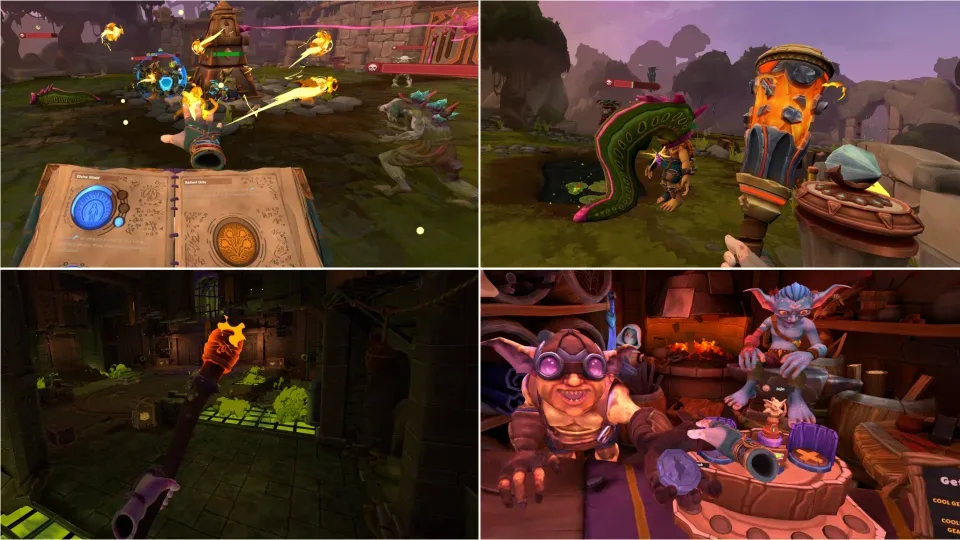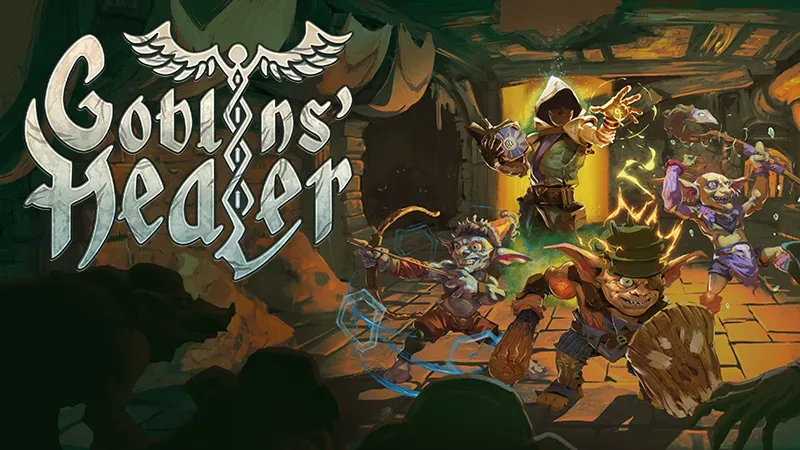
Error 404 Game Studios has announced Goblins’ Healer, a single-player fantasy VR adventure that puts players in the role of a healer overseeing a rambunctious goblin party. Rather than making the player another sword-swinging member of the expedition, the game is built around keeping allies alive, steering their actions and making rapid decisions as the group attempts to cross the Forgotten Valley and find its way home.
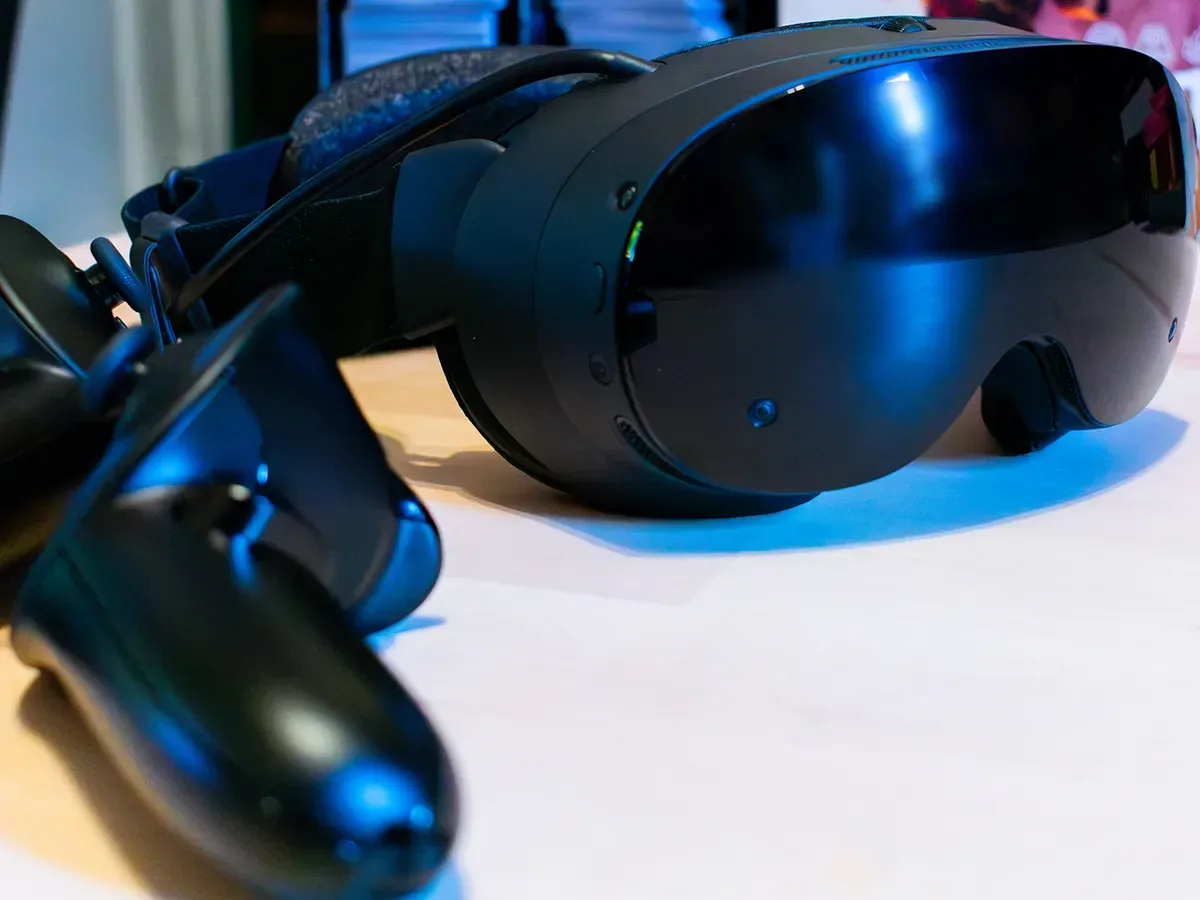
A demo is available now for Steam VR and Meta Quest. It covers the opening hour of the adventure, including the tutorial, an introduction to the goblin companions at Blingo’s Tavern, and one early boss encounter. That makes the demo a fairly direct look at the intended loop: learn the party’s needs, prepare at the hub, then try to keep an unruly group functioning once an expedition turns dangerous.
A healer’s job is more than restoring health
The central premise is not simply casting a recovery spell whenever a health bar runs low. Goblins’ Healer gives the player several overlapping support responsibilities. Holy magic can heal and revive fallen goblins, while support spells, potions and powerful artefacts provide additional ways to influence the party’s chances in combat.
Just as important, the healer is expected to direct goblin attacks and physically reposition companions away from danger. In practical terms, that means party support includes both recovery and battlefield management. A player may need to decide whether a threatened goblin needs immediate healing, whether moving that character is safer, or whether another spell or consumable is the better answer for the moment.
“Hands-on VR interactions” are a key part of that setup. The phrase describes gameplay actions performed through VR motion controls rather than conventional button-only inputs. Here, the supplied details specifically tie those interactions to healing, reviving, spellcasting and using equipment. The game’s concept therefore leans on the sense that the healer is actively tending to a party, not issuing every decision from a detached overhead view.
That division of labor also distinguishes the player character from the goblins. The companions are the ones attacking, while the healer serves as the group’s survival specialist and coordinator. The stated challenge is to use each companion’s abilities effectively while responding to the hazards of the Forgotten Valley.
Warriors, Archers and Shamans define the party
Goblins’ Healer organizes its party-building around three companion types: Warriors, Archers and Shamans. Each is said to have its own strengths, weaknesses and skills. The announcement does not specify individual abilities, stat systems or exact tactical matchups, so those details remain for the demo and full game to establish. Still, the class list gives a clear outline of the decisions the healer will be asked to make.
- Warriors are one of the available goblin types.
- Archers are another available goblin type.
- Shamans complete the announced trio of party roles.
In a party-based adventure, strengths and weaknesses matter because no single companion can necessarily answer every threat equally well. The player’s task is not only to preserve the party, but to leverage what each goblin can contribute. The need to reposition allies suggests placement will matter alongside class choice: having the right companion is useful, but keeping that companion out of immediate danger is part of the healer’s responsibility.
Related coverage includes Goblins’ Healer brings party support to VR, with a demo out now.
The description also points to a deliberately busy kind of co-ordination. Players must manage attacks, movement, healing, revivals, support magic, potions and artefacts while the party faces hostile encounters. Whether that proves approachable will depend on how clearly the game communicates priorities in VR, but the demo’s tutorial and early boss are positioned as an introduction to those core systems.
Blingo’s Tavern is the preparation hub
Between expeditions, players return to Blingo’s Tavern, a safe hub for managing the party. The tavern is where goblins can be upgraded, useful potions can be purchased, equipment can be improved, and companions can be outfitted with cosmetic items before the next trip into danger.
A hub is a recurring safe location that separates the preparation phase from the action phase. Here, it gives Goblins’ Healer a structure beyond individual fights. Players head out to confront the valley, then return to make changes before another expedition. The announced options cover combat readiness—upgrades, potions and equipment—as well as visual customization through cosmetic items.
Cosmetic items are specifically distinct from the stated combat-facing tools. They are presented as a way to outfit companions visually, while upgrades, purchases and equipment improvements are the systems associated with preparing for the next outing. No details have been provided about how upgrades are earned, how equipment is obtained, or what particular cosmetic items will be available.
The demo includes meeting the companions at the tavern, so it should offer the first indication of how the game introduces its goblin crew and preparation systems. For players curious about the premise, that section may be as important as the boss encounter: the appeal rests on building and maintaining a party, not merely on surviving a single battle.
Five zones, dungeons and bosses await in the Forgotten Valley
The full adventure is planned across five distinct zones in the Forgotten Valley. Those zones include enemies, dungeons and hidden secrets, with boss encounters serving as major threats. The announcement does not identify the zones, name their enemies, or describe how secrets are found, so it is too early to draw conclusions about the game’s overall length or its exact progression structure.
What is clear is that the adventure is meant to move between exploration and confrontation. Dungeons imply more contained dangerous spaces within the larger journey, while hidden secrets suggest players will have reasons to pay attention beyond the direct route forward. Bosses, meanwhile, should put the party-management systems under particular pressure. The demo’s inclusion of an early boss is a useful fit for a game whose central promise is reacting to a party’s needs in hazardous situations.
For VR players, the immediate practical question is simple: does the healer role sound more appealing than directly controlling a conventional fighter? Goblins’ Healer is aimed at people who want their physical VR interactions tied to support and oversight—casting aid, administering items, reviving allies and moving them to safety—while a goblin team handles the attacking.
It also arrives amid continued interest in PC releases with distinctive co-op and party-oriented ideas, though Goblins’ Healer itself is explicitly single-player. For another current PC-focused update, see Sous Raccoon’s two-player local co-op news.
What the current demo can show
The available demo is limited to the first hour, but that hour has been chosen to establish the game’s basic identity. It contains the tutorial, the initial meeting with the companions at Blingo’s Tavern and one early boss. Players should therefore be able to assess the control approach, the interaction between healing and party direction, and the early rhythm of tavern preparation followed by an expedition.
It should not be treated as a complete view of the announced five-zone adventure. The supplied information does not say which later systems, zones, dungeons, artefacts or secrets appear in the demo. Nor does it give a release date for the full game. For now, the confirmed availability is the demo on Steam VR and Meta Quest, alongside the outline of a fantasy support adventure in which the goblins may be chaotic, but their healer is expected to keep them standing.