Game of Thrones: War for Westeros is aiming for the tricky middle ground between satisfying real-time strategy regulars and welcoming players who know Westeros far better than build orders. PlaySide’s upcoming PC strategy game is expected next year, and its developers are preparing for a player base split between people chasing a new RTS and people who simply want to command familiar houses, characters, armies, and dragons.
That is no small design challenge. RTS games can ask players to absorb resource production, construction, unit counters, map control, combat positioning, and hotkey-heavy multitasking all at once. For veteran players, that workload is much of the appeal. For someone arriving because they want Jon Snow on the battlefield, it can feel less like taking the Iron Throne and more like unexpectedly being handed an accountant’s ledger during a siege.
PlaySide game director Ryan McMahon has described approachability as a central priority. The stated goal is not to strip out the strategic substance that RTS players expect, but to make the route into those systems clearer and less punishing. That distinction matters: accessibility in this case is being framed around onboarding and reducing needless early overload rather than turning the game into a dramatically simpler genre hybrid.
Workers are designed to demand less constant attention
The most consequential detail so far is War for Westeros’s approach to workers and resource gathering. In many traditional RTS games, workers must be continually directed: assign them to collect a resource, move them to a new task when circumstances change, put them on a construction project, and then tell them what to do after the building is complete. Keeping that machine efficient is a learned skill, often called macro management, and it competes for the player’s attention with every battlefield decision.
War for Westeros is taking a more automated route. Once a relevant building has been constructed, it will gather its associated resources by itself. The system has been characterized as “set and forget,” meaning players will not need to repeatedly shepherd workers through the resource loop.
That leaves more mental bandwidth for the parts of a Game of Thrones RTS that may be immediately legible to a much broader audience:
- Choosing which structures to place and where to establish them.
- Building and positioning military units.
- Selecting heroes and commanders for an army.
- Using faction strengths to shape engagements.
- Creating the large-scale confrontations, including dragon-centered moments, that the setting naturally invites.
Automation does not automatically mean a lack of strategy. Base placement, production choices, army composition, and timing can remain highly important even when the player is not individually assigning laborers to every economic task. The intended trade-off appears to be reduced low-level maintenance in exchange for more focus on visible strategic choices and battles.
Tutorials, campaigns, and room to learn
PlaySide also plans what McMahon called a robust tutorial at launch. That onboarding is expected to introduce skirmish mode and explain the game’s systems through the campaign. For an RTS built around an enormous entertainment franchise, the campaign can do more than explain interface buttons: it can gradually establish why a particular house, hero, or composition works as it does before players face another person who has spent years perfecting cavalry timing.
Related coverage includes Game of Thrones: War for Westeros Is Designing Its RTS Systems for Newcomers.
Single-player AI is being tuned to give newcomers room to understand the rules rather than immediately overwhelming them. The broader ambition is for players to build familiarity in stages, then decide whether they want to test those lessons in multiplayer or alongside friends. That does not promise a painless competitive environment—multiplayer RTS communities are rarely known for distributing mercy rations—but it suggests the game wants its early learning curve to be less of a cliff.
For PC players setting up for a strategy game launch, the usual housekeeping can still matter. Our guide on updating GPU drivers in Windows 11 covers the basics without turning routine maintenance into its own campaign.
HBO likenesses, with soundalike dialogue performers
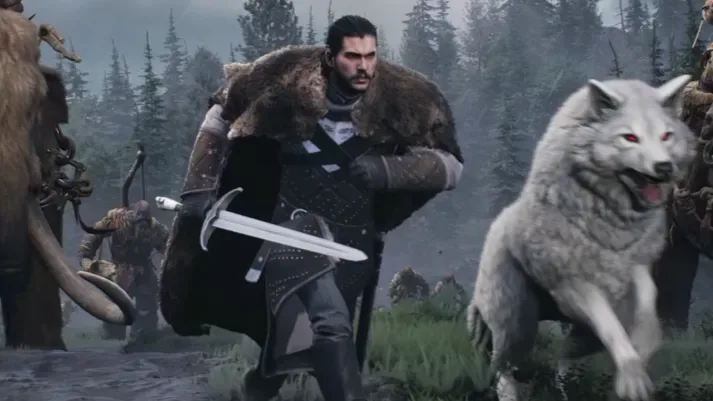
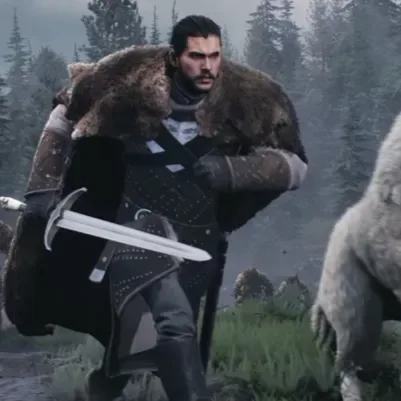
War for Westeros will include major characters using likenesses associated with the HBO television series. Jon Snow is among them, with Kit Harington’s likeness approved for the game. However, the dialogue will use soundalike actors rather than the original television performers. The practical reasons cited include both the expense of securing the screen cast and the reality that actors may not be available within a game production’s timeline.
The announced character roster includes Gregor “The Mountain” Clegane and Arya Stark. The Mountain is recruitable by House Lannister, bringing his imposing physical presence and an ability profile built around disrupting enemy battle lines and intimidating opponents. Arya serves House Stark as an assassin, drawing on the character’s Faceless Men training and her association with the House of Black and White.
Those roles fit the central balancing act facing the game. Players will understandably want to pick beloved characters, while a competitive RTS needs those characters to have defined tactical functions instead of being interchangeable pieces of celebrity wallpaper. A commander who strengthens nearby troops may be more useful than a lone warrior who dominates every encounter, even if the latter makes for a flashier trailer.
Internal playtests are shaping heroes and factions
PlaySide is using recurring internal playtests and milestone tournaments to gather data while War for Westeros evolves. The studio reportedly plays the game weekly on Friday afternoons, while tournament brackets at the end of development milestones put the current build through a more competitive internal proving ground. A trophy changes hands based on the winner of the latest tournament, which sounds appropriately dangerous for an office full of Westeros strategists.
More importantly, those sessions supply measurable information. The team is tracking faction win rates, the frequency with which heroes are selected or spawned, and heat maps that show where players erect buildings. That information can influence level design, faction balance, and decisions about how heroes should be equipped relative to one another.
At the moment, hero choices in these internal environments are being driven more by effectiveness than pure fandom. McMahon said Tywin Lannister and Robb Stark have become particularly popular. Cavalry helps those commanders cover the map quickly, but their value is also tied to kits that reinforce the units around them. They are commanders whose strengths are expressed through the army, not merely individual damage output.
That is a meaningful signal about the direction of the game’s balance. Earlier in development, Jon Snow and Jaime Lannister were popular choices because they were notably powerful heroes. As the design has matured, the emphasis has shifted toward units and grounded battlefield roles. The development team does not want a single named character to plausibly defeat hundreds of soldiers alone. Instead, commanders are increasingly important because they improve the troops paired with them.
A healthier fantasy than one hero doing everything
This approach is well suited to RTS play. Game of Thrones is full of memorable individual figures, but it is also a story about logistics, alliances, battlefield leadership, terrain, and the consequences of putting the wrong people in charge. Letting commanders amplify a formation provides a mechanical reason to think about positioning and composition, while still giving recognizable characters a major role.
It also means fan favorites may not permanently own the competitive spotlight. Jon Snow could easily become a leading pick when a broad PC audience arrives, simply because Jon Snow is Jon Snow. Yet the current internal data suggests players who understand the systems may gravitate to a commander with strong cavalry mobility or army-wide buffs instead. The choice between heart and battlefield efficiency is, in its own small way, extremely Westeros.
War for Westeros still has time to change before its planned PC release next year. Hero popularity, faction tuning, tutorials, and AI behavior are all areas likely to move during development. But the broad design philosophy is clear: PlaySide wants a strategy game with enough layers for dedicated RTS players, without requiring every Game of Thrones fan to become a worker-micromanagement specialist before they can enjoy commanding an army.