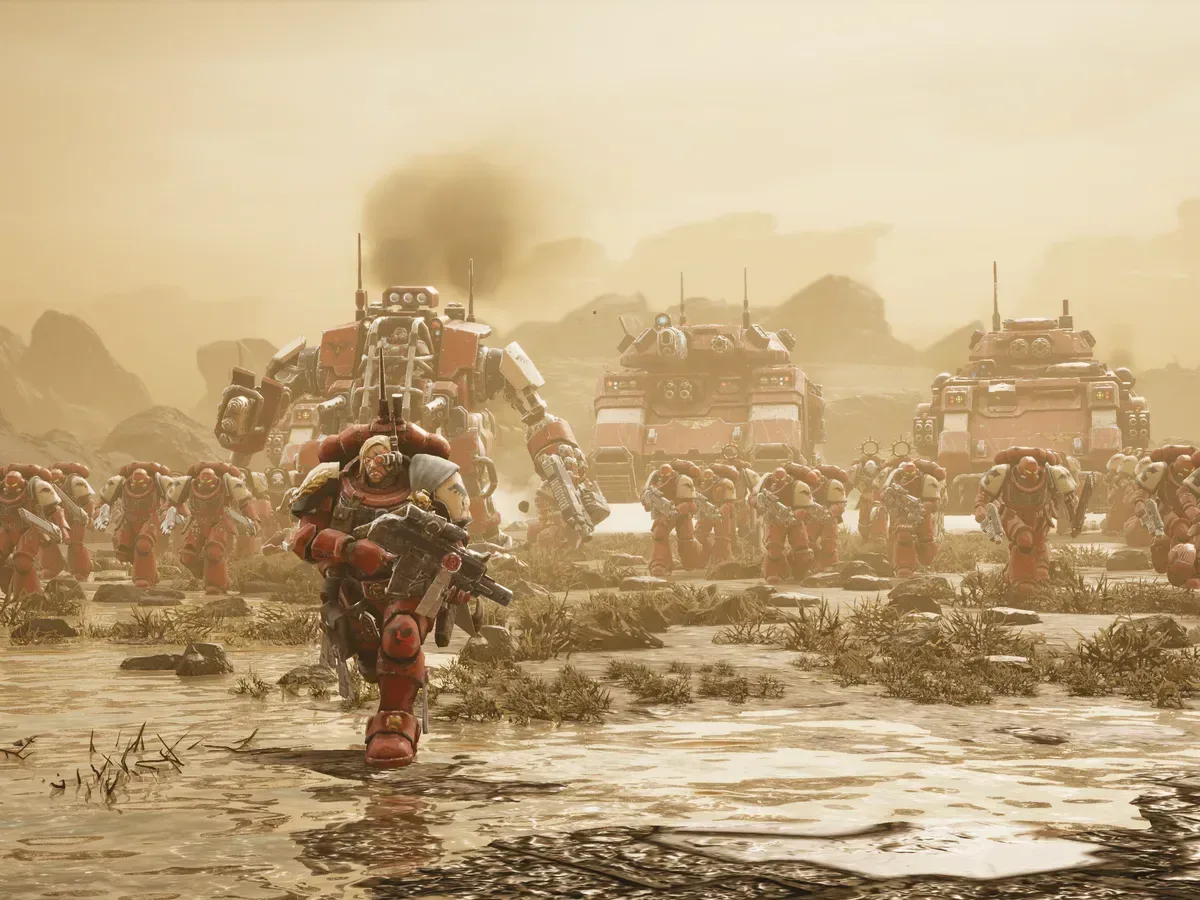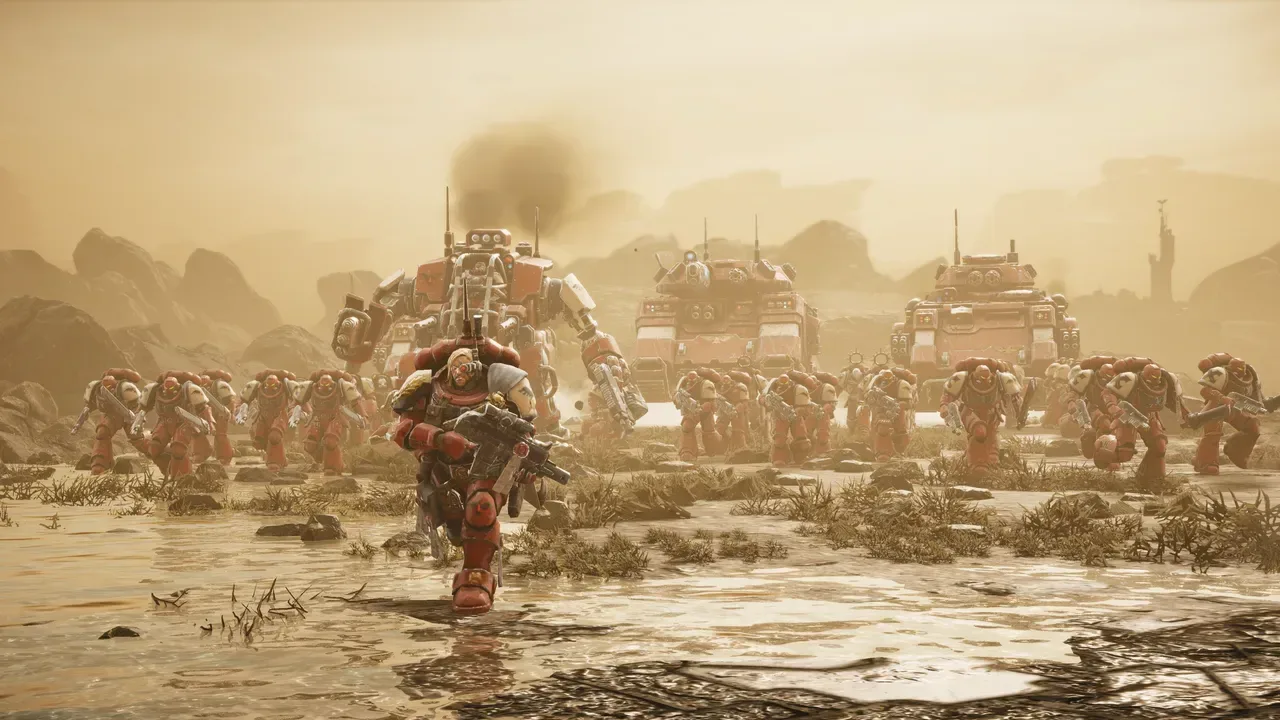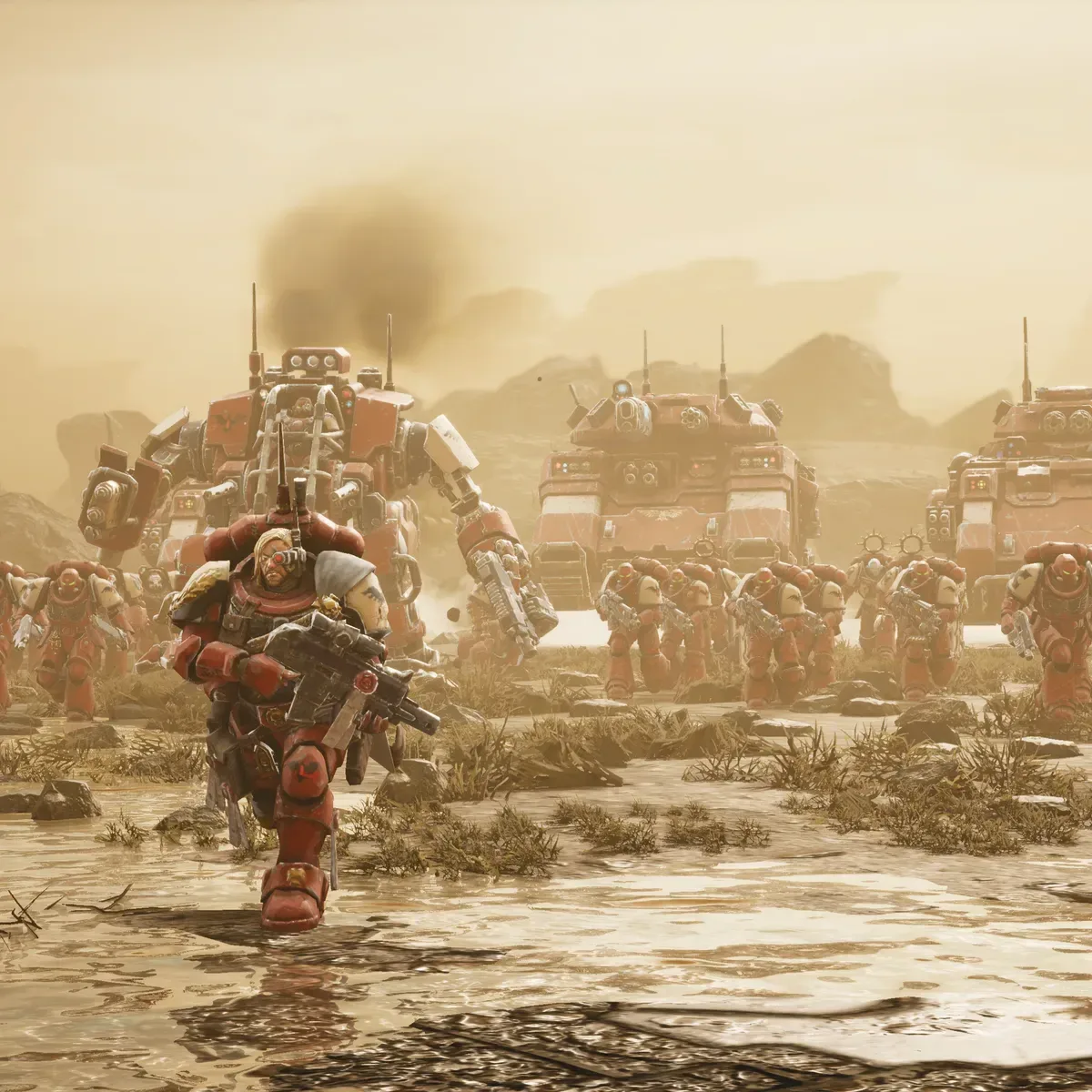
Warhammer 40,000: Dawn of War 4 will make the Space Marines an elite, compact force whose battlefield power is offset by a simple strategic problem: they cannot be everywhere. The faction’s planned identity centers on expensive but durable troops, tailored weapon upgrades, orbital construction, and rapid reinforcements delivered through Drop Pods or Thunderhawks.
That combination is designed to make a small Space Marine force feel threatening wherever it arrives. It also puts an unusually high value on preservation. A lost squad is not merely a replacement purchase: players may also have to rebuild the upgrades and specialization that made that squad effective in the first place.
The Blood Ravens return for the new game alongside the Dark Angels. The campaign will also feature Lion El’Jonson briefly. In multiplayer and skirmish, the Space Marines are one of four launch factions, set apart from the Necrons, Orks, and Adeptus Mechanicus by an emphasis on elite infantry, adaptable squad roles, and the ability to reposition production and reserves close to a fight.
Dawn of War 4 is scheduled to launch on PC on December 3, 2026.
A faction that wins local fights, not the whole map by default
The key Space Marine trade-off is clear. Their early units are described as capable of defeating other early-game units in a straight engagement, but players field fewer of them. In real-time strategy terms, that is an elite roster: each individual squad brings greater fighting power and likely represents a larger investment, rather than being one interchangeable part of a huge army.
The consequence is not that objectives become unimportant. It is the opposite. Capturing resource points quickly matters in skirmish and multiplayer, but a Space Marine player may have too few squads to seize every location as rapidly as a faction with more bodies. The strategic question becomes where the force can exert its superior quality and where it cannot currently be present.
That makes aggressive recaptures a natural fit. A tough Space Marine unit that takes an enemy-held point may be difficult to remove immediately, creating time for the rest of the army to arrive. A player can choose to stand ground under pressure, use the faction’s healing options, and delay the opposition until reinforcements appear. However, durability should not be confused with invulnerability. Being surrounded by two or three enemy units is identified as the point where retreat or a more deliberate defensive stand becomes a serious consideration.
For newcomers, this is an approachable but demanding distinction. Fewer units generally means less simultaneous control is required, and a durable roster is more forgiving if a player notices an attack a little late. But the punishment for a bad engagement may be more severe. Losing a valuable squad removes its combat value, consumes resources to replace it, and resets the work put into outfitting it. Space Marines may simplify the number of decisions on screen while making every squad-level decision matter more.
Related coverage includes Dawn of War 4 Details the Space Marines' Elite, Flexible Battlefield Role.
Orbital buildings and reserve units could redefine response time
The faction’s most consequential mobility tools are not limited to its soldiers. Space Marines can construct buildings anywhere on the map without a builder unit, calling them down from orbit. The practical promise is forward production: rather than producing every unit at a fixed home base and marching it across the map, a player can establish production nearer to a resource point or contested front.
That creates the possibility of a secondary base built around an important area. It is not just a visual expression of orbital warfare; it could change how quickly newly made units become relevant. In an RTS, reinforcement travel time is the delay between ordering a unit and getting it into the battle that needs it. Locating production near the front can reduce that delay, though it also implies a choice about where to commit infrastructure.
Units may also be produced in reserve instead of appearing on the ground right away. Those forces can then deploy from orbit by Drop Pod or Thunderhawk. The stated intention is flexibility: a surprise attack elsewhere on the map can be answered by bringing soldiers down quickly, while a poorly defended point can be hit by a concentrated landing force before the opponent reacts.
In practice, these systems suggest that Space Marine map control may be less about permanently covering every objective with a squad and more about threatening swift, forceful intervention. A player who holds units in reserve is retaining options. That player gives up some immediate board presence in exchange for the chance to place reinforcements where they matter most later.
It is a fitting version of “shock and awe” for an RTS. The emphasis is on sudden localized superiority: identify a vulnerable location, deploy, win the immediate clash, then make the enemy spend time responding. Whether that becomes a dominant competitive tactic will depend on costs, cooldowns, placement restrictions, and counterplay that have not been detailed. Still, the intended direction is unusually clear: Space Marines are meant to turn mobility into a tool for concentrating an elite army rather than spreading it thin.
Equipment choices are specialization, not just bigger numbers
Space Marine squads will level up and receive weapon options that do more than simply increase damage. Intercessors, for example, can be configured for longer range or given an Auto Bolt Rifle-style option that fires faster. That is a meaningful distinction in a strategy game. A range-oriented unit can contribute from farther away, while a faster-firing one may favor a different target profile or battlefield position.
The same thinking extends to Dreadnoughts. Players can equip them toward anti-vehicle work or toward fighting massed infantry, with Gatling and plasma weapon choices cited as examples. The important phrase here is specialization: a player is deliberately shaping a unit for a role, rather than seeking one universally correct upgrade.
This creates squad combinations with defined jobs. One group can be assembled to defeat armor, another to handle infantry, and another to target commanders or heroes. It also makes scouting more important. An upgrade selected without knowing what an opponent is fielding can be less useful than an option that answers a revealed threat.
There is a related economic implication. Customization increases the importance of keeping units alive because the value sitting on the field is not merely the base cost of the squad. An upgraded force contains accumulated investment. Replacing it may be possible, but it takes time and resources, and the replacement may not immediately carry the same specialized tools.
The result sounds closer to managing a strike force than churning out a disposable army. That should appeal to players who enjoy identifying enemy composition and assembling a direct answer, but it also means the Space Marines’ supposed ease of use has a boundary. A small roster is easier to select and move; choosing the wrong weapons, or throwing highly upgraded troops into an unwinnable fight, can still be a very expensive error.
No lone final boss, but a strong roster from start to finish
The Space Marines will not rely on one singular, colossal endgame unit. Instead, their power is intended to remain spread across a capable roster throughout the match. Infantry remains especially important, with Terminators, Bladeguards, and Eliminators among the stated options.
Later-game forces expand into Dreadnoughts, two Gladiator tank variants—the Lancer and Reaper—and the Redemptor Dreadnought. The Redemptor is described as the Space Marines’ biggest tank and one of the game’s largest units. Yet it is not intended to occupy the same category as the Imperial Knight available to the Adeptus Mechanicus.
That contrast matters. A capstone unit is a high-tier centerpiece that can reshape a battle simply by arriving. The Space Marine plan sounds less dependent on that one massive payoff. A late-game army may instead include multiple Reapers and multiple Redemptor Dreadnoughts as part of a conventional combined strike force. Its strength lies in stacking solid, complementary assets rather than protecting one irreplaceable superweapon.
This should preserve the core faction identity at every stage. Early Space Marines are elite compared with contemporaries; late Space Marines are still an elite army, now with more ways to apply that quality. The faction’s challenge remains coordination, positioning, and timing—not waiting until one enormous unit turns the match into a different game.
Four commanders offer scouting, psychic attacks, resilience and speed
Space Marines have the most characters and playable characters among the factions described so far, with two Blood Ravens and two Dark Angels available. Their roles are deliberately distinct:
- Cyrus is a Blood Ravens sniper and infiltrator built around concealment, long-range attacks, and scouting.
- Jonah Orion is a Blood Ravens Librarian with spells and area-of-effect attacks. Area of effect, often shortened to AOE, means an ability affects a zone or multiple units instead of one target alone.
- Astoran is a Dark Angels Captain in Terminator armor and the game’s toughest commander. He can be equipped for offensive, defensive, ranged, or melee duties, and is positioned as a highly durable anchor for Bladeguards or Terminators.
- Ezrael is a Chaplain on Bike who is fast, improves nearby troops, and can join Outriders for urgent interventions across the map.
Together, the lineup mirrors the wider faction. Cyrus helps the player find the next opportunity, Jonah Orion punishes concentrations of opponents, Astoran makes an already hard-to-kill formation even more difficult to shift, and Ezrael helps address the recurring problem of limited map coverage.
Ezrael’s role is especially revealing. A fast buffing commander attached to Outriders can operate as a rapid-response group. That does not solve the Space Marines’ numerical disadvantage on its own, but it can let the faction answer a raid or capitalize on a developing fight without pulling apart its entire core army.
Making huge armored soldiers look huge without making them slow
The visual challenge is as important as the mechanical one. Space Marines wear oversized armor with massive shoulder plates, a design that risks looking stiff or cumbersome when animated. The goal has been to communicate both their weight and their speed: they should appear physically imposing while moving decisively, not simply like ordinary soldiers scaled up in bulk.
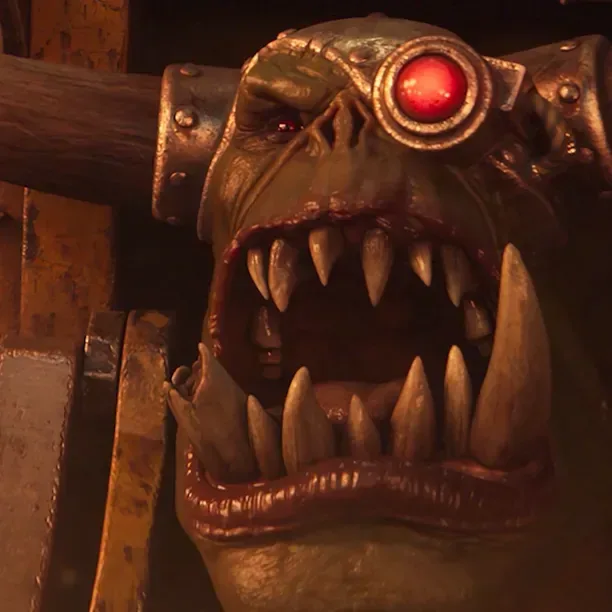
The game will establish that contrast by beginning its tutorial with Guards. Presenting regular human soldiers first provides a baseline for size and strength, then makes the Space Marines’ scale more legible when they arrive. Their power is also intended to read clearly when they fight Orks or Guard units in skirmish and multiplayer.
That approach addresses a useful visual principle for strategy games. Unit silhouettes and relative scale have to communicate at a glance, especially when players are issuing commands quickly. The animation work is not just cosmetic if it helps players immediately recognize the Space Marines as a durable, elite force amid more ordinary troops.
Why the December release window matters
The game was moved from a planned September release window to December, with late-November access mentioned for preorders. The extra time is being used across several areas rather than for one defining new feature: additions prompted by playtest feedback, items that had been candidates for post-launch work, and further polish to performance and visuals.
That is particularly relevant for a faction system built on upgrades, deployment flexibility, and expensive units. RTS balance depends not only on individual unit strength but also on the surrounding rules: how fast forces arrive, how efficiently they reinforce, how readily opponents can answer a forward position, and how costly an unsuccessful push becomes. More time for playtest-led adjustments could therefore matter as much as any individual Space Marine weapon.
For prospective PC players, it may also be sensible to assess a system’s current performance before the game arrives; these four PC benchmarks for checking a gaming rig offer a general starting point. No Dawn of War 4 system requirements were detailed here, so they should not be treated as a compatibility guide for this specific release.
For now, the faction’s promise is focused rather than vague: field relatively few Space Marines, make every squad count, tune them for the enemy in front of you, and use orbital tools to ensure that the decisive fight takes place where your strike force can win it.