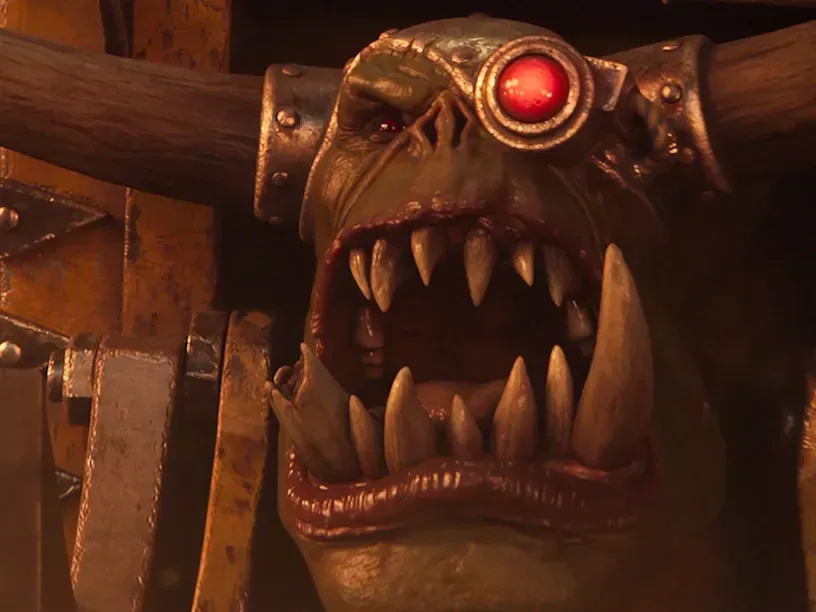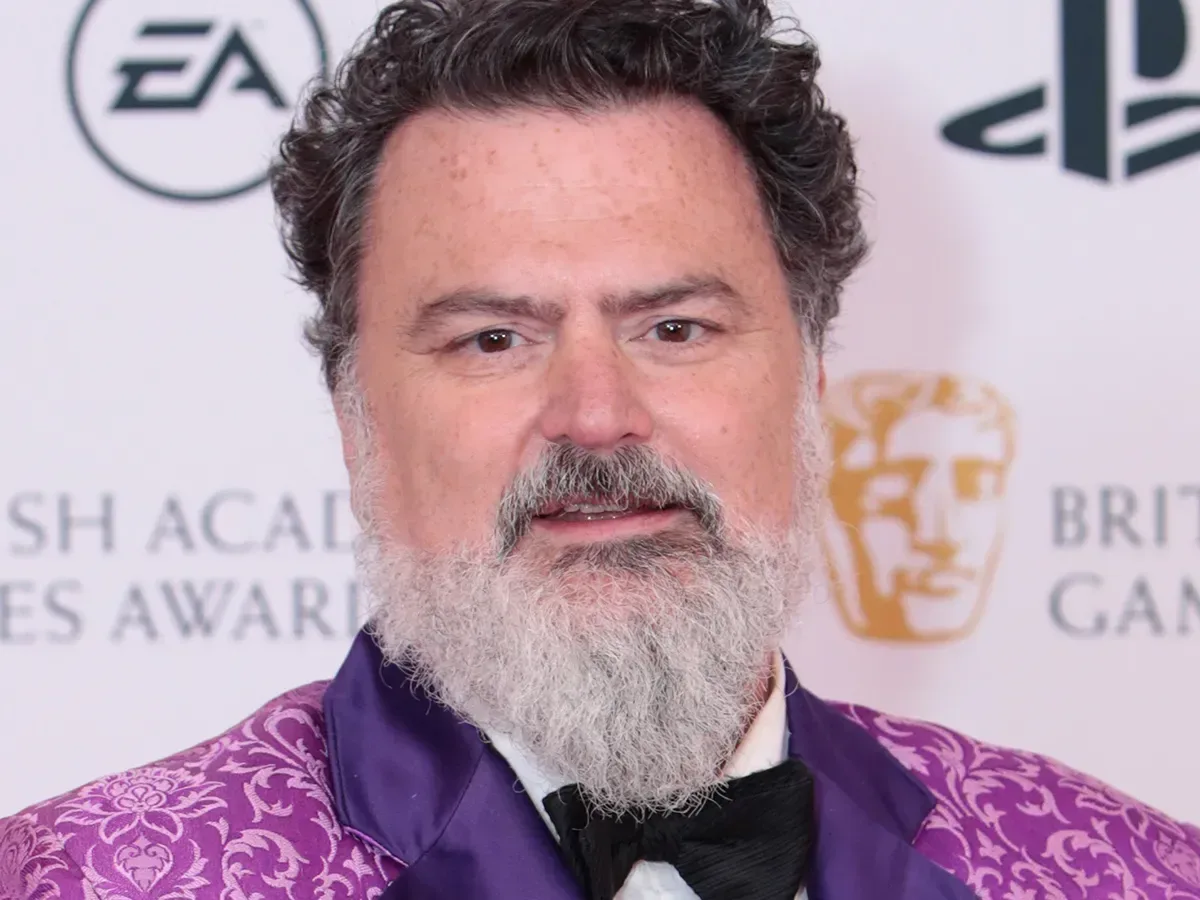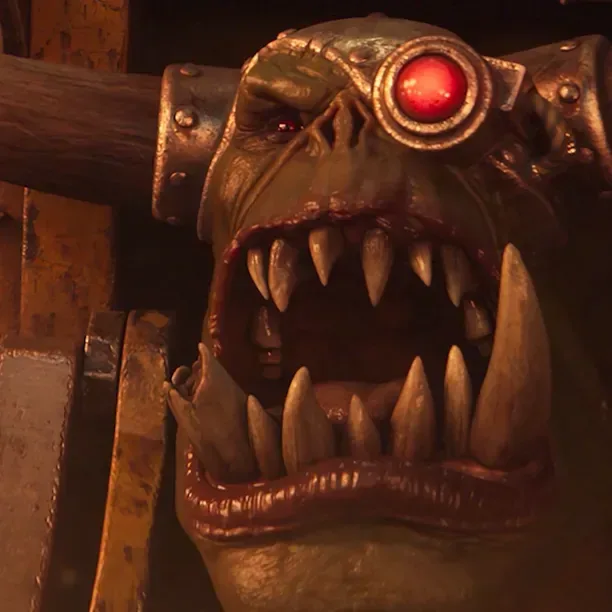
There is a familiar rhythm to pre-release strategy-game footage: developers demonstrate the shiny new systems, the intended tactics work beautifully, and the enemy ends up as an obliging pile of wreckage. Warhammer 40,000: Dawn of War 4 has taken a much funnier route. In a new co-op player-versus-environment match, creative director Jan Theysen and senior game designer Elliott Verbiest tried to beat Hard AI Orks as Space Marines. The Orks did not appear especially interested in the promotional plan.
The first 2v2 Team Skirmish PvE match ended in defeat a little over four minutes in. The second lasted 13 minutes after the pair raised the Victory Point requirement to give themselves more room to recover. That adjustment did not reverse the outcome. Theysen ultimately surrendered before the Orks landed the final blow, candidly summarizing the video’s two key lessons: the pair were not very good at their own game, and the AI was strong.
It is a small but telling slice of footage for an upcoming real-time strategy game. More importantly, it is the first showcased look at two-player co-op play against computer-controlled opponents rather than the player-versus-player battlefield reports the team had previously presented.
Two attempts, one relentless Ork problem
Theysen and Verbiest entered the match as a Space Marine team against a pair of Ork AI opponents on Hard difficulty. Their first outing unravelled with remarkable speed. Rather than quietly cutting around that loss, the video keeps it in. The developers frame it as a warm-up, then jump into another match with the promise that they are now focused.
For the rematch, the team increased the number of Victory Points required. In an RTS context, Victory Points are objective-score markers: controlling relevant points contributes toward the total needed to win. Raising the target can extend a match, at least in principle, because a side needs to accumulate more objective score before the game ends. It can create time to regroup—but time has value only if a struggling team can stabilize its economy, retain territory, and field an army capable of contesting the map.
That was the issue here. The Space Marines attempted to capture points and stay on top of objectives, yet repeated Ork pressure kept them from establishing control. The footage shows them falling behind on Victory Points while resources become scarce. In resource-driven RTS play, that combination is particularly punishing: losing map control means losing the means to produce replacement units, and losing units makes taking that map control back still harder.
They had auto-reinforce enabled, a setting that automatically replenishes units when the required resources are available. But automation cannot solve a resource deficit. If a team is short on the materials needed to replace losses, auto-reinforce merely makes the underlying problem more apparent: the force takes damage faster than its economy can restore it. When the Orks eventually pushed toward the Space Marine base, the developers could not assemble a sufficient response army.
“I think I have to have a stern word with our coders about the hard mode difficulty,” Theysen joked. “I mean it’s supposed to be hard but also the boss is supposed to win!”
Related coverage includes Dawn of War 4 Developers Surrender After Hard AI Orks Crush Their Space Marines.
The joke lands because the usual expectation is exactly the opposite. A developer-led gameplay video is normally controlled evidence of mastery. Here, the loss is the evidence. The team could have replayed the encounter on a lower setting or continued retrying Hard AI until the highlight reel contained a victory. Instead, the footage preserves the failed practice round, the extended second attempt, and the surrender.
What “Hard AI” means in this particular demonstration
The video does not establish every detail of Dawn of War 4’s AI design, nor does it prove that every player will have the same result. Two developers playing one match configuration are not a full difficulty breakdown. It does, however, demonstrate the practical behavior of the Hard setting in this encounter: the Orks apply enough repeated pressure to disrupt objective control, constrain resources, and turn a local setback into a widening strategic disadvantage.
That distinction matters. Difficulty in an RTS is not just about an enemy army having more units. A challenging opponent can be difficult because it attacks frequently, prioritizes objectives effectively, exploits openings, or forces players to divide attention between fighting, territory control, unit reinforcement, and base defense. The footage supports the conclusion that the Hard AI can impose that kind of multitasking burden on a two-player Space Marine team. It does not reveal precisely which AI systems or balance values produce it.
The result is also a reminder that co-op does not automatically make PvE easy. Two players offer more hands for management and potentially more coordinated forces, but they also have to maintain a shared front. If both are being pushed back from objectives and both lack resources, each player’s difficulty compounds the other’s. The Orks’ ability to keep attacking left little time for the developers to convert a temporary retreat into a coordinated counterattack.
Verbiest suggested that players may solve the challenge more quickly than the on-screen team did, predicting that people could return within weeks of launch to say they had beaten it in days. That is a sensible acknowledgment of what RTS communities often bring to a game: repeated attempts, build-order experimentation, map knowledge, and tightly coordinated play. None of those possibilities negate the displayed result. They simply mean this one defeat should be read as a snapshot of a hard encounter, not a final ceiling on what skilled players can accomplish.
A rare useful failure in pre-release footage
There is real value in a demonstration that includes failure. A clean victory may show off units and effects, but it can conceal whether an AI opponent actually forces adaptation. Here, viewers can see the consequences of getting squeezed on both objectives and resources. The pacing is more informative precisely because the Space Marines are not cruising toward a scripted-looking win.
It also gives prospective players a clearer reason to treat the difficulty label seriously. “Hard” is often an abstract menu choice until gameplay makes its consequences visible. In this case, the visual story is direct: early defeat in the first attempt, a longer but still unsuccessful second match, then a surrender once the base is under pressure and a comeback army is no longer viable.
There is a broader production-side angle, too. Game development is under heavy economic scrutiny, as discussed in an examination of the industry’s increasingly difficult development economics. That does not make an imperfect gameplay session inherently remarkable, but it helps explain why an unvarnished video can be more persuasive than a polished win. It shows a team willing to let the game’s systems—not only its best-case spectacle—carry the presentation.
Fan reaction reflected that appeal, with commenters praising the decision to show the defeat and the apparent strength of the AI. Another response summed up the more cautious view of facing Orks on a high setting: Hard mode may be a commitment best made with a plan rather than optimism.
What players can take from the match
The footage is not a strategy guide, and it does not provide enough evidence to prescribe a specific Space Marine build or a definitive answer to Ork aggression. It does offer a few straightforward takeaways for anyone considering the PvE mode:
- Objectives and economy are connected. Falling behind on Victory Points was paired with resource starvation, leaving the Space Marines unable to rebuild effectively.
- Auto-reinforce is support, not a rescue plan. It replenishes units only when the economy can pay for them; it cannot stop a team from being outproduced or overwhelmed.
- More time is not automatically a comeback. Increasing the Victory Point requirement stretched the rematch, but it did not address the pressure preventing the Space Marines from retaking control.
- Hard AI may demand coordinated recovery. The two players could not merely react to attacks; they needed enough space and resources to rebuild while still contesting the map.
Those are practical implications, not verdicts on final balance. Theysen himself joked about reviewing the difficulty with the team, and the game remains unreleased. A developer video can show the current state of a build, but it cannot settle every question about tuning at launch or how different factions and strategies will fare.
Release date and the appeal of an honest loss
Warhammer 40,000: Dawn of War 4 is scheduled to launch on PC on December 3, 2026. Before then, the hard-mode Ork match stands out less because it is a showcase of Space Marine dominance and more because it refuses to pretend dominance happened.
For strategy fans, that may be more enticing than another effortless victory. The video suggests that its co-op PvE can create the kind of escalating map-control crisis that demands quick decisions and a resilient economy. For everyone else, it delivers the simpler message: if two people leading the game’s development can be routed in four minutes, the Orks are probably not going to accept “we were just testing” as a valid tactical defense.