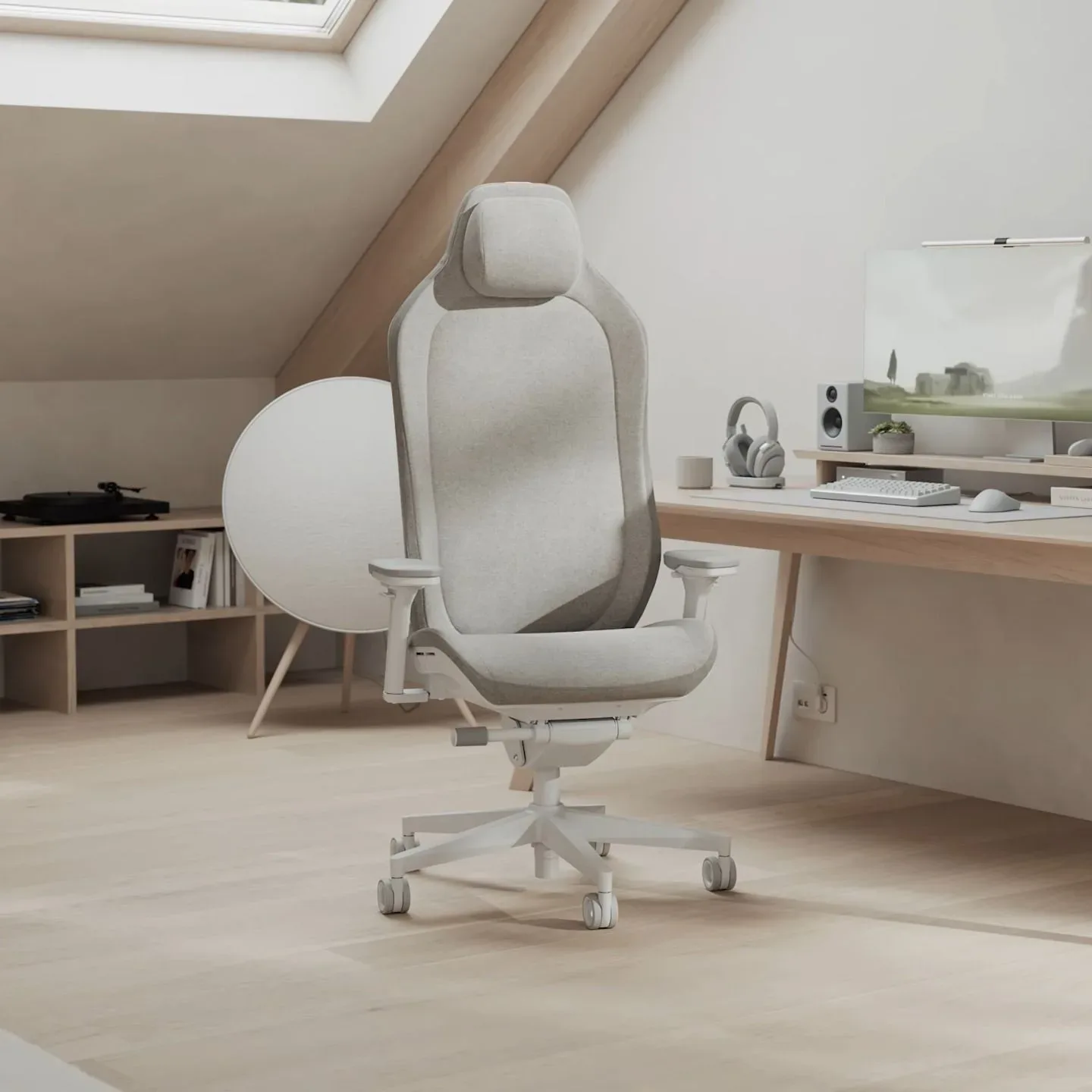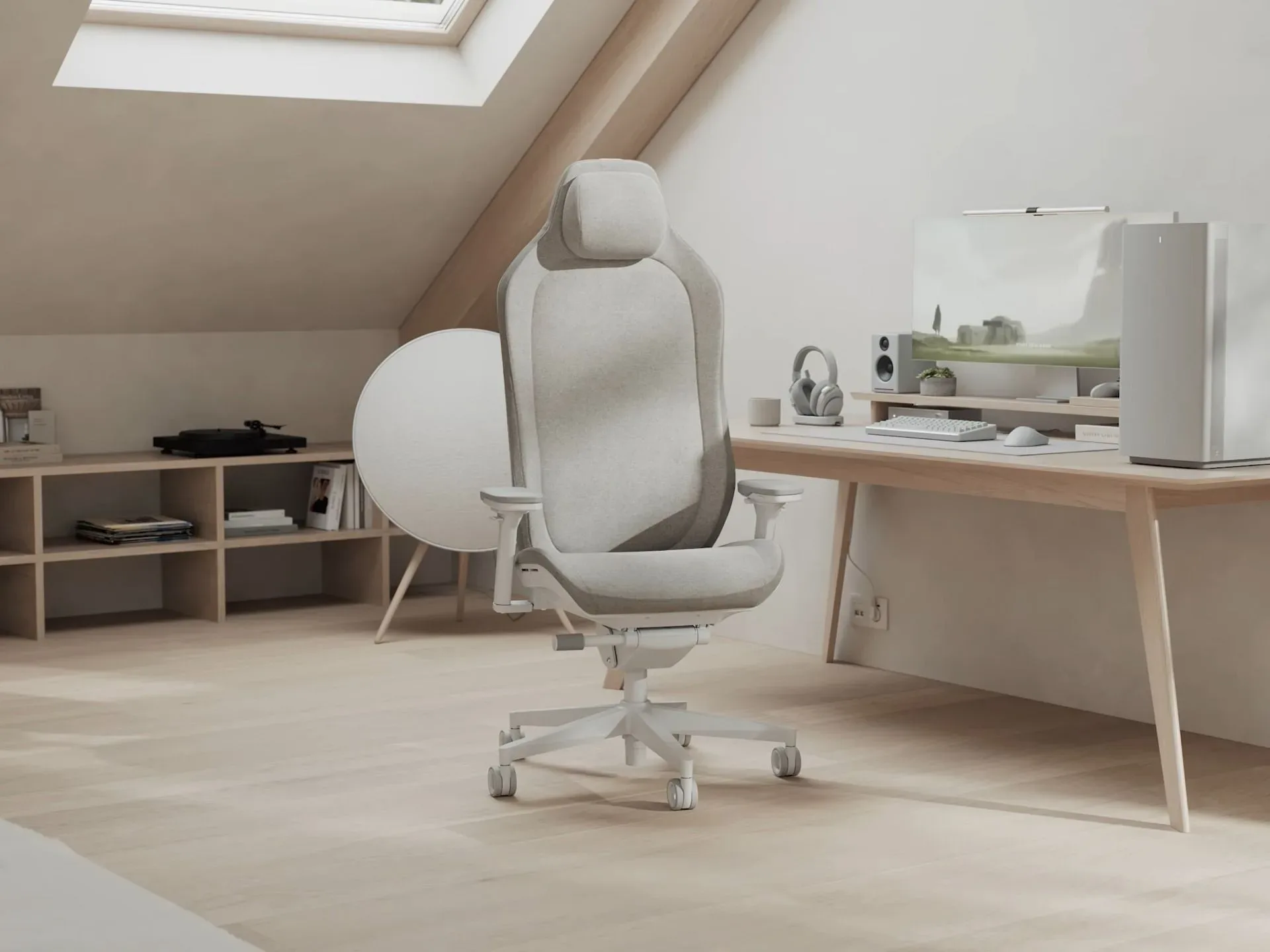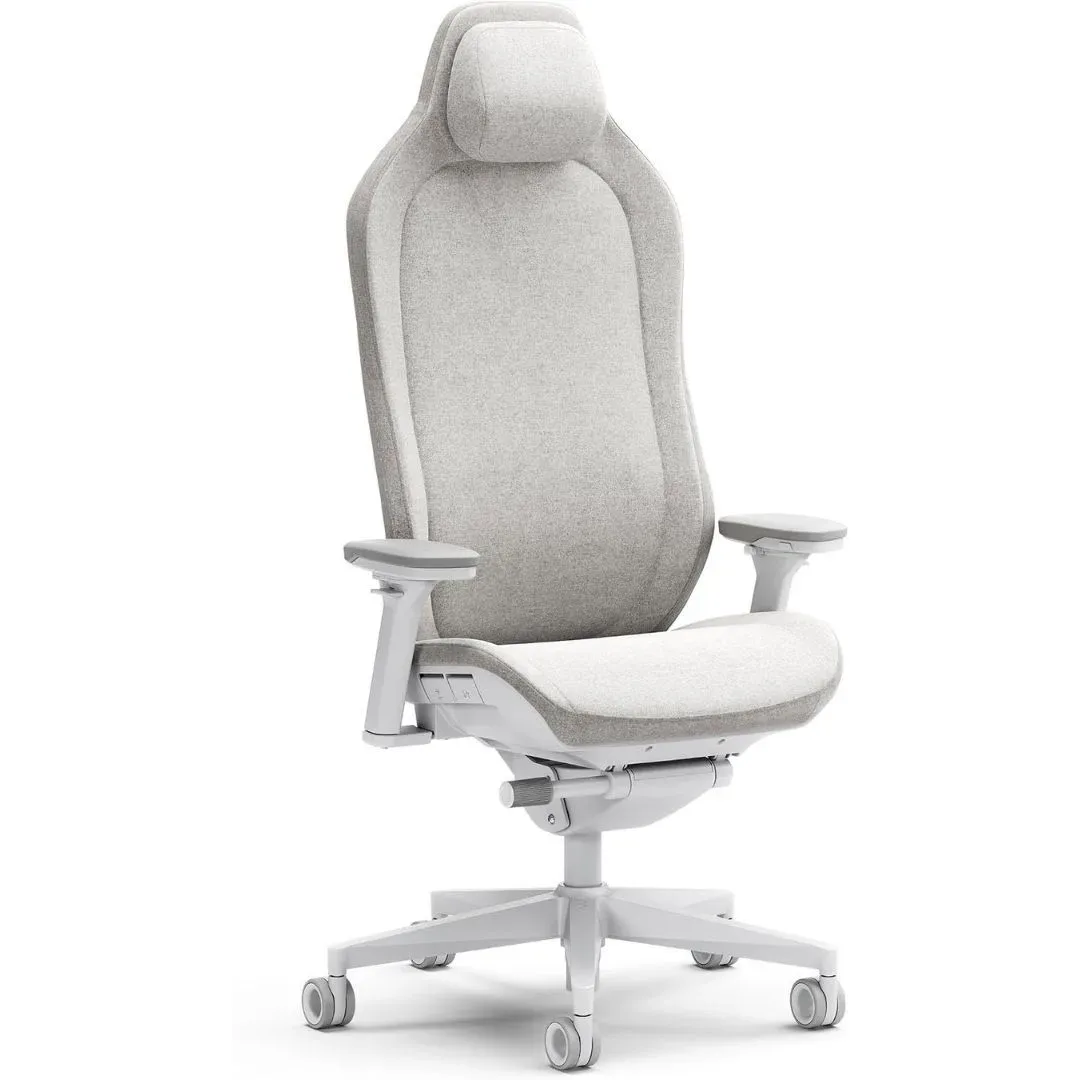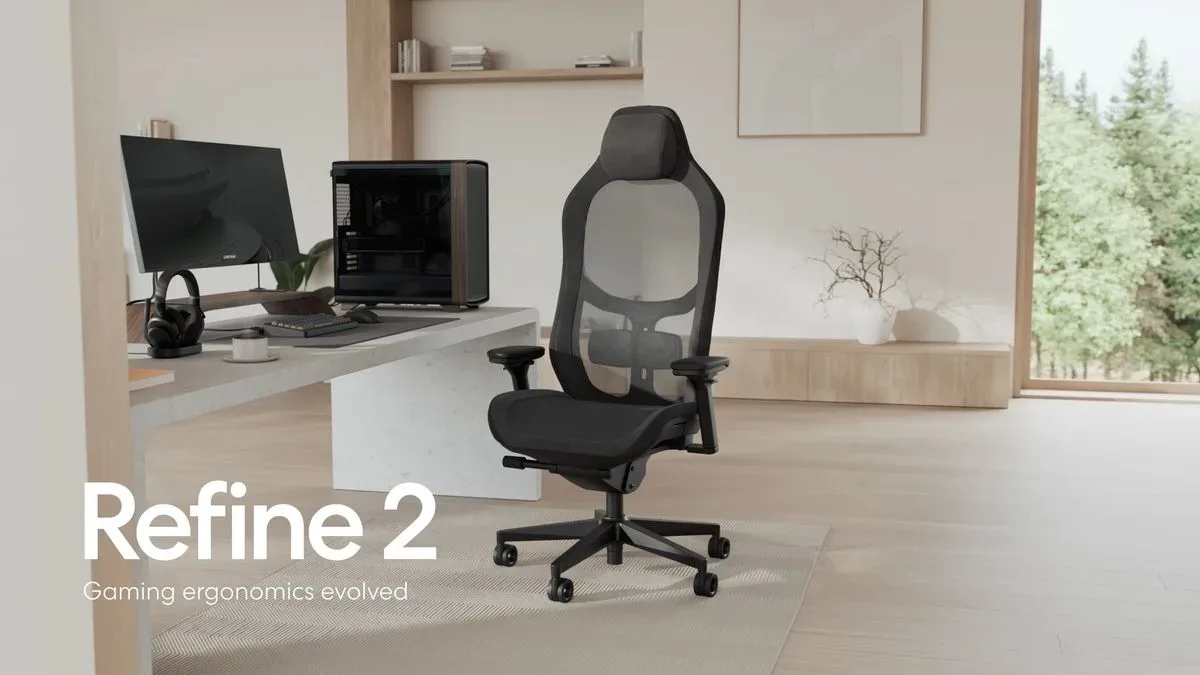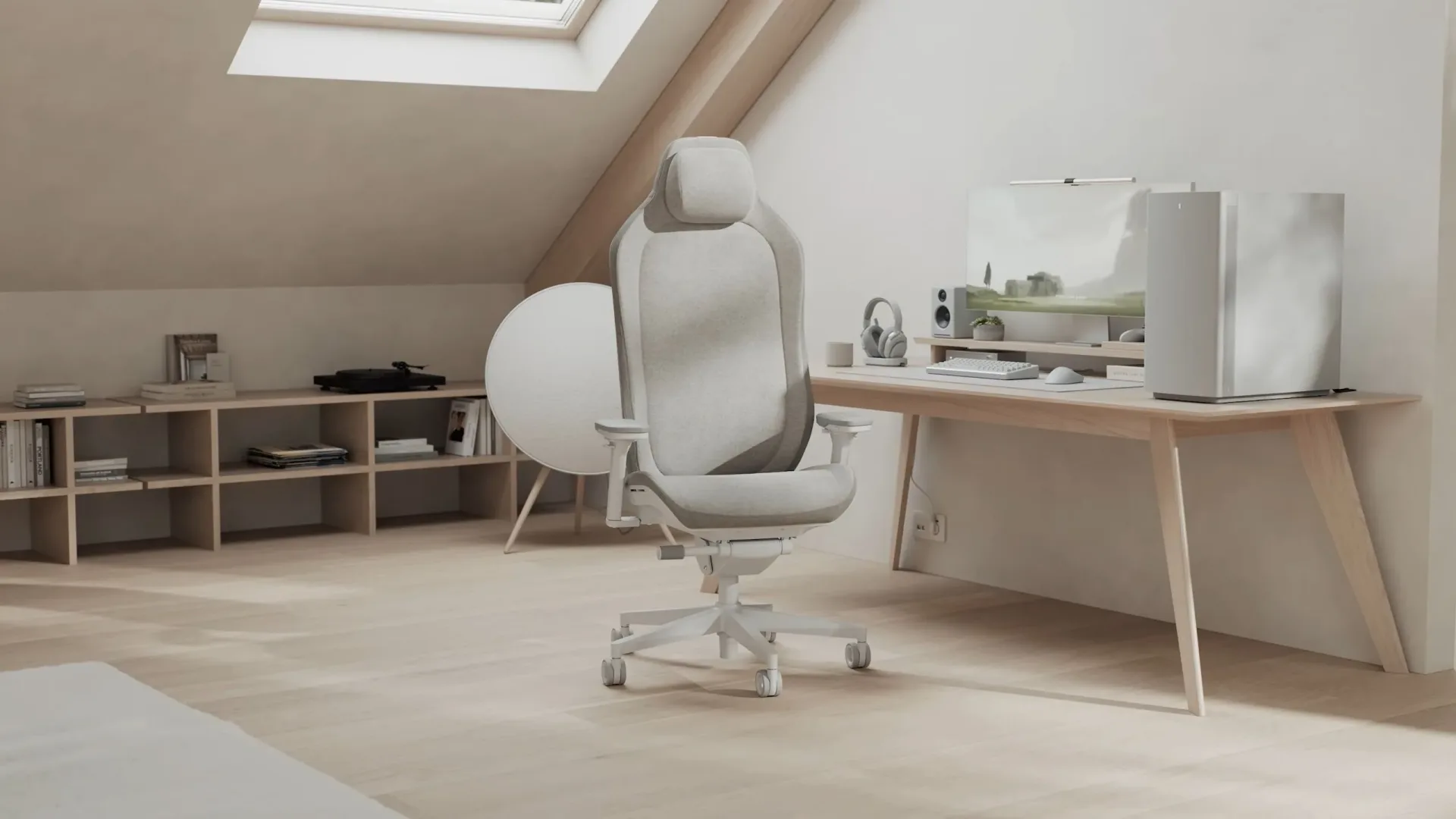
Fractal Design has refreshed its gaming-chair range with the Refine 2, a follow-up to the Refine introduced in 2024. The update keeps the original chair’s restrained, Scandinavian-leaning approach while making a more determined push into ergonomic customization. Its headline addition is a set of hybrid upholstery configurations: mesh on the backrest paired with fabric on the seat.
That new middle ground joins familiar all-mesh and all-fabric options, offered in light and dark colorways. It gives prospective buyers a choice that is more specific than the usual “breathable or soft” chair-shopping fork in the road. A mesh back may appeal to people trying to keep cooler through extended sessions, while a fabric seat may be preferable for those who want a more conventional cushioned sitting surface. The hybrid approach attempts to combine both priorities without asking players to commit entirely to one material.
Every Refine 2 configuration is listed at $639.99 / £499.99. That means Fractal has kept pricing consistent across upholstery choices, but it is still an increase over the original Refine’s $549 launch price. The prior model’s premium full-Alcantara edition, which cost $899 / £799, does not appear to have a direct successor in this refreshed lineup.
A more practical revision than a dramatic redesign
The Refine 2 does not discard the identity of the first chair. Instead, Fractal’s changes target the areas that determine whether a gaming chair becomes a dependable daily desk companion or an expensive clothes rack with lumbar aspirations. The exterior remains relatively understated compared with many aggressively styled gaming seats, although the light fabric version gains brighter white elements in its frame. That makes the pale model a more visible feature in a desk setup than the earlier chair’s quieter presentation.
The meaningful revisions are concentrated in the chair’s support system, its adjustment controls, and the motion of the recline. In particular, the lower-back setup has been revised from one horizontal lumbar panel into two separate pads. Fractal positions the split arrangement as more adaptive. Whether that design suits a particular player will still depend on body shape, posture, desk height, and how often they change positions during the day, but it signals an effort to make support less static.
Gaming chairs often advertise ergonomics with a parade of knobs and levers, then make owners wonder which control just altered their relationship with gravity. Fractal says it has updated the controls for the lumbar support and tilt tension to provide a more unified, tactile adjustment experience. The language is necessarily broad, but the intent is clear: settings should be easier to locate and operate rather than becoming another tiny side quest below the seat.
Lockable armrests address a familiar annoyance
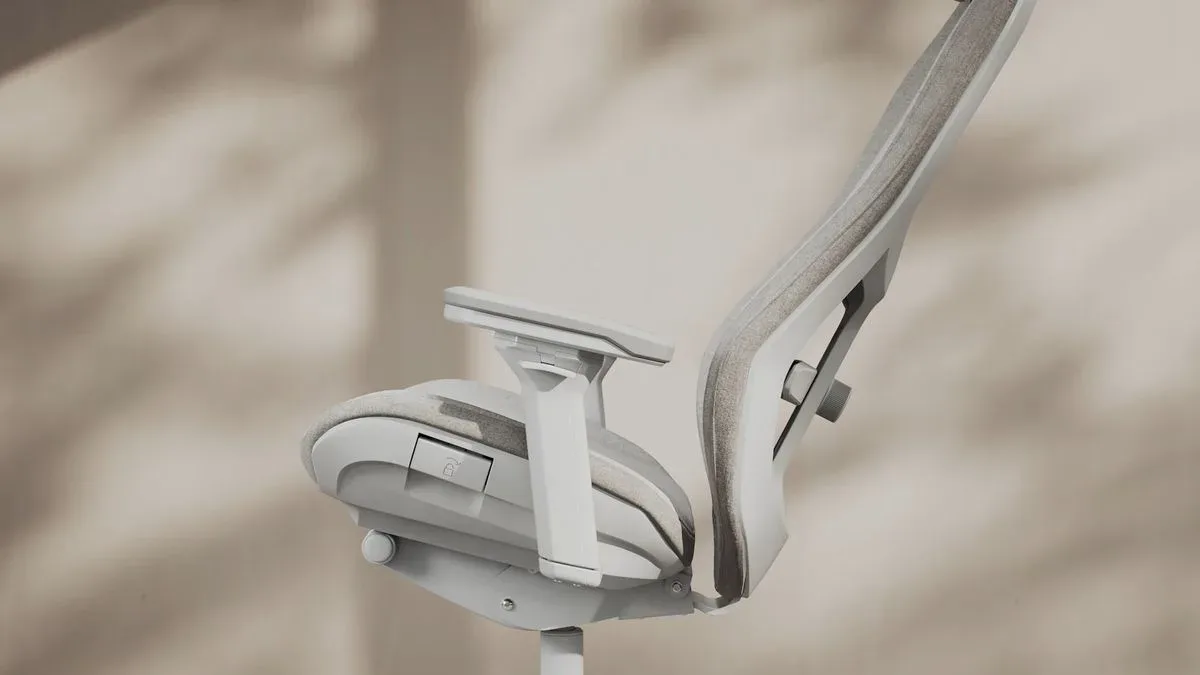
One particularly notable alteration is the inclusion of lockable armrest controls. Adjustable armrests can be enormously useful when dialing in a chair around a keyboard, mouse, controller, or desk. They can also be a source of irritation when they drift sideways or move unexpectedly every time someone rises from the seat. A locking mechanism should help users preserve a preferred placement once they have found it.
That matters because armrest position affects more than convenience. Arms set too high can force shoulders upward; arms set too low may leave the upper body without useful support. Width, depth, and angle also influence whether a chair fits neatly beneath a desk or collides with it. The Refine 2’s lockable controls do not automatically guarantee a perfect setup, of course, but they acknowledge that adjustment is only valuable if it stays adjusted.
Related coverage includes Fractal Refine 2 Gaming Chair Adds Hybrid Upholstery and Synchro-Tilt Controls.
The headrest has also moved to memory foam, with revised controls intended to simplify its positioning. Fractal has expanded its height-adjustment range as well. Headrests can be divisive on task chairs, especially for people who sit upright for mouse-and-keyboard games, but a broader range is welcome when users do want neck support while reclining with a controller, watching a stream, or catching up on PC gaming news such as the latest speculation surrounding StarCraft.
Synchro-tilt is the major movement upgrade
Fractal also says that movement has been smoothed out, especially when reclining. The Refine 2 now uses a synchro-tilt mechanism, a system designed to coordinate the movement of the backrest and seat as a person leans back. This is broadly similar in concept to the mechanism found in the Secretlab Atlas.
The practical appeal of synchro-tilt is that reclining need not feel like the chair is simply tipping backward beneath its occupant. In a well-executed system, the seat and back move in a coordinated way that better maintains support and positioning during the motion. The exact feel will require independent hands-on assessment, and the presence of a feature alone cannot settle questions of comfort or durability. Still, it is a substantial addition on paper, particularly for a chair intended to cover work, gaming, and general desktop use.
Seat-depth adjustment is another ergonomic feature receiving attention. Fractal has extended the range that was already present on the original Refine. This setting lets users alter how far the seat pan extends beneath their thighs, which can be important for avoiding an awkward gap behind the knees or, in the opposite direction, a seat edge that presses too close to them. It is the kind of adjustment that may not command attention in a marketing photo, yet can make a major difference across a long day.
Capacity rises, but the Alcantara edition departs
The Refine 2 raises the chair’s stated weight capacity from 125kg to 135kg. It is an incremental change, but it extends the chair’s intended fit to more users and complements the wider adjustments to the headrest, lumbar system, and seat depth. It also reinforces the sense that this revision is aimed less at chasing a radical new silhouette and more at broadening the chair’s day-to-day usability.
Not every change is an addition. Fans of the first Refine’s high-end full-Alcantara variant will find that the premium option has been retired. At $899 / £799, that model occupied a distinctly luxury niche. The new collection’s unified $639.99 / £499.99 price across mesh, fabric, and hybrid versions makes choosing an upholstery style simpler, but buyers seeking that specific upscale material no longer have an equivalent Refine 2 model to select.
There is a reasonable trade-off in that decision. Standardizing the lineup makes the choices easier to understand: choose light or dark, then choose mesh, fabric, or the hybrid combination. Yet Alcantara has a particular appeal for buyers who wanted their gaming furniture to feel less like office equipment and more like a premium automotive interior. Its disappearance leaves the Refine 2 more streamlined, but less extravagant.
How the Refine 2 fits into the chair market
The Refine 2 arrives in a gaming-furniture market where the boundaries between gaming chair and ergonomic office chair continue to blur. Mesh, adjustable lumbar systems, sliding seat pans, and synchronized recline mechanisms have long been associated with office seating, while gaming brands increasingly present them as essential comfort features rather than specialist extras. Fractal’s product is firmly part of that shift.
Its hybrid model is especially interesting because it avoids treating mesh and fabric as mutually exclusive camps. Full mesh typically emphasizes airflow, while fabric upholstery offers a different surface feel and aesthetic. Pairing a mesh back with a fabric seat recognizes that a person’s back and legs do not necessarily have identical priorities. It is not an entirely unprecedented concept, but it remains unusual enough to distinguish the Refine 2 from many familiar racing-seat-inspired designs.
Buyers should also keep the price increase in view. The Refine 2 is $90 above the original Refine’s stated $549 price in the US. The added hardware and adjustment changes may be meaningful, but value will ultimately depend on how well the chair’s controls, support, materials, and synchro-tilt action hold up in real use. The first Refine earned a 4.5/5 score and spent more than a year as a leading overall gaming-chair recommendation before the LiberNovo Omni displaced it, establishing a high bar for this successor.
For now, the Refine 2 looks like a carefully focused evolution: more upholstery flexibility, more secure armrest adjustment, a revised lumbar design, improved headrest and seat-depth ranges, a higher stated capacity, and a more sophisticated reclining mechanism. It is available now in its mesh, fabric, and hybrid forms. The Alcantara option may be gone, but Fractal is betting that better motion and broader practical fit will matter more than a luxury trim badge.