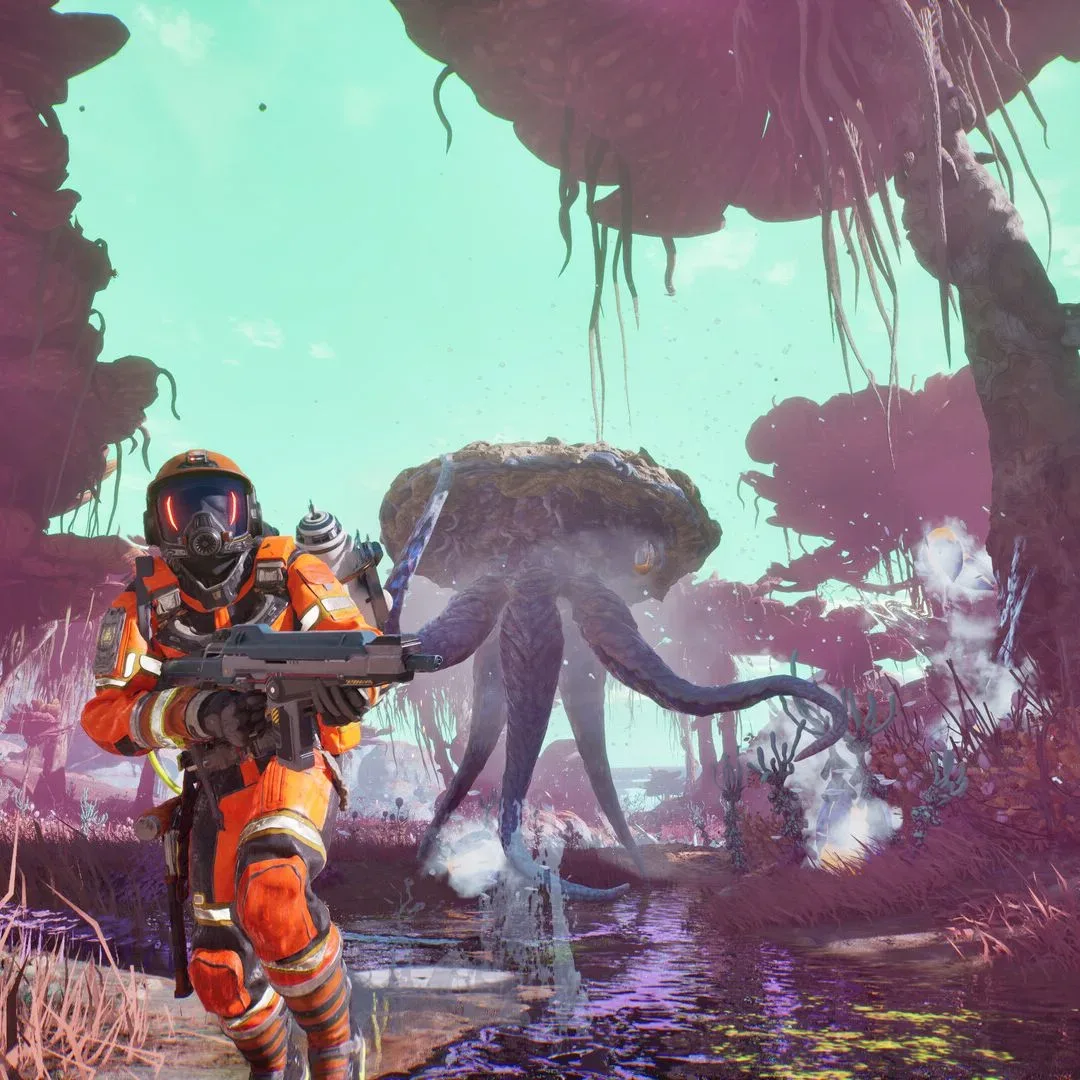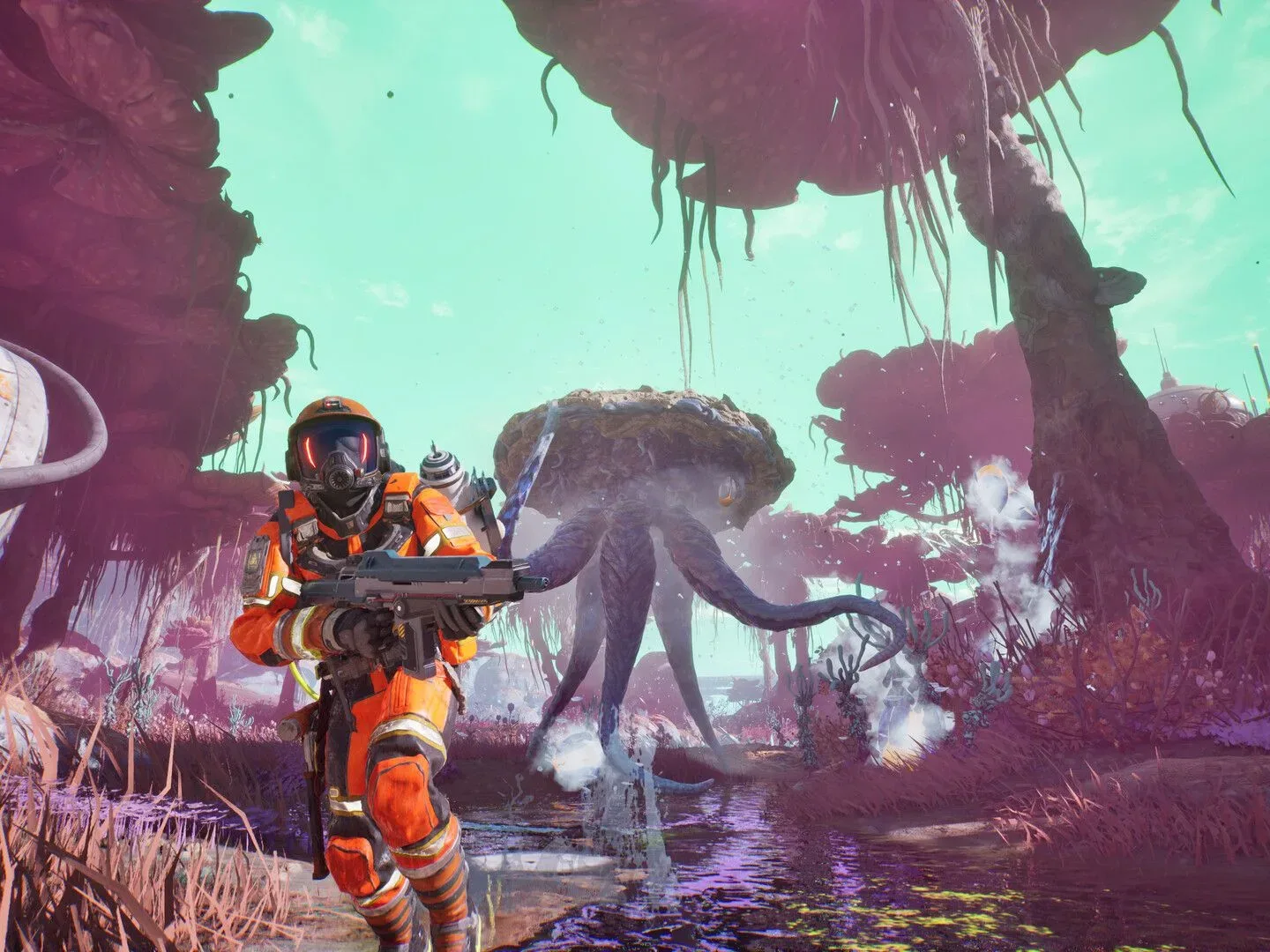
Behaviour Interactive’s Exterminauts is framing the familiar business of mowing down alien hordes as a blue-collar shift in the least ordinary workplace imaginable: an extraplanetary pest-control company. The newly revealed PvE co-op shooter sends its employees across the galaxy to clear dangerous creatures from hostile sites, finish the assigned jobs and, ideally, return home before dinner.
That premise arrives with intentionally heightened corporate-patriotic energy, but the game’s central structure should be recognizable to players of modern squad shooters. Teams push through colorful alien environments, follow HUD markers toward objectives at abandoned installations, manage ammunition and special resources, and fend off swarms while trying not to become another item on the cleanup invoice.
Exterminauts is currently planned for PC, PlayStation 5 and Xbox Series X/S. A release date has not been announced. For a second overview of its galactic pest-control setup, see this Exterminauts report.
A workplace comedy with a very large extermination problem
The game’s sci-fi setting is not simply a grim war against insects. Its tone leans into the absurdity of ordinary workers clocking in for exceptionally hazardous labor. Rather than elite soldiers defending civilization with solemn speeches, players are presented as employees doing pest-control work on a galactic scale. The joke is that the job description may be mundane, but the daily hazards are decidedly not.
For more context, explore Steven Spielberg’s Disclosure Day Lands on Peacock Oct. 9 After $241 Million Global Run.
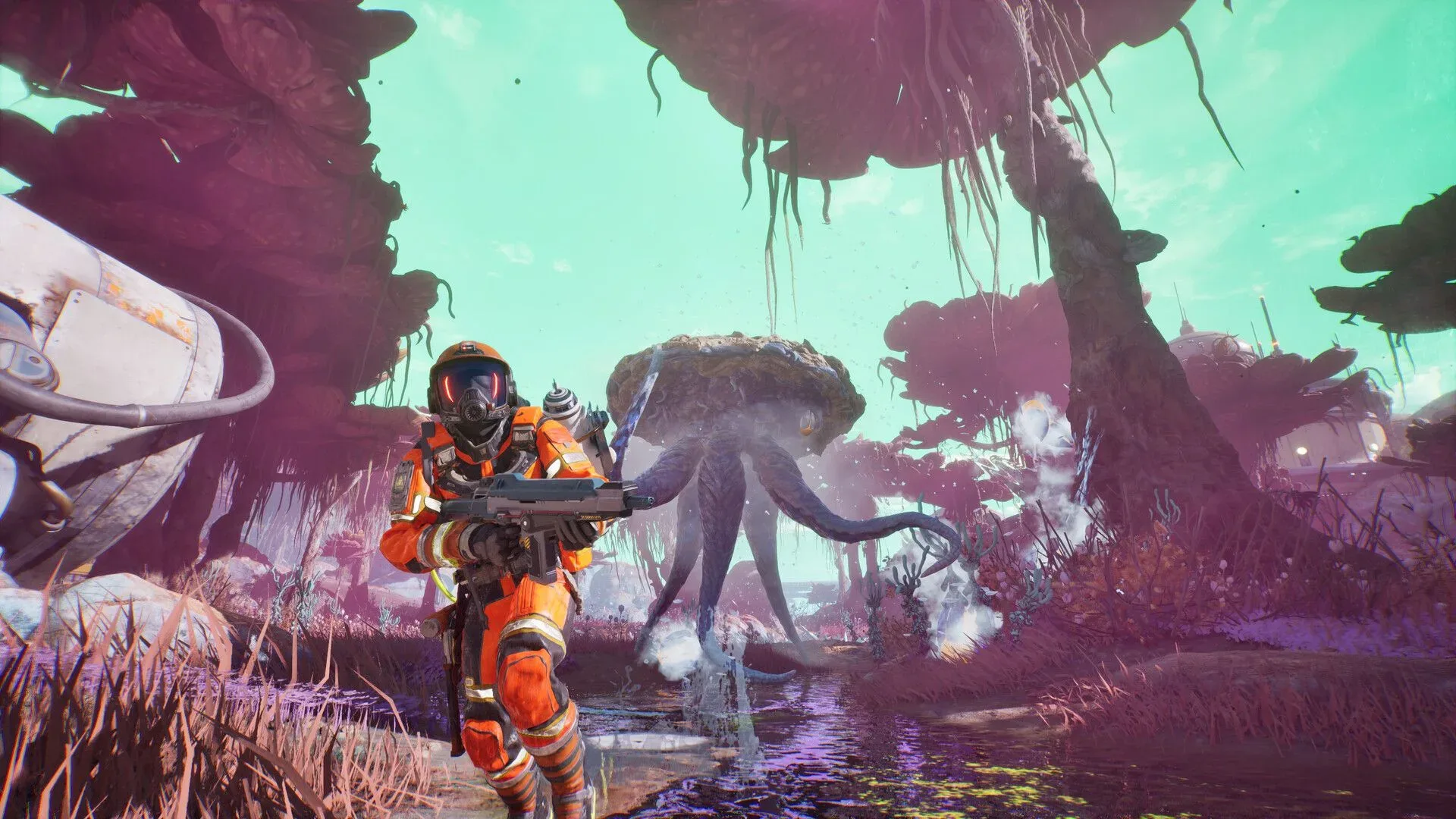
That framing also separates the creatures from more literal insect horror. The enemies shown in the available demo information were described less as enlarged real-world ants, roaches or other crawling pests and more as grotesque alien beasts. There are airborne threats as well as ground-based targets, giving squads reasons to watch the skies while moving between tasks.
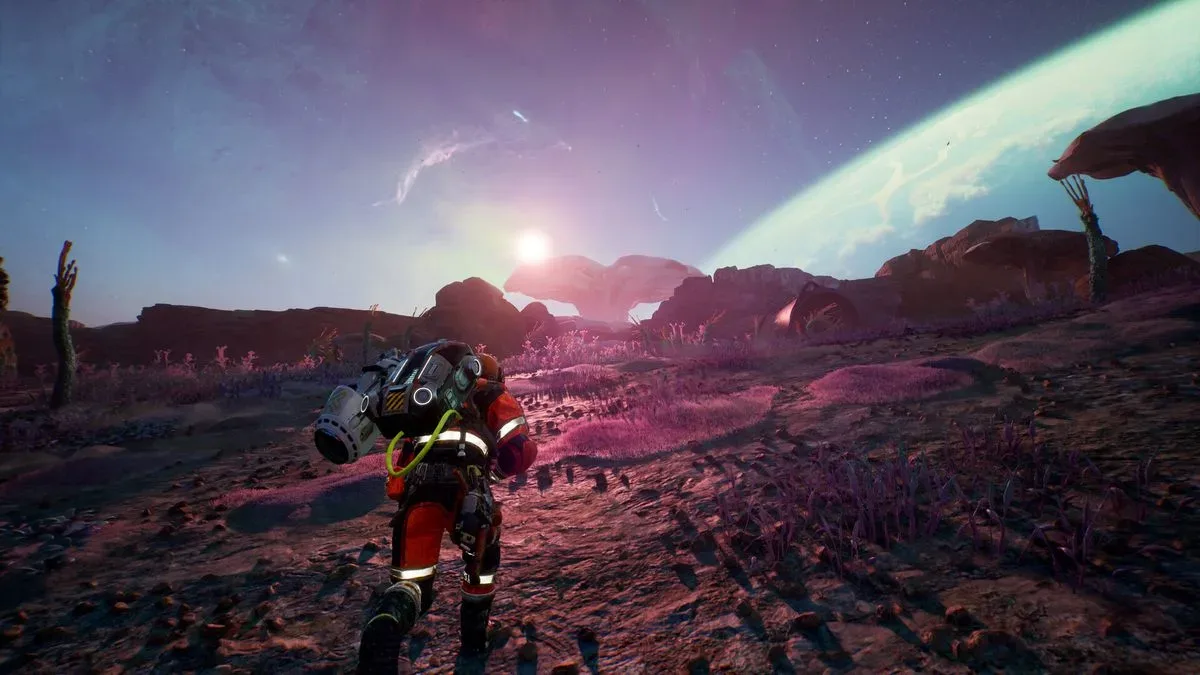
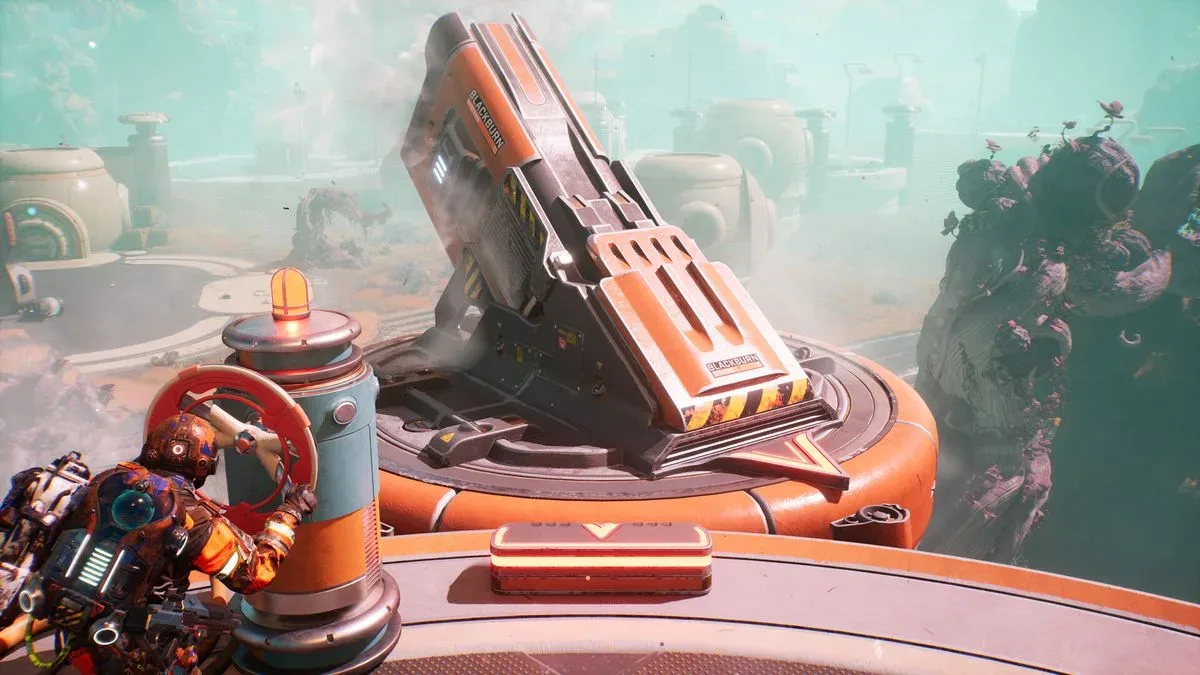
The environments are another important piece of the identity. One showcased planet combines broad red-dirt terrain with striking patches of alien plants and wildlife. Its abandoned bases and industrial structures create destinations for the team’s assignments, while the vivid presentation keeps the action from sinking into a uniformly brown or metallic military aesthetic. Exterminauts appears to want its bug slaughter to be cartoonishly messy and colorful rather than relentlessly dour.
Objectives matter, even when the horde is louder
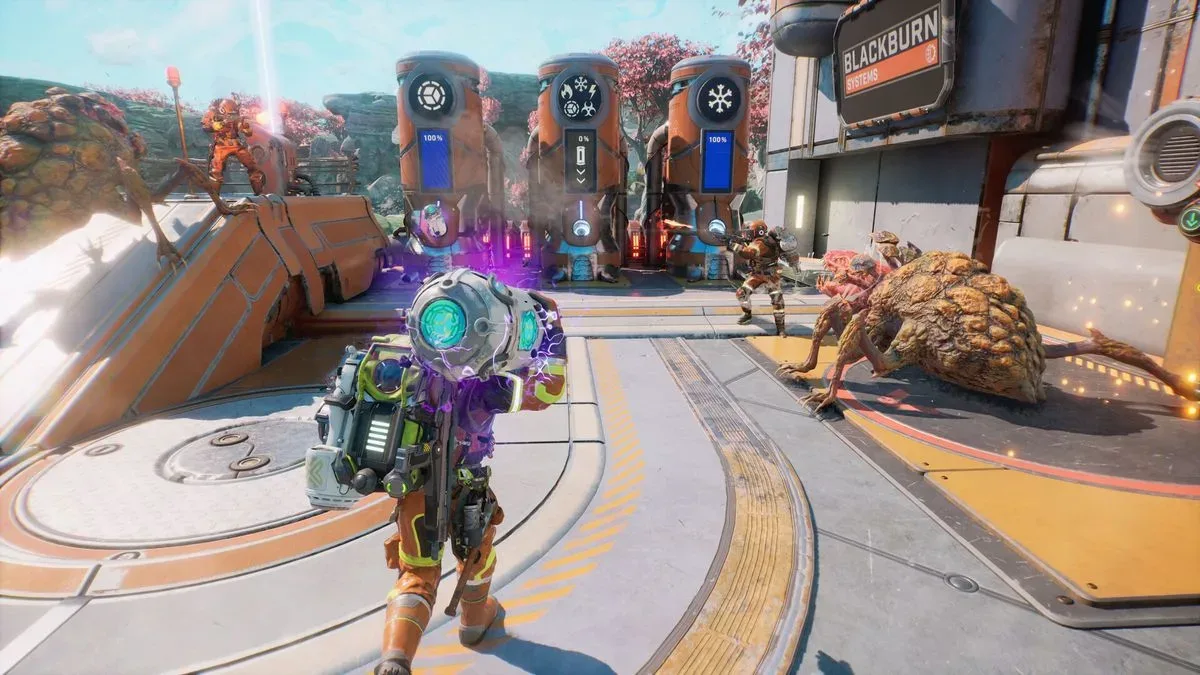
Mission play revolves around advancing toward points identified through the HUD and completing smaller tasks at those locations. The exact range of mission types has not been fully outlined, but the demonstrated examples included interacting with old control panels and climbing a substantial metal structure to operate a valve. Those practical jobs happen under pressure from enemy attacks, creating the expected split in squad priorities: somebody needs to make progress, while somebody else needs to keep the monsters from overrunning the area.
That division of labor is a core strength of co-op PvE shooters when it works. Players who love pursuit and combat can focus on thinning the swarm, while teammates concentrate on activating machinery, reaching the next checkpoint or handling whatever objective requires attention. The concept is simple, but it can generate useful chaos when the team has limited ammunition, several attack angles to cover and a time-sensitive interaction underway.
Exterminauts also appears willing to let the workplace satire peek through the competitive edges of cooperation. Teammates may be on the same payroll, but resource stockpiles are not guaranteed to be shared politely. Ammo and grenade caches placed around a map can become a race, especially if a player reaches one after allies have already emptied it. It is cooperative survival with a small but believable dose of office politics: everyone wants the squad to succeed, yet everyone also wants enough supplies to look good on the end-of-shift report.
Elemental heavy weapons and bug-goo economy
Each character is said to carry a standard weapon alongside a large heavy weapon, with those heavier tools differentiated by elemental properties. In the showcased loadout, a charged heavy attack created a wide icy blast capable of freezing enemies caught inside its range. That suggests players will be encouraged to balance dependable gunfire with more dramatic power attacks that can reshape an encounter when a crowd becomes too dense.
Special power is not free. Heavy abilities are replenished with a resource harvested from defeated creatures: bug goo. That enemy-derived economy could make target selection and positioning more meaningful than simply firing until everything stops moving. If the strongest attacks depend on materials acquired through kills, squads may be pushed to stay active and aggressive rather than endlessly retreating.
Regular ammunition is replenished through stockpiles found in the environment. Combined with the goo system, this establishes two distinct resource loops. Bullets and grenades support moment-to-moment survival, while the residue from destroyed enemies helps restore the flashier abilities. The eventual balance will be crucial. Generous resupply can preserve the game’s breezy arcade appeal; tighter scarcity could give its casual workplace premise a more frantic edge. At this stage, there is not enough information to know where Exterminauts will ultimately land.
A support role that can still dominate the kill board
One demonstrated character choice was a healer whose signature ability deploys first-aid drones on the battlefield. That is a useful indicator that the game is not built exclusively around direct damage specialists. Players who prefer helping teammates recover may have a defined role, even while still carrying conventional and heavy weapons capable of contributing heavily to the fight.
The available session details also point to an end-of-match recognition system, including an Employee of the Shift distinction tied to performance such as kills and deaths. In that particular demo, the support character reportedly earned the top score with the most eliminations and the fewest deaths, without being downed at all. It is only one session, not a measurement of final balance, but it does hint that Exterminauts may allow a healing-focused pick to remain dangerous instead of being reduced to passive maintenance.
That flexibility matters for a game inviting squads with mixed experience levels. A player can bring medical support, use drones to aid the group, then unleash a freezing explosion into a cluster of winged aliens. It is a broad power fantasy rather than a strict simulation of tactical roles, and it suits a game where pest control apparently includes explosives, frost effects and industrial-scale quantities of ammunition.
The generative-AI voice issue remains a real concern
One notable caveat accompanies the otherwise playful art direction and combat pitch. Character barks in the current version were made with generative AI. Behaviour Interactive has indicated that these temporary lines will be replaced by human voices for launch, but no release date has been set and the final implementation has not been detailed.
This is more than a minor production footnote because disposable, frequent dialogue is often central to the personality of a squad shooter. Battle chatter, panic reactions and silly workplace slogans can make a co-op game memorable over repeated matches. If Exterminauts is selling an exaggerated corporate pest-control universe, the quality and character of those voices will help determine whether the comedy lands. The stated intention to move to human performers is encouraging, but it leaves an obvious point to watch as development continues.
What Exterminauts needs to prove before launch
The game already has a readable elevator pitch: assemble a crew, take on an interstellar extermination contract and use guns, grenades, special abilities and elemental heavy weapons to survive. The reported demo also suggests responsive, energetic shooting and an approachable tone rather than a punishingly serious tactical exercise. Its colorful worlds and less literal alien designs may be particularly appealing to players who are happy to fight monsters but would rather avoid hyper-realistic oversized bugs.
Still, the long-term test for any co-op shooter is variety. Players will need enough mission types, enemy behaviors, maps, loadout choices and escalating complications to make another shift feel meaningfully different from the previous one. The small objective interactions described so far establish a functional foundation, yet they do not answer how broad the mission pool will be, how progression works, or how aggressively Exterminauts will challenge coordinated teams.
For now, Behaviour Interactive’s project looks like a lively PvE shooter with a knowingly silly professional premise and the right ingredients for hectic group play. Its confirmed destinations are PC, PS5 and Xbox Series X/S, its launch timing remains TBC, and its promised switch away from AI-generated character barks is among the most important details still to be verified. Until then, the company’s newest recruits can at least expect one clear workplace rule: if it has too many legs, it is probably on the schedule for removal.