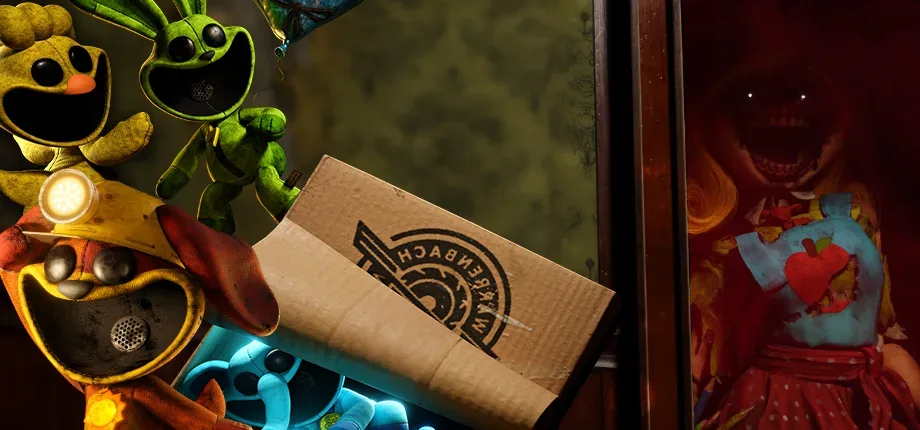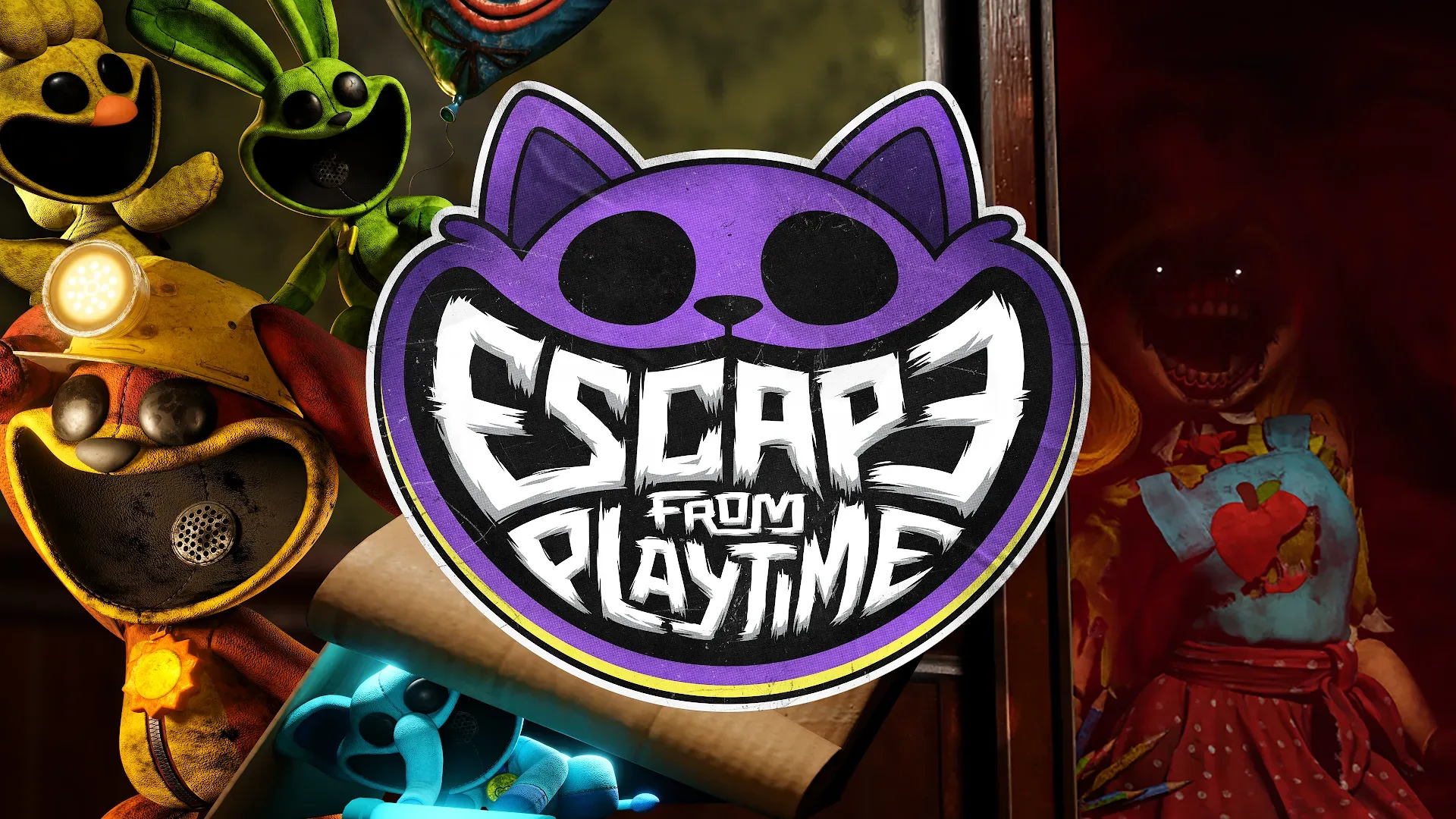
Escape From Playtime, the two-to-eight-player co-op survival horror adventure from Mob Entertainment, is part of Steam Scream V Fest with a limited-time discount running through November 2. Players who have already downloaded the free Poppy Playtime: Chapter 1 can receive an additional 10% discount.
The promotion offers a lower-cost entry point for players curious about the co-op branch of the Poppy Playtime universe. No sale price was specified, so anyone interested should check the Steam listing before the event deadline for the current regional price and the applicable Chapter 1 reduction.
A co-op escape through Playtime Co.
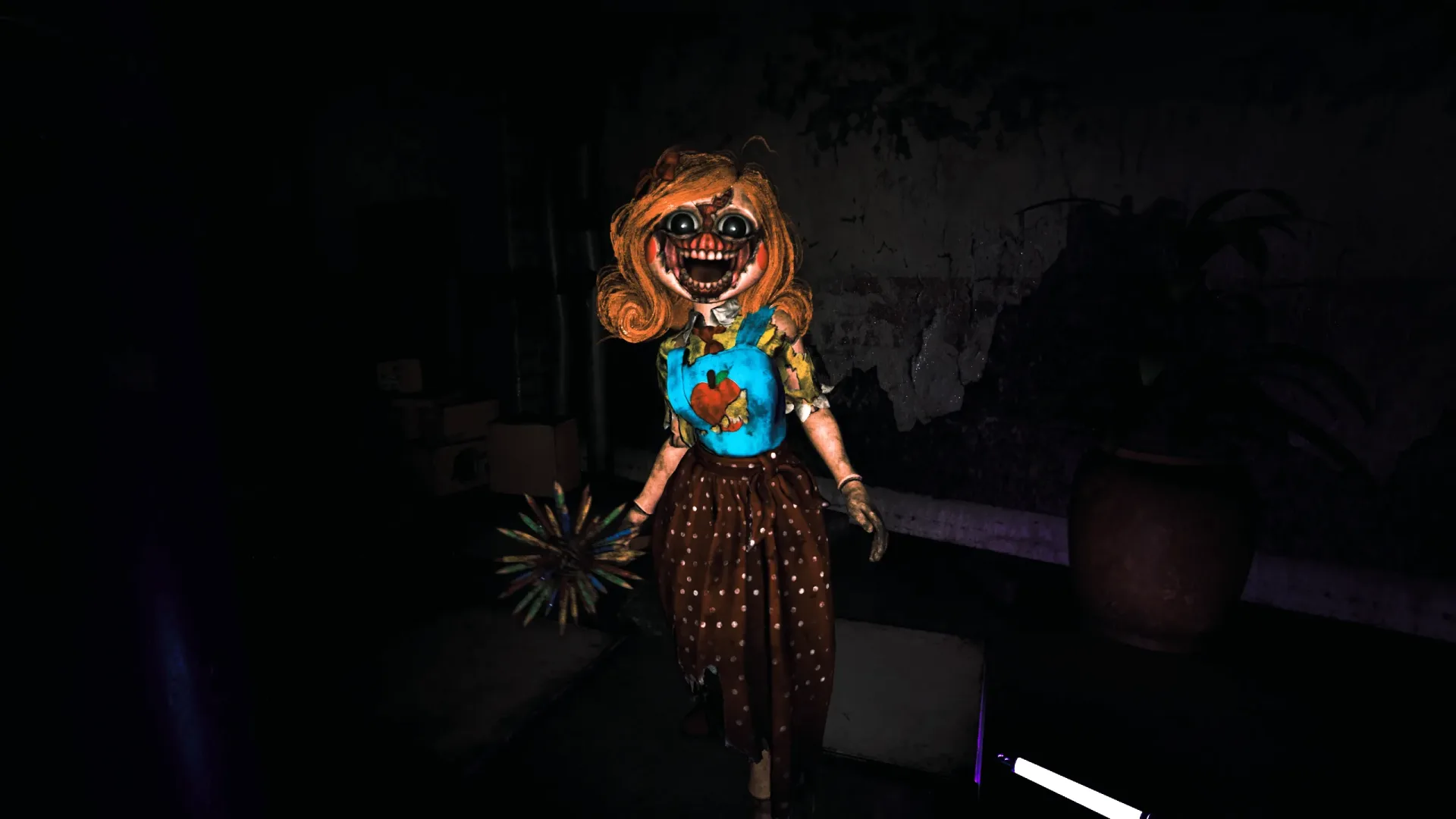
Escape From Playtime takes the Smiling Critters into the abandoned Playtime Co. factory, where survival depends on working with anywhere from one partner to seven additional players. The basic objective is not simply to outlast the factory’s threats. Teams scavenge supplies and move building materials while following directions from a mysterious Voice that offers freedom and a home.
That setup places cooperation at the center of the horror. A full party can divide jobs, but it also has more people to organize while danger closes in. A smaller group may be easier to coordinate, yet has fewer hands available for carrying materials, searching rooms and watching for threats. The game supports both ends of that spectrum, from a two-person run to a group of eight.
Its factory setting also connects the game to the broader Poppy Playtime story. Escape From Playtime is described as canonical, meaning its events and details are intended to belong to the franchise’s established narrative rather than functioning as a detached spin-off. Players who survive a run can use the Perm-A-Lounge computer to review progress, inspect rewards and investigate connections to the wider story.
What procedural generation means for each run
Escape From Playtime uses procedurally generated environments. In practical terms, the environments change from run to run rather than presenting one fixed arrangement every time. The supplied details do not specify exactly which elements are randomized, but the central implication is clear: a team cannot rely entirely on memorizing one route through the factory.
That matters especially in a survival-horror game built around scavenging, movement and hiding. Players may need to find supplies and building materials while reassessing their route, deciding when to advance and identifying potential hiding places as the layout changes. Familiarity with the game’s goals can still help, but prior knowledge of a single run is not guaranteed to solve the next one.
The required actions include crawling, climbing, solving puzzles and squeezing into hiding spots. Those are different kinds of pressure. Puzzles can slow a group down at precisely the moment it wants to move; climbing and crawling can make positioning matter; hiding creates a tense choice between staying quiet and making progress. The rejected toys pursuing the team are the reason those choices have consequences.
Related coverage includes Escape From Playtime Joins Steam Scream V Fest Sale Through November 2.
For horror fans who prefer uncertainty over a fully rehearsed route, changing environments are likely to be a major part of the appeal. For teams that value efficient communication, they may also make a clear division of responsibilities useful: one player can focus on a puzzle or materials while others stay alert, provided the group does not scatter so far that it loses the ability to regroup when necessary.
Proximity voice chat turns communication into a risk
One of Escape From Playtime’s more interesting systems is proximity voice chat. Unlike a voice channel in which every teammate hears everyone at the same volume regardless of location, proximity chat makes conversation dependent on characters being near one another. The game adds a horror-specific twist: plans can be heard by the wrong ears.
That means voice communication is not merely a convenience. It is part of the risk calculation. Players may need to decide how much to say aloud while moving through dangerous areas, or whether a quick warning is worth revealing the group’s presence. The result can turn otherwise ordinary co-op chatter into another source of tension.
There is a practical social side, too. Large groups can become noisy even before a game makes sound strategically important. Teams may get more value from brief, direct callouts: identify a threat, name a location or state what material is needed. Players do not need an elaborate role-playing plan to benefit from being concise; the premise itself makes unnecessary noise potentially costly.
Of course, proximity chat also creates the sort of unpredictable group moments that co-op horror is built for: a teammate disappears around a corner, a warning arrives too late, or a carefully discussed plan becomes suddenly irrelevant. That contrast between collaboration and panic distinguishes multiplayer survival horror from a solo pursuit game. For another perspective on horror games that embrace discomfort rather than neat genre boundaries, see this look at Hellraiser: Revival’s body-horror approach.
How the Poppy Playtime: Chapter 1 bonus works
The additional discount is tied to having downloaded Poppy Playtime: Chapter 1, which is free. The offer is specifically described as an extra 10% reduction for players who have already downloaded that chapter. The safest approach is to make sure Chapter 1 is in the Steam library, then verify the Escape From Playtime store page displays the expected discount before completing a purchase.
Players should also keep the timing in mind. The Steam Scream V Fest sale and the Chapter 1-related reduction are stated to run through November 2. Sales can be deadline-sensitive, so leaving a purchase decision until after the event ends risks missing the promotion. The available information does not establish an exact time of day for the cutoff, nor does it provide a final price.
Who the sale is most relevant to
The discount is most directly relevant to existing Poppy Playtime players who want a cooperative experience set inside the same fictional world. The story links available through the Perm-A-Lounge, the Smiling Critters setting and the canonical designation all give franchise followers reasons to pay attention beyond the basic sale.
It may also appeal to established friend groups looking for survival horror that accommodates a wide range of party sizes. Supporting two to eight players means a duo is not required to fill a large lobby, while a bigger group is not forced to leave friends out. The flip side is that the game’s communication and material-hauling systems suggest a team will need at least some willingness to coordinate.
Those who prefer a predictable, fixed campaign should weigh the procedural structure carefully. Repeating runs in changing environments is a feature for players who enjoy adapting, but it may not suit everyone. Likewise, proximity voice chat is an atmospheric mechanic, not just a technical checkbox: people who want to preserve the intended tension may find it valuable, while groups seeking a quieter or more casual horror session should understand that communication itself can feed into the game’s danger.
Key details at a glance
- Game: Escape From Playtime
- Developer: Mob Entertainment
- Event: Steam Scream V Fest
- Sale window: Through November 2
- Extra offer: An additional 10% discount for players who have downloaded the free Poppy Playtime: Chapter 1
- Players: Two to eight
- Core structure: Co-op survival horror in procedurally generated factory environments
- Major mechanics: Scavenging, moving building materials, puzzles, crawling, climbing, hiding and proximity voice chat
- Story connection: Canonical to the wider Poppy Playtime universe, with progress and lore connections accessed through the Perm-A-Lounge computer after a successful run
For players who have been holding out for a promotion, the combination of the Steam event discount and the Chapter 1 bonus makes the period through November 2 the relevant window. What the game asks of a group is equally clear: gather what the factory demands, stay coordinated, and try not to let the toys hear the plan.