Epic Games is widening the lanes for the most essential multiplayer activity that is not technically multiplayer at all: talking over the game while someone rummages through menus, forgets to ready up, or insists they were absolutely one shot from winning.
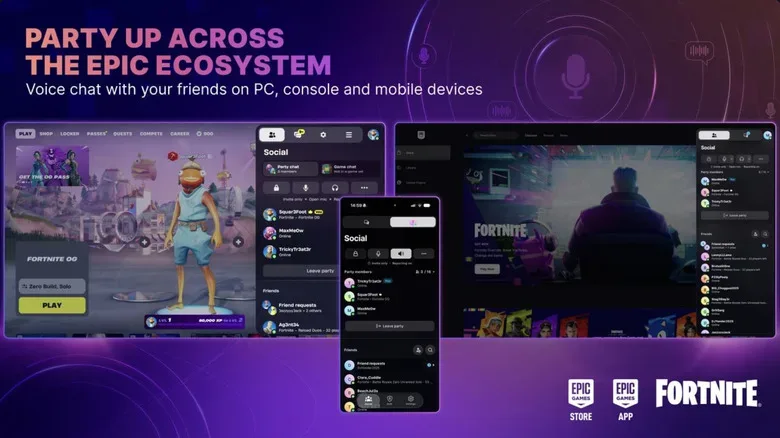
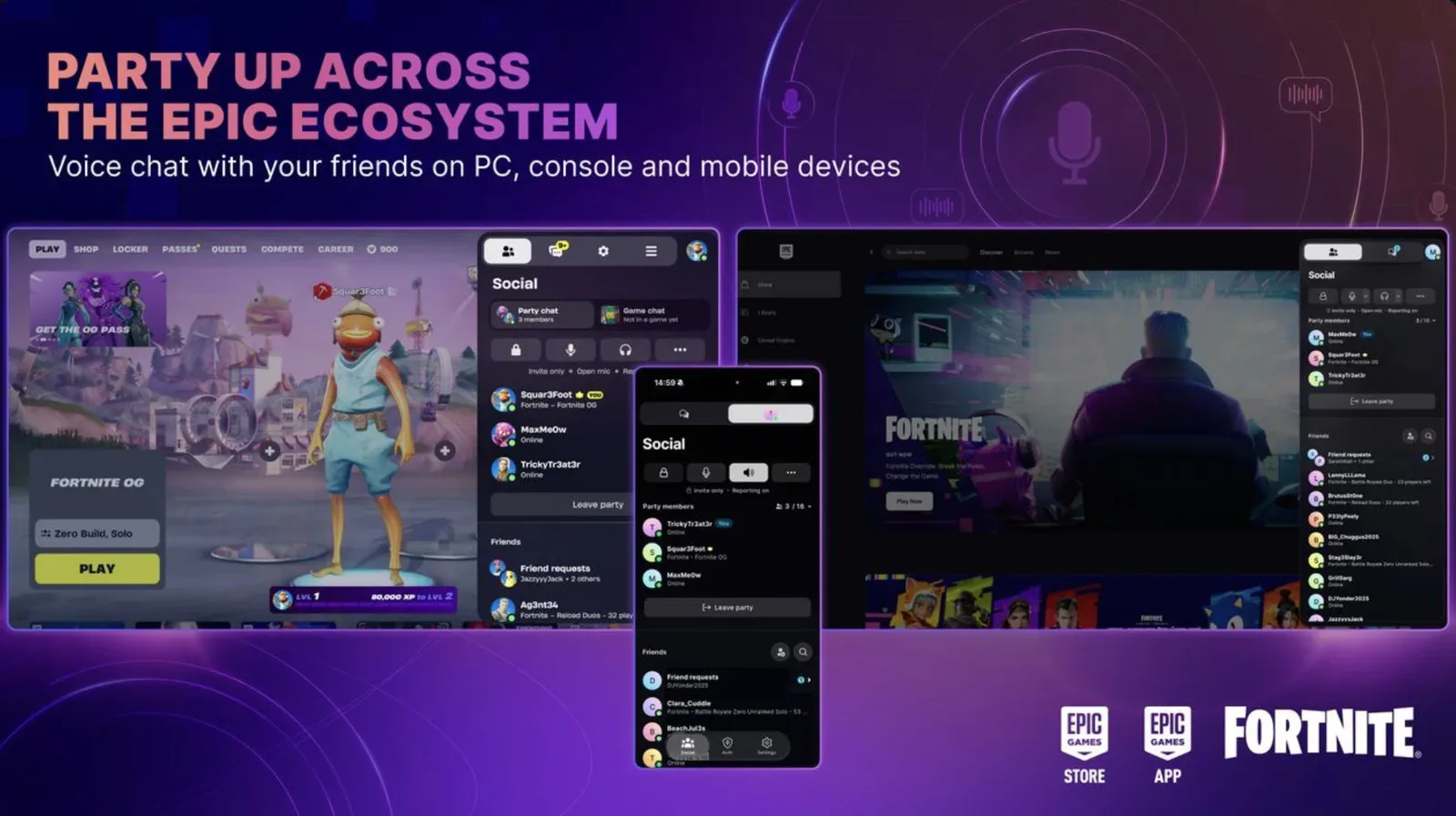
The company’s new Epic Parties feature is designed to provide voice chat across Fortnite, the Epic Games Store and the Epic Games app. Its notable wrinkle is continuity. A player can begin a voice conversation in the Epic app, then carry that chat over when entering a Fortnite match rather than treating the game, store and app as separate social islands.
Epic Parties is also cross-platform, allowing people using different hardware to communicate in the same party. The chat is meant to remain active in the background on mobile and while a player is using other games from the Epic Games Store. In Fortnite, accepting an Epic Party invitation will automatically place participants together in the same lobby.
It is a feature built around a very modern truth: friends frequently gather before they know exactly what they will play. The actual destination might be Fortnite. It might be a game in a library. It might be 20 minutes of indecisive conversation followed by one person saying they have to leave. Epic Parties aims to keep the social layer intact through all of those transitions.
One party, several Epic destinations
The core idea behind Epic Parties is not simply that Fortnite has voice chat. Voice communications in and around online games are hardly new. Instead, the feature connects three pieces of Epic’s ecosystem: Fortnite itself, the Epic Games Store and the Epic Games app.
That means voice chat can begin before a match starts and need not be discarded as a player changes where they are interacting with Epic’s services. A conversation started in the app can be transferred as the group moves into Fortnite. For players whose gaming plans regularly involve swapping between mobile, desktop storefronts and game lobbies, that handoff is the important detail.
There is a practical social advantage in removing the tiny chores around group play. When every platform, launcher and game treats conversation as a fresh start, friends must recreate the party repeatedly: make a call, send another invite, locate the right lobby, explain who is already there and wait while someone adjusts a setting. None of those actions is difficult in isolation, but together they can turn a quick session into an administrative side quest.
Epic’s approach places the party higher than the individual game session. In that model, the group is the stable unit while the software, device or Fortnite lobby becomes the place the group happens to visit.
Related coverage includes Epic Parties Adds Cross-Platform Voice Chat Across Fortnite, Store and App.
Cross-platform chat is the headline
Epic Parties supports communication across hardware, so party members do not need to be using the same platform to speak with one another. That matters for Fortnite in particular, where groups often span more than one kind of device. It also means the company is presenting Epic Parties as a broader ecosystem feature rather than a tool confined to one version of one game.
The background behavior adds another layer. On mobile, a chat can continue in the background. The same is true while playing other titles through the Epic Games Store. In plain terms, the voice party is intended to persist even when somebody is not staring at the same screen or doing the same thing as the rest of the group.
That flexibility fits the way multiplayer groups actually operate. One person may be launching a game while another is browsing their library. A third may be on mobile, attempting to coordinate the evening while supposedly doing something else. A persistent party can let those people remain in contact without requiring every member to reach the same exact menu at the same exact moment.
It does not eliminate the eternal question of what to play, of course. No voice feature has yet defeated the group chat that spends half an hour voting between three games before defaulting to Fortnite. But it can at least make the debate feel like one ongoing conversation rather than a string of disconnected calls.
Fortnite lobby placement removes a familiar friction point
Within Fortnite, Epic Parties also handles a common logistical task automatically. Players who accept an Epic Party invite are placed into the same Fortnite lobby when they are in the game.
That detail is modest on paper but central to the rhythm of casual squad play. A voice party and an in-game party are often treated as separate things, which can produce the classic multiplayer scene: everyone can hear one another, yet half the group is somehow still in another lobby. Automatic lobby placement ties the social invitation more closely to the game’s immediate gathering space.
For players, that should make an invite more legible. Accepting it is not merely agreeing to a call; in Fortnite, it also brings the player to the same lobby as the people who invited them. The feature does not promise to settle mode selection, squad strategy or who gets blamed for a dropped match, but it targets the step before all of that: getting everyone into the same place.
Built on Epic’s existing text-chat rollout
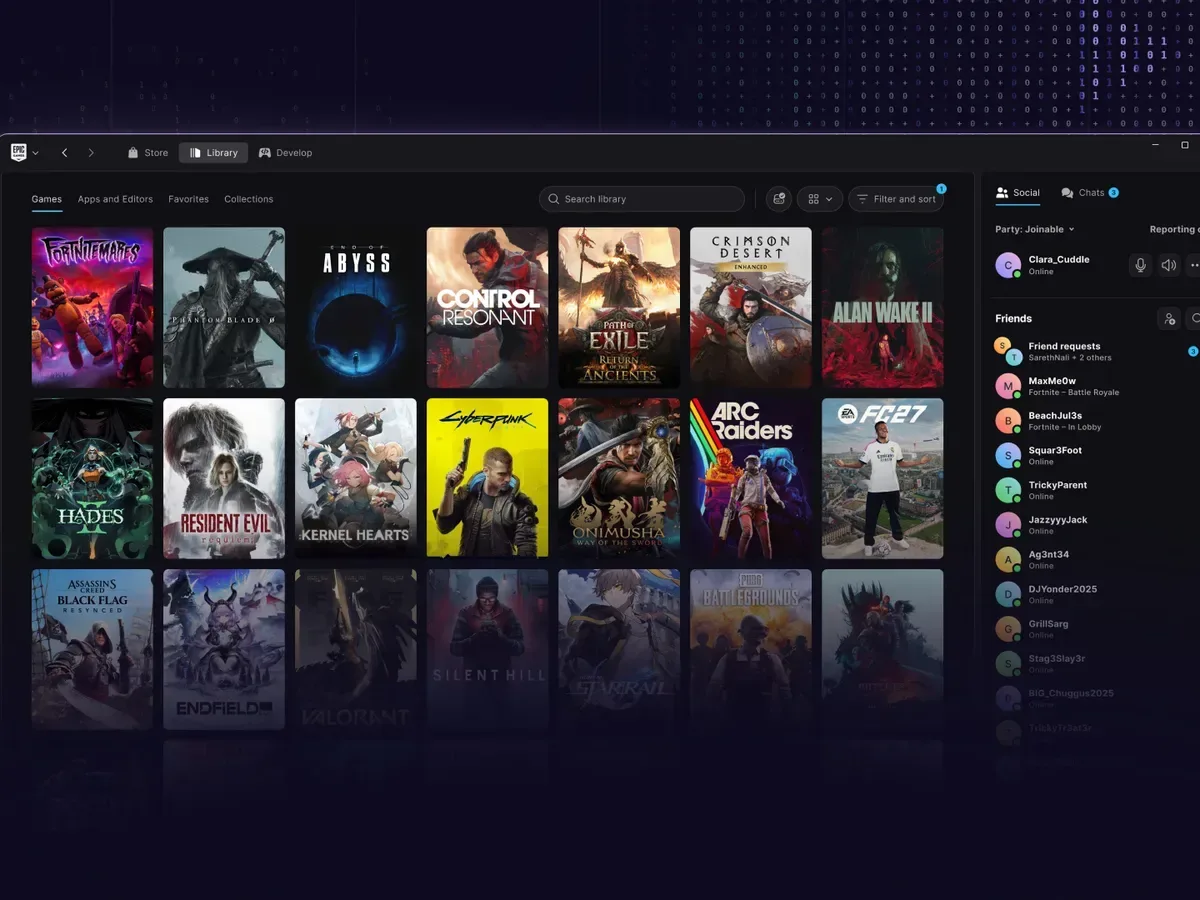
Epic Parties extends communication tools Epic began rolling out last year, when text chat arrived across its services. Players can invite friends into a party from their friends list, while an existing text conversation includes a Start Party button that moves the chat into voice.
The path from text to voice is a sensible one. Text is useful for a quick check-in, a link, a plan or the classic “you on?” message. Voice tends to take over when a group is actively arranging a session or playing together. Putting a voice-party control directly in the text-chat window connects those two stages without demanding that players hunt through separate screens.
It also frames Epic’s communication features as a connected system rather than a collection of isolated tools. Friends lists supply the people. Text chat starts the conversation. Epic Parties can turn it into voice. Fortnite’s lobby system brings the accepted party together when players enter the game. The Epic Games Store and Epic Games app give that conversation places to continue outside a Fortnite match.
That sequence may sound obvious, which is generally a compliment for social software. Good party tools are often the ones that feel unremarkable after they are working. The player should spend less time thinking about which service is carrying the call and more time talking to friends, coordinating a drop, or hearing the exact moment a teammate realizes they landed alone.
Why the ecosystem angle matters
Fortnite remains the best-known element in this arrangement, but Epic Parties deliberately reaches beyond it. Including the Epic Games Store and Epic Games app makes the social feature relevant before, during and after a Fortnite session, as well as while people are playing other Epic Games Store titles.
That is a different proposition from a game-specific voice channel. It is closer to a shared room that follows a group around Epic’s services. The promise is continuity: start in one place, shift to another, keep the conversation alive. The company has not positioned Epic Parties as a replacement for every other communication service players may use, nor does this rollout erase the many existing ways friends can coordinate online. What it does add is a native option that is tied directly to Epic accounts, friends lists and Fortnite lobbies.
For the broader culture of multiplayer gaming, the update lands on a problem players know well. The games may be cross-platform, but the social tools can still be fragmented. A party might involve a console player, a mobile player and someone at a PC storefront, with each person arriving through a different doorway. Epic Parties is meant to make the conversation less dependent on everyone entering through the same one.
There is also a more human benefit to reducing setup friction. The best group sessions often begin loosely: somebody opens an app, another replies from a phone, a third joins once their download finishes. Systems that keep those people connected make the gathering feel less formal and more like friends drifting into the same room. For a spirited reminder that multiplayer logistics have always had their own bizarre social code, see The Unwritten Rules of Couch Multiplayer, Now Written Down.
What players can expect from Epic Parties
- Voice chat across platforms: Party members can communicate even when using different hardware.
- Support across Epic services: Epic Parties works with Fortnite, the Epic Games Store and the Epic Games app.
- Voice-chat transfer: A conversation can start in the Epic app and move into a Fortnite session.
- Background continuity: Voice chat can remain active on mobile in the background and while playing other Epic Games Store games.
- Fortnite lobby grouping: Players who accept an Epic Party invite are automatically placed in the same Fortnite lobby when in-game.
- Text-to-voice escalation: Friends can be invited from the friends list, and a text-chat window can shift into voice through the Start Party button.
Announced on September 3, 2026, Epic Parties is ultimately a social infrastructure update with a straightforward ambition: make it easier for friends to stay together while moving through Epic’s services. The match may end, the platform may change and the group may briefly wander into a different game, but the conversation is intended to keep going.