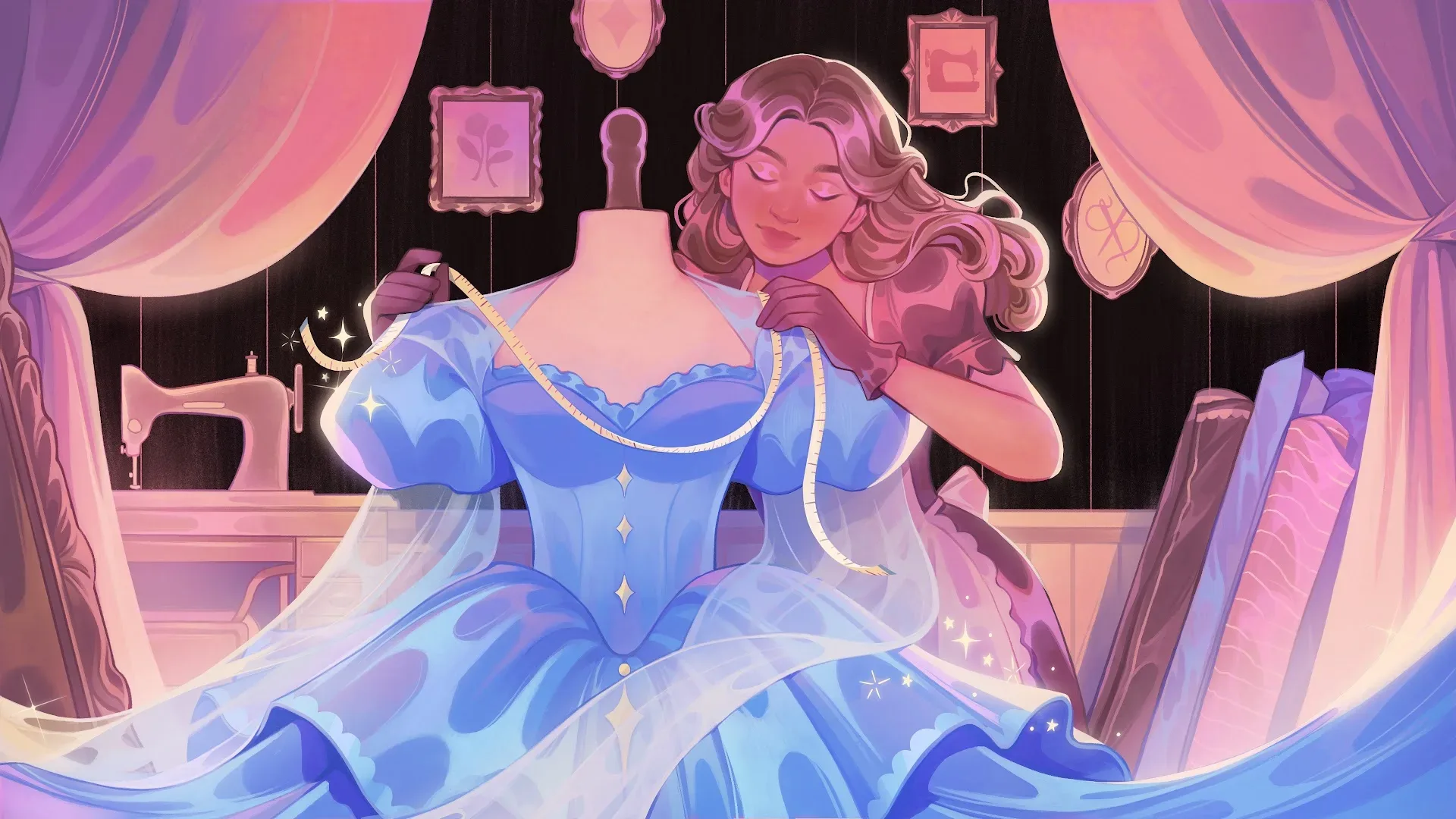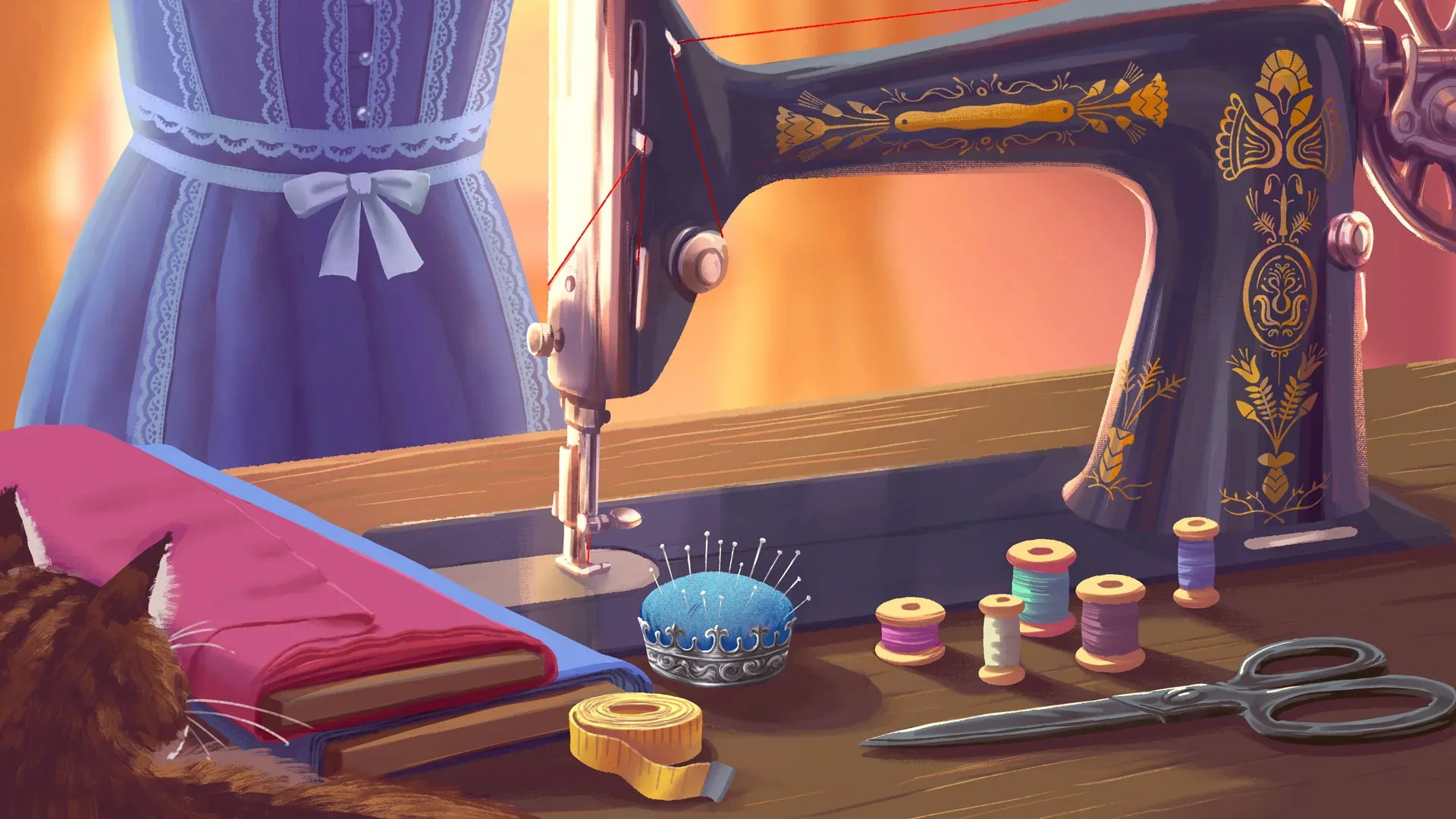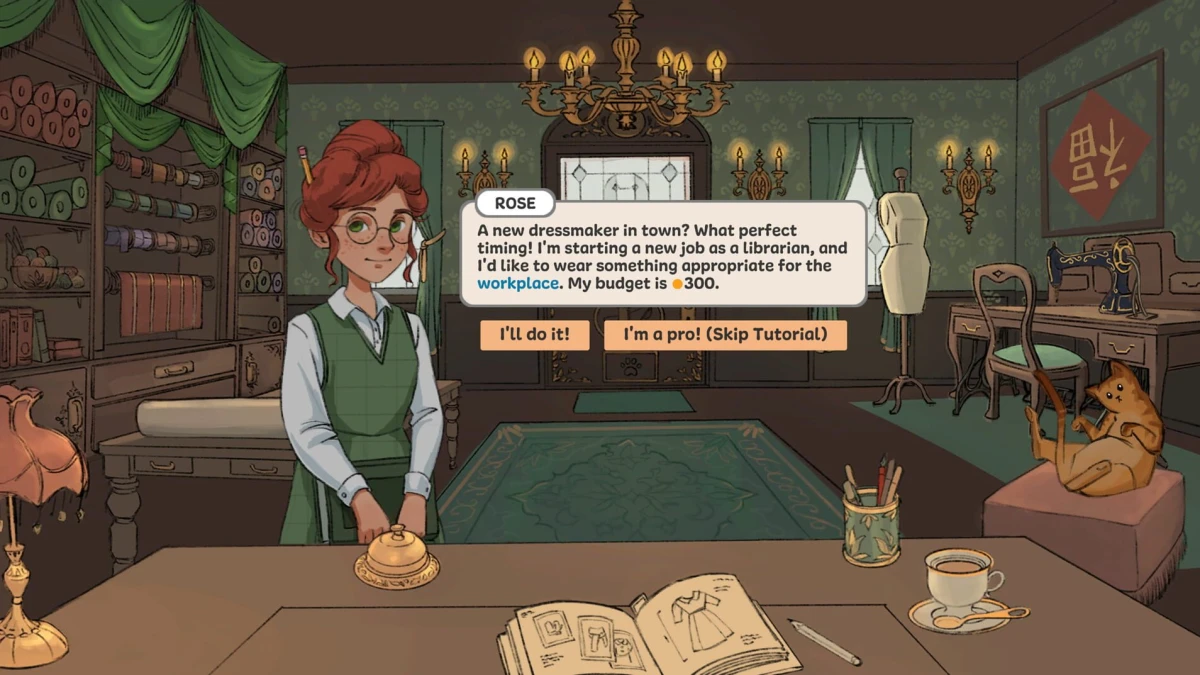
Dressmaker, the tactile tailoring game from Cozy Lives, is now available on Steam for PC and Mac. The game approaches clothing creation as a hands-on process rather than simply selecting a finished outfit from a menu: players choose materials, place and cut patterns, guide fabric through a sewing machine, then finish each piece with decorations and accessories.
It is a premise with room for both careful craft and mischief. Garments are made for a town full of customers, and players can aim to meet their requests—or deliberately undermine them with their creations. Alongside commissions, Dressmaker lets players put ready-made dresses in a shop window for sale. A calendar of special events adds another occasion-driven reason to create something new.
The release arrives after more than 400,000 wishlists were registered ahead of launch, a considerable early signal of interest for a game built around the detailed, material-focused side of dressmaking.
A sewing game built around the making, not just the result
Dressmaker’s key idea is that the route to a completed dress matters. Its tailoring workflow begins with fabric selection and moves through pattern work, cutting, sewing and embellishment. That structure distinguishes the game from a straightforward dress-up system, where the creative decision is largely limited to combining pre-existing items.
Players can buy several fabric types: cotton, linen, wool, silk and velvet. The supplied details do not define a separate mechanical property for each textile, so it would be premature to assume how deeply every material changes garment behaviour. Still, the inclusion of named materials gives the design process an appropriately tactile vocabulary. Choosing between linen and velvet is not merely picking a colour; it frames the garment as a different kind of object before any patterns are arranged.
The sketchbook serves as a planning space, with fabric samples and appliqué available while designing and colouring concepts. In dressmaking, an appliqué is a decorative piece of fabric applied to a larger textile surface. Here, it sits among the tools that allow a player to develop a look before moving on to construction. That bridge between sketching and making is important: it turns the design stage into an explicit part of play rather than an invisible step.
Patterns are then arranged and previewed on a mannequin before they are cut. A pattern, in this context, is the shaped template used to create the pieces of a garment. Dressmaker’s use of a mannequin preview suggests an opportunity to check a proposed design before committing it to fabric. It is a simple but useful concept for a tailoring game, because it makes the relationship between two-dimensional pattern pieces and a wearable final form central to the process.
After that, fabric goes through the sewing machine to create the garment itself. Buttons, bows and handmade accessories provide the finishing touches. The full loop is therefore not simply “make dress, receive reward.” It is a sequence of linked decisions: select a material, develop the concept, position the pattern, inspect it on the mannequin, sew it, and decorate it.
Related coverage includes Dressmaker Launches on Steam for PC and Mac.
Customers, commissions and a shop-window business
The town is more than a backdrop for the sewing machine. Its residents are customers, and their orders are the basis for made-to-order commissions. Completing and turning in dresses earns reputation and coin, forming the progression system described for the game.
Reputation commonly refers to standing or recognition earned through successful work in a game world; coin is the currency used in its economy. The supplied information does not spell out every reputation threshold, unlock or spending option, but the pair establishes a clear relationship between a tailor’s work and the town around them. Commissions are not only creative prompts: they connect each garment to advancement.
There is also a second approach to selling. Instead of only responding to specific requests, players can make dresses in advance and display them in a shop window. That distinction should matter to players who prefer planning their own output. A commission has an implied external brief, while a window display invites a player to decide what to create first and offer it afterward.
The special-event calendar adds another dimension to that choice. Event-driven occasions can make fashion a response to the town’s rhythm rather than an isolated workshop activity. The available details do not identify individual events or rewards, but a full calendar indicates that the requests and retail side of the game are meant to change over time.
Dressmaker also makes space for a less dutiful route through its customer work. The game explicitly frames player creations as something that can satisfy—or sabotage—townsfolk. That wording gives the social side a playful edge. A player can pursue the satisfaction of delivering an ideal garment, or use the same toolset to create an intentionally questionable answer to a request. The tailoring process remains the focus either way, but the desired outcome need not always be perfect service.
What the premise means for prospective players
For anyone considering Dressmaker, the strongest expectation to bring in is a desire for a creative loop with concrete stages. The game is not presented solely as a town-management game, a shopkeeper simulation or a fashion catalogue. Its identity rests on combining those ideas with a construction process inspired by real dressmaking.
- For creative players: fabric choices, sketchbook work, pattern placement, colour and decoration create several points where an individual style can enter a garment.
- For goal-oriented players: commissions, reputation and coin provide stated reasons to keep completing work for the town.
- For shop-sim fans: the window-display option supports creating stock before a customer has made a particular request.
- For cozy-game audiences: the town setting, events and a pettable kitty fit the gentler framing, while the option to sabotage customers leaves room for a cheekier tone.
It is worth keeping the boundaries of the announced feature set in mind. Details provided for the launch establish the major activities but do not enumerate every garment category, describe the full economy, or say exactly how customers judge individual dresses. Those are areas players will need to discover in the game rather than assumptions to make from the basic outline.
Why the sewing-machine interaction stands out
“Tactile” is a useful word for Dressmaker’s design because the game consistently points players toward actions associated with physical making. Fabric is not only selected but cut. Patterns are not only unlocked but arranged. Garments are not only equipped or sold but sewn by feeding material through a machine. Even decoration comes through buttons, bows and handmade accessories rather than a single final confirmation screen.
That does not mean it attempts to replace real-world dressmaking instruction; it is still a video game set in a cozy town, with its own rewards and playful customer interactions. But grounding its systems in recognizable tailoring actions helps give each dress a sense of authorship. The player’s output is intended to feel constructed, not merely chosen.
The game’s material list also keeps the craft rooted in recognizable terms. Cotton, linen, wool, silk and velvet each evoke a different kind of garment-making decision in ordinary language. A player does not need an explanation of complex textile systems to understand why choosing a fabric can be part of the creative fantasy. The named materials, samples, patterns and mannequin form a coherent chain from idea to finished clothing.
The team behind Dressmaker
Dressmaker was developed by Cozy Lives, a cozy label from Free Lives. Jonathan Hau-Yoon and Sabrina Becker are credited as creators. Ruan Rothmann and Sara Laubscher contributed additional development, while Meydän composed the music and Kerstin Hall handled writing.
Those credits reflect the game’s blend of systems and atmosphere. The tailoring loop needs clear interactive steps, while a town of customers and special events benefits from writing that frames the people requesting the clothes. Music, meanwhile, is part of the broader cozy presentation, even though the launch details do not specify individual tracks or how the soundtrack shifts during play.
Dressmaker is part of a busy PC release day
Dressmaker’s PC and Mac launch lands among the games arriving on September 21; Joking Joystick’s games releasing today roundup tracks the broader slate. For Dressmaker specifically, Steam is the stated platform for both versions, and the launch is accompanied by a new trailer.
The core appeal is easy to state but unusually specific: make dresses from the material upward, then see how a town responds. Players can work to fulfill an order, build an inventory for the shop window, chase reputation and coin, prepare for special occasions, or make a creation that sends a customer home less than thrilled. And, among all the fabric, fittings and commerce, there is a kitty to pet.