Dressmaker, a cozy Steam simulation game centered on making bespoke gowns, has quickly become a substantial PC hit. The game has reached a 98% Overwhelmingly Positive user-review rating on Steam and recorded a peak of 35,650 concurrent players, a sharp rise from a previously shared chart that sat just above 25,000.
For Ruan Rothmann, a programmer on Dressmaker at publisher Free Lives, the result has prompted a characteristically amused bit of professional self-assessment. “I used to be worried that I peaked way too early in my career. Now it seems I may have peaked with a dressmaking game,” he wrote while sharing the earlier player chart. He followed that up with a much more direct judgment: “Dressmaker is awesome and I couldn't be more proud.”
That reaction makes sense. A week after its Steam launch, Dressmaker is not simply accumulating favorable responses; it is still expanding its audience. More than 28,000 people were playing at one point during the day, while the game’s all-time concurrent-player high had already reached 35,650. A concurrent-player figure counts the number of people playing at the same time, rather than the total number of people who have bought or installed a game. It is therefore a useful measure of immediate attention and momentum, even though it does not reveal total sales.
A simulation built around making the garment
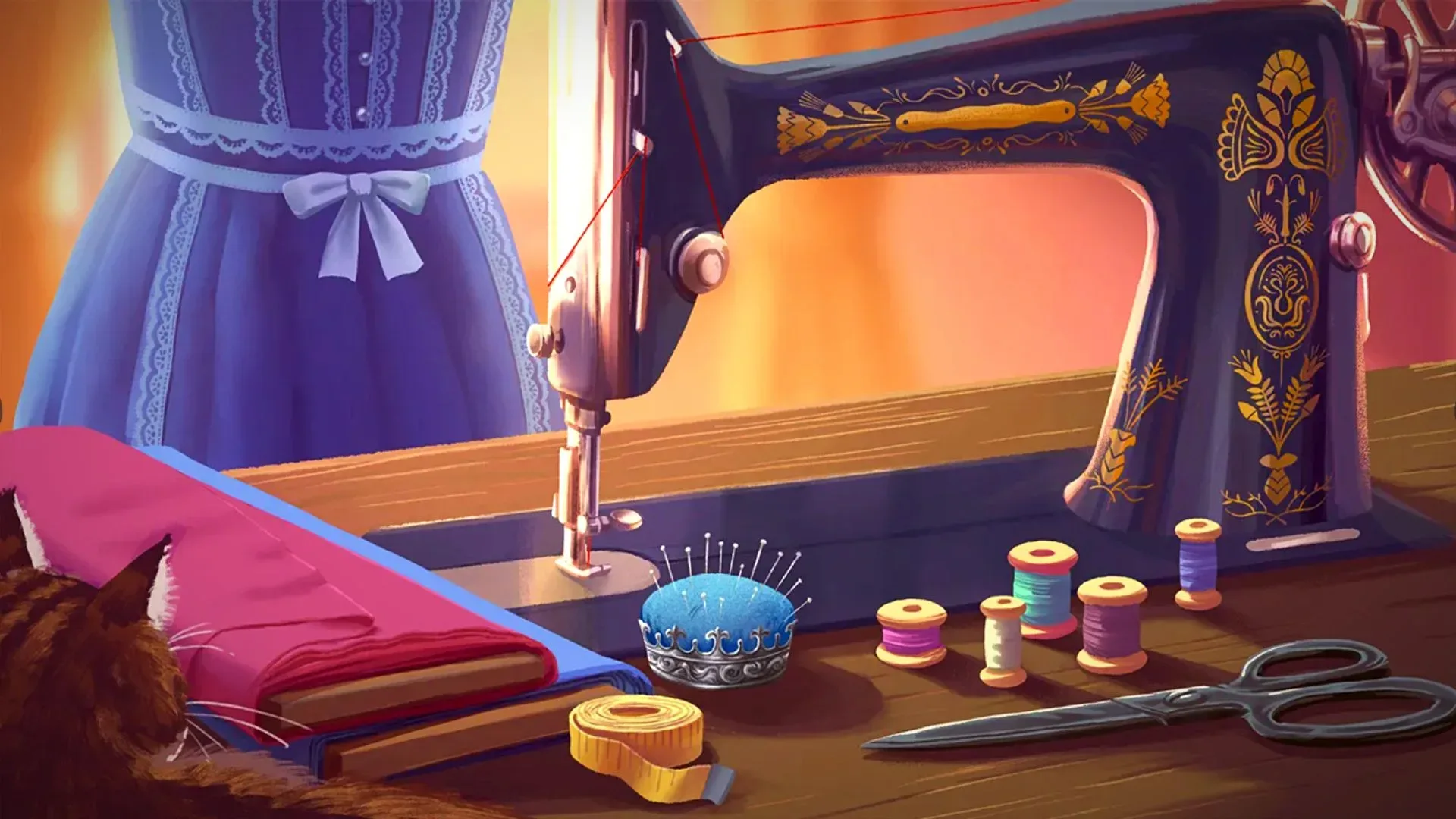
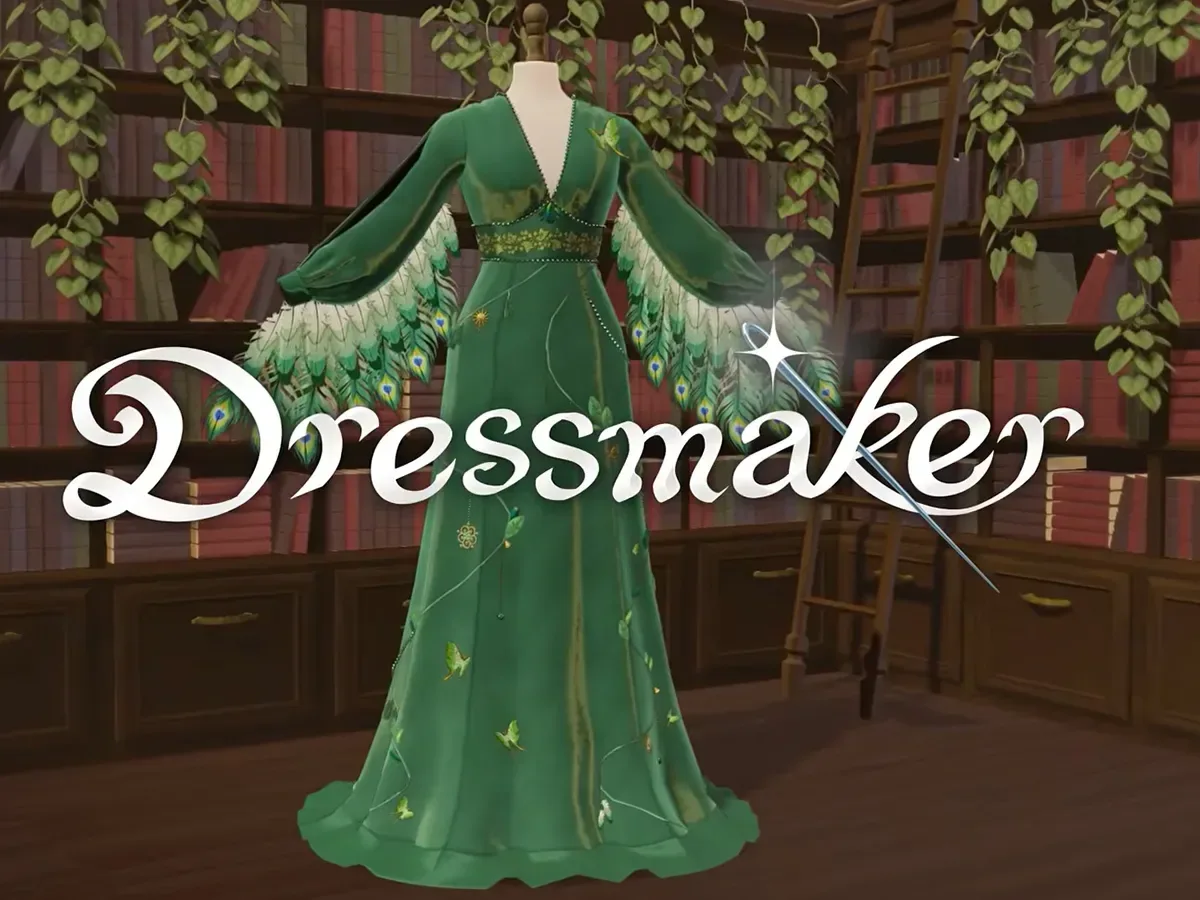
The premise of Dressmaker is unusually literal in the best possible way. Players select fabrics, cut patterns and create gowns. Its appeal appears to be rooted in the amount of creative latitude that process allows rather than in a broader fantasy premise attached to fashion. The point is the construction and customization of the outfit.
That hands-on focus helps explain why the game can draw interest beyond players who already identify as fans of conventional cozy games. “Cozy” is often used as a broad label for low-pressure games with calming, expressive or domestic activities. In Dressmaker’s case, the available description is more specific: its simulation involves choices about materials and patterns, leading to made-to-order dresses. The creative task is not merely choosing a pre-made costume from a menu.
There is also evidence that players are taking its tools in ambitious directions. As covered in Dressmaker’s growing bead-art creations, players have been using individual beads to produce elaborate images and designs. That kind of community experimentation can make a creative sim more visible: every striking result offers a concrete demonstration of what the tools can do, while also giving newcomers a reason to imagine their own projects.
What the Steam numbers do—and do not—say
A 98% positive review score is an emphatic early signal of player satisfaction, particularly because the figure rose from 96% in a short period. Steam’s “Overwhelmingly Positive” label communicates the proportion of user reviews that are positive; it is not a critic score, a guarantee of long-term support, or a measurement of every player’s experience. Still, it is a meaningful indicator that the players choosing to review Dressmaker have responded warmly to it.
The same care applies to player counts. A peak of 35,650 concurrent players shows that Dressmaker reached that number simultaneously at its busiest observed moment. It does not mean 35,650 is the game’s permanent audience, and it should not be confused with a sales total. Yet the context matters: the peak exceeded the chart Rothmann originally highlighted, and the game still had more than 28,000 active players at the time those figures were noted. Together, those details indicate that attention was continuing to build rather than immediately fading after launch.
Related coverage includes Dressmaker Surges on Steam as Cozy Couture Sim Reaches 35,650 Concurrent Players.
For a small creative game, sustained visibility can be especially valuable. Multiplayer games may depend on a populated player base for matchmaking, but a single-player-facing creative simulation benefits from an active audience in a different way. More players means more designs, more examples of unusual techniques, and more chances for the central crafting loop to circulate through screenshots and conversation. Dressmaker’s early momentum suggests its fashion-making tools are providing that kind of shareable material.
Rothmann’s path makes the moment more surprising
Rothmann previously worked on the side-scrolling run-and-gun game Broforce and the gladiator simulator Gorn. Those projects have very different subject matter and energy from a game about selecting cloth and constructing gowns. His joking suggestion that a dressmaking game may be his peak lands because Dressmaker represents such a conspicuous shift in tone and activity.
But the contrast also underlines a useful point about development work: a creator’s earlier genre credits do not dictate which project will connect most strongly. Technical and design work can transfer across wildly different games, while audiences can emerge around ideas that would have sounded niche in a one-line pitch. Dressmaker’s success is not proof that any unusual premise will become a breakout hit. It does show that a tightly defined activity, when given room for expression, can attract a surprisingly wide audience.
It is also notable that Rothmann’s public reaction is about pride in the game rather than an attempt to turn the surge into a grand claim about the future. The available numbers are impressive, but the project is still very new. A launch-week spike can be important without establishing every aspect of a game’s long-term trajectory. What is firmly clear now is that Dressmaker has made a major first impression on Steam.
A small interface update is already on the way
Dressmaker’s next update is set to address a particularly specific piece of its interface. Rothmann said it will hide pins belonging to other trims when one trim is selected. That may sound minor outside the game, but it is exactly the sort of adjustment that can matter in a design tool.
In this context, a trim is an ornamental or finishing element of a garment, and pins appear to be part of how players place or manage those elements. When several decorative components occupy a similar space, visual clutter can make precise work harder. Hiding pins for unrelated trims while one is active should make the currently selected task easier to read. The announced change does not add a new crafting system or expand the game’s premise; it is an example of usability refinement, meaning a change intended to make an existing feature less distracting and more straightforward to use.
Creative software and creative games often succeed or fail on these tiny moments of clarity. The more detailed a player’s project becomes, the more useful it is to isolate the element being edited. Dressmaker’s bead creations and layered couture designs make that especially relevant: an interface that stays legible gives players more freedom to concentrate on composition instead of sorting through overlapping on-screen markers.
No clues about the next game—except one rejected pitch
Rothmann did not offer any meaningful hints about Free Lives’ next project. One fan proposed a “girly horse game,” but the programmer ruled out that particular possibility with a blunt joke: “I dont trust horses or horse people sorry.”
It is not a roadmap, and it should not be read as one. The exchange is simply a reminder of how fast a breakout game can invite speculation about what comes next. For now, the immediate work is more concrete: Dressmaker has a fast-growing Steam audience, a very strong user-review response, and an identified interface improvement planned for its next update.
Its rise is striking because the pitch is both narrow and generously open-ended. The game asks players to make gowns, but it provides enough control over fabrics, patterns, trims and details for those gowns to become personal projects. The 35,650-player peak and 98% positive rating do not settle where Dressmaker goes from here. They do establish that a game about careful couture has found an audience large enough to make even a veteran developer reconsider what a career high point might look like.