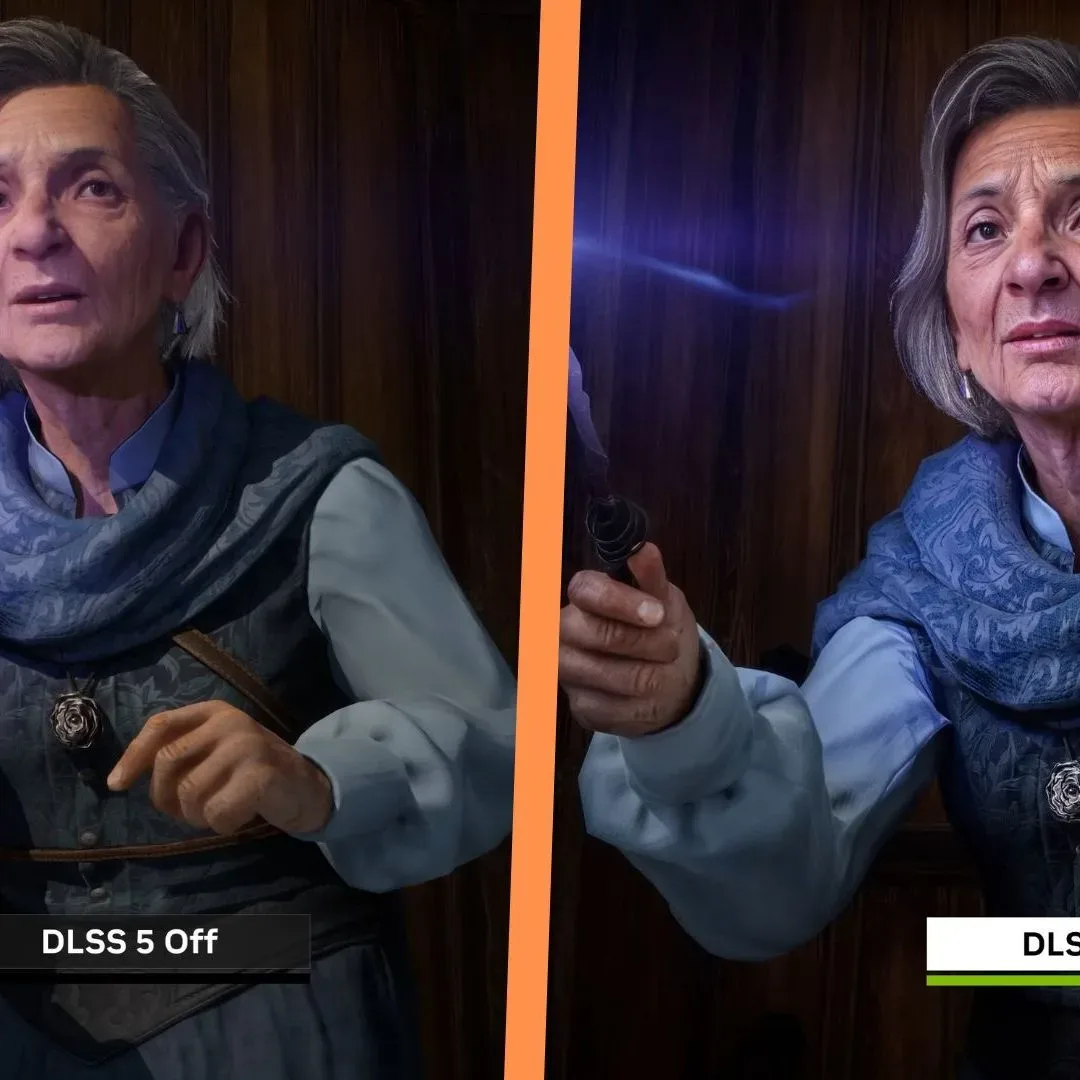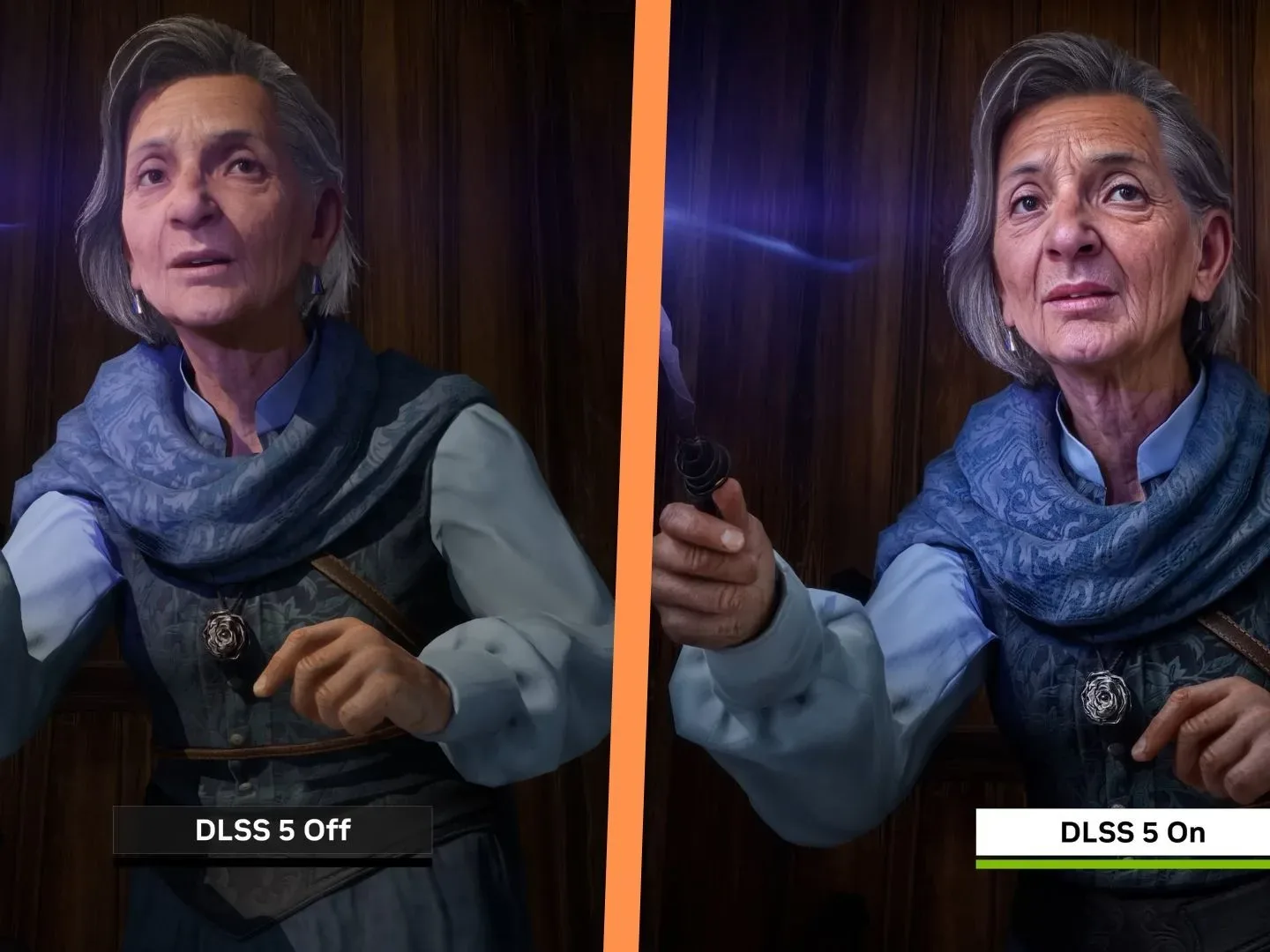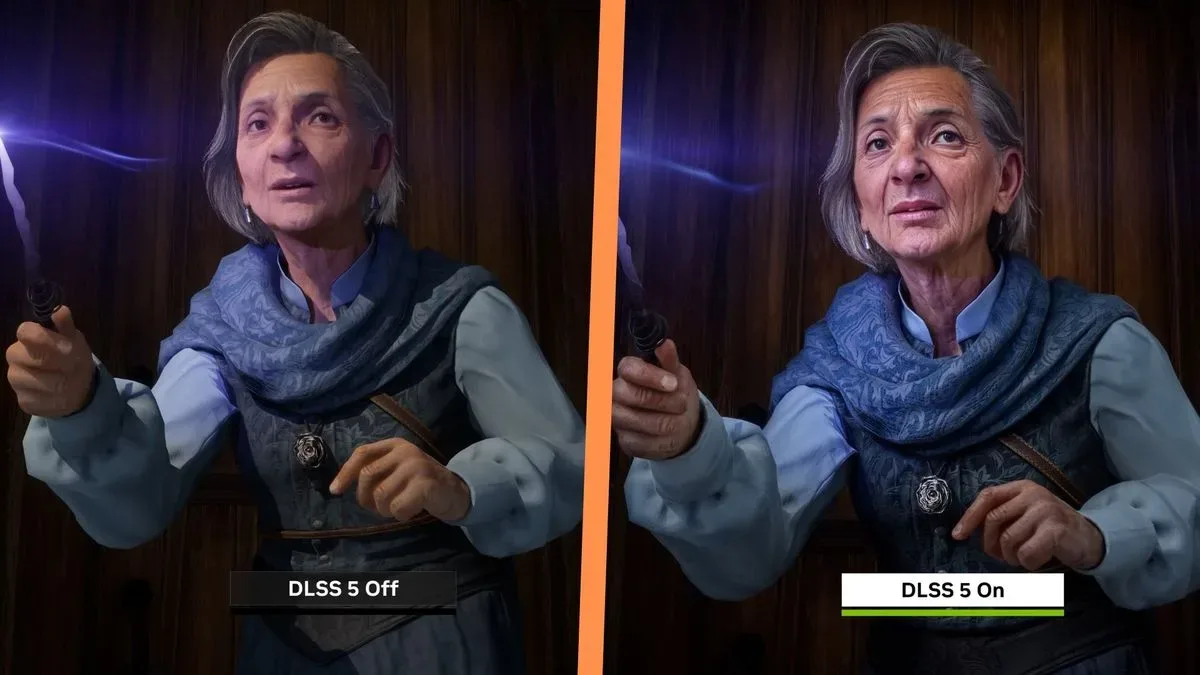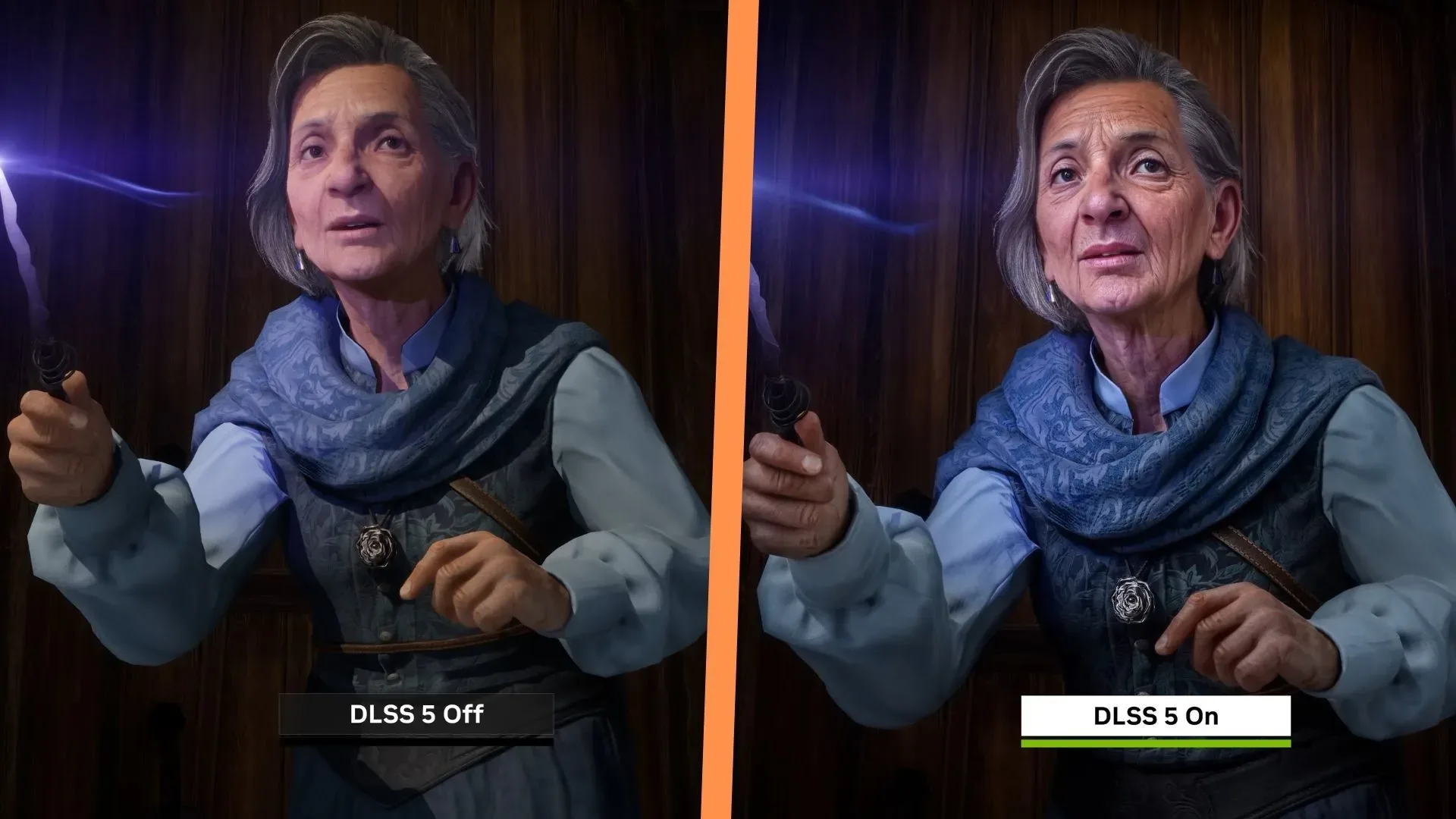
DLSS 5 is about to move beyond its one-game official footprint. Nvidia’s AI-enhanced rendering technology is scheduled to arrive in Hogwarts Legacy on November 5, War Thunder in mid-November, and Where Winds Meet on November 23 in the US and November 24 elsewhere.
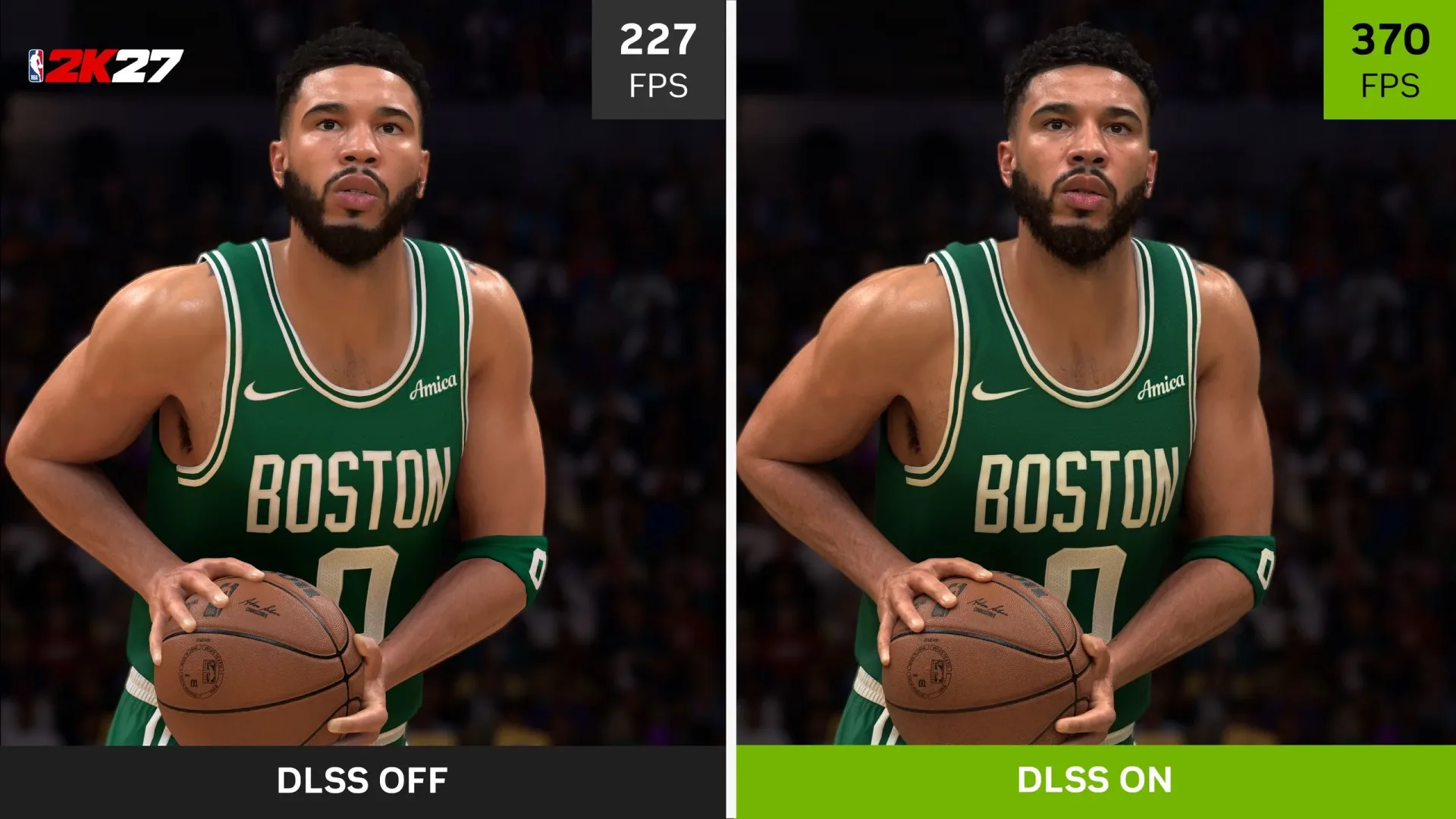
The dates are notable, but the word official may be the more important part of the update. Workarounds and mods have already made DLSS 5 visible in a wider range of games and applications. That is not the same as a developer integrating it into a game and deciding how its image-processing tools should be applied. Until now, NBA 2K27 has been the only game with that official implementation.
That makes this trio a meaningful next test for a technology that has attracted as much attention for contentious performance behavior and altered character appearances as for sharper-looking imagery. The newly supported games span a photorealistic sports presentation, military combat, a wizarding-world adventure and an action game with a more stylized interpretation of realism. They should offer a better indication of whether DLSS 5 can be tuned to suit distinct visual identities—or whether its most conspicuous traits travel from game to game unchanged.
What the November schedule looks like
- Hogwarts Legacy: November 5
- War Thunder: mid-November
- Where Winds Meet: November 23 in the US; November 24 in other territories
The stated expansion is particularly relevant to players using Nvidia RTX 40- and 50-series graphics cards. It is also worth keeping expectations grounded: confirmation that a game will receive DLSS 5 does not, by itself, establish how every setting will perform on every GPU, resolution or in-game scene. The RTX 5090 figures shown in promotional material for Hogwarts Legacy, for example, are a high-end reference point rather than a universal prediction for PC performance.
Official integration is not merely a label
DLSS, short for Deep Learning Super Sampling, is Nvidia’s family of machine-learning-assisted rendering techniques. In broad terms, an upscaling system renders a game at a lower internal resolution and uses available image data to produce an output intended to resemble a higher-resolution image. The goal is to reduce the graphics workload while retaining, or improving, apparent detail.
DLSS 5’s discussion has centered on AI image enhancement in addition to that general upscaling role. An unofficial workaround can apply a tool broadly across a game’s existing presentation. A formal implementation, however, gives developers an opportunity to make choices about how the feature interacts with the art direction. The supplied details point to selectable AI models and sliders that can enhance individual elements in an environment.
Those choices matter because games are not neutral collections of pixels. Developers make deliberate decisions about lighting, material detail, skin texture, haze, facial rendering and the distance at which objects should appear clear or soft. A blanket effect may create an immediately striking image, yet still cut against the intended composition or make people look noticeably different. Official support offers the chance to steer the processing toward particular priorities instead of treating every scene as though it needs the same correction.
That does not guarantee that every player will prefer the result. Image quality is partly technical and partly aesthetic. Some players want the cleanest possible edges and highly defined surfaces; others may prefer a softer image if it better fits the game’s original atmosphere. The useful distinction is that an officially supported version can be assessed as a developer-directed configuration, rather than as an external layer imposed over the whole game.
Related coverage includes DLSS 5 Expands to Hogwarts Legacy, War Thunder and Where Winds Meet This Month.
The big question is performance, not just polish
DLSS tools are commonly associated with performance gains, so the early reaction to DLSS 5 has been awkward. Discussion around its official debut in NBA 2K27 included concerns that enabling it could severely reduce frame rates, even on powerful Nvidia hardware. Nvidia has since updated the AI model and reported a twofold speed improvement.
That claimed improvement is encouraging, but it should not be mistaken for a complete answer before the new integrations arrive. “Two times faster” describes a change in the model’s speed, not necessarily a promise that a player’s overall frame rate will double. A game’s performance is shaped by many factors beyond one image-processing stage: the chosen resolution, scene complexity, visual settings and the rest of the rendering pipeline all have a role.
Frame rate is the number of completed images a system displays each second, usually measured in frames per second (fps). A higher frame rate can make motion look smoother and reduce the time between a player input and its visible result. If an AI enhancement creates a sharper image but consumes enough processing time to make the game feel less responsive, its value becomes harder to judge—especially in games where tracking movement and reacting quickly matter.
That is why the November games are more informative than a simple compatibility list. War Thunder’s action-heavy setting can put a spotlight on responsiveness and visual clarity during motion. Hogwarts Legacy provides busy environments, elaborate lighting and character-focused scenes. Where Winds Meet adds another game whose look is not limited to the broadcast-style realism of NBA 2K27. Each can reveal different trade-offs between detail, temporal stability and speed.
Photorealism is a target, but it is not one look
DLSS 5 engineers have characterized the technology as something aimed at games pursuing photorealism. NBA 2K27 is an understandable first showcase for that ambition: a sports game can chase a television-broadcast aesthetic built around lifelike athletes, arena illumination and close-up presentation.
The next games complicate that idea in useful ways. War Thunder may have an obvious connection to realistic materials and environments, but Hogwarts Legacy and Where Winds Meet are not trying to look like unfiltered camera footage. Both can use detailed lighting, physical textures and believable spaces while still embracing a recognizable videogame-art sensibility in their characters and worlds.
That distinction is more than a debate over labels. A rendering feature that treats photorealism as simply “more detail everywhere” can risk flattening visual character. In contrast, a tool that can preserve a game’s intended stylization while improving selected environmental features could be much more broadly useful.
Promotional footage for Hogwarts Legacy suggests the latter may be the intended direction. Earlier DLSS 5 discussion focused on a conspicuous beautifying effect on characters—an effect often jokingly described as “yassification.” The newer Hogwarts Legacy material appears to place greater emphasis on lifelike environments and lighting, while avoiding much of that earlier-looking change to faces. It remains a trailer-based impression rather than a full verdict, but it is a sensible area for players to inspect after the update arrives.
What players can watch for after the updates land
- Character consistency: Do faces, hair, clothing and expressions retain the game’s established look from scene to scene?
- Lighting behavior: Are indoor spaces, outdoor areas and reflective surfaces more convincing without introducing distracting shifts?
- Motion clarity: Does detail stay stable while the camera moves, rather than appearing to shimmer or change unexpectedly?
- Performance cost: Does the updated model make the feature practical at a player’s preferred resolution and settings?
- Meaningful options: If games expose different models or sliders, do those controls produce understandable visual changes that let players select a result they actually prefer?
A broader test for developer control
The transition from NBA 2K27 to three very different games is what turns this rollout into more than another post-launch graphics feature. NBA 2K27 established an official starting point, but its photorealistic broadcast presentation could not answer how DLSS 5 would behave across varied art directions. Hogwarts Legacy, War Thunder and Where Winds Meet can begin to answer that question.
There is also a practical lesson in separating official support from the broader claims that arise around new PC technology. A feature appearing to work through a mod or workaround can be useful to technically adventurous players, but it does not automatically mean the game’s creators have approved its behavior, tuned its settings or accounted for its artistic consequences. For most players, an official release is the point at which it becomes reasonable to judge the feature as part of the game rather than an experiment layered on top of it.
DLSS 5’s next phase therefore has two standards to meet. It needs to demonstrate that the faster AI model addresses the frame-rate concerns associated with its launch. And it needs to show that developer-led integration can serve games with distinct aesthetics instead of imposing one recognizable AI finish. The November updates will not settle every question, but they are the first opportunity to evaluate the technology beyond a single sports-game showcase.
For the wider PC landscape, the rollout arrives amid continuing interest in how AI-related tools are entering game development and distribution. Steam’s evolving pre-release checks and concerns around AI-generated clones are a separate issue, but they underline why it helps to be specific about what an AI tool is doing. DLSS 5 is presented here as a rendering and image-enhancement system; its success will depend on the pictures it produces, the performance it requires and how carefully each development team integrates it.