Dear Passengers, a co-op airline comedy from Kyiv-based developer Flexus, has become the third-most-wishlisted game on Steam. It sits behind Valve’s PvP shooter Deadlock and Hello Games’ survival project Light No Fire, while ranking ahead of major forthcoming games including Fable, Phantom Blade Zero, Resident Evil Veronica, and Witchbrook.
That is an unusually prominent pre-release position for a studio whose Steam profile has no previously released games. Flexus is not, however, a new games company. The studio says it was founded in 2020 in Kyiv, Ukraine, has a team of more than 70 people, and has accumulated more than 300 million downloads across titles released in over 150 countries. Its prior footprint is primarily in mobile games; Dear Passengers represents a high-profile move toward the PC audience.
A disastrous airline is the whole premise
The setup is deliberately chaotic. Players form an online co-op crew running what the game describes as the world’s worst airline. The plane is in poor condition, the cargo is illegal, and passenger wellbeing is not exactly the operation’s guiding principle. Its trailer even openly labels the game “Another Friendslop Game,” making clear that the appeal is intended to be shared confusion, panicked coordination, and the stories that result when a group’s plan immediately stops being a plan.
“Friendslop” is informal community slang rather than a formal genre. It generally refers to multiplayer games designed around accessible co-op, absurd situations, and entertaining failures that are fun to experience with friends or watch in clips. The label is self-deprecating, but it identifies a real design and audience pattern: games in this space often thrive on simple premises, a distinctive visual hook, and systems that create unpredictable group moments.
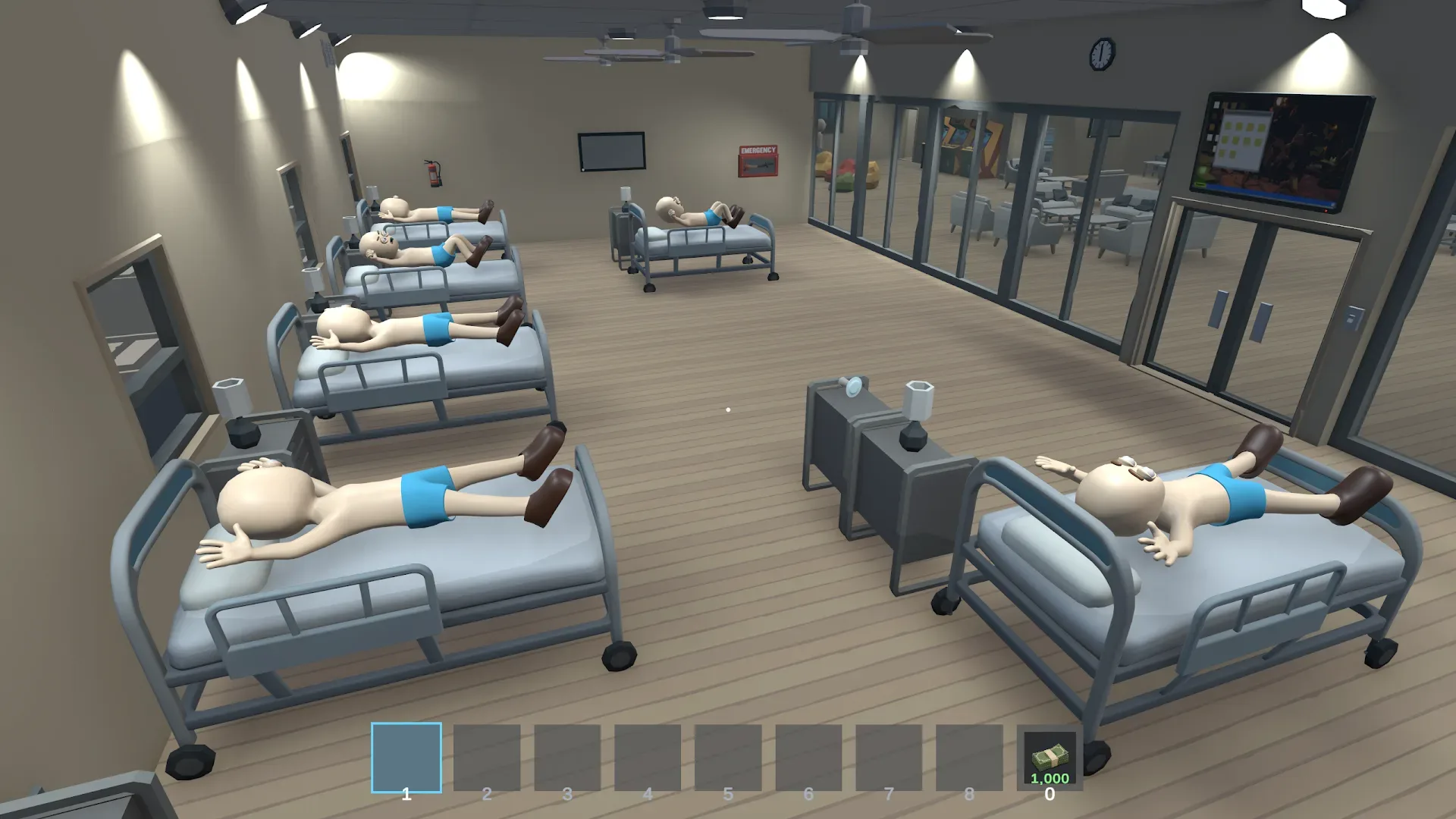
In Dear Passengers, that hook is aviation turned into slapstick. The game’s exaggerated passengers, with conspicuously cartoonish faces and movement, reinforce that this is not a conventional flight-management simulation. Its focus appears to be disorder and comic escalation rather than procedural realism. For players, that distinction matters. The premise signals a social co-op experience where the crew’s ability to react together is likely more important than mastering a dense simulation interface.
Two million wishlists before launch
Flexus said on July 31 that Dear Passengers had reached two million wishlists. That milestone coincided with its move into Steam’s top five wishlist rankings. The game then reached fourth place on August 7, before the studio said on September 5 that it had climbed to third.
A wishlist is not a sale, and it is not a guarantee that everyone who adds a game will buy or play it. It is, however, one of the clearest public indicators of interest in an unreleased Steam game. Players can use the feature to track a title and receive platform notifications around release or discount activity. For developers, a large wishlist count means a substantial audience has already chosen to keep the game on its radar.
That makes the scale of Dear Passengers notable. The game’s ranking places it in a wishlist conversation normally dominated by long-running franchises, high-profile publishers, platform holders, or studios with an established PC catalogue. Flexus has extensive game-making experience, but it has not previously built a release history on Steam. The studio is bringing a meaningful mobile audience record into a marketplace where PC visibility and community expectations work differently.
Related coverage includes Dear Passengers Climbs to Steam's Third-Most-Wishlisted Game Despite Developer's Newcomer Status.
Why the ranking stands out
Co-op comedy hits are often difficult to forecast in advance. A game can suddenly gain enormous attention through friend groups, streams, short videos, and word of mouth once players start generating memorable disasters together. That tendency usually makes surprise successes easier to recognize after launch than before it. Dear Passengers is different because its momentum is already highly visible ahead of release.
The gap to comparable games is also significant. The next similar co-op title in the Steam ranking is down at No. 20 and comes from Funselektor Labs, a developer with an established record in car games on the platform. In that context, Flexus reaching No. 3 is not merely a strong result for a co-op game; it is a striking result for a studio making its first Steam release.
Its choice of presentation may be part of why the pitch travels well. An airline in crisis is a compact premise people understand immediately. Co-op supplies the social reason to try it. Cartoon passengers and increasingly bad operational decisions supply the visual joke. That combination is easy to describe without requiring players to understand a deep lore setting, competitive meta, or complicated progression structure.
Flexus arrives from mobile with a large player base
Flexus’ previous games show a background in approachable, visually direct mobile projects. Its catalogue includes Tower Draft, an idle game with a blocky visual style; Mow My Lawn, built around mowing and a relaxed presentation; Dye Hard; and Train Miner, another idle-oriented game structured around a train. The studio’s mobile releases have received generally positive store ratings, with 4.2 stars cited as the lowest among the games noted.
An idle game is a game designed around progress that can continue with limited active input, often using upgrades and automation as its core loop. That experience does not automatically map to online PC co-op, where players may expect sustained interaction with friends and a more involved session structure. Still, Flexus’ record suggests familiarity with broad-audience game design: readable ideas, immediate feedback, and concepts that can be understood quickly.
The transition to Steam will test how effectively the studio can carry that accessibility into a different ecosystem. Mobile downloads, ratings, and Steam wishlists measure different things. The first reflects reach; the second records feedback from existing users; the third captures anticipated interest. None should be treated as interchangeable. Yet taken together, they indicate that Flexus has already reached a very large player population and that Dear Passengers has found a particularly strong early audience among PC users.
What the wishlist surge does—and does not—mean
The headline ranking is meaningful, but it should be read carefully. Steam wishlists measure intent and curiosity before release, not finished-game quality, server stability, long-term player retention, or commercial performance. The number also does not tell prospective players how the final co-op systems will function, how much content will be included, or whether the game will sustain the interest created by its premise.
What it does establish is a major visibility advantage. A game that has reached two million wishlists and the No. 3 ranking begins with a much larger pool of people who have already raised their hands for a reminder. For a social co-op title, that early concentration of attention can be especially useful: these games depend on groups being able to persuade other groups to join in. Interest is more valuable when it is shared rather than isolated.
It also puts pressure on the release. The more public the pre-launch success, the greater the expectation that the finished game will deliver the specific type of chaos players have imagined from its trailers and store description. Flexus has plainly succeeded at making people notice its PC debut. The next measure will be whether those prospective crews turn their interest into an enduring airline catastrophe.
For PC players preparing group sessions, the mundane setup can matter too: reliable connections and low-latency inputs are helpful when everyone is trying to solve a problem at once. Our guide to keyboard latency for PC gaming explains the practical differences between wired, Bluetooth, and 2.4GHz connections.
A rare kind of debut visibility
Dear Passengers has achieved a pre-release profile that is rare for any newcomer to Steam, especially one operating in a comedy co-op lane often associated with unexpected post-launch breakouts. Its situation is unusual not because Flexus lacks experience making games, but because its mobile history and vast download total are now being translated into the highly visible, wishlist-driven world of PC storefronts.
With Deadlock and Light No Fire ahead of it, Dear Passengers is in elite company on Steam’s public wishlist board. Its current position is a strong sign that the world’s worst airline has already convinced a remarkable number of prospective passengers to board.