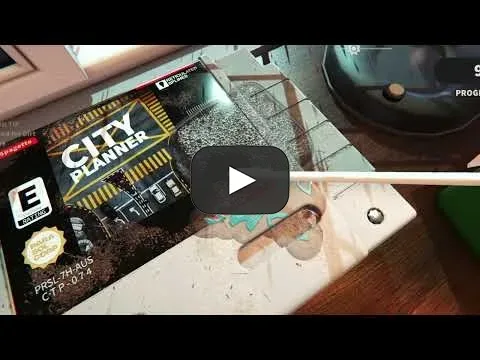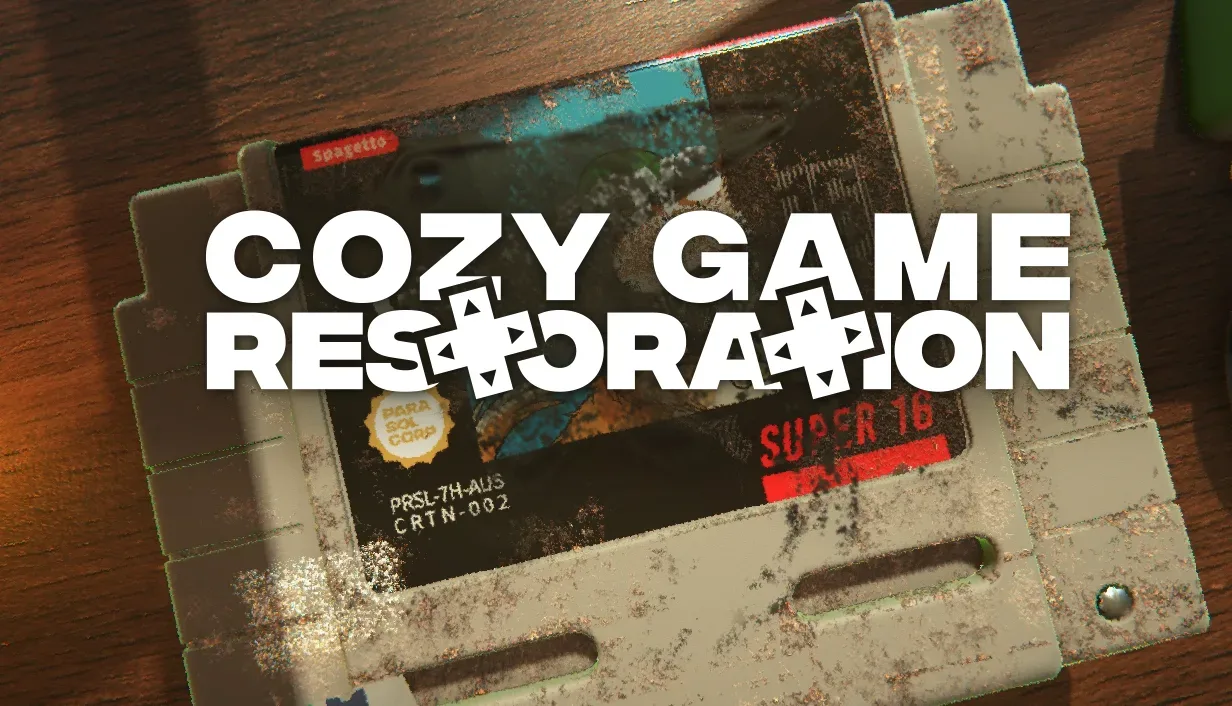
Cozy Game Restoration, the solo-developed game from Adam Stormhardt under Parasol Corp, has surpassed 400,000 Steam wishlists ahead of its November 4, 2026 launch. It is scheduled to arrive on Windows and Mac through Steam for $14.99 USD, with support for 19 languages and a design intended to suit Steam Deck play.
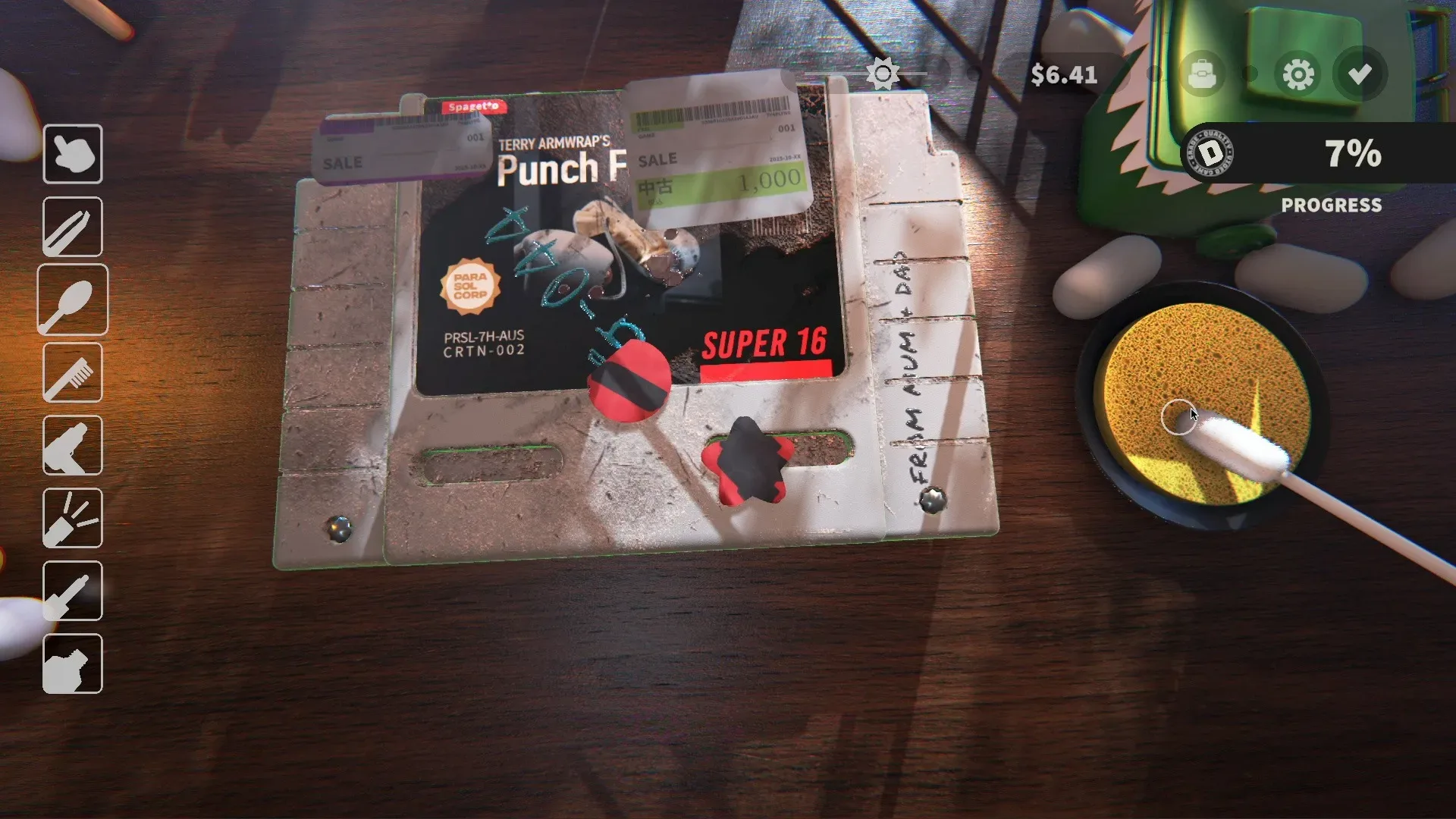
That wishlist figure is a substantial early signal for a small independent project with a very focused premise: restoring retro-inspired game cartridges, then building a collection around the results. Players will remove dust, grime, stickers, scratches and adhesive residue from cartridges in differing conditions. The game’s defining relaxation-first choice is equally clear: there are no timers and no fail states.
In other words, the cartridge on the desk is not a high-pressure obstacle to beat. It is the job. And, mercifully, no one is standing behind the player with a clipboard asking why they have not yet polished the fictional 1990s sports-game cart to museum-glass brilliance.
Strong pre-release interest across playtest and demo
The 400,000-wishlist milestone follows notable participation earlier in 2026. An early May playtest drew 149,745 sign-ups. The game’s demo was also among the 24 most-played demos during Steam Next Fest, recording 171,679 downloads.
Wishlists are not sales, and a demo download is not a guarantee that every interested player will buy the completed game. They are still meaningful measures of attention before launch. A wishlist lets a Steam user track a game and receive notification when it becomes available or discounted, while a demo gives people a direct opportunity to sample its core loop. Together, those figures suggest that restoration, low-stakes collecting and retro presentation have found an audience well before release.
That is particularly notable because Cozy Game Restoration does not frame its appeal around competitive action, a sprawling open world or a famous licensed property. Its hook is tactile and specific: uncovering what a battered cartridge once looked like, learning its small history, and deciding where it belongs in an increasingly personalized collection room.
What players will collect at launch
The launch version is set to include 108 distinct retro-inspired games across six unique platforms. Each game is represented in PAL and NTSC regional variants, making 216 collectible versions in total. The game also uses five rarity levels.
PAL and NTSC are regional television and video standards historically associated with different territories. In this context, the distinction means the collection is not limited to one cartridge design per fictional game. Regional editions add another collecting layer: completing the base game library is separate from seeking every version.
Related coverage includes Cozy Game Restoration Passes 400,000 Steam Wishlists Before November Launch.
That structure matters because it gives the game a deliberately collector-minded definition of completion. Someone may be pleased to own one version of a title, while another player may want both regional releases, target particular rarity tiers or arrange their display around a chosen platform. The game’s stated 216-version total is therefore more than a numerical flourish; it establishes the scope of the launch collection and the reasons players may revisit its parcel-opening and restoration routines.
The cartridges come from mystery parcels, where players discover randomized items in variable condition. Some may arrive in need of a basic cleanup, while others can demand more extensive work on scratches, labels or adhesive remnants. Notes from previous owners can also be found, adding bits of story to objects that might otherwise be only entries in a catalogue.
Randomized parcels introduce uncertainty into collecting, but the lack of timers and fail states changes the tone of that uncertainty. A player is not being pushed to perform a repair under a countdown or threatened with permanently failing a restoration task. The design instead puts the emphasis on the process of revealing, repairing and cataloguing the next item.
A restoration game built around the process, not punishment
“Tactile” is a useful word for the game’s approach. It describes an experience centered on hands-on interaction and the sensory satisfaction of making something grimy or damaged look cared for again. Here, that means cleaning physical-looking cartridge surfaces rather than simply clicking an inventory button that instantly changes an item from broken to pristine.
Cozy Game Restoration’s stated tasks include removing dust, grime, stickers, scratches and adhesive residue. Those are familiar forms of wear for anyone who has handled old cartridges, but the game is using them as accessible restoration problems rather than presenting a real-world preservation manual. The objective is a relaxing loop with a collecting payoff, not an invitation to treat fictional cleaning mechanics as advice for valuable physical games.
The no-fail-state structure is important to that distinction. In many games, a fail state means an error that ends an attempt, resets progress or applies a serious penalty. Excluding those outcomes makes room for slower play. Players can spend time on a particular cartridge, inspect its details or simply enjoy the rhythm of the maintenance work without an efficiency score becoming the whole point.
There is still a progression layer. Cozy Game Restoration includes 300 quests, which unlock furniture and decorations for a collection room. That room turns the collection from a menu of acquired items into a space players can shape. The rewards are not described as altering the core restoration rules; they are principally expressive, giving players more ways to build the environment surrounding their cartridges.
This creates a clear loop: find a cartridge through a parcel, restore it, learn from its associated note where applicable, add it to the collection, and use quest rewards to make the room feel more personal. It is a structure suited to players who enjoy an expanding archive but do not necessarily want the systems-heavy pressure of a market simulation or a punishing repair game.
Collaborations and secrets add another layer
The game will feature collaborations with real independent games, including Abiotic Factor and CONSCRIPT. It also contains hidden secrets and Easter eggs drawing on wider gaming culture.
Those inclusions give the fictional cartridge library a connection to games beyond its own invented retro ecosystem. The details of the collaborations and secrets have not been outlined here, so players should not assume a specific type of crossover content or reward. What is established is that the collection contains more than wholly original retro-inspired entries, with recognizable indie-game connections included in the broader hunt.
Easter eggs, meanwhile, are deliberately hidden references or secrets placed for attentive players to discover. They are a natural fit for a game whose central activity already rewards looking closely at labels, surfaces, regional variants and the personal traces left with old objects. In a collecting game, a secret is not just background decoration; it can become a reason to inspect another shelf, parcel or cartridge more carefully.
A self-published project heading to PC and Mac
Stormhardt developed the project independently under Parasol Corp and is self-publishing it without external publisher backing. Before launch, Cozy Game Restoration appeared at PAX Aus 2026 in the Aus Indie Showcase and at ACMI’s Games Week Showcase.
Self-publishing means the developer is bringing the game to market without a separate external publisher handling that role. It does not reduce the importance of the pre-release numbers; if anything, the scale of early interest places more attention on the project’s own ability to convert curiosity into a successful release.
The announced platforms are Windows and Mac via Steam. Steam Deck is also a design consideration, which makes sense for a game based on short, repeatable cleaning and collecting sessions, though this should not be read as a separate platform announcement. Players looking for another upcoming Steam release can also keep an eye on Beholder: The Landlord’s Handbook, due on Steam in November.
For Cozy Game Restoration, the immediate question is not whether the concept has found attention. With 400,000 wishlists, an early playtest that attracted nearly 150,000 sign-ups, and more than 171,000 demo downloads, it plainly has. The more interesting question is how players respond to the complete set of 216 regional cartridge versions, five rarity levels, 300 quests, collection-room rewards and crossover secrets once the full game arrives.
Its appeal is easy to understand: a deliberately unhurried digital collection, battered cartridges waiting for careful treatment, and a room that becomes more individual with every task completed. It is a game about bringing old-looking objects back to life, one sticker and one suspicious patch of adhesive at a time.