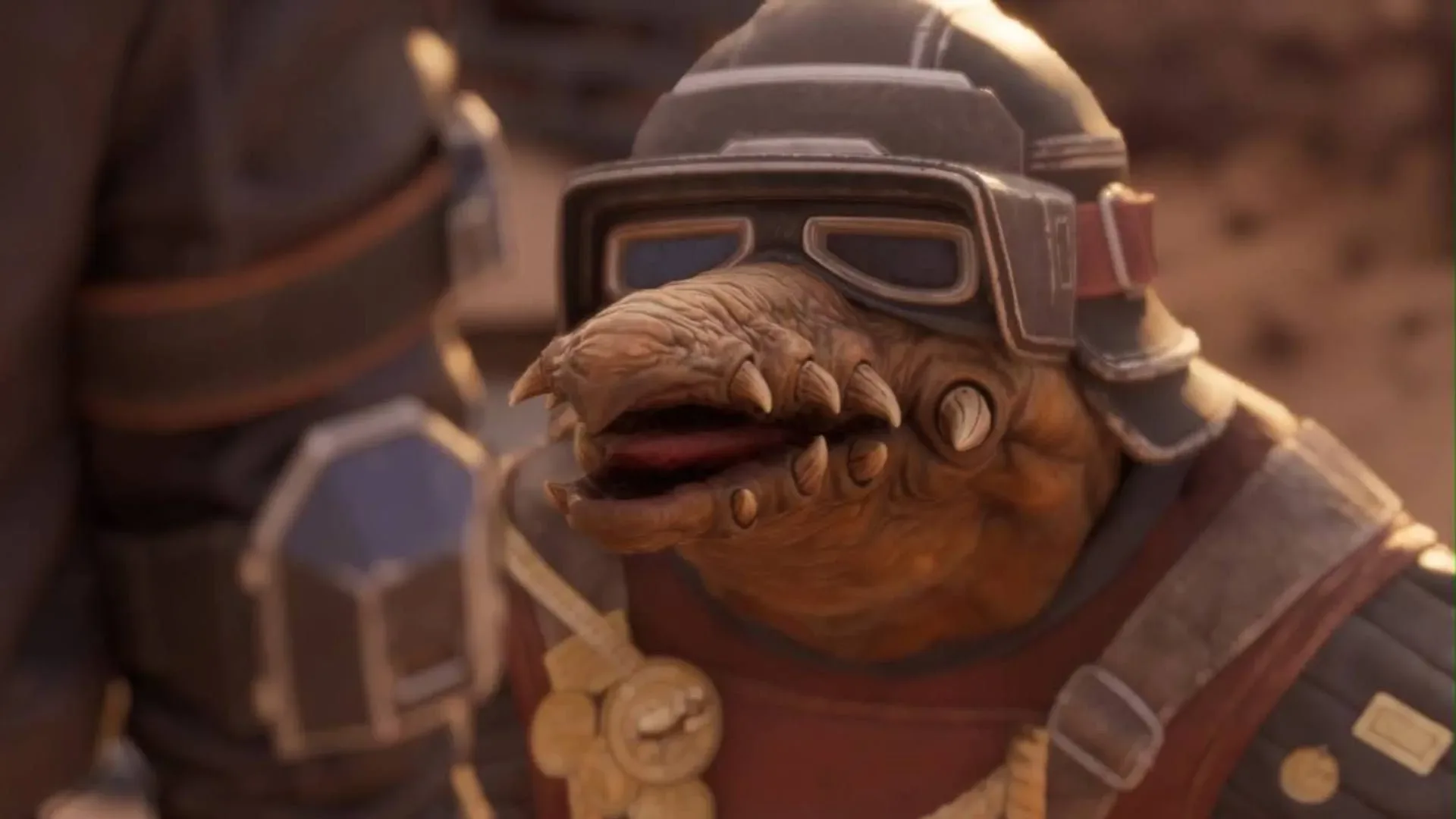
Star Wars: Galactic Racer arrived on consoles and PC in early October with attention around its arcade-style racing and polished presentation. Yet the game’s most visible cultural aftershock has not centered on a championship, a track, or even a central protagonist. It is Biddy Blas: a high-pitched, fast-talking Crocin competitor with a taste for yelling, a fierce dislike of defeat, and the sort of monumental self-regard that tends to turn a supporting character into an internet fixture.
In the days since launch, Biddy has become the focus of jokes, short video edits, memes, TikToks, Reddit posts and social-media reactions. The scale of that activity can make him seem like a defining figure in the game. He is not. Biddy is one of the NPC racers players can encounter in both solo play and online competition. But that limited role has not stopped the character from becoming a fan favorite—particularly among people who have a soft spot for aggressively strange little creatures with very big opinions.
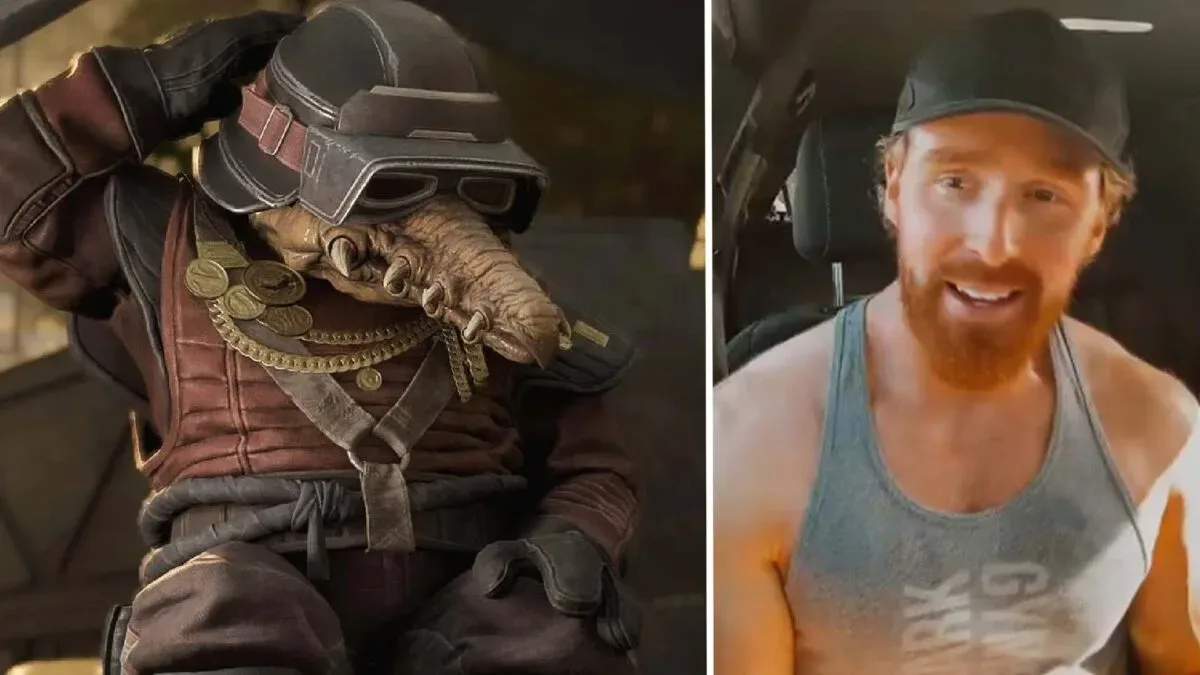
The performer behind Biddy, UK independent wrestler and actor Richard Summers-Calvert, has responded with visible enthusiasm. He has reposted favorite memes and edits, engaged with fans, and shared videos expressing gratitude for the attention. Summers-Calvert has also described the sudden response as potentially overstimulating, an understandable note when a character’s lines and mannerisms swiftly become a shared online punchline.
“I am so, so grateful and so, so happy that everybody loves Biddy Blas,” Summers-Calvert said in a video shared online.
He has invited supporters who would like to meet him at local comic conventions to contact those events, adding that he could “scrib doon” some autographs. The wording is not incidental. “SCRIB DOON” is one of Biddy’s recognizable vocal lines, and the actor has been happily deploying it in his fan-facing posts.
A supporting racer with leading-character energy
Biddy’s appeal is rooted in an effective clash between narrative importance and personality volume. He is not presented as the game’s main character or a major figure steering its wider story. He is an opponent in a racing game, one among a field of NPCs. But his behavior makes him hard to ignore: he talks quickly, sounds deliberately abrasive, boasts beyond his apparent station, and reacts to the prospect of losing as if it were a personal cosmic injustice.
That compact character design is especially potent in an arcade racer. An NPC, or non-player character, is a character controlled by the game rather than a human player. In a racing context, NPC rivals need to communicate identity quickly because players often experience them in fast, repeated bursts: a voice line at the start, an aggressive move in traffic, a shouted reaction after a crash or pass. Biddy’s voice and attitude ensure that even a brief encounter has a clear point of view.
The character is not merely loud in the abstract, either. Biddy has gained a reputation for ramming competitors into walls at speed and ruining their runs. That tendency gives the jokes a gameplay anchor. Fans are not only reacting to an eccentric voice; they are responding to a racer whose on-track behavior reinforces his hostile, comically self-important persona. The irritation is part of the affection. Biddy can be a nuisance, and that nuisance feels inseparable from the joke.
There is a useful distinction here between a character becoming famous because a game instructs players to care about them and a character becoming famous because players decide that an odd detail is worth amplifying. Biddy belongs to the second category. The online response has elevated a side racer into a mascot-like presence without changing the fact that he is a relatively small part of the game itself.
Why “annoying” can become a compliment
Many games aim for charming side characters. Biddy’s rise suggests that charm does not always require softness, calmness or universal agreeability. His annoying voice, grand ambitions and bad sportsmanship are precisely the qualities that make him memorable. They produce a character who is immediately legible and easy to imitate, remix and quote.
That does not mean every deliberately irritating character will find an audience. The response depends on a balance: the character needs enough specificity to feel intentional rather than random, and enough comic distance that their worst traits remain entertaining. In Biddy’s case, the fast delivery, screaming intensity and willingness to turn a race into a grudge match have given fans a distinct package to play with.
It also matters that the character exists in a format built around rematches. Arcade racing is generally defined by accessible, action-forward competition rather than a strict simulation of real driving. In practical terms, an arcade racer gives players repeated opportunities to meet rivals, hear their dialogue and associate them with chaos on the track. A dramatic opponent has more chances to make an impression than they might in a single, linear scene.
For players, Biddy’s popularity may alter the texture of a race without changing its basic objective. Seeing him in an event can now carry an added layer of recognition: the game’s hostile little competitor is also the subject of a much larger fan joke. That is the unusual feedback loop at work. Gameplay supplied the character’s actions and lines; players turned those details into an online identity; and future encounters with Biddy can now arrive with that community-created context attached.
Summers-Calvert embraces the attention without losing sight of the character
Summers-Calvert’s response has helped make this moment feel reciprocal rather than distant. Instead of treating the memes as a strange distraction from the work, he has acknowledged them directly and enthusiastically. His posts make clear that he knows Biddy can inspire irritation as well as admiration—and that he appreciates both reactions.
“I know you’re doing it for Biddy,” Summers-Calvert said in another video. “I know you’re doing it for him, but I benefit from him as well.”
That is a candid description of how breakout voice performances can work. Fans may arrive for the fictional racer rather than the person who portrayed him, but their sharing, engagement and convention interest can still create meaningful visibility for the performer. Summers-Calvert has thanked people for the likes, comments and other engagement while recognizing the character’s capacity to frustrate racers.
He has also leaned into the line that fans have adopted, ending a thank-you message with an extended “SCRIB DOOOON!” It is a small but savvy bit of participation: he is meeting the audience in the character’s language rather than attempting to redirect attention away from it. For a performer, that sort of response can preserve the fun of a viral moment while making clear that the human voice behind it sees and values the reaction.
Convention requests are another practical aspect of the attention. Summers-Calvert’s suggestion that fans contact local comic cons and conventions is not a promise of future appearances or a confirmed schedule. It is an invitation for interested communities to signal demand to organizers. The distinction matters. For now, the confirmed development is fan interest and the actor’s openness to the idea, not an announced event circuit.
What Biddy’s surge does—and does not—mean for Galactic Racer
The enthusiasm surrounding Biddy Blas is real, but it should not be mistaken for confirmation of a larger role, playable status or downloadable content. Fans have understandably imagined an expansion that would put Biddy in the driver’s seat and let him chase the Galactic League tournament, but that is a wish, not a revealed plan.
DLC, short for downloadable content, is additional content released for a game after its original launch. It can range from cosmetic items to new characters, tracks, modes or story material. Nothing in the current response establishes that a Biddy-centered DLC release exists. The clearest factual takeaway is narrower and still notable: a non-playable racer has generated enough affection, mockery and recognizability to inspire calls for more.
That makes Biddy’s moment useful evidence of the value of strong supporting casts. A racing game’s headline mechanics may draw people in, but a sharp rival can become the detail they carry out into group chats and social feeds. Such characters give communities a common reference point. They allow fans to joke about their bad luck on the track, imitate a line, share clips, or unite around the very specific pleasure of being annoyed by the same fictional menace.
For the moment, Biddy remains what he was at launch: an NPC racer in Star Wars: Galactic Racer, loud, competitive and apparently willing to turn another driver’s clean run into wall contact. The internet has simply decided that this small reptilian disruptor deserves a much bigger stage.
His rise is also a reminder that game conversation rarely follows a marketing outline. A release can be praised for responsive arcade action and visuals, then find its loudest fan conversation orbiting a side character with an infuriating voice line. That unpredictability is part of the medium’s social life. Players do not only discuss systems and scores; they adopt personalities, antagonists and weirdly specific moments.
For more on the broad range of games making news on PC, see this look at PEE V PEE’s PC plans. Biddy Blas may be operating in a galaxy far away, but his current notoriety comes from a familiar place: a performer delivering a vividly odd character, players repeatedly encountering that character in motion, and a community deciding that one tiny racer is too funny to leave on the starting grid.