Athanasia is now available in Early Access on Steam, and its central proposition is immediately legible: a futuristic research facility in South America has become overrun with dinosaurs, and Carmen Flores has entered it to learn what happened to its researchers. The intriguing part is not merely that there are velociraptors in metal corridors. It is that the game puts survival-horror pressure inside a large, interconnected, systems-heavy first-person environment.
That means locked doors, keycards, terminal codes, scattered messages and scarce supplies are not side dressing around constant gunfire. They are the route through the facility. Carmen gradually gains access to a pistol, shotgun, crossbow and science-fiction tools, but the available ammunition and energy make brute force an expensive answer to a problem with claws.
The Early Access build currently contains the first half of Athanasia, comprising three major areas. The developers plan to add the final three areas through major updates over roughly the next six months. For players considering a purchase now, the important caveat is simple: this is a substantial but unfinished game whose active development can still affect its stability and balance.
A dinosaur problem that rewards preparation
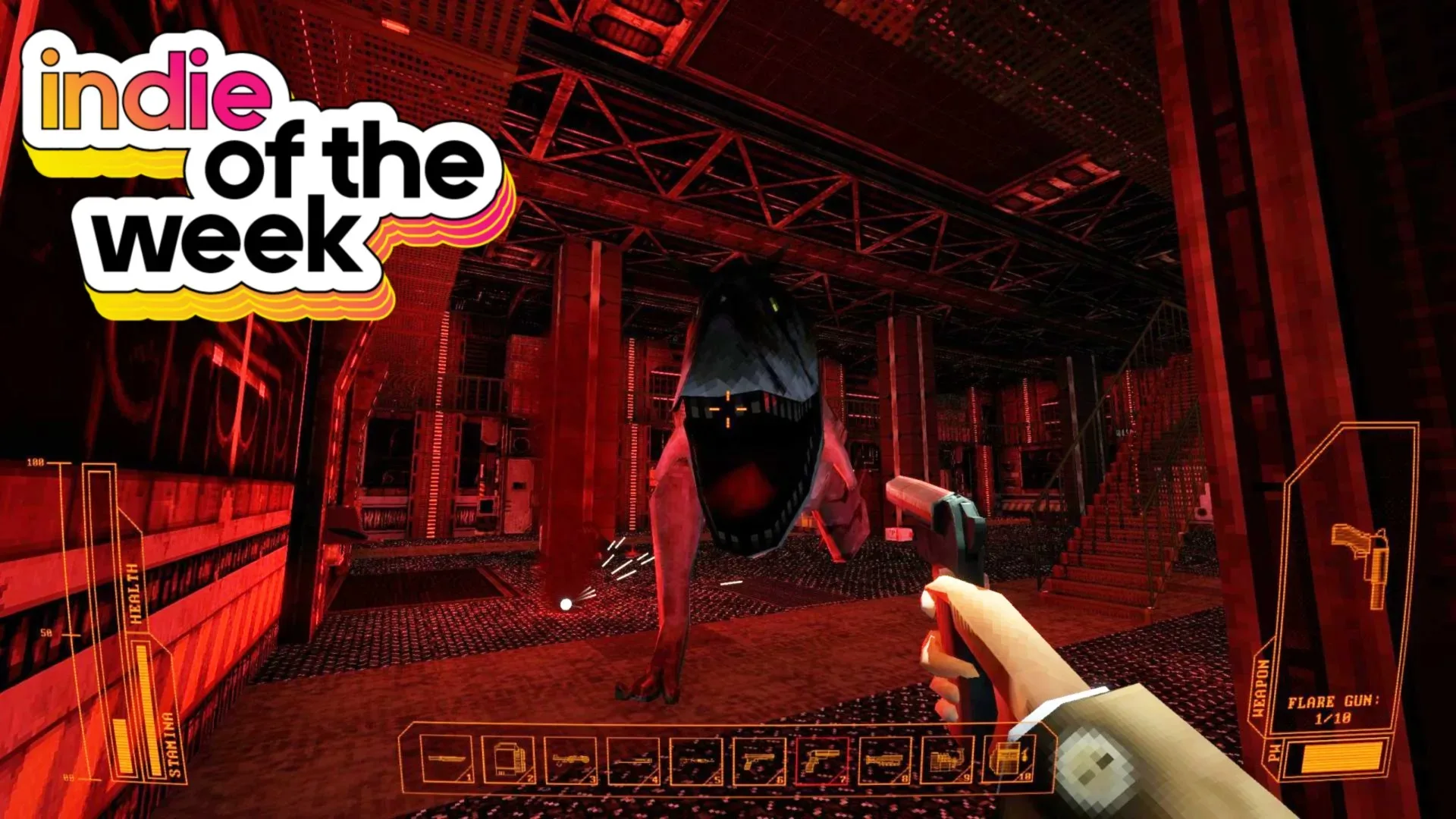
Athanasia gives players several ways to deal with predators, and its resources encourage them to think before pulling a trigger. One option is to lay traps using environmental objects and supplies: bear traps, gas canisters and explosives can be arranged into a dangerous welcome for creatures on the other side of a door. Another is to gather components for a toxin and release it into a room occupied by enemies. Stealth routes, unlocked through the right keycards and routes through the complex, are also available.
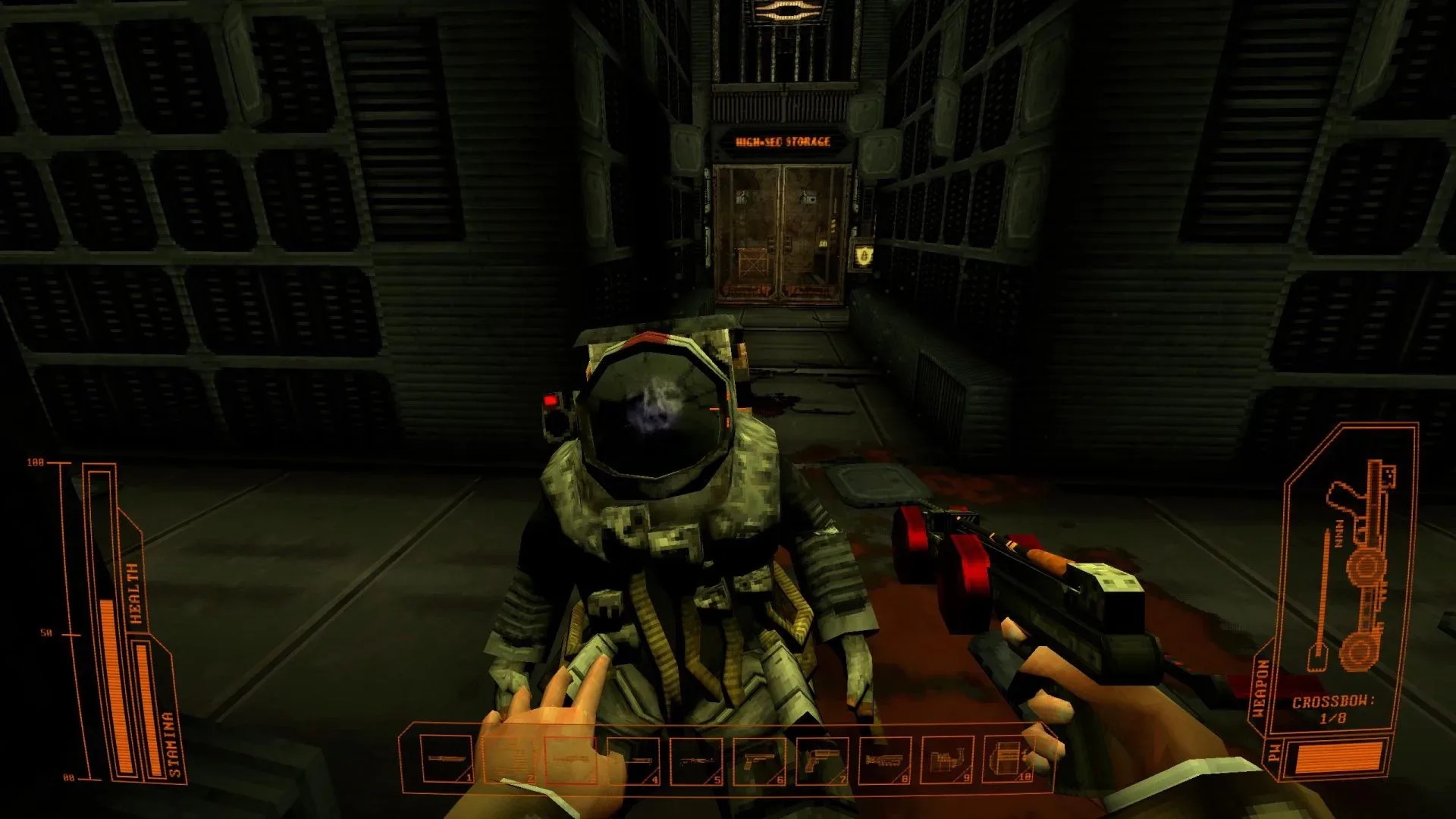
The crossbow appears particularly useful as a flexible tool rather than simply a quieter gun. Bolts can be prepared with a fungal growth that puts enemies to sleep. This creates a meaningful distinction between disabling a threat, evading it and eliminating it. Even when the player chooses violence, Athanasia asks for setup, placement and timing instead of treating combat as an endless shooting gallery.
That design is commonly associated with an immersive sim, a term for games that place multiple interacting systems in a shared space and let players devise their own solutions. In Athanasia, the relevant systems include physics objects, explosive hazards, traps, chemicals, enemy behavior, access items and a limited inventory. The label does not mean every obstacle has limitless answers; it means a player can often make a plan from the tools and environment rather than wait for a single highlighted solution.
It also changes the flavor of dinosaur survival. A raptor is not only an enemy to defeat but a risk to route around, incapacitate or bait into a prepared situation. When ammunition is scarce, even opening a door can become a decision: is this a safe passage, an escape route, or the moment to trigger a trap?
The facility is meant to be learned, not merely passed through
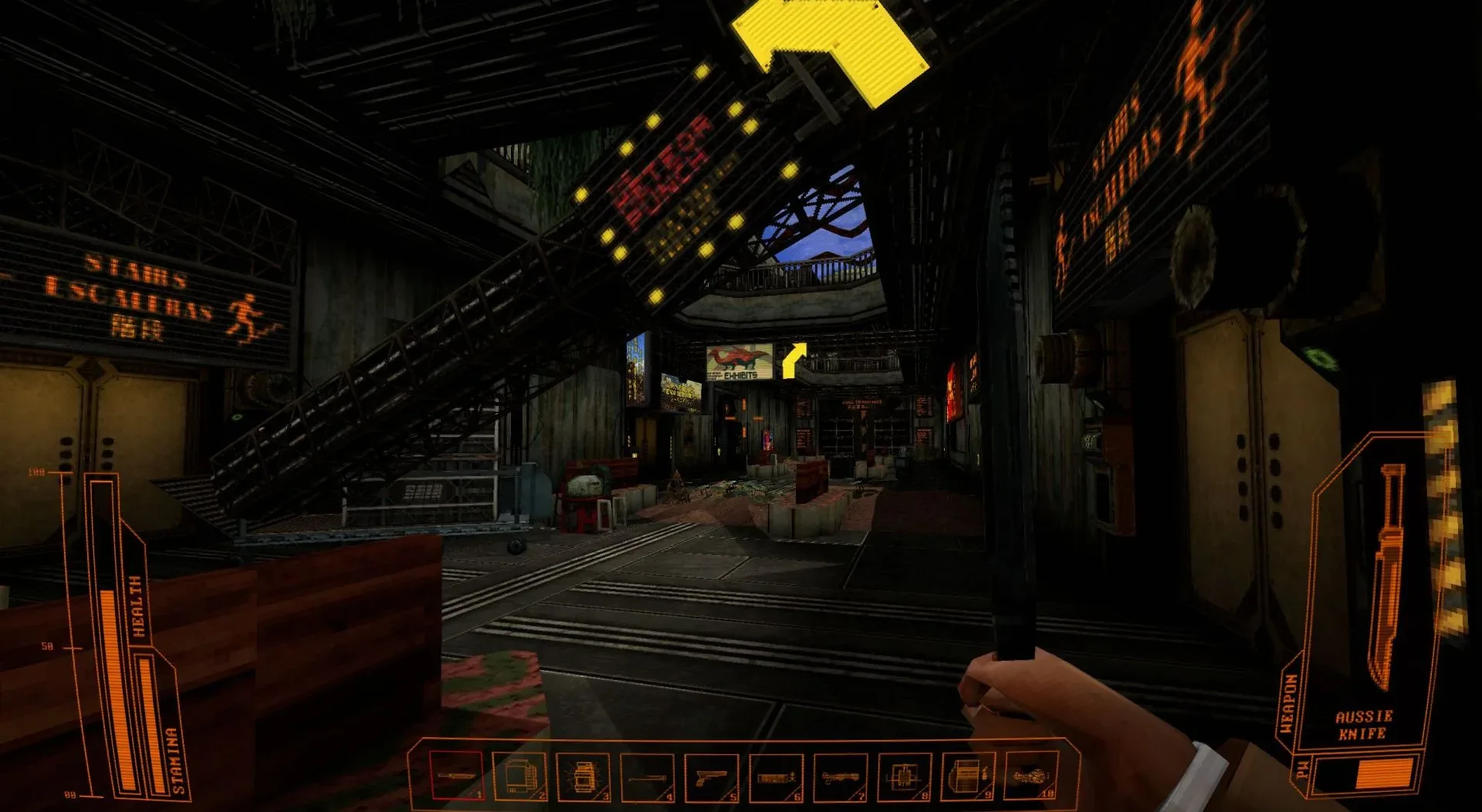
The game’s three current regions are described as sprawling, multi-level spaces with shortcuts, secrets, lifts and branching paths. Initial confusion is part of the intended rhythm. Areas become manageable as players recognize their floors, connections and routes around danger. The third currently available section is especially large, centered on a deteriorating hollow lined with pipes and unsteady walkways.
Related coverage includes Athanasia Turns Dinosaur Survival Into a Tense Immersive Sim Adventure.
That layout makes access progression feel tangible. Finding a keycard may open a lift; the lift may establish a safer connection between two floors; that connection may make it possible to conserve healing supplies and ammunition on the next attempt. Rather than a linear sequence of set pieces, the facility is built to support familiarity. The player’s increasing knowledge of the place becomes a form of progress.
There is a deliberate wrinkle: printable paper maps do not show Carmen’s current position. They can provide information about the facility, but they do not function as a live navigation display. Players will need to orient themselves through landmarks, remembered doors and the shortcuts they have opened. That could be rewarding for anyone who enjoys constructing a mental map, though it will be a tougher fit for players who prefer constant waypoint guidance.
Athanasia’s retro presentation sits alongside more modern physical interaction. Boxes can be stacked to make new paths, while movable objects can be knocked around the environment. Physics in this context means the game treats certain objects as things with position, weight and collision rather than static decoration. It can turn an overlooked crate into a step, a barricade or just an object someone has sent tumbling into a walkway while panicking. The broader practical result is that the spaces can support a little more improvisation than a strictly fixed corridor shooter.
Inventory pressure is part of the horror
Inventory management is another major source of tension. Athanasia uses a compact, grid-based system often called a Tetris inventory: each item occupies a shape and space within a finite case, so players must rotate and arrange belongings to make everything fit. Medical supplies, ammunition, weapons, tools and bulky objects all compete for the same precious room.
This turns carrying capacity into a series of uncomfortable trade-offs. Is it wiser to retain multiple types of medicine, bring spare ammunition, or carry a tool that can force certain doors? Is the large fuel container worth the space because it may enable a clever later plan? The game reportedly accounts for the chance that a player leaves a needed tool behind by placing important tools in later areas, avoiding the need for excessive backtracking simply to repair one earlier inventory choice.
That is a valuable detail in a game built around deliberate limitation. Limited inventory works best when it creates interesting priorities without silently ruining a run. By offering later opportunities to find vital equipment, Athanasia can preserve the consequence of packing decisions while reducing the risk that a player gets stuck because they made an uninformed choice hours earlier.
Slow saves and slow movement raise the stakes
Athanasia uses stationary save machines. This is a familiar survival-horror structure: a save point is a physical place in the world, not an option available at every moment. It asks players to judge whether they can safely explore one more hallway before returning to secure their progress. The consequence is more cautious play, particularly in a game where a bad encounter can cost materials as well as time.
Slow movement and limited sprint stamina reinforce that approach. The current build has no skill trees or character stats, so Carmen does not develop into a build-defined specialist with improved healing, endurance or other numerical advantages. Player expression instead comes from planning: which tools are brought, which routes are opened, whether enemies are avoided or trapped, and when supplies are spent.
Not every deliberate limitation will suit every player. Slow item switching can be especially frustrating when an enemy is rushing toward Carmen and the intended response is a prepared crossbow bolt. By contrast, slow reloads are positioned as a useful source of tension, making each shot and each moment without a ready weapon matter. The distinction is worth noting: a slow action can feel suspenseful when it is readable and manageable, but feel awkward when the interface gets between a player and a plan they have already made.
Early Access caveats remain important
The game is described as largely solid and close to a finished experience in many respects, but it remains Early Access and has seen frequent patches. One reported issue causes sound to disappear after loading a save until the game is rebooted; a fix has been indicated as forthcoming. Updates have also sometimes resolved one issue while introducing another.
That is the practical trade-off of buying in before the full release. Early adopters can play a lengthy first half and follow the expansion of the facility, but should be prepared for technical roughness, changes in behavior and incomplete content. The currently available material is estimated in-game at around seven hours, not counting time lost to deaths and reloads. Athanasia is priced below $15 at this stage.
For players who enjoy slow, exploratory survival horror, the core appeal is clear: a large industrial maze full of hungry dinosaurs, where a keycard, an improvised trap or a carefully saved crossbow bolt may be more valuable than another loud firefight. It occupies a different corner of the genre from the microphone-sensitive threat concept discussed in Alien: Isolation 2, but shares the broader interest in making players feel vulnerable rather than overarmed.
With three areas available, six planned in total, and systems that reward both patient navigation and gleeful environmental problem-solving, Athanasia’s Early Access version offers a substantial foundation. The remaining question is whether upcoming updates can preserve that careful tension while smoothing its technical edges and completing Carmen Flores’ search through the ruined facility.