Alien: Isolation 2 is set to receive a physical edition when it launches in 2027, while its developers are also planning a photo mode and an optional microphone feature that can make noise in a player’s room part of the horror. The newly detailed systems point to a sequel interested in preserving the original game’s tense, single-hunter premise while changing the conditions in which that hunter operates.
Creative Assembly discussed the sequel’s direction in a fan Q&A video. The most immediately practical confirmation is the physical release: players who prefer a disc rather than a digital purchase will have that option at launch. No further details on the edition’s contents, platforms or regional availability were provided.
A physical edition is confirmed for 2027
Physical media confirmation matters because it establishes that Alien: Isolation 2 will not be digital-only at release. For players, that can mean a tangible copy for a shelf, lending within the limits of the relevant platform, or simply buying in the format they prefer. It does not, however, tell us whether there will be multiple physical editions, what material will be on the disc, or whether any post-launch content will be planned.
Those details remain unconfirmed. The useful takeaway for now is straightforward: a boxed version is part of the game’s 2027 release plan, rather than an afterthought left to speculation.
For more context, explore Touch-Enabled PROLED MacBook Pros Keep the Same Battery-Life Ratings as Mini-LED Models.
Photo mode aims for proper camera-style controls
The sequel will also include a photo mode. The team’s stated ambition is to make it function like the sort of camera toolkit players expect, rather than a basic screenshot filter. Confirmed areas of focus include depth of field, lighting controls and filters designed to evoke the original Alien films.
Depth of field is a photographic effect that leaves one distance range sharp while softening parts of the image nearer to or farther from the chosen focus point. In a game built around a stalking Xenomorph, that could be especially useful for framing the creature as a partially obscured shape, isolating a character or object in a corridor, or making a wider exterior scene feel more cinematic. Lighting options generally concern how an image is exposed and presented; the detailed implementation has not been outlined, so players should not assume particular sliders or presets beyond the team’s broad goal.
The film-inspired filters are a notable fit for the material. Alien: Isolation 2 is again pursuing the atmosphere of the first Alien film, and photo-mode presentation tools can give players a way to capture that visual language independently of ordinary gameplay. They are also separate from the game’s survival mechanics: the announcement does not state that photo mode will affect encounters, reveal threats, or provide an advantage.
The Xenomorph will hunt in less predictable spaces
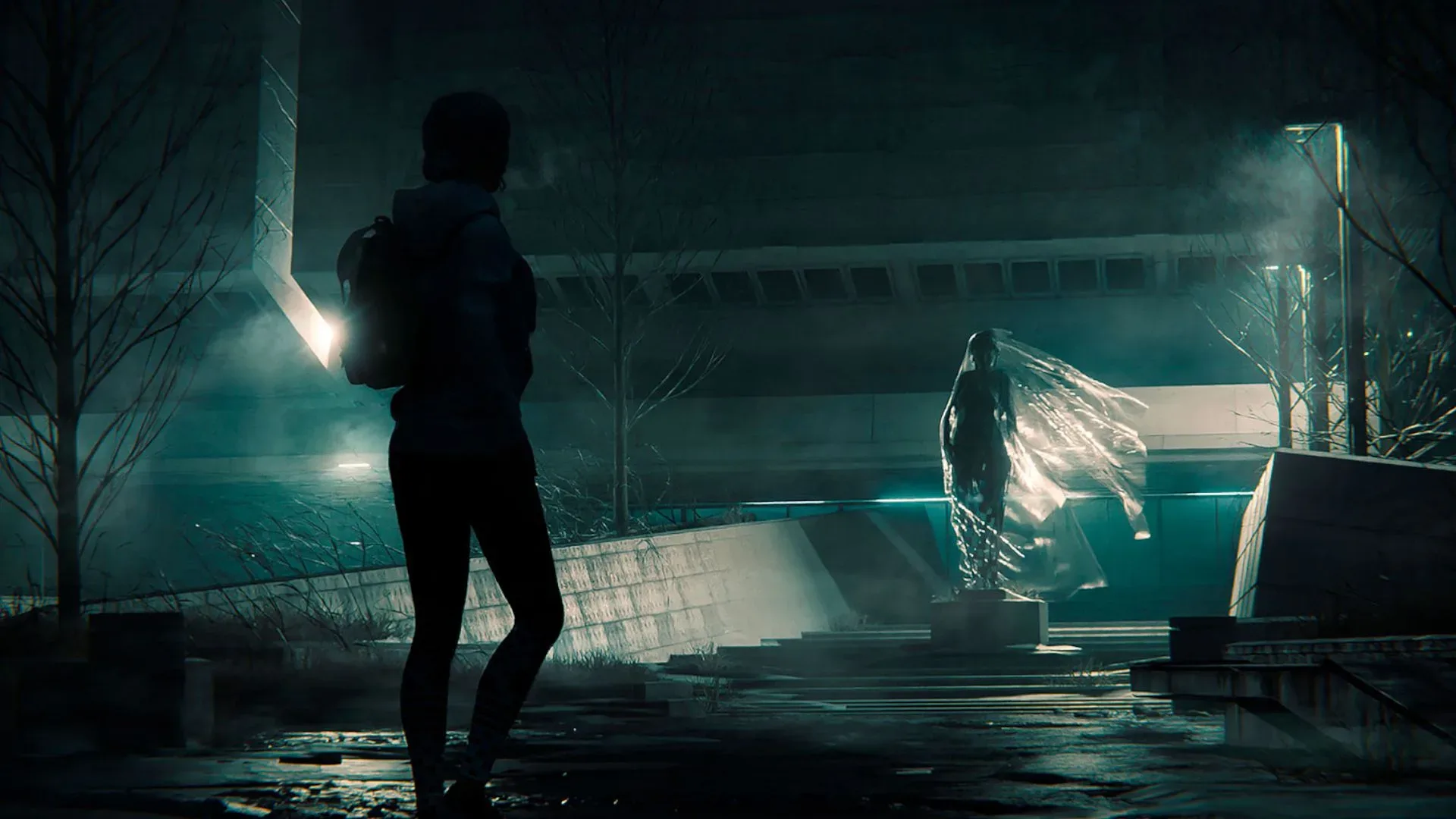
Alien: Isolation 2 takes place months after the first game. One of its major environmental changes is that part of the game will unfold outdoors. That shift has consequences for the central pursuit: the Xenomorph will be able to use the wider environment, rough weather and reduced claustrophobia to hunt more effectively.
In an enclosed space, sound and sightlines can give players clues about an approaching danger. The sequel’s outdoor sections are intended to disturb those familiar warning signs. Weather and open surroundings can make a threat harder to hear or see coming, while a broader play space gives it more ways to approach. The core idea is not merely “more room”; it is less certainty about where danger is and how it is moving.
This is an important distinction for a survival-horror sequel. A bigger environment does not automatically mean a more powerful enemy, and the available information does not specify new combat abilities or exact artificial-intelligence behavior. What has been described is a change in the hunting context. Players may need to read terrain and environmental conditions differently when the reliable tension of a tight corridor is replaced by exposure and poor visibility.
Despite that change, Creative Assembly is still framing the experience around a singular Xenomorph rather than an army of enemies. That approach follows the dramatic structure associated with the original film: one persistent creature becomes frightening because attention stays on its presence, its unpredictability and the effort required to avoid it. The sequel’s outdoor locations appear intended to challenge that formula without abandoning it.
An optional microphone setting could turn household noise into a risk
The most unusual newly described feature is an option to enable or disable microphone input. When enabled, audio picked up by a player’s microphone can be fed into the game. A scream, the sound of putting down a cup, or a dog barking could potentially draw the notice of the Xenomorph or other threats.
The feature is explicitly optional, with a toggle to turn the microphone on and off. That matters both for accessibility and for the simple realities of playing games at home. A room can be noisy for reasons outside a player’s control: other people, pets, traffic, a mechanical keyboard or a headset microphone positioned too close to a fan. The toggle means the mechanic is an elective source of pressure rather than an unavoidable requirement.
Its appeal is easy to understand. Alien: Isolation’s tension depends heavily on the gap between what a player knows and what the character can safely do. Bringing real-life sound into that loop collapses the boundary a little further. The game is no longer only asking whether someone can remain calm on a controller; it can ask whether their actual space stays quiet at the wrong moment.
Still, the key word is could. The team has described the general concept, not a complete rule set. It has not detailed how sensitive the system will be, what types of audio it recognizes, how consistently a sound attracts a threat, or whether players will be able to adjust thresholds. Until those specifics are shared, it is best understood as an opt-in immersion mechanic rather than a fully defined stealth system.
Continuity behind the sequel
About one-third of the original game’s development team is working on Alien: Isolation 2. That is meaningful continuity for a sequel with a distinct identity to protect, though it should not be mistaken for a promise that every element of the first game will return unchanged. The Q&A instead presents a team attempting to carry over the original’s priorities—film-rooted mood, vulnerability and one overwhelming pursuer—while building new situations around them.
Lead game designer James Green described the project as a dream project. The developers also said that, during hiring for the first game, they looked for people who were major fans. Taken together, those comments help explain the repeated emphasis on the original film’s tone and on details such as era-evoking visual filters. The sequel’s announced features are not solely about adding modern conveniences; they are meant to reinforce a particular kind of Alien suspense.
What remains unknown
The Q&A gives Alien: Isolation 2 a clearer shape, but many fundamentals have not been established in the information shared so far. There are no confirmed platform details, release date beyond 2027, pricing, pre-order information, physical-edition contents or full breakdown of the photo mode’s controls. The microphone feature’s technical behavior also needs further explanation.
For now, the strongest picture is of a sequel that intends to make players feel exposed in new ways. A physical edition provides a confirmed format choice. Photo mode offers tools for documenting its spaces and creature encounters. Outdoor environments seek to make the hunter harder to track. And, for players willing to enable it, a live microphone can make an ordinary noise at home feel like one more risk to manage.