Apple has set an October 28 product event in Los Angeles under the appropriately suspiciously punny banner “Pro and Tell.” The company has invited press and influencers for what is described as an all-day showcase, its third product event of the season following a smart-home-focused presentation.
The confirmed part is straightforward: Apple is holding an event, it is happening in Los Angeles, and “Pro and Tell” is the name attached to the invitation. The interesting part is everything that may be waiting behind that title. Current reporting points to a Mac- and iPad-centered presentation, potentially led by the company’s first touchscreen MacBooks.
That possibility deserves the large asterisk it comes with. Apple has not publicly confirmed a touchscreen Mac, the particular chip configurations, display technology, model sizes or any new iPad. For now, these are expectations surrounding the event rather than specifications buyers should treat as final.
What may be announced
The expected slate is unusually wide for a single Mac-focused event. The reported possibilities include touchscreen MacBook Pro models, additional Macs powered by Apple’s M6 chip, a refreshed 14-inch MacBook Pro, an updated iMac, and an iPad mini moving to an OLED display.
The touchscreen MacBook rumor is the headline-grabber because it would represent a meaningful shift in how Apple positions the Mac. The reported models would come in 14-inch and 16-inch sizes, use M5 Pro and M5 Max processors, feature OLED panels, and weigh substantially less than today’s Pro models.
Meanwhile, the rumored 14-inch MacBook Pro and iMac refreshes are expected to use the M6. That chip already debuted in August in the latest Mac mini, so an October expansion to more of Apple’s desktop and notebook hardware would fit the broad outline of a platform rollout. It would not, however, answer the most important purchase questions: exact performance, memory configurations, ports, battery life, pricing and release timing are all unconfirmed in the information currently available.
Why a touchscreen Mac would matter
A touchscreen laptop is not merely a familiar laptop with one extra input method. It changes the physical assumptions of everyday use. A conventional MacBook workflow centers on a keyboard, trackpad and pointer. Direct touch means a person can manipulate an interface element by reaching for the screen itself: tapping a control, scrolling a page, moving a window or drawing in a compatible app.
That does not guarantee a better experience. Touch can be valuable for quick navigation, creative work and certain kinds of software, but it also raises design questions. Mac software has historically been designed around pointer precision and menus that may be less comfortable to use with a fingertip. Screen reach, viewing angle and the ergonomics of repeatedly lifting a hand from the keyboard matter too. Apple’s event, if the touchscreen reports are accurate, would need to establish not just that touch hardware exists, but what the company believes it improves.
For players, a touch-enabled MacBook would not automatically make the Mac a new gaming category. Touch input only becomes meaningful in games that support it well, and there is no indication yet of any game-specific feature, software initiative or controller change tied to this event. Still, the prospect matters to the wider PC space because laptop hardware choices influence how developers and players think about interfaces across devices.
That is particularly true for games and companion apps that already accommodate multiple control methods. A touchscreen could offer another way to handle maps, menus, inventories or social features, but it would be premature to assume a universal benefit. Competitive games and genres built around keyboard-and-mouse controls may see little reason to alter their existing design. The relevant question will be support, not simply whether a display can register a tap.
OLED, explained without the spec-sheet fog
The reported touchscreen MacBooks and iPad mini are both said to use OLED displays. OLED is short for organic light-emitting diode. Unlike a conventional display that relies on a separate backlight, OLED pixels can emit their own light. In practical terms, that can allow very dark black levels because pixels can switch off individually, while also enabling strong contrast.
Those properties can be attractive for films, artwork and games, especially scenes built around darkness and bright highlights. But a display label alone cannot settle whether one screen is better than another in every setting. Brightness behavior, color tuning, refresh characteristics, software support and the specific panel implementation all affect the result. None of those details have been confirmed for the rumored products.
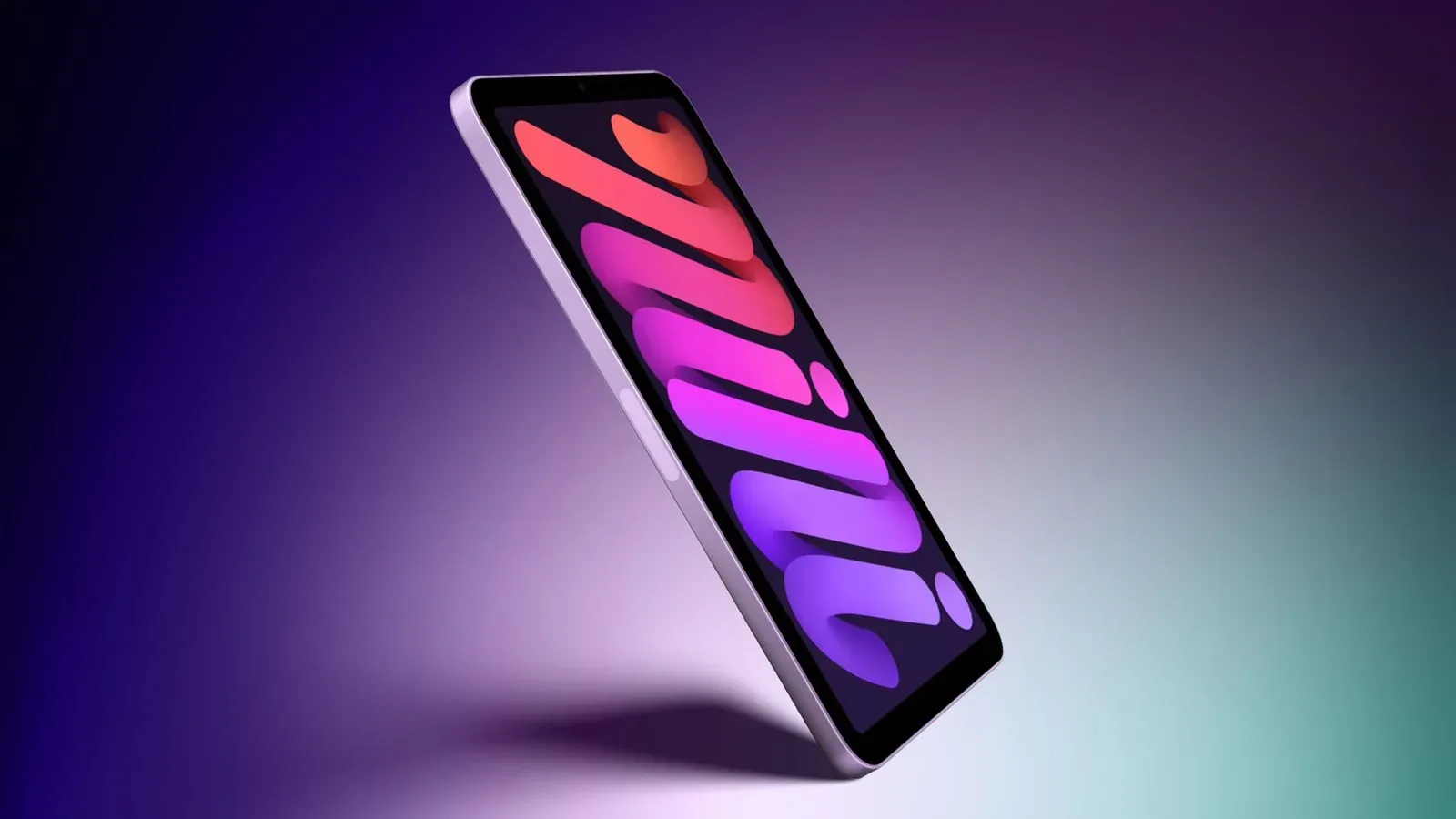
An OLED iPad mini would be significant in a different way. The mini’s smaller form factor makes it a portable device first, and a display change could improve its appeal for video, reading, art and games that work with touch controls. Yet it remains an expected announcement, not a confirmed product. Anyone considering a current iPad mini should separate the event’s confirmed date from the unconfirmed hardware attached to it.
M5 Pro, M5 Max and M6 are not interchangeable labels
The chip names in these reports may sound contradictory at first: rumored touchscreen MacBook Pros are tied to M5 Pro and M5 Max, while the anticipated 14-inch MacBook Pro and iMac updates are tied to M6. They describe different expected product branches, not necessarily a single lineup all using one processor.
Apple’s “Pro” and “Max” labels conventionally indicate higher-tier variants aimed at more demanding work than the baseline family chip. The source material specifically associates M5 Pro and M5 Max with the reported touch-equipped 14-inch and 16-inch notebooks. Separately, it connects M6 with a refreshed 14-inch MacBook Pro and iMac, while noting that M6 arrived first in the latest Mac mini in August.
That distinction is important for shoppers. A newer numerical generation does not, by itself, reveal how every model will compare across every task. Chip class, thermal design, memory capacity, software workload and the final machine configuration all matter. Until Apple presents the machines and full specifications, the M5 Pro/M5 Max and M6 references are useful signals about the rumored product map, not a completed performance chart.
Practical implications for Mac owners and would-be buyers
For people who need a computer immediately, an unannounced product should not be treated as a guaranteed reason to delay a purchase. The event is real; the devices remain subject to change. A buyer with a specific near-term need should judge existing hardware on its documented capabilities rather than a rumor list.
For those who can wait until October 28, the event could clarify several decisions at once. Prospective MacBook Pro owners may learn whether touch, OLED and reduced weight are genuinely part of a new Pro direction. Desktop shoppers may find out whether the M6 expansion reaches the iMac as expected. And iPad mini fans may finally get a clear answer on whether the compact tablet is receiving an OLED upgrade.
It is also worth resisting the urge to treat a likely Mac announcement as a gaming-performance promise. Apple’s hardware can be relevant to players, particularly those using Macs for indie games, streaming, creative projects or cross-platform libraries, but no gaming announcements have been described for “Pro and Tell.” If gaming is the main use case, the details that matter will be the eventual hardware specifications, supported software and the games an individual actually intends to play—not an event name or a display technology in isolation.
That measured approach is useful across the PC market. As explored in our look at why gaming connections involve more than download speed, a single headline specification rarely tells the whole practical story. Hardware is much the same: a chip generation, panel type or input feature may be consequential, but its real value depends on the complete device and the work—or play—being asked of it.
What to watch on October 28
The October 28 presentation has a clear hierarchy of certainty. Apple’s Los Angeles event is confirmed. A Mac and iPad focus, touchscreen MacBooks, OLED-equipped devices, M5 Pro and M5 Max configurations, and wider M6 hardware are all reported expectations.
If touchscreen MacBooks do appear, the key details will be how Apple implements touch in macOS hardware, whether OLED is standard across the rumored models, and how the company differentiates the M5 Pro/Max machines from any M6 refreshes. If they do not appear, “Pro and Tell” could still be an important checkpoint for the next stage of Apple’s Mac and iPad lineups. Either way, the invitation has turned October 28 into a date worth watching rather than a completed spec sheet.