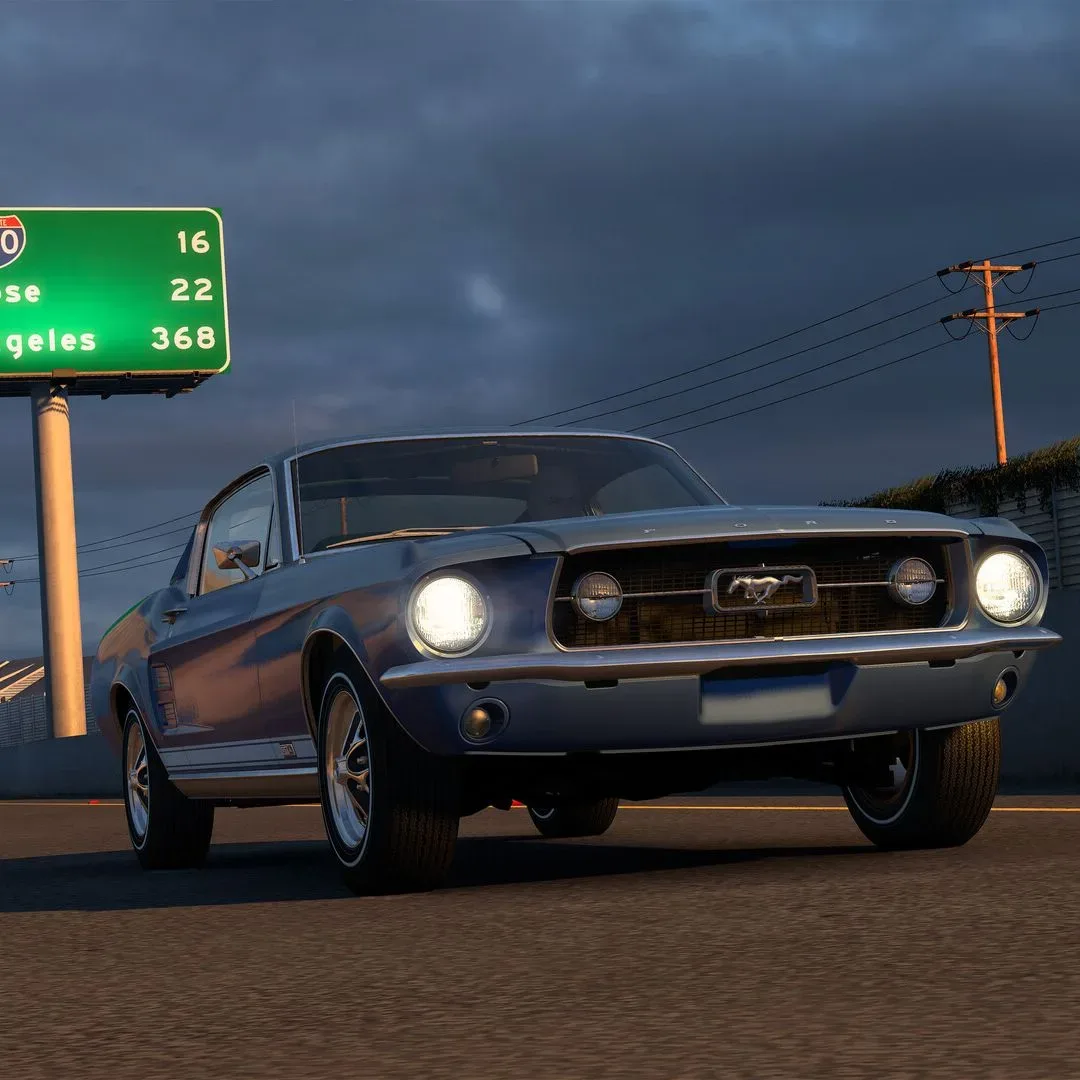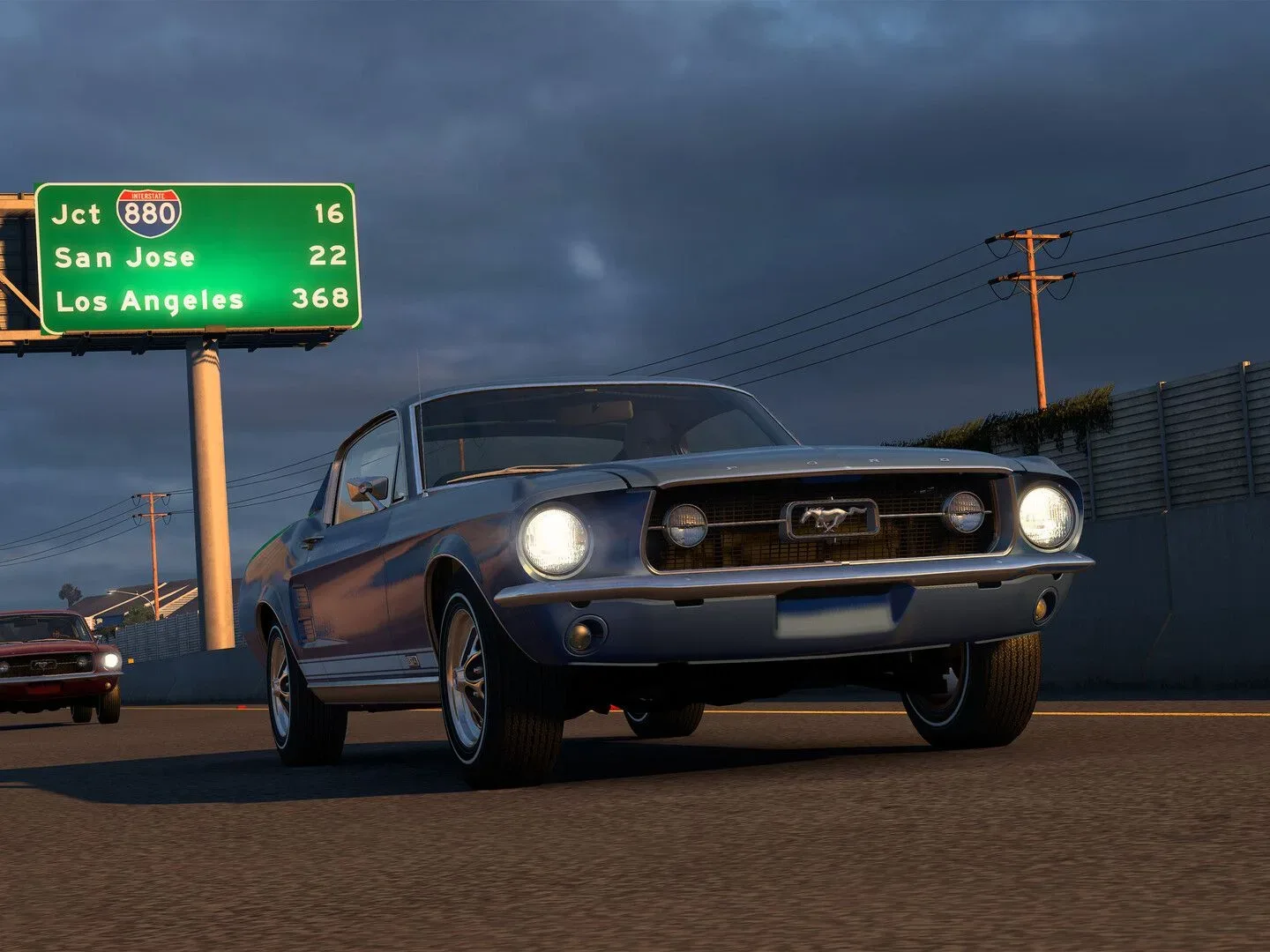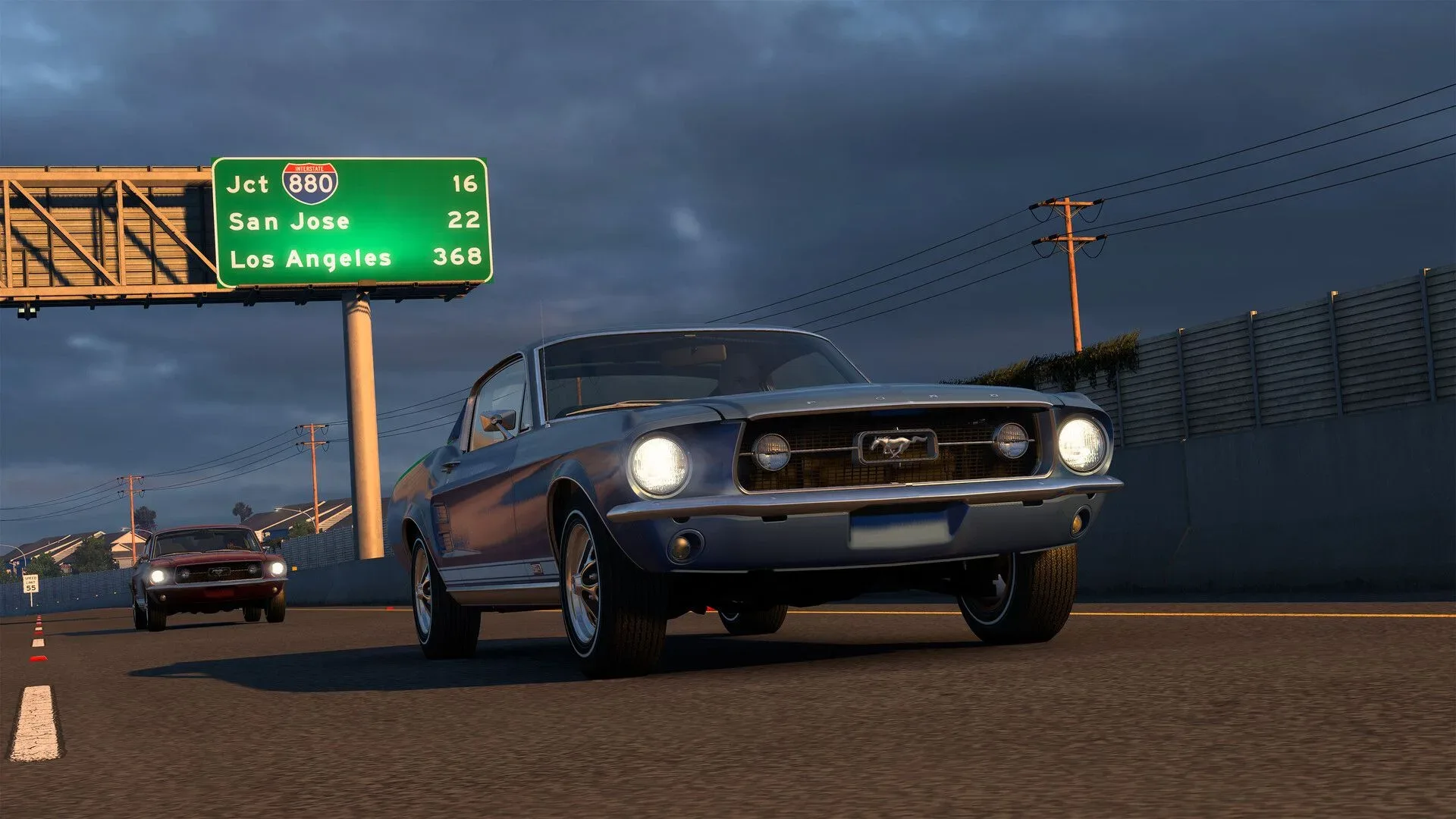
American Truck Simulator has set a new all-time concurrent-player record on Steam, reaching 21,318 players following the arrival of the Road Trip: Ford DLC. The expansion is a notable detour for a game built around commercial hauling: it adds licensed Ford passenger vehicles, allowing players to explore in something other than an 18-wheeler and to tackle new classes of delivery jobs.
SCS Software said more than 20,000 people were in-game at the time of its celebratory social-media post, split between traditional trucking and the new road-trip option. The documented peak of 21,318 surpasses the game’s previous high of 19,138 players, recorded around its 2016 launch.
That makes the result more meaningful than a simple day-one DLC bump. A launch peak is often a game’s easiest moment to attract a large audience; exceeding it years later suggests that the new vehicle category connected with both long-standing players and people curious about a different way to use the simulator’s roads.
A truck simulator makes room for cars
The Road Trip: Ford DLC includes a Ford F-150, Ford Bronco, Ford Crown Victoria and a 1967 Ford Mustang. Rather than replacing the core trucking loop, the pack sits alongside it. Players can use the vehicles for unstructured cruising or choose the newly added delivery-job classes.
For more context, explore How to Prepare a Samsung Galaxy Phone for the One UI 9 Update.
That distinction matters. American Truck Simulator remains a trucking game: its established economy involves earning money through industrial cargo hauls, purchasing truck upgrades and working toward paying for them. Road Trip appears to widen the ways players can engage with the same virtual road network, rather than changing the game’s basic identity.
For players who prefer the quiet, scenic side of the simulation, passenger vehicles offer a more casual fit. A conventional car is closer to the vehicle many people know from daily life, and it can make a drive feel less like a freight assignment and more like an open-ended tour. The supplied vehicle list also offers distinct road-trip imagery: a pickup, an SUV, a police-sedan-shaped staple of American roads, and a classic Mustang.
The DLC is priced at $8 and is centered on normal road vehicles rather than heavy-haul equipment. That comparatively focused premise may be part of the appeal. It gives existing owners a fresh activity without requiring them to leave the familiar map, while the Ford branding supplies recognizable vehicles for players who might not otherwise be interested in a trucking-focused simulation.
Related coverage includes American Truck Simulator's Road Trip: Ford DLC Drives Steam Player Count to New Record.
What the Steam number does—and does not—say
“Concurrent players” means the number of people playing at the same time. It is not the same metric as copies sold, total owners, lifetime players or even the number of people who bought the DLC. A concurrency peak is best understood as a snapshot of attention: at its highest observed point, 21,318 Steam users were active in American Truck Simulator simultaneously.
It also cannot establish precisely why each person logged in. Some may have been trying Road Trip: Ford; others may have returned to drive trucks as usual; and some may have arrived because the record itself generated interest. Still, the timing makes the DLC an important part of the story. The peak occurred after the Ford pack launched, and the developer explicitly referenced players using both trucks and Road Trip vehicles.
The figure should not be judged only against the very largest games on Steam. American Truck Simulator serves a specialized simulation audience, and its achievement is best measured against its own history. Passing a launch-era peak after a long period on the market is a strong sign that its audience has remained engaged and that a carefully chosen expansion can bring substantial attention back to an established game.
Why this addition fits the game’s strongest idea
The central appeal of a driving simulator is not always the task attached to the drive. Cargo delivery gives trucking a structure: accept a job, move goods, earn money and build toward better equipment. But the roads themselves are also the attraction. Long highway stretches, changing scenery and the simple rhythm of a sustained drive can be satisfying even when players are not focused on maximizing an in-game balance.
Road Trip: Ford leans into that latter appeal. Cruising at a self-chosen pace is specifically part of the DLC’s promise, while delivery jobs preserve a purpose for players who want direction. It is a practical two-track design: sightseeing is available for people seeking the journey, and jobs are available for people seeking a goal.
The choice of cars also changes the scale of the fantasy without abandoning it. Driving a truck emphasizes the responsibilities of a working vehicle: cargo, upgrades and long-distance logistics. Driving a Mustang, Bronco, Crown Victoria or F-150 emphasizes the road itself. Both approaches can occupy the same simulated America, but they invite different expectations from a trip.
That may explain why an expansion that initially sounds like a contradiction—cars in American Truck Simulator—has generated so much interest. The DLC does not argue that trucking is no longer the point. Instead, it recognizes that the highways connecting the game’s locations are a destination in their own right.
The practical takeaway for returning players
Players returning specifically for Road Trip: Ford should expect an additional vehicle mode, not a wholesale reinvention of the game. The known additions are the four licensed Ford models, the ability to cruise, and new delivery-job classes. The established trucking economy remains relevant for anyone who wants to continue upgrading trucks and hauling industrial cargo.
For newcomers, the record provides a useful signal of active interest but not a promise that every player will prefer the same activity. Those drawn to logistics and progression can approach the game through conventional freight work. Those more interested in scenery and relaxed driving may find the Ford vehicles a more approachable entry point. The DLC broadens the range of motivations without erasing the original one.
It is also worth keeping expectations tied to the available details. The evidence supports a new way to drive through the existing experience, with both leisurely and job-based uses. It does not establish a separate car-racing game, a new map, or a replacement for the trucking systems that defined American Truck Simulator from the start.
A record built on expansion, not abandonment
The most interesting part of the new peak is that it comes from extending a clear premise rather than discarding it. American Truck Simulator has long offered economic goals through freight hauling, but its simulated highways have always supported the simple pleasure of a drive. Road Trip: Ford gives that second element a formal place in the game.
At 21,318 concurrent players, the result is now the game’s largest Steam moment on record. Whether every player stays for trucking, takes a Ford onto the open road, or alternates between both, the immediate response shows that the community was ready for a wider interpretation of the American road trip.