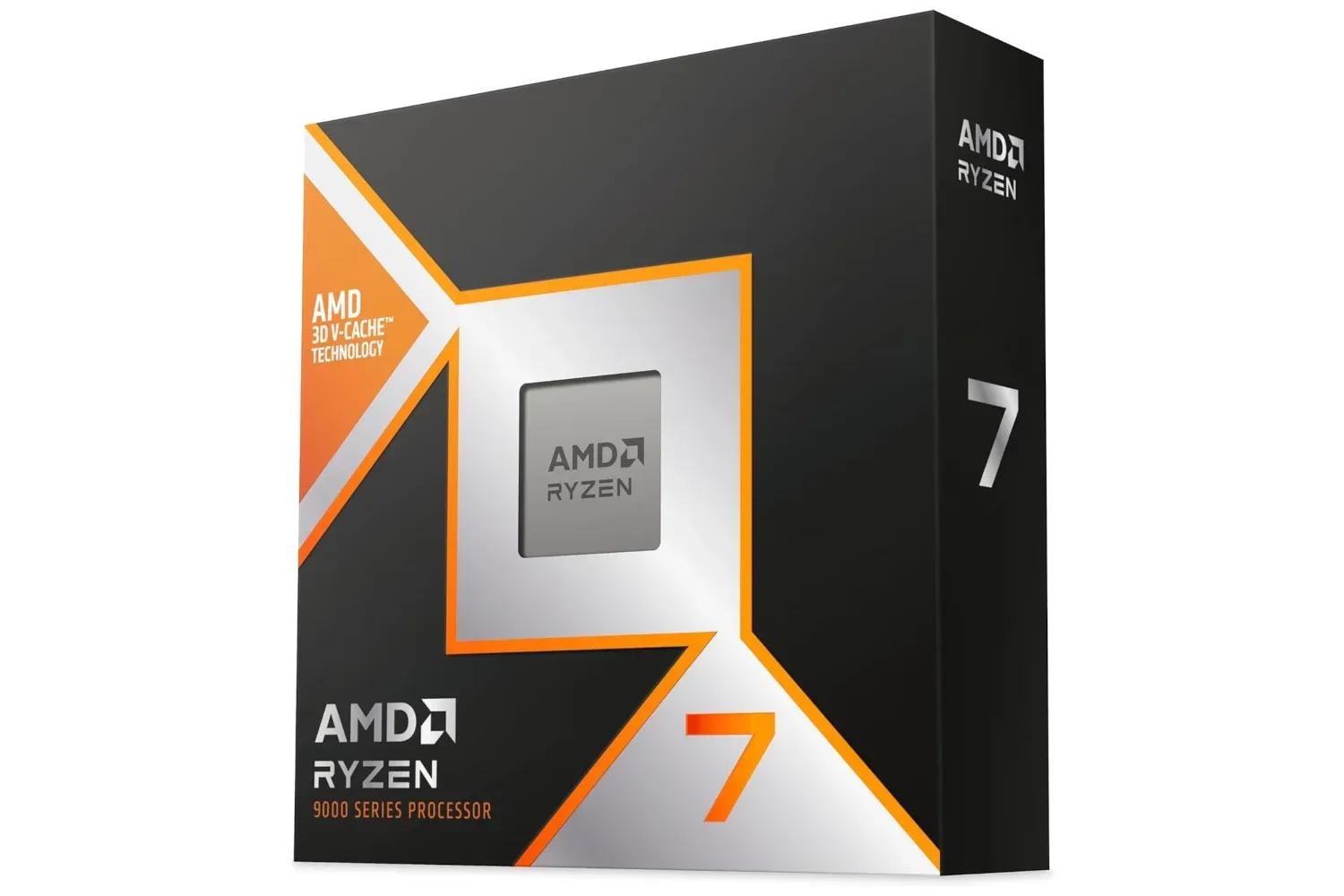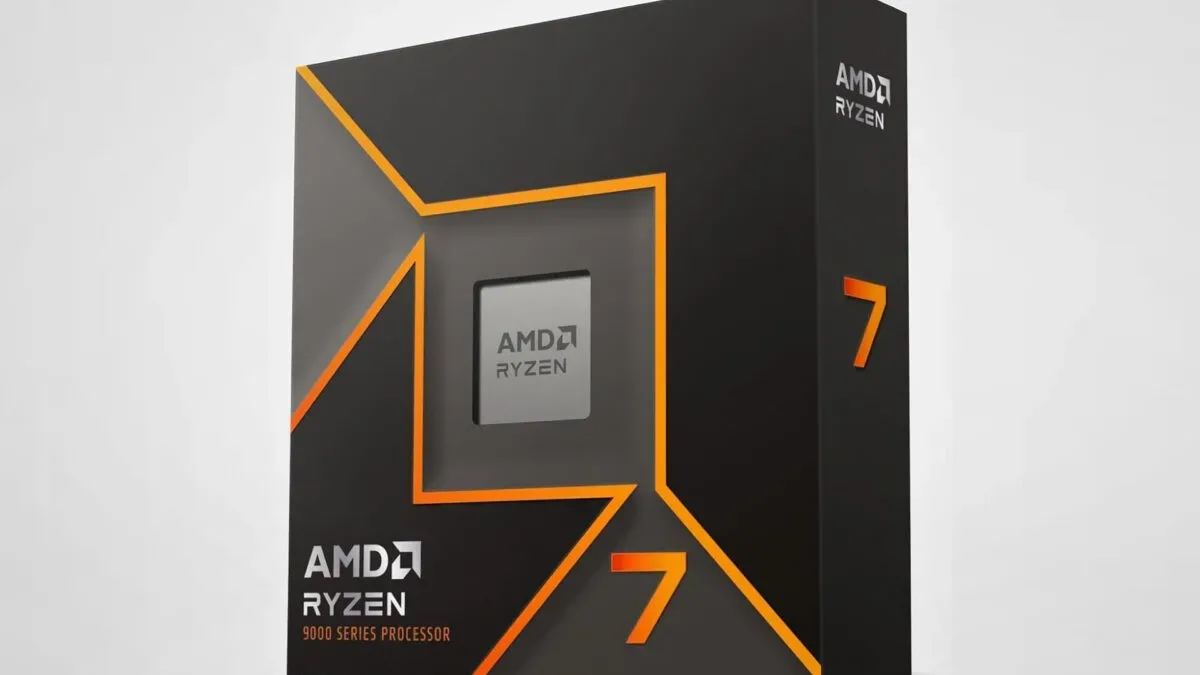
AMD’s Ryzen 7 9800X3D is currently listed at $369 after a coupon is activated on its Amazon product page. The page shows a $411 price before that extra discount, while the stated reference price is $479. That makes the coupon worth $42 against the uncouponed listing and puts the processor $110 below the reference price.
For anyone assembling a high-end gaming PC or revisiting an AM5 build, that difference is meaningful because the CPU is only one part of an increasingly expensive shopping list. DDR5 memory in particular has become costlier as demand from AI data centers pressures DRAM supply. A lower processor price does not make the rest of a system cheap, but it can leave more room in the budget for memory, cooling, storage, or a graphics card.
There is one important catch with any retailer coupon: the $369 figure depends on the coupon being present and successfully applied before checkout. The visible item price alone may be $411. Pricing, coupon eligibility, stock, and the product-page offer can change, so shoppers should verify the final cart total rather than assume the discount has been included.
What the Ryzen 7 9800X3D Brings to a Gaming PC
The Ryzen 7 9800X3D is an eight-core, 16-thread processor based on AMD’s Zen 5 architecture. AMD cites a double-digit instructions-per-clock, or IPC, improvement over the prior generation, alongside improved power efficiency. IPC is a measure of how much work a processor can complete per clock cycle; it is one factor in performance, distinct from the clock-speed number commonly printed on a specification sheet.
Its stated boost clock reaches up to 5.2GHz, but the defining feature is not simply frequency. This is an X3D processor, meaning it uses AMD’s second-generation 3D V-Cache technology and has 96MB of L3 cache.
Cache is very fast memory located close to the CPU cores. L3 cache is a larger, shared cache tier that can hold data a processor may need again soon. When game data can be accessed there instead of being fetched from main system memory, the processor can spend less time waiting. That is the basic reason cache-heavy gaming chips can make a difference even when another CPU has broadly similar core counts or headline clock speeds.
The benefit is especially relevant in games that ask the processor to manage a lot at once: high-frame-rate competitive shooters, large simulations, and strategy games with increasingly busy late-game states. In those cases, the goal is not only a higher average frame rate. More consistent performance can also matter, because uneven frame delivery is what players experience as stutter or sudden slowdowns.
That does not mean a CPU upgrade changes every game by the same amount. The practical limit in a PC is often the graphics card, especially at demanding resolutions or visual settings. The 9800X3D’s appeal is that it is designed to reduce CPU-side constraints in games that can take advantage of its larger cache, rather than being a universal substitute for a faster GPU.
Related coverage includes AMD’s Ryzen 7 9800X3D drops to $369 with Amazon coupon.
Why the Cache Layout Matters for Cooling
AMD changed the physical arrangement of the cache for this generation, placing it beneath the processing cores rather than on top of them. The claimed result is better thermal behavior than the Ryzen 7 7800X3D it replaces. Better heat transfer matters because modern processors dynamically adjust their operating behavior within power and temperature limits; cooling is part of allowing a chip to sustain its intended performance.
In practical buying terms, the source information indicates that the 9800X3D can be handled by a mid-range air cooler rather than requiring a costly liquid-cooling setup. That is useful for a build budget, but it should not be read as a reason to skip cooler compatibility checks. Case clearance, mounting hardware, airflow, and motherboard layout still matter. A cooler needs to fit both the chassis and the AM5 socket mounting system.
For a new builder, the wider lesson is that a processor price should be considered alongside the platform costs it triggers. A discounted CPU may still require a motherboard, DDR5 kit, cooler, storage, case, and power supply. Saving $110 from the listed $479 reference price is real, but it is most useful when it is directed toward a part the build actually needs rather than prompting an unnecessary upgrade elsewhere.
AM5 Owners Have the Simplest Upgrade Path
The Ryzen 7 9800X3D uses the AM5 platform. Existing AM5 motherboard owners can potentially retain their motherboard and current DDR5 memory, provided their board supports the processor after a BIOS update. A BIOS is the motherboard’s low-level firmware; it helps the board recognize and initialize installed hardware during startup.
That is the central compatibility advantage for an AM5 upgrade. Keeping the motherboard and RAM avoids some of the largest accompanying costs of a platform change, particularly at a time when DDR5 pricing is under pressure. It also means the upgrade can be focused on the CPU, assuming the system’s cooler is adequate and compatible.
However, “after a BIOS update” deserves to be taken literally. Buyers should check their motherboard maker’s CPU support list and identify the BIOS version required for the 9800X3D before ordering. They should also determine whether the board can update its BIOS without an older supported processor installed. The supplied details establish AM5 compatibility after a BIOS update, but individual board procedures and supported firmware versions remain manufacturer-specific.
For an AM4 owner, the calculation is very different. Moving to the 9800X3D means changing to an AM5 motherboard and DDR5 memory as well. The CPU’s sale price can soften that jump, but it does not erase the cost of switching platforms. AMD has said it intends to support AM5 over the long term, which gives a new AM5 build a stronger upgrade rationale than a one-generation-only socket would offer, but that promise should still be weighed against the cost of the complete transition.
A sensible pre-purchase checklist
- Activate the coupon: Confirm the product-page coupon is selected and that the checkout total reflects the $369 offer.
- Identify the current platform: AM5 users may be able to reuse a board and DDR5 kit; AM4 users should budget for both replacements.
- Check motherboard support: Find the board maker’s CPU support information and required BIOS version for the Ryzen 7 9800X3D.
- Plan the update safely: Review the manufacturer’s BIOS update method before removing an existing CPU or ordering a new build around the chip.
- Confirm cooler and case fit: A mid-range air cooler may be sufficient, but socket mounting, case clearance, and airflow still need verification.
- Budget for the complete system: Do not treat the processor discount as proof that DDR5 or the rest of the build has become inexpensive.
Why Memory Costs Change the Value Conversation
The unusual part of this offer is the surrounding component market. When memory prices rise, a gaming-PC builder has less flexibility: a platform upgrade that needs DDR5 becomes more expensive even before a CPU, motherboard, or cooler is selected. In that environment, a lower price on a processor can be more useful than the same nominal discount during a period of cheap RAM.
For an AM5 owner who already has usable DDR5, the value proposition is more direct. Keeping the existing memory avoids exposure to current kit prices altogether. For a builder starting from scratch, the discount can be treated as part of the RAM budget rather than as permission to overspend on another component.
The 9800X3D is positioned as AMD’s gaming-focused flagship choice, with AMD marketing it as the world’s fastest gaming processor. That is a manufacturer claim, not a guarantee that it is the right purchase for every workload. Eight cores and 16 threads are a strong fit for gaming, but shoppers whose systems are primarily for a different kind of work should consider their own software needs, platform costs, and priorities rather than buying solely on the X3D label.
Gaming hardware decisions also exist alongside the games people plan to play. PC audiences include both technically demanding competitive and simulation players, as well as players who favor games outside the usual always-online model; that wider conversation is reflected in the discussion around resisting live-service by default. The relevant point here is not that one processor changes a game’s design, but that different games place very different demands on a PC.
Bottom Line on the $369 Listing
At $369 with the displayed coupon, the Ryzen 7 9800X3D is notably cheaper than its $479 reference price and also below the $411 non-coupon listing. Its combination of eight Zen 5 cores, 16 threads, 96MB of L3 cache, and an advertised boost of up to 5.2GHz makes the deal most compelling for gamers building around CPU-sensitive titles or trying to improve frame-time consistency at high frame rates.
Existing AM5 users stand to benefit most because they can potentially keep their motherboard and DDR5 memory after completing the necessary BIOS update. AM4 users should view it as a full platform move, not merely a processor swap. In either case, the crucial final step is simple: ensure the coupon is activated and verify that the cart actually shows the $369 price before buying.
Shop the products
Check current price, model and availability at the retailer.