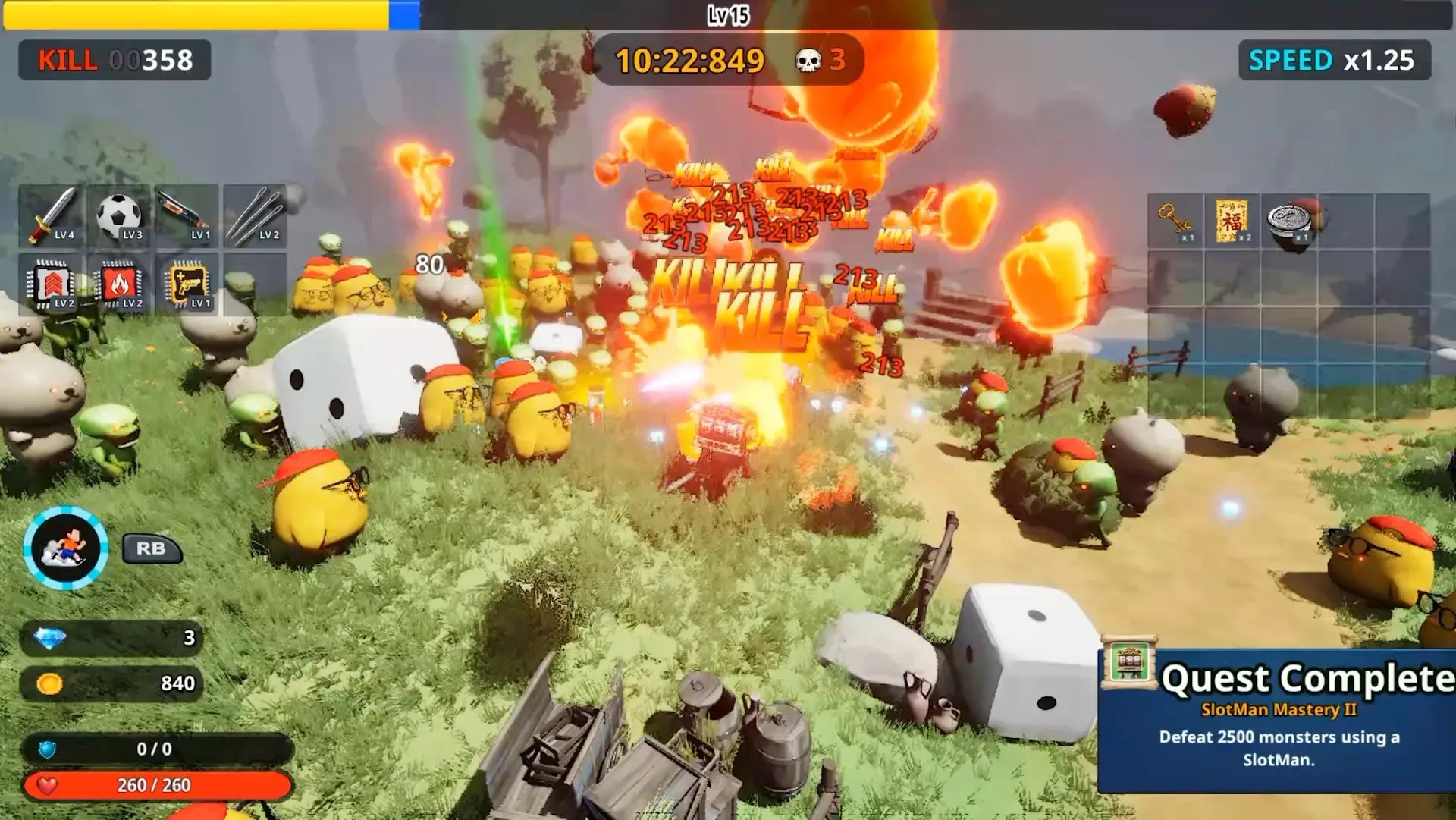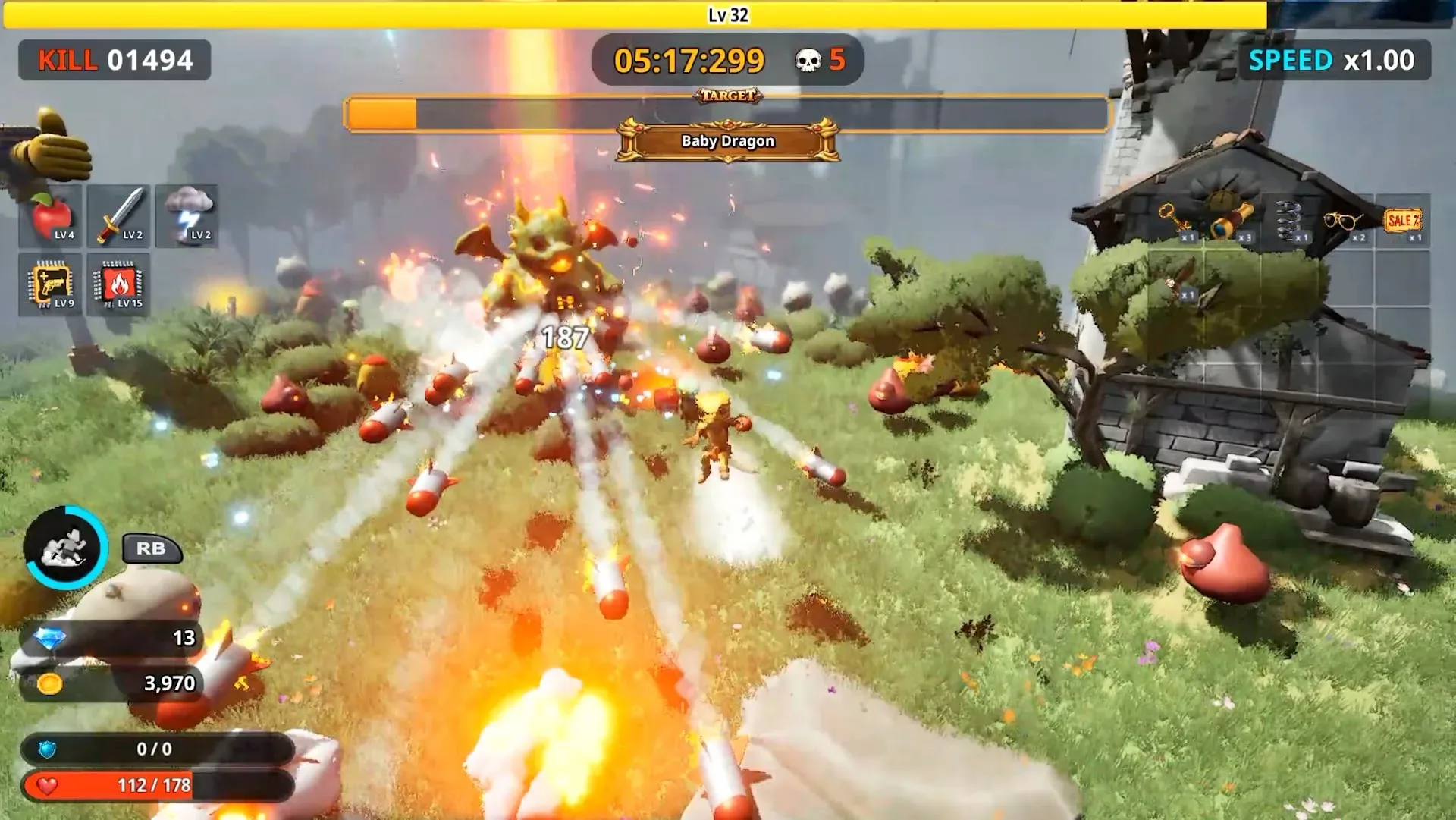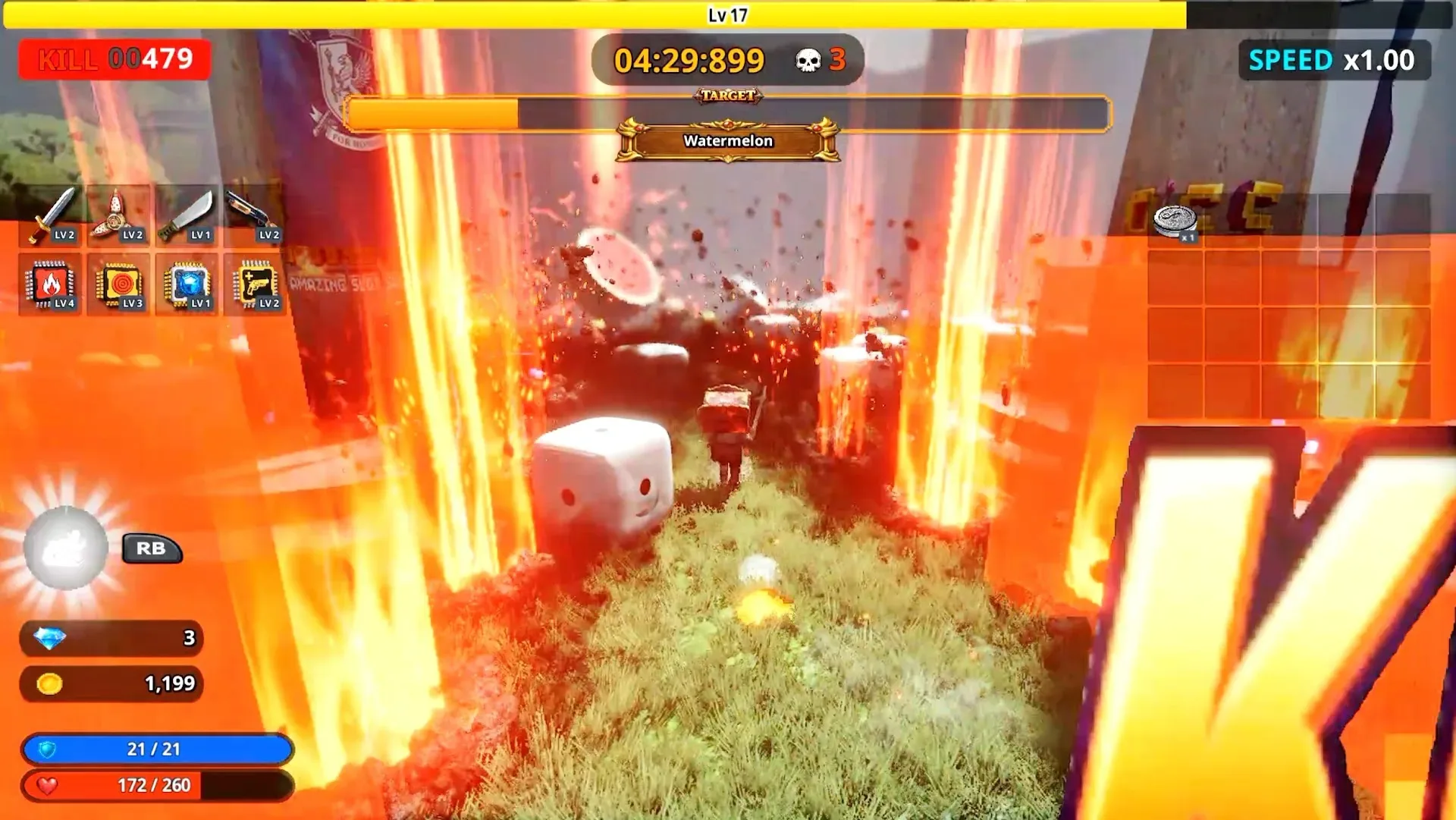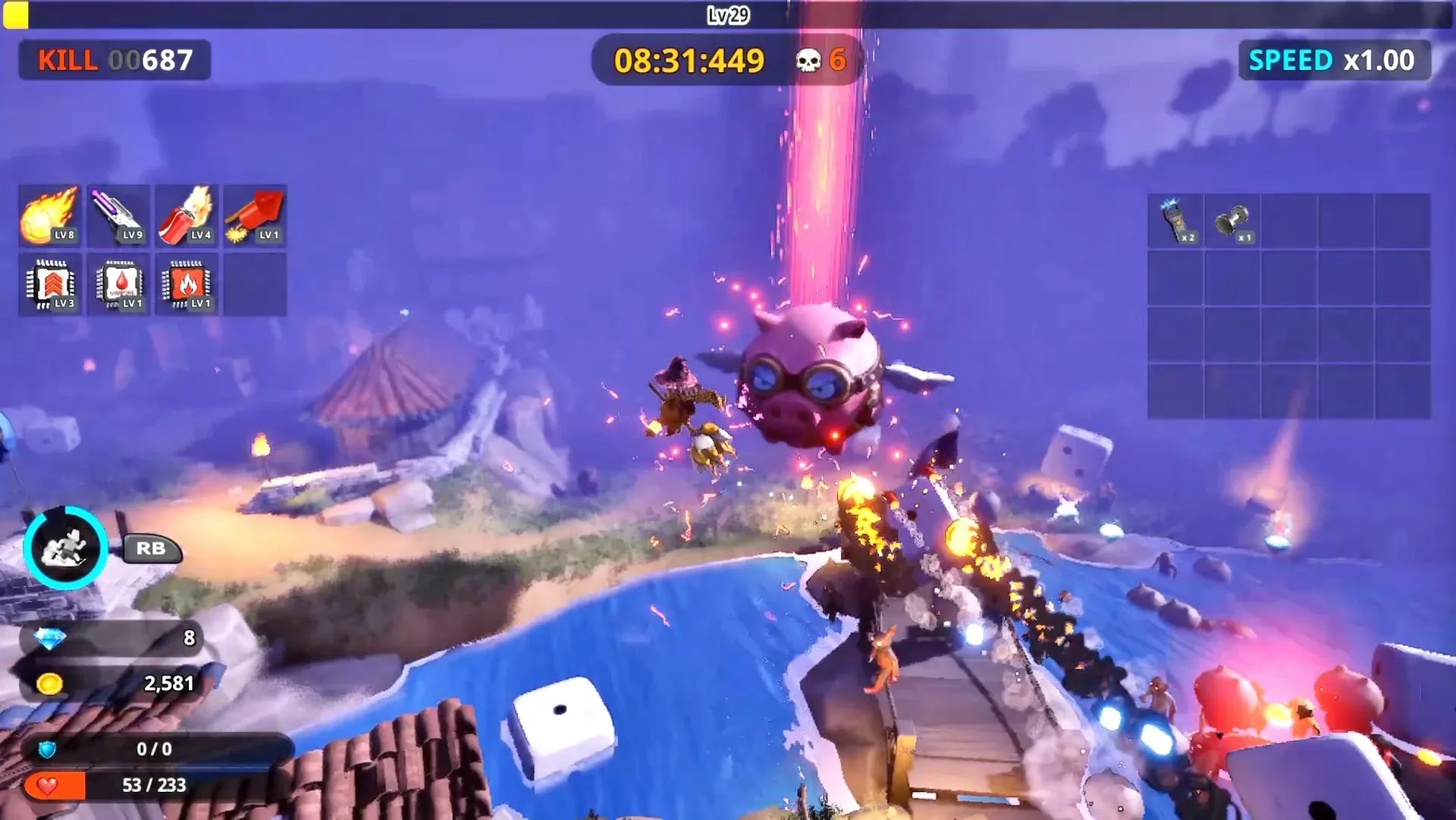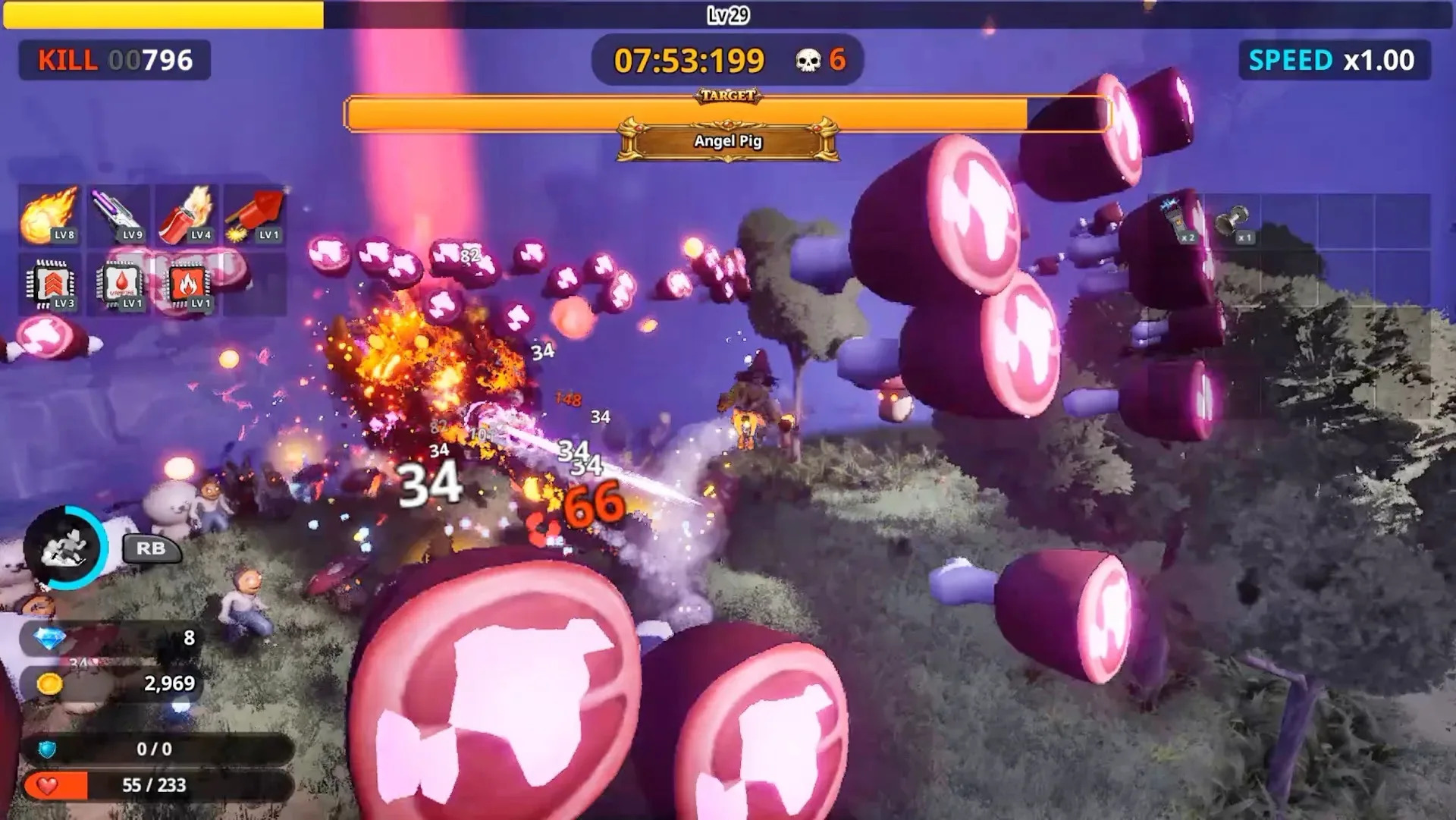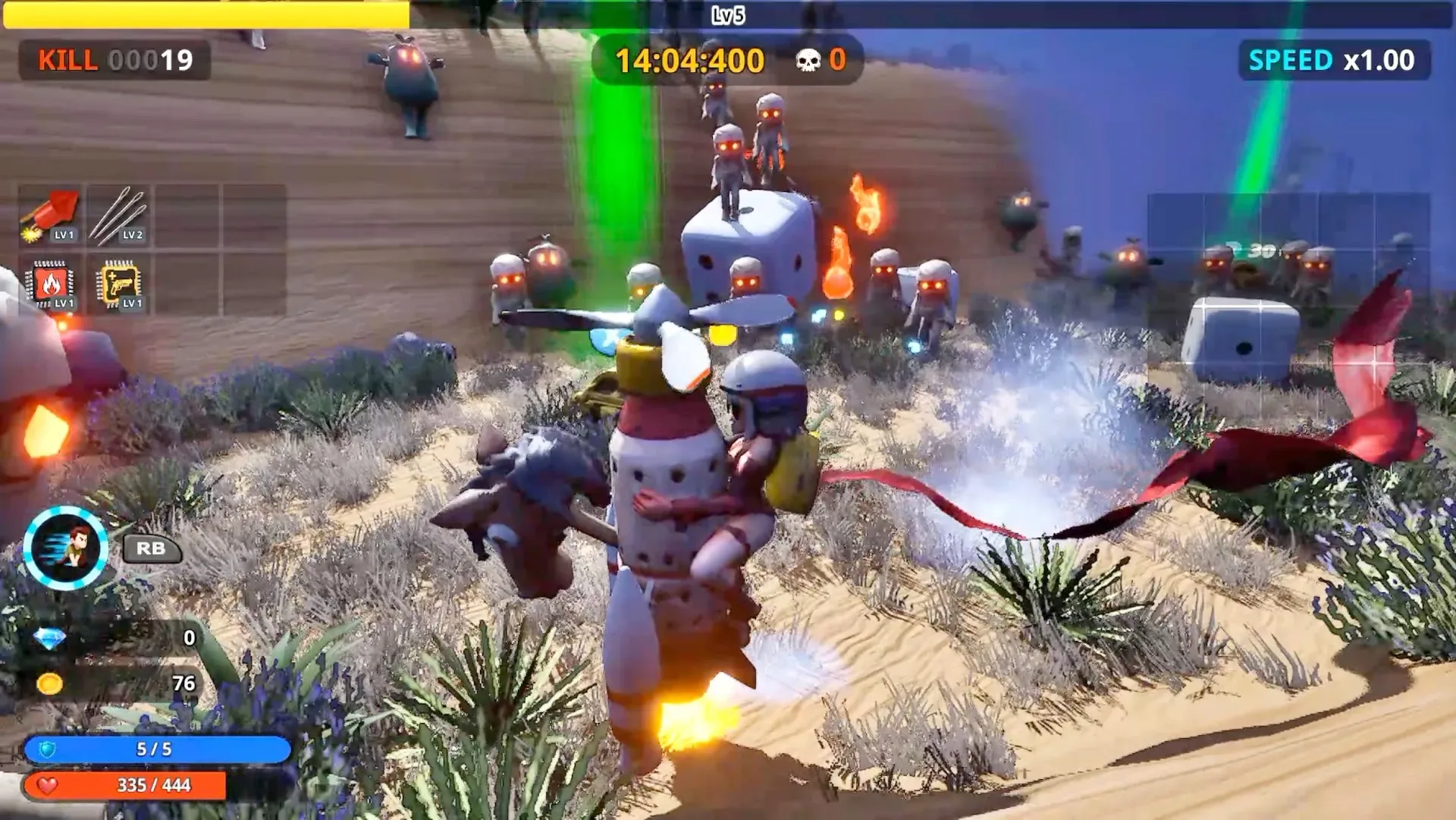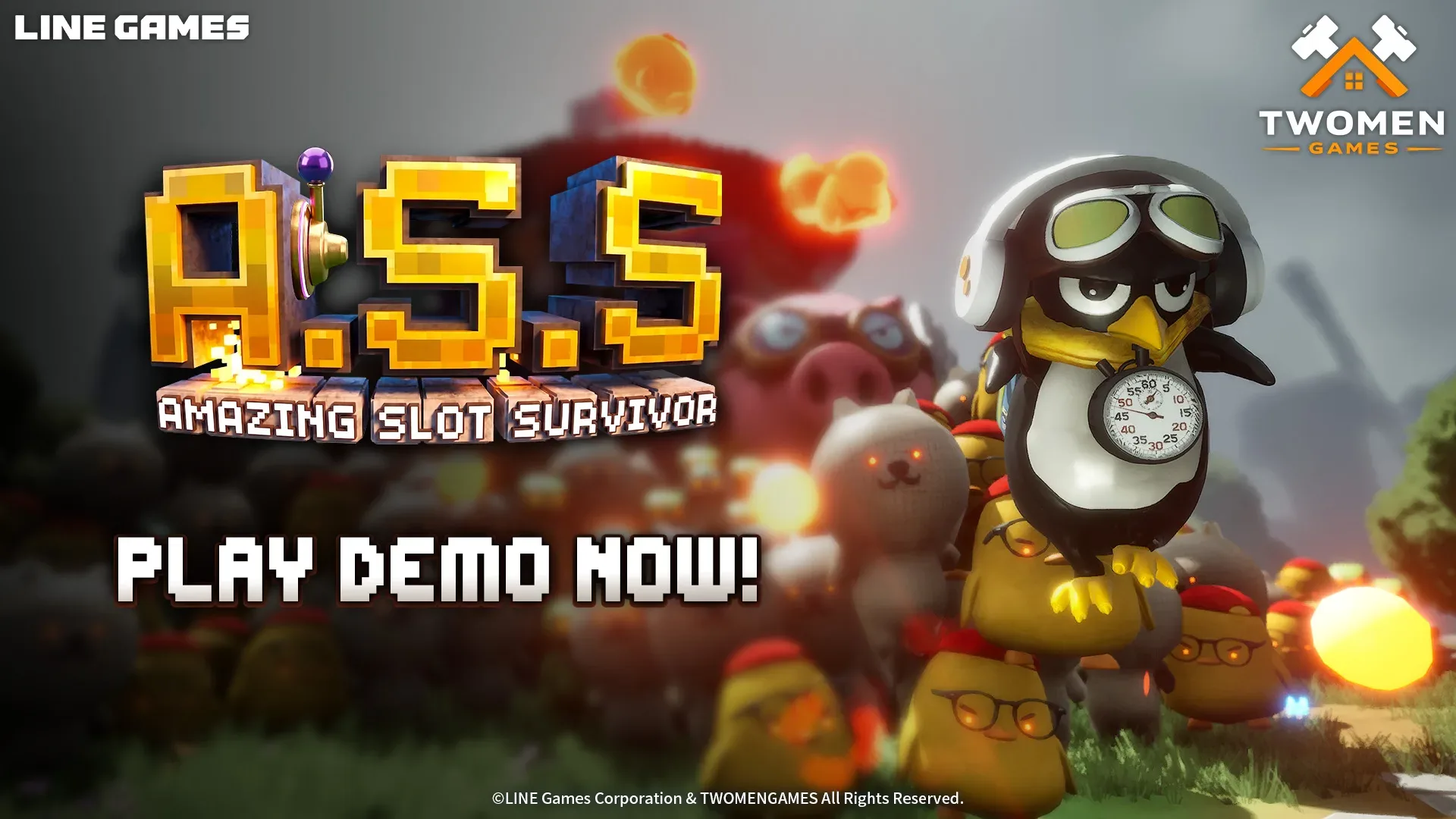
LINE Games and TWOMENGAMES have released an updated Steam demo for Amazing Slot Survivor (A.S.S.), a bullet-heaven action roguelike built around large enemy waves and a deliberately volatile decision: whether to bet a run on the Legendary Slot Machine.
Available from October 16, 2026, the demo arrives after a recent playtest and includes improvements to its controls and graphics. It also comes ahead of the game’s planned Steam Next Fest appearance, giving players another opportunity to see how its central combat-and-gambling structure fits together.
The pitch is not simply to eliminate everything on screen. Runs involve fighting monsters, locating the Spawners responsible for summoning them, completing objectives, assembling a stronger build, and preparing for a boss encounter. The slot machine sits within that loop as a potentially enormous accelerator—and a possible disaster.
A survival roguelike where the big gamble is part of the build
Bullet heaven describes a survival-action format in which players face dense swarms of opponents and are often equipped with attacks that fire or activate automatically. The pressure comes from movement, positioning, crowd control and the choices that shape a character over the course of a run. In Amazing Slot Survivor, that framework is paired with an explicit risk-and-reward mechanic rather than treating upgrades as a purely dependable climb in power.
The Legendary Slot Machine can deliver a jackpot that makes a character 18 times stronger. That stated multiplier immediately makes the machine more than a cosmetic flourish. A gain of that scale could radically alter the pace of a run, making the timing of a spin a strategic concern instead of an automatic choice.
Just as important, the game presents the machine as a wager. Players must determine when an uncertain shot at overwhelming strength is preferable to keeping a steadier run intact. The risk extends beyond ordinary combat: after death, the same machine may offer revival, but it may also result in losing everything.
That makes a failed run part of the design’s central tension. In many roguelikes, defeat closes a run and sends the player back to begin another attempt. Here, death can apparently create one more decision point. A player may have to judge whether a revival gamble is worth taking when the alternative is accepting the loss and restarting.
What “risk and reward” means in this setup
Risk and reward is often used broadly to describe any choice with a possible upside and downside. In Amazing Slot Survivor, the details provided make it much more specific: the Legendary Slot Machine is tied to a jackpot power spike, can be used after death, and can cost the player everything. The system’s value is therefore not just the strength it can provide, but the uncertainty it inserts into the order of decisions during a run.
A player who spins early may be seeking momentum while their arsenal is still small. A player who waits may be trying to preserve a more established run until a boss or another demanding moment. Those are analytical examples of the questions the described system raises, not confirmation of fixed optimal tactics or machine outcomes beyond the stated jackpot, revival possibility and loss risk.
The meaningful part is timing. If every spin were safe, it would be a routine upgrade button. If the potential gain were minor, it would be easy to ignore. An advertised 18× jackpot alongside the threat of losing everything creates a reason to weigh short-term danger against a chance to transform the entire run.
Spawners give the hordes a target
Monster waves are not described as a single undifferentiated flood. Amazing Slot Survivor asks players to hunt Spawners, entities that summon enemies. That gives the action a second priority beyond staying alive: identifying and reaching the source of reinforcements.
In practical terms, a Spawner objective can complicate movement choices. Moving toward one may mean entering a more dangerous area, while leaving it active may allow the horde to keep expanding. The information available does not define how Spawners are placed, how durable they are, or what defeating them awards, so those specifics remain unknown. Still, their inclusion indicates that enemy production itself is something players can confront rather than merely endure.
That distinction matters for a game centered on escalating waves. A run’s challenges are not only about raw damage output. Players are also asked to recognize a high-priority target amid the monsters, balance route choices against immediate safety, and continue building enough power for the boss that follows.
Starting items, objectives and character specialties
Before that boss confrontation, players can choose starting items, complete objectives and power up their character. These pieces suggest several layers to a run’s preparation.
- Starting items establish an opening direction before the action develops.
- Objectives give players tasks to pursue while navigating the enemy waves.
- Powering up describes the process of increasing a character’s combat capability during a run.
- The boss serves as a later confrontation that players are encouraged to prepare for rather than treat as an afterthought.
The game also features multiple characters with distinct combat specialties. The supplied details do not name those characters or define the specialties, but the distinction means the starting selection is intended to matter. Players are not limited to one universal approach; their character choice can influence the kind of combat role they begin with.
Weapons span conventional swords and guns as well as stranger equipment, including an item called the God Finger. No mechanical explanation has been provided for that weapon, so it would be premature to assume how it attacks or what it synergizes with. Its presence does, however, signal a weapon pool willing to mix familiar archetypes with more eccentric ideas.
For prospective demo players, the useful takeaway is that the available decisions are layered. Character specialty, starting item selection, objectives, weapons, upgrades, Spawner targets and the slot machine are all presented as components of a single run. The game’s strategic hook is not solely selecting a weapon or surviving a wave; it is deciding how those elements should influence the next gamble.
Bonus Stages are designed to disrupt routine
Another variable comes from Bonus Stages, which change the rules during play. The specific rules and triggers have not been detailed, but their stated purpose is to keep runs unpredictable and encourage adaptation.
That is a notable fit for a roguelike structure. A repeatable run loop can become predictable if the same choices always lead to the same result. Rule-changing stages create conditions where a previously sensible plan may need revision. A player focused on a particular weapon, objective or slot-machine timing may need to reconsider that plan once the stage’s altered rules take effect.
There is an important boundary here: unpredictability does not by itself reveal whether Bonus Stages are random, optional, mandatory, frequent or rare. Nor does it tell us what rewards they offer. What is clear is that they are intended as a source of changing conditions, not simply another normal arena.
Why the demo’s control and graphics updates matter
The new demo follows a playtest and makes targeted improvements to controls and graphics. Neither set of changes has been itemized, so there is no basis to claim a particular input adjustment, visual feature or performance upgrade. Even so, both areas are especially consequential for a game about maneuvering through masses of enemies.
Controls govern how clearly a player can translate a decision into action. In a dense survival-action game, that includes the basic act of moving away from threats, approaching a Spawner or repositioning around a crowd. Graphics affect how the game communicates that action on screen: enemies, targets, attacks, rewards and hazards all need to remain readable when the playfield grows busy. The demo’s update signals that these were areas addressed after player testing, while the exact effects will need to be assessed by people playing the current build.
The timing also places the demo ahead of Steam Next Fest, a Steam event associated with game demos. For Amazing Slot Survivor, the updated build is therefore an opportunity to introduce its core proposition in a form that reflects feedback from the preceding playtest: survive the swarm, build an arsenal, pursue the things generating the swarm, and choose whether a huge but uncertain slot-machine payoff is worth the exposure.
What players can verify in the current build
The demo is now on Steam. Its most immediate value is not that it answers every question about the final game—many details remain unannounced—but that it lets players engage with the systems the developers have outlined.
- Choose from the available characters and begin with selected starting items.
- Fight through enemy waves while seeking out Spawners.
- Complete objectives and gather power for the eventual boss encounter.
- Try the available weapon options, from swords and guns to the God Finger.
- Decide when, if at all, to use the Legendary Slot Machine’s high-risk chance at a jackpot.
- Adapt when Bonus Stages alter the rules.
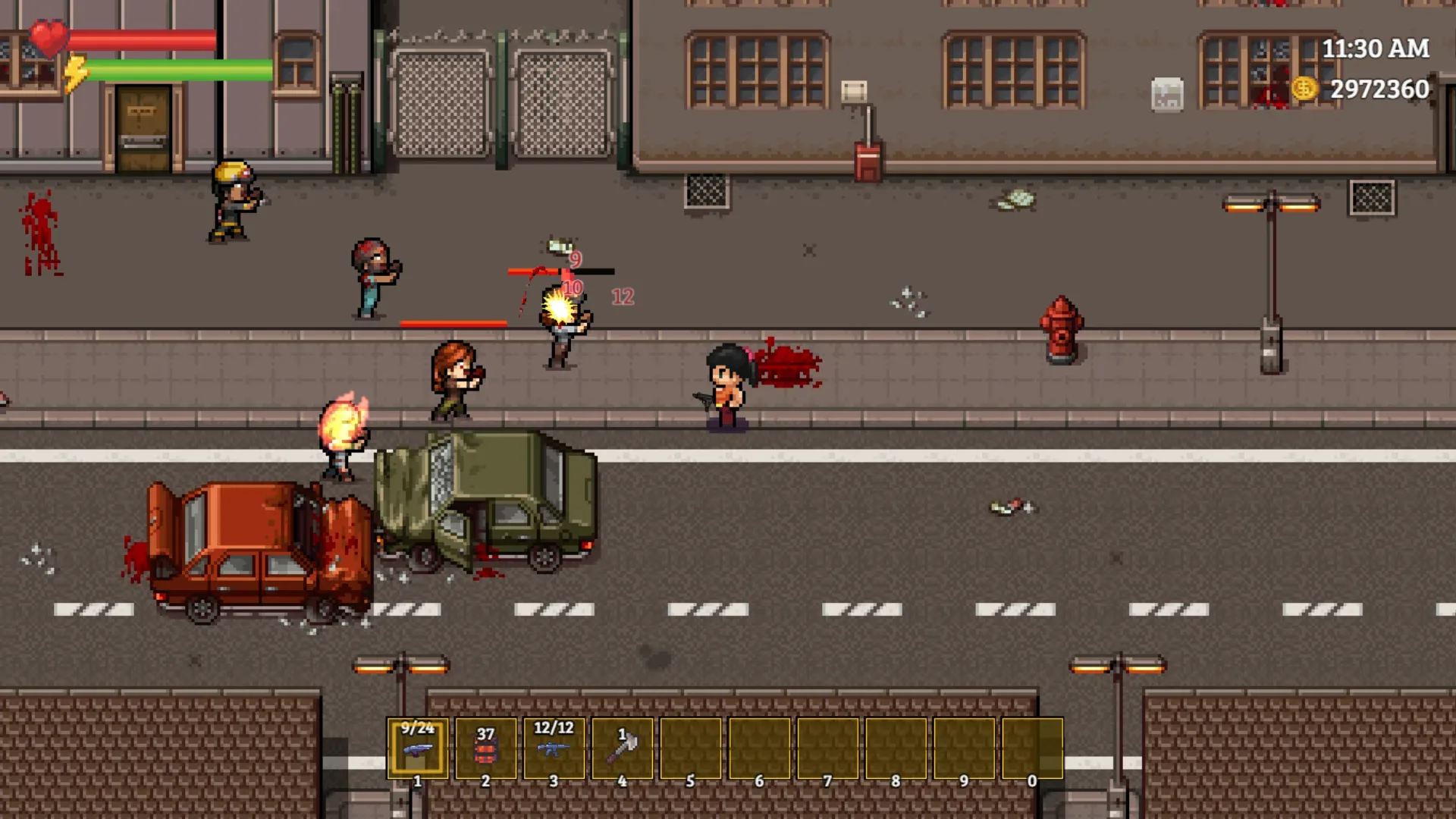
Those interested in other PC projects using demo releases to establish their ideas can also see The Road of Dust and Sorrow’s free Steam demo.
For Amazing Slot Survivor, the key question is whether the machine creates decisions that feel tense and legible amid the horde action. The announced premise gives that question real weight: a spin can promise extraordinary strength, while death can turn the same system into a last-chance revival bet with everything at stake.