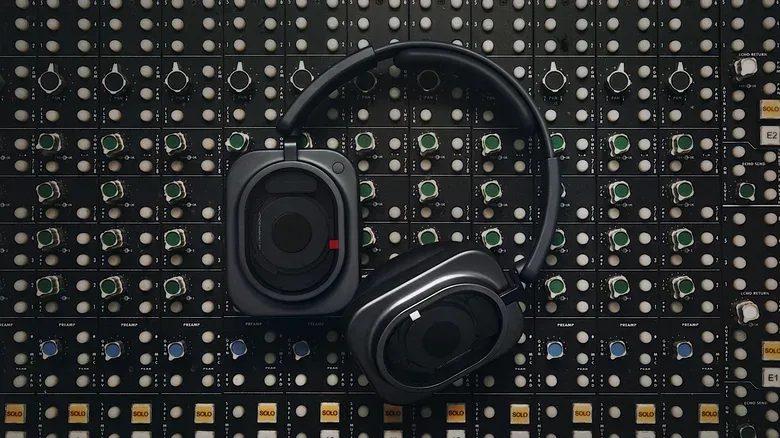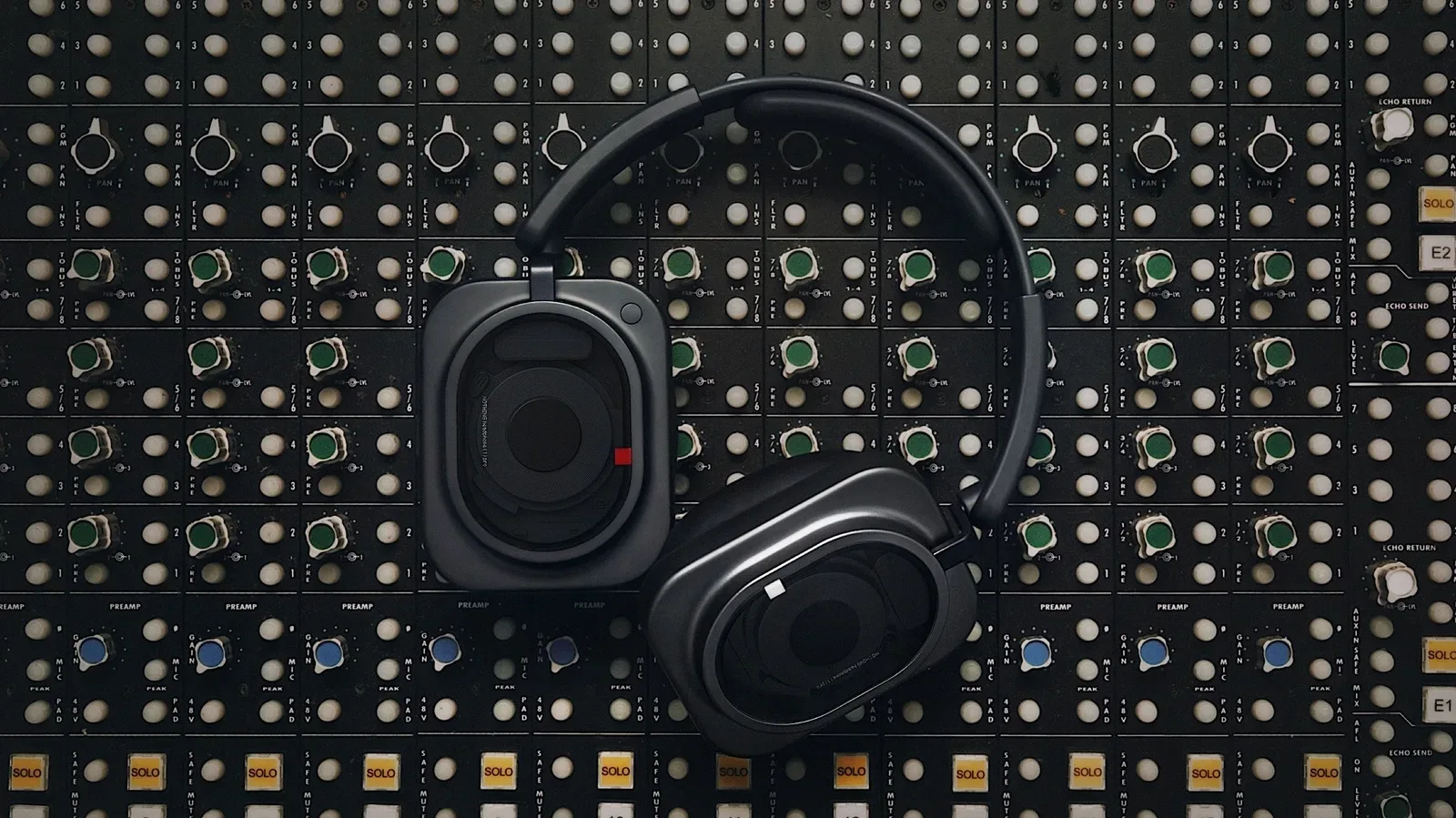
Nothing’s Headphone 1 Pro is a $399 over-ear flagship that makes an unusually direct pitch: its “Pro” label is meant to describe more than a higher price and a louder spec sheet. The standout is a small physical switch intended to disable equalization and spatial audio, leaving a flatter presentation for people who need to assess a mix without those processing choices in the way.
That is a notable decision in a headphone market that often treats personalization as an automatic good. Many listeners want more bass, a different vocal balance, or a wider spatial effect. Nothing is still offering the features expected of a modern premium wireless set, but it is also providing a quick route out of them. For music makers, engineers and detail-oriented listeners, that distinction could be more meaningful than another long list of sound modes.
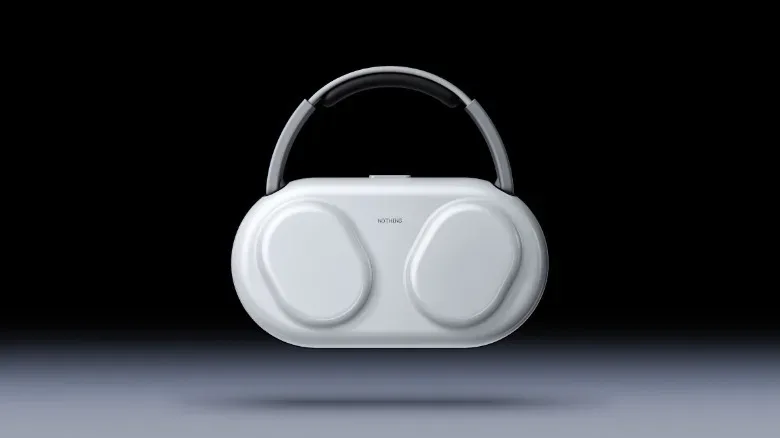
The Headphone 1 Pro arrives in black and white, with transparent-panel styling and physical controls. It includes a hard case that encloses the earcups while allowing the headphones to be carried by their headband. Nothing says the product is available now through its own store, Amazon and Best Buy stores in the US.
The physical switch is the real “Pro” feature
Equalization, usually shortened to EQ, changes the relative level of parts of the audible frequency range. A bass boost is an EQ choice; so is a profile that emphasizes voices or softens sharp high frequencies. Spatial audio, meanwhile, uses processing to create a broader or more positional listening presentation. Both can make everyday music, films and games more entertaining for a particular listener. Neither is necessarily ideal when the task is judging the underlying recording as plainly as possible.
Nothing says its switch turns off both EQ and spatial audio for a flat EQ mode developed in collaboration with London mastering facility Metropolis Studios. In this context, “flat” means the headphone is aiming not to impose an extra tuning profile selected by the listener. It does not mean every person will find it exciting, nor does it guarantee that a listener will prefer it. A more neutral presentation can initially sound less dramatic to someone accustomed to elevated low end or enhanced width.
The practical appeal is immediacy. A physical control does not ask the user to open an app, locate a preset, or remember which profile was active. Someone moving between casual listening and critical checking can change the playback approach on the headphones themselves. That is a sensible use of hardware controls, especially on a product whose design otherwise makes a point of being conspicuous.
It is important to keep the claim in proportion. Nothing is positioning the mode for studio professionals, but the supplied details do not establish that Headphone 1 Pro replaces dedicated wired monitoring headphones or proves its performance across professional workflows. The flat mode is best understood as a targeted feature for reducing optional processing when accuracy matters to the listener.
Wireless specifications: what the labels are intended to signal
Nothing also lists LDAC, 24-bit high-resolution audio and wireless lossless connections among the Headphone 1 Pro’s capabilities. Those terms all concern the audio path between a device and the headphones, but they should not be treated as interchangeable promises of identical results.
- LDAC is a Bluetooth audio codec designed to carry more audio data than conventional Bluetooth options in supported setups.
- 24-bit high-resolution audio describes support for audio with greater bit depth than basic consumer formats. The benefit a listener receives can depend on the original material and the entire playback chain.
- Wireless lossless refers to transmitting audio without the usual lossy compression step, where supported by the relevant devices and connection method.
Compatibility matters. A headphone specification alone cannot determine the format sent by a phone, computer or player. Listeners considering the Headphone 1 Pro specifically for LDAC, high-resolution material or lossless wireless listening should check the capabilities of the device they plan to use. The feature list makes the headphones potentially flexible; it does not make every wireless source automatically high-resolution or lossless.
The hardware is also described as using three drivers assigned to bass, vocal and instrumental ranges. A driver is the component that physically produces sound. Multiple drivers can be used to divide the work across different portions of the frequency range, but the number of drivers is not, on its own, a verdict on sound quality. Tuning, crossover behavior and implementation all matter. Nothing’s description tells buyers what the company is attempting architecturally, while actual sonic preference will remain personal.
Auracast could make the headphones more flexible in shared listening setups
Headphone 1 Pro supports Auracast as both a transmitter and receiver when paired with the companion app. Auracast is a Bluetooth broadcast feature intended to let audio be shared or received across compatible devices. In plain terms, the dual role suggests the headphones can participate on either side of a compatible audio broadcast rather than being restricted to a single use case.
That may be useful for shared audio situations, although the experience will naturally depend on compatible equipment and app setup. It is a feature with a potentially wider purpose than a personal EQ preset: it concerns how the headphones can connect into a broader listening environment.
For an audience that uses headphones across games, music and video, this is one of the more interesting future-facing entries in the list, even if its usefulness will vary from one setup to another. The everyday essentials remain simpler: comfort, controls, noise reduction and battery life. On those fronts, Nothing has made several specific claims.
ANC, battery claims and the limits of a rating
Nothing says the Headphone 1 Pro has 10 microphones for active noise cancellation, or ANC, and calls it the company’s best ANC to date. ANC uses microphones and electronic processing to counter portions of environmental noise. It is different from passive isolation, which is the physical reduction of sound created by the earcups and their seal.
The company says a silicone baffle wall is intended to create a better physical barrier to sound. That is significant because passive isolation and ANC can complement one another. The former begins with fit and materials; the latter relies on the microphones and processing. People using the headphones in noisy offices, transit or busy homes may care about the combination more than they care about a codec acronym.
Battery estimates are up to 32 hours with ANC active and up to 68 hours with noise cancellation off. Those are company claims, not a guarantee for every owner. Actual endurance can vary with listening level and which features are enabled, but the gap illustrates a familiar trade-off: active noise reduction needs power, while turning it off extends playback time.
The headphones have an IP52 rating. This indicates a degree of protection against dust and against dripping water when tilted, but it is not a cue to treat them as waterproof. For a portable pair designed to travel in its case, the rating offers some reassurance against ordinary incidental exposure while setting clear limits on the environment they are designed to handle.
Comfort changes are practical, not decorative
Nothing claims the Headphone 1 Pro’s ear cushions are 50% softer than those on Headphone 1 and better able to accommodate glasses. It also says the headband is 10% wider. Those changes may sound modest next to the flat switch or Auracast support, but they address the part of a headphone that users deal with for every minute it is worn.
Glasses can interfere with an earcup’s seal, affecting both comfort and passive isolation. Softer cushioning designed around that reality is therefore not merely a comfort footnote. It is tied to the practical experience of ANC as well. A wider headband can distribute pressure differently, another detail that can matter more over extended sessions than during a brief try-on.
Nothing’s visual approach remains a central part of the package. The see-through-panel look, available black and white finishes, and glossy hard case draw on a turn-of-the-century consumer-tech mood rather than conventional studio minimalism. The result is not an attempt to disappear. For shoppers who find premium headphones increasingly similar in appearance, that is part of the product proposition.
Those looking for another audio product with a different emphasis can also see how portable sound design is being pushed in other directions in Marshall’s smaller Bromley 150 party-speaker approach.
Who the Headphone 1 Pro appears to be for
At $399, the Headphone 1 Pro costs substantially more than Nothing’s $199 Headphone A series. Its case for the extra money rests on the fuller wireless feature set, the company’s noise-cancellation and comfort claims, and especially its attempt to separate entertainment processing from a more neutral monitoring option.
For listeners who always want bass-forward tuning or spatial effects, the flat mode may be something they use rarely. That does not make it pointless: a physical off-ramp from processing is useful precisely because it gives the owner a reference point. For people editing audio, evaluating a new track, or simply curious about how a mix sounds without their usual enhancements, it is the product’s clearest differentiator.
The broader lesson is that “pro” need not mean removing consumer conveniences. Nothing is combining ANC, long claimed battery life, app-linked broadcast support and a conspicuous visual identity with a control that favors restraint. Whether the sound and comfort meet the company’s claims will require independent listening and longer-term use, but the feature concept is clear: provide the fun settings, then make it easy to hear without them.