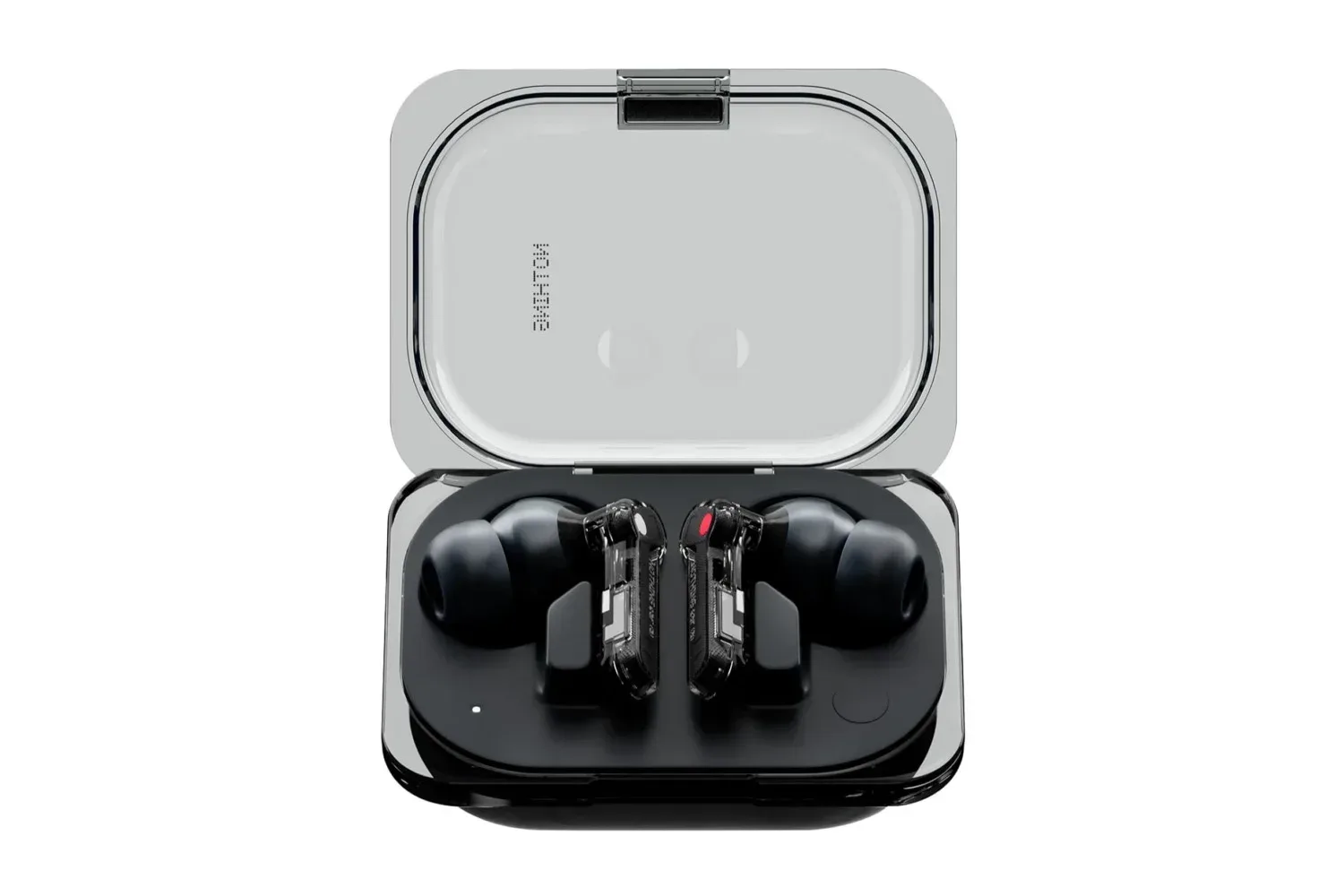
Nothing Ear (a) wireless earbuds are currently listed at $55 for Prime members, a reduction from their stated $79 regular price. The limited-time offer applies to all three listed finishes: black, yellow and white. Shoppers without a Prime subscription continue to see the $79 price at the time of the deal.
For players, the headline feature is not simply the lower price but the combination of active noise cancellation, dual-device connectivity and a dedicated Low Lag mode. Earbuds are often pulled into the gaming setup as much for chat, streams, music and mobile play as for traditional listening, and those features address different parts of that everyday use. The important qualifier is that a sale is temporary and retailer listings can change, so the $55 figure and membership restriction should be checked before purchase.
What the $55 deal includes
The Nothing Ear (a) offer represents a 30% reduction from the $79 listed retail price. It is limited to Prime members, although shipping is listed as free for all shoppers. Color availability is part of the deal rather than a single-finish clearance: black, yellow and white are each included.
That matters for anyone deciding whether this is a straightforward budget-earbud purchase or a deal worth waiting on. The discount is meaningful only if the buyer is eligible for the membership pricing and wants the product’s particular mix of features. A lower sticker price does not automatically make a device the right fit for every setup, especially where console support, preferred phone platform, fit and microphone expectations have not been specified.
Nothing’s listed specification highlights an 11 mm driver in each compact earbud. In earbuds, a driver is the component that turns an electrical audio signal into the sound heard by the listener. Driver diameter alone does not settle questions of sound quality, but it is a useful part of the hardware description. The earbuds are presented as delivering clear, balanced audio, with bass performance described as twice that of the preceding model.
ANC is designed to reduce distractions, not erase the world
The Ear (a) includes three manually selectable levels of active noise cancellation, usually shortened to ANC. ANC uses microphones and processing to counter outside sound, aiming to make audio easier to hear without raising volume as aggressively. Here, the intended benefit is reducing unwanted environmental noise such as traffic and nearby conversation.
There is a practical distinction worth keeping in mind. Noise cancellation can make a commute, shared room or busy public setting feel less intrusive, but it is not a promise of complete silence. Its effectiveness will vary with the noise around the listener, the selected ANC level and the physical seal formed by the earbud tips. The listing frames the feature as blocking most unwanted background sound, which is a more useful expectation than assuming every external noise will disappear.
Three levels give the owner a manual choice about how much cancellation to use in a particular environment. That can be helpful when the surrounding situation changes: a quieter room may not need the same setting as a loud street or crowded space. The supplied information does not describe automatic adjustment, so buyers should treat the selectable levels as a manual control.
Related coverage includes Nothing Ear (a) Prime Deal Drops Earbuds to $55.
For gaming, noise reduction can have an indirect benefit. It may make game audio, voice chat or a soundtrack easier to follow when there is external noise competing for attention. It does not itself improve a game’s performance, strengthen a wireless connection or guarantee better positional audio. It is chiefly about reducing distractions at the listener’s end.
Low Lag mode and what it means for games
The earbuds also offer a Low Lag mode aimed at keeping latency to a minimum. Latency is the delay between an event and when its audio reaches the listener. In a game, that can mean the gap between seeing an action on screen and hearing its sound effect. If a delay is noticeable, timing-sensitive games can feel disconnected even when the sound itself is clear.
Low-latency modes are therefore especially relevant to mobile gaming and any use where players care about the relationship between picture and sound. The feature is presented as a way to improve the gaming experience by reducing lag; it should not be read as a claim that all latency is eliminated. Wireless audio still depends on the broader device and connection situation, and the available information does not provide a measured delay figure or name the platforms supported by the mode.
That absence is worth noting for console players. The deal details establish that Low Lag mode exists, but they do not establish direct compatibility with any particular console, controller, PC or phone. Anyone buying specifically for a gaming platform should confirm that platform’s Bluetooth and audio behavior rather than infer it from the presence of a gaming-oriented mode. Players already troubleshooting a console audio issue may also find our guide on fixing distorted PS5 audio without replacing a setup useful.
Two-device connection could be the everyday convenience feature
Nothing Ear (a) can connect with up to two devices simultaneously and automatically switch output to the device being used. This is commonly useful for people who split time between a phone and a computer, or between a handheld/mobile game and another device used for calls or media.
The appeal is less about raw sound performance and more about avoiding repeated manual reconnection. A player could, for example, move from audio on one device to an incoming call or another active device without treating the earbuds as if they were permanently attached to only one source. The supplied details say the output changes automatically, but do not spell out the precise behavior in every possible notification, call or simultaneous-playback situation. It is best understood as a convenience feature for moving between two active devices, not a guarantee that both audio streams will play together.
Calls, battery claims and the purchase checklist
For calls, the earbuds use Clear Voice technology, described as isolating the speaker’s voice from surrounding noise so the person on the other end can hear more clearly. That could be useful for voice chats, work calls or catching up with friends from a busy setting. It is a separate proposition from ANC: ANC is principally about what the wearer hears, while voice-isolation processing concerns the outgoing voice picked up for a call.
Battery life is listed at up to 42.5 hours with the charging case. The phrase “up to” is important. It signals a maximum claim rather than a fixed result every owner should expect. Actual runtime can vary with listening volume, use of noise cancellation, calls and other settings, though the deal information does not offer a breakdown for those conditions. The listing also says that a brief recharge can provide additional listening time when the battery is low, without specifying the exact top-up duration or playback gained.
Potential buyers can use a short checklist before treating the $55 listing as a must-buy:
- Confirm eligibility: the listed $55 price is Prime-exclusive, while the stated non-member price is $79.
- Check the current listing: the offer is described as limited-time, so the price and stock status may change.
- Pick a finish while it is included: black, yellow and white are all named as discounted options.
- Verify intended-device compatibility: the information identifies Low Lag mode but does not specify support for individual consoles, PCs or phones.
- Set realistic ANC expectations: three levels of cancellation are available, but external sound reduction is not the same as total isolation.
- Read battery life as a maximum: 42.5 hours is a case-inclusive “up to” figure, not a promised result under every listening condition.
Why this deal may stand out for gaming-adjacent use
At $55, the Nothing Ear (a) sits well below its stated $79 price while retaining features that matter beyond music playback: selectable ANC, voice-focused call processing, two-device connection and a low-latency setting. There is no supplied evidence here for a direct comparison with a specific competing earbud model, nor are there independent measurements of sound, microphone quality, latency or battery performance. The strongest case for the deal is therefore feature-to-price rather than an absolute claim that it is best in every category.
For someone who wants a single compact pair for travel, calls and mobile or general wireless gaming, that combination may be compelling while the Prime price remains active. For a buyer whose decision turns on a specific console, codec, fit requirement or measured competitive-gaming latency, the details supplied with this listing leave important questions to verify first. The deal is clear; the right purchase still depends on the device it will be paired with and the role the earbuds need to fill.
Shop the products
Check current price, model and availability at the retailer.