The Legend of Zelda’s 40th anniversary and the strong sales of the 2026 Ocarina of Time remake have put a particularly bright spotlight on Hyrule. For a gift buyer, that creates an enjoyable but slightly hazardous situation: there are many ways to buy for a Zelda fan, and not all of them suit the same person.
Some players want an accessory they will use every week. Some want a display piece that turns a shelf into a small corner of Hyrule. Others are far happier disappearing into timelines, artifacts, character histories and artwork than receiving another piece of hardware. Three current products fit those distinct lanes: PowerA’s Advantage Wireless Controller – Zelda Decayed Master Sword, LEGO’s The Legend of Zelda: Ocarina of Time – The Final Battle, and The Legend of Zelda Encyclopedia.
None is a substitute for the games themselves. That is a strength, not a shortcoming. They are companion gifts: hardware for playing, a build for displaying and a reference book for exploring a series whose people, places and objects have accumulated enormous significance over its long life.
Match the gift to the fan, not merely the logo
“Zelda fan” covers a great deal of ground. One recipient might be focused on current Switch 2 play and appreciate a controller that makes the connection to the series every time it is picked up. Another may have an attachment to the climactic confrontation in Ocarina of Time and prefer an object that can stay on view. A newer fan may be looking for a way to make sense of recurring names, shifting designs and a large fictional world.
The useful question is therefore not simply whether an item bears the Triforce or Master Sword. It is whether it has a role in the recipient’s routine. A controller needs to fit their platform and play habits. A LEGO set needs a place to live once construction is complete. A large franchise book is best for someone who welcomes reference material, rather than someone seeking a novel or a walkthrough.
That distinction also avoids a common mistake in holiday shopping: treating every tie-in as interchangeable. These three choices are connected by Zelda, but they deliver very different experiences.
- For the active Switch 2 player: the PowerA controller is the practical choice.
- For the builder or shelf curator: the Ocarina of Time LEGO set is the display-first choice.
- For the lore-minded reader: the encyclopedia is the research-and-coffee-table choice.
PowerA’s Decayed Master Sword controller is the practical pick
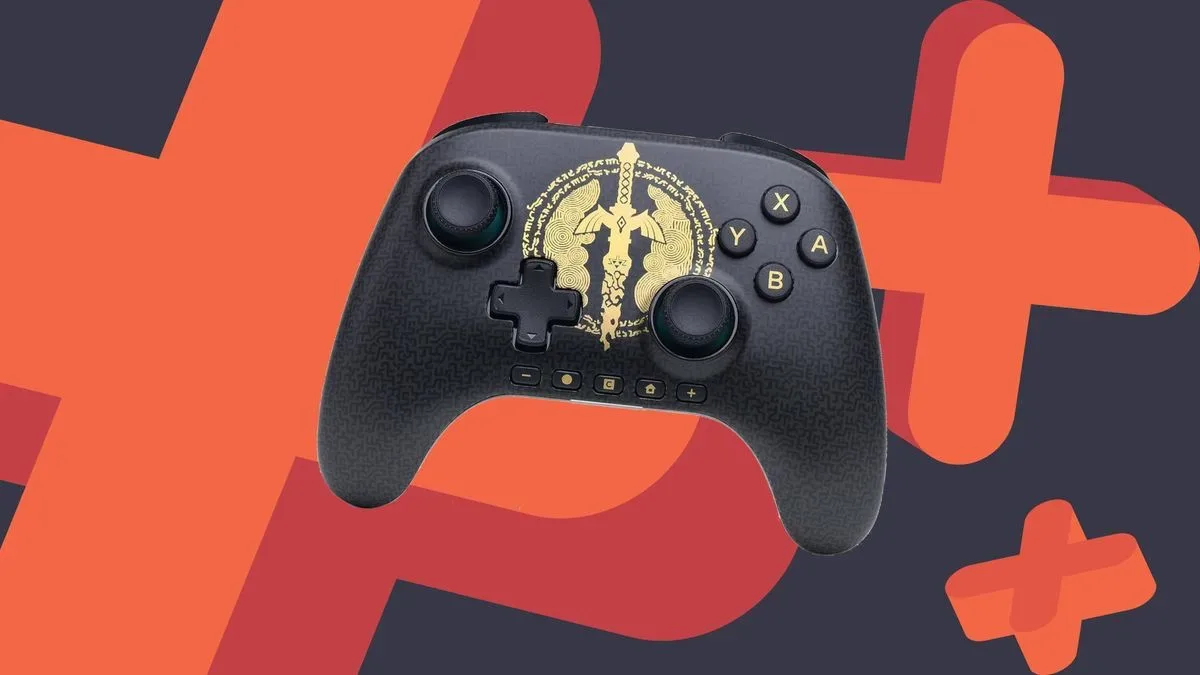
The PowerA Advantage Wireless Controller – Zelda Decayed Master Sword is a Switch 2 accessory with a Zelda-specific visual identity, aimed at the person who would rather use their gift than reserve it for a shelf. It is positioned below the official Zelda-themed Nintendo Switch 2 Pro Controller in price, while that official option has been difficult to find consistently.
Its cited feature list is substantial: additional buttons on both the front and back, Hall Effect sticks, and a claimed battery life of up to 30 hours. The visual theme centers on the Decayed Master Sword, giving the controller a direct connection to the series without changing its main purpose as an input device.
Related coverage includes Best Legend of Zelda Gifts for Fans: Controllers, LEGO and Essential Books.
What Hall Effect sticks mean
Hall Effect is a technical term for a method of detecting stick movement magnetically. In plain terms, the controller reads the position of the stick using magnetic sensing rather than relying on physical contact in the same way as a conventional design. It is a specification buyers often seek when choosing a controller, especially for an accessory expected to see regular use.
It should not be read as a magical seal of perfection, nor does the feature alone determine whether a controller will suit every player. Button feel, shape, layout, wireless behavior and general comfort matter in daily play. But Hall Effect sticks are a concrete feature worth checking for when comparing this Zelda model with alternatives.
Extra buttons are about flexibility, not decoration
The controller’s added front and rear buttons make it more than a themed paint job. Extra inputs can offer more control options than a simpler pad, though the value is personal: a player who likes customizing controls will likely get more out of them than someone who uses a standard layout and never changes it.
The Decayed Master Sword edition is closely related to PowerA’s main Advantage Nintendo Switch 2 Controller, with extra buttons and adjustments over that base model. That relationship is useful context. It tells a buyer this is part of an existing controller family rather than an unrelated novelty item, while the Zelda edition’s appeal remains the combination of familiar functionality and franchise design.
For anyone shopping late, availability is a practical part of the story. The official Zelda-themed Switch 2 Pro Controller has repeatedly sold through, while this third-party alternative has been easier to obtain. Stock naturally changes, so buyers should verify the listing and platform compatibility before ordering rather than assuming a themed controller is automatically the same model they had in mind.
Timing can matter as much as the model in seasonal shopping. Broader accessory promotions can shape the comparison even when the products are unrelated; for example, current Black Friday gaming-hardware discounts illustrate why it is sensible to check a retailer’s live price before committing. A deal elsewhere does not guarantee a discount on this controller, but it is a reminder to separate confirmed specifications from temporary price movements.
LEGO’s Ocarina of Time Final Battle is for the display shelf
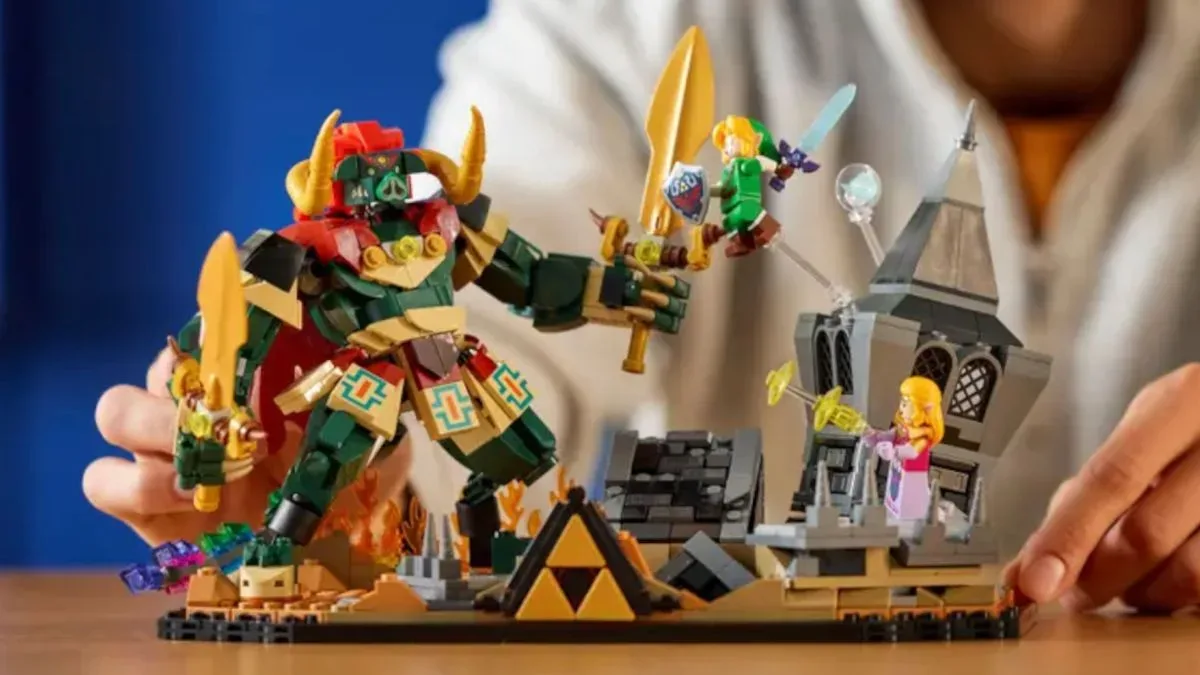
LEGO’s The Legend of Zelda: Ocarina of Time – The Final Battle goes in the opposite direction. It is not primarily a toy-like stand-in for a game session; it is designed as a display model built around one of the most recognizable confrontations in Zelda history.
The set includes minifigures of Link, Zelda and Ganondorf, plus a large Ganon figure that dominates the scene. Its wider construction forms a diorama of the final battle and incorporates further iconography from Ocarina of Time. A diorama is a three-dimensional scene meant to be viewed as a composed moment, rather than an open-ended play environment. That makes it a particularly sensible gift for somebody who enjoys building and exhibiting a finished model.
With more than 1,000 pieces, it is a substantial project without requiring the shelf footprint of the larger Great Deku Tree set. That balance is arguably its clearest practical advantage. A display piece still needs a destination after the bags are empty, and a smaller-space-friendly model can be easier to give confidently when the buyer does not know exactly how much room the recipient has.
Why the scene matters
Choosing Ocarina of Time gives the set a specific emotional center rather than presenting a general collection of Zelda symbols. Link, Zelda, Ganondorf and Ganon are not interchangeable decorative elements here; their inclusion makes the item a physical rendition of the game’s final conflict. For a fan whose connection to the series is rooted in that game, the specificity is part of the value.
It also makes the gift less universal than a plain Zelda-branded object, in a useful way. Someone who knows only the newest entries may still admire the model, but a fan who cares about Ocarina of Time is the more obvious match. Gift buyers should treat that as helpful guidance, not a drawback. A considered present generally lands better when it reflects the recipient’s particular Zelda era.
Of the two Zelda LEGO sets available, the Final Battle kit is the less expensive choice and has become easier to find after uneven availability. More Zelda sets are expected in 2027, but that future prospect does not diminish what makes this one appealing now: it is a self-contained scene with named characters, a clear visual focal point and a manageable display purpose.
The Zelda Encyclopedia is the gift for someone who wants context
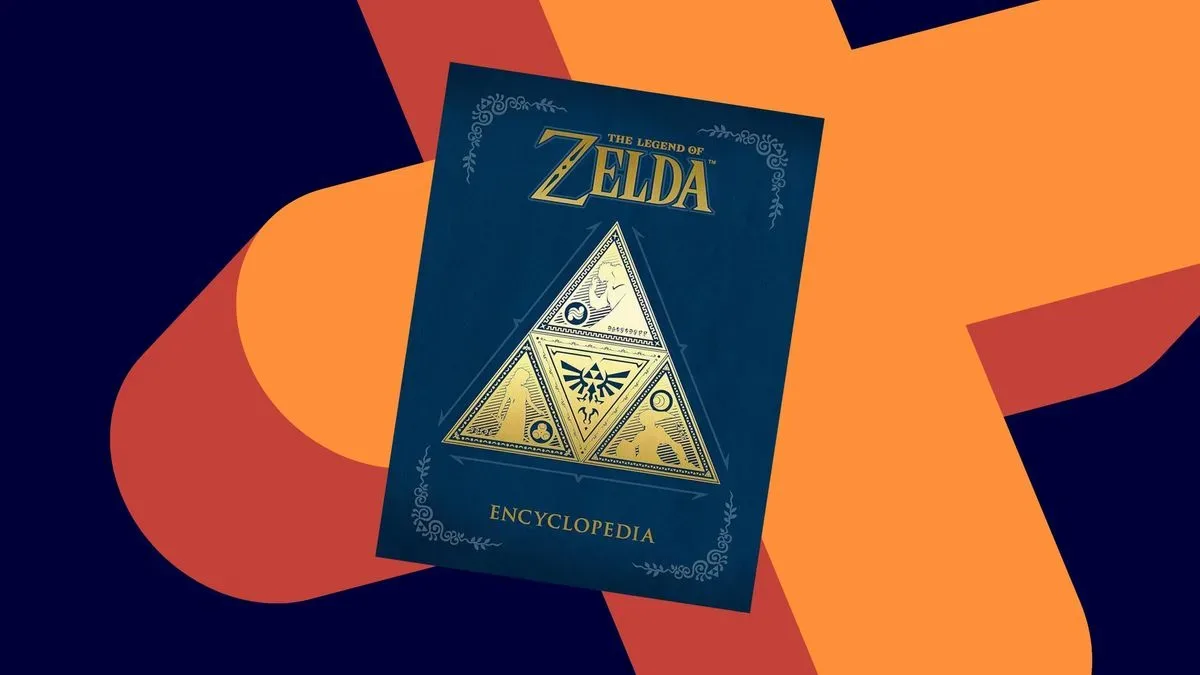
The Legend of Zelda Encyclopedia is the least electronic and least space-hungry of the three options, but it may be the broadest in scope. Published by Dark Horse Comics in 2018, it is an official Nintendo encyclopedia and the third book in a trilogy that also includes a history volume and an art book.
Its more than 300 pages cover the series’ universe through material including character relationship trees, the histories of weapons and artifacts, and changing character designs. That is why “encyclopedia” is a more accurate description than simply “Zelda book.” It is a reference work: a book arranged to help readers look up, compare and contextualize elements of the fiction and its presentation.
A lore compendium, explained
“Lore” is a catch-all term for the internal history, recurring ideas, characters, objects and background details of a fictional setting. A lore compendium gathers that material in one place. In this case, the draw is not merely that the book contains Zelda imagery. It is that it connects people and artifacts to a wider view of the franchise.
For a recently converted fan, that can be more welcoming than trying to reconstruct every connection from memory or by hopping between games. For a long-time fan, it offers a format suited to browsing: read a character entry, follow a relationship tree, then move to the evolution of a design or the history of an object. The book is also naturally suited to a coffee table, where it can work as a conversation piece even when it is not being read cover to cover.
There is a caveat worth making explicit. As a 2018 publication, the encyclopedia should be understood as a reference to the material it contains, not an automatic guide to every development in the series after its publication. That is not a criticism of the book’s purpose; it is simply the practical implication of its date. Buyers looking for a durable overview of Zelda’s accumulated mythology, rather than a guide to the very latest release, are the clearest audience.
A short buying checklist
- Confirm the recipient’s favorite Zelda era. The LEGO set is explicitly tied to Ocarina of Time; the encyclopedia spans the franchise; the controller’s design is based on the Decayed Master Sword.
- Check how they play. The PowerA model is for Switch 2 players. Do not buy it on the assumption that Zelda branding overrides platform compatibility.
- Think about space. The LEGO set is intended as a display model, while the encyclopedia stores like a large book and the controller replaces or supplements a play accessory.
- Verify the live retailer details. Holiday availability and prices can move quickly, particularly for themed hardware and sets that have experienced spotty stock.
- Choose use, display or reading. That one decision will usually point to the correct gift faster than comparing logos.
The strongest Zelda gift is not necessarily the rarest or the most visibly branded item. It is the one that lines up with what the fan already enjoys doing. PowerA’s Decayed Master Sword controller gives a Switch 2 player a usable themed tool with Hall Effect sticks, extra controls and a stated 30-hour battery life. LEGO’s Final Battle delivers a buildable, display-focused tribute to Ocarina of Time. The encyclopedia offers a long-form route through the series’ characters, designs and artifacts. Each lets Zelda enthusiasm continue beyond the game cartridge, but each does so in a different language.
Shop the products
Check current price, model and availability at the retailer.