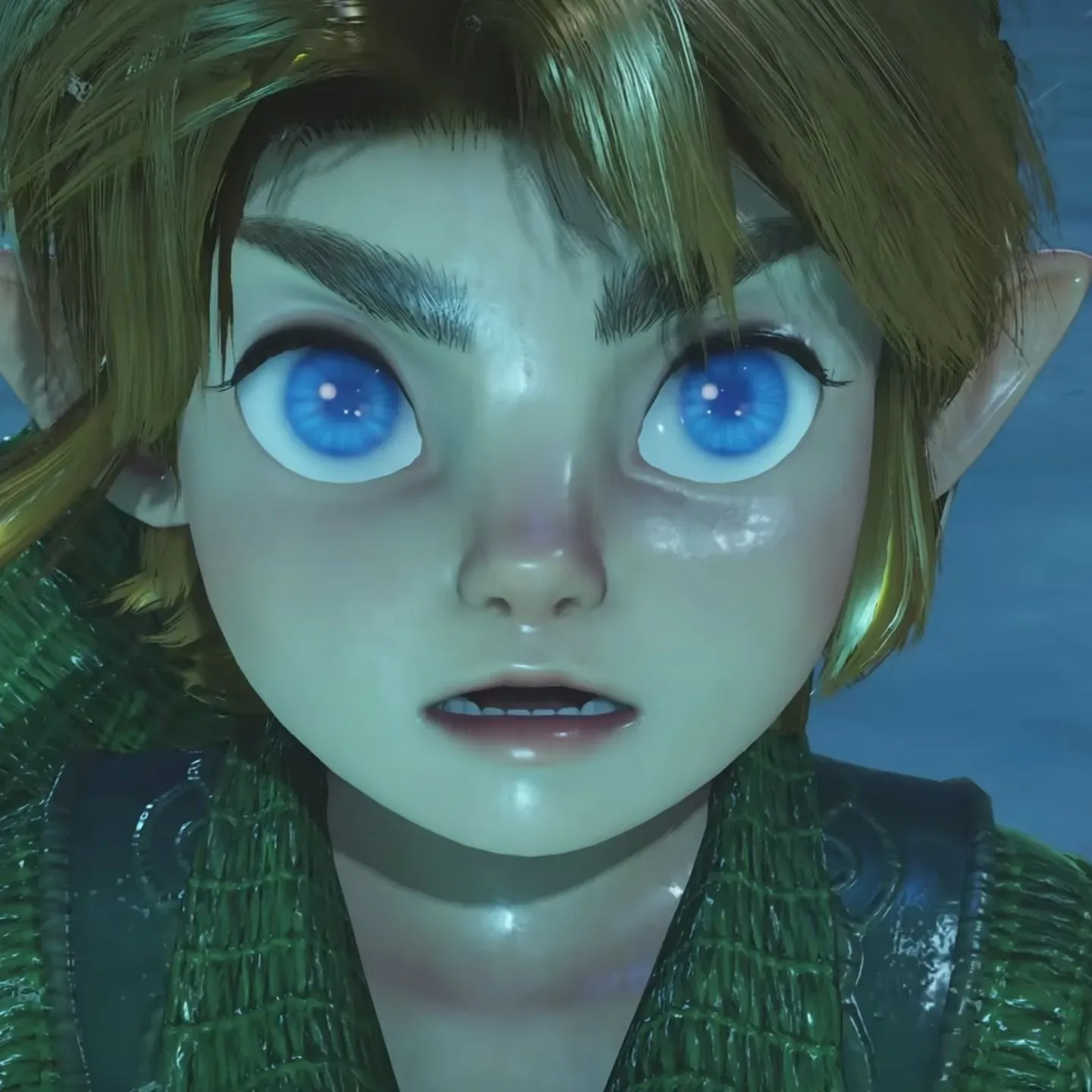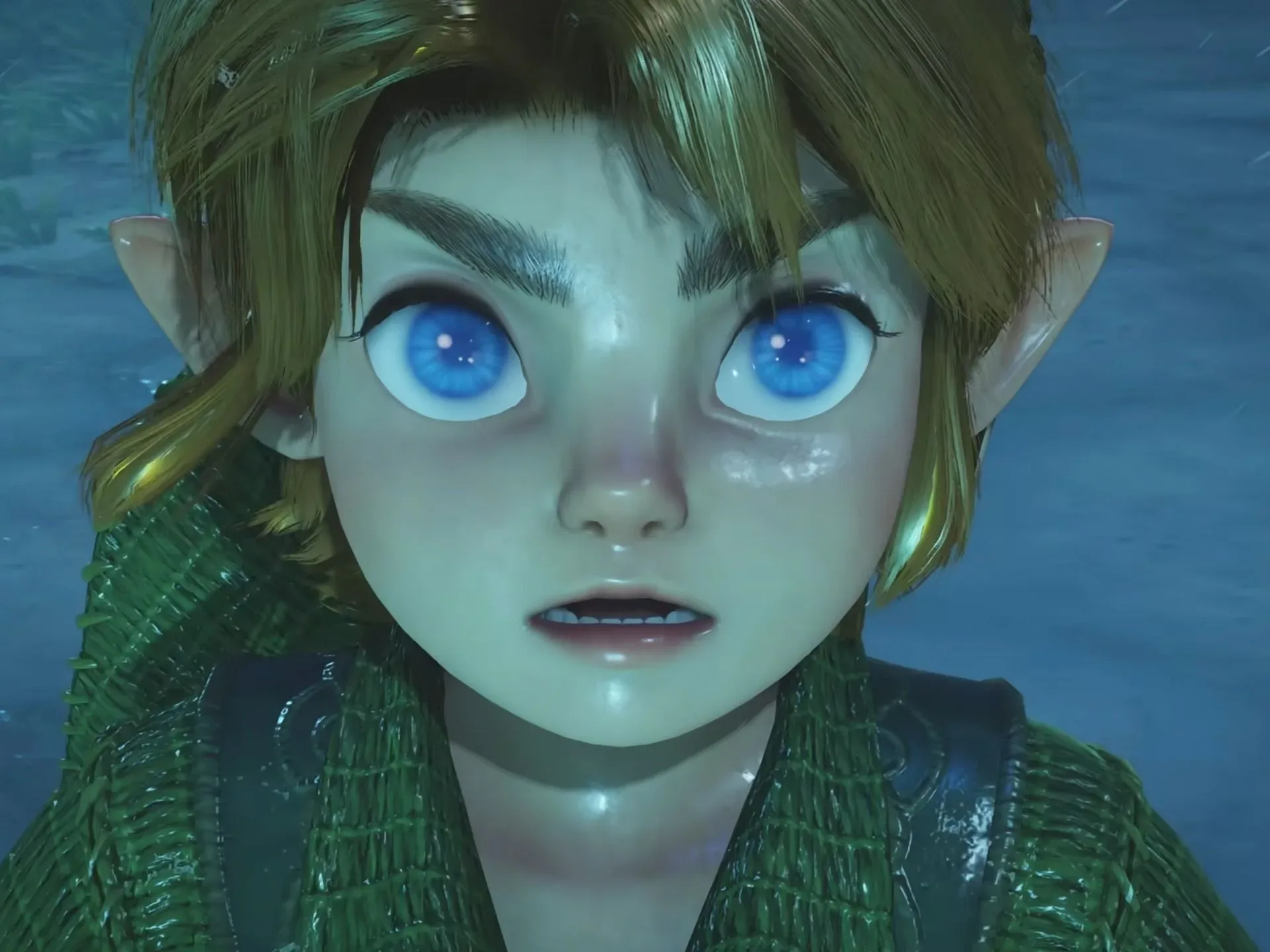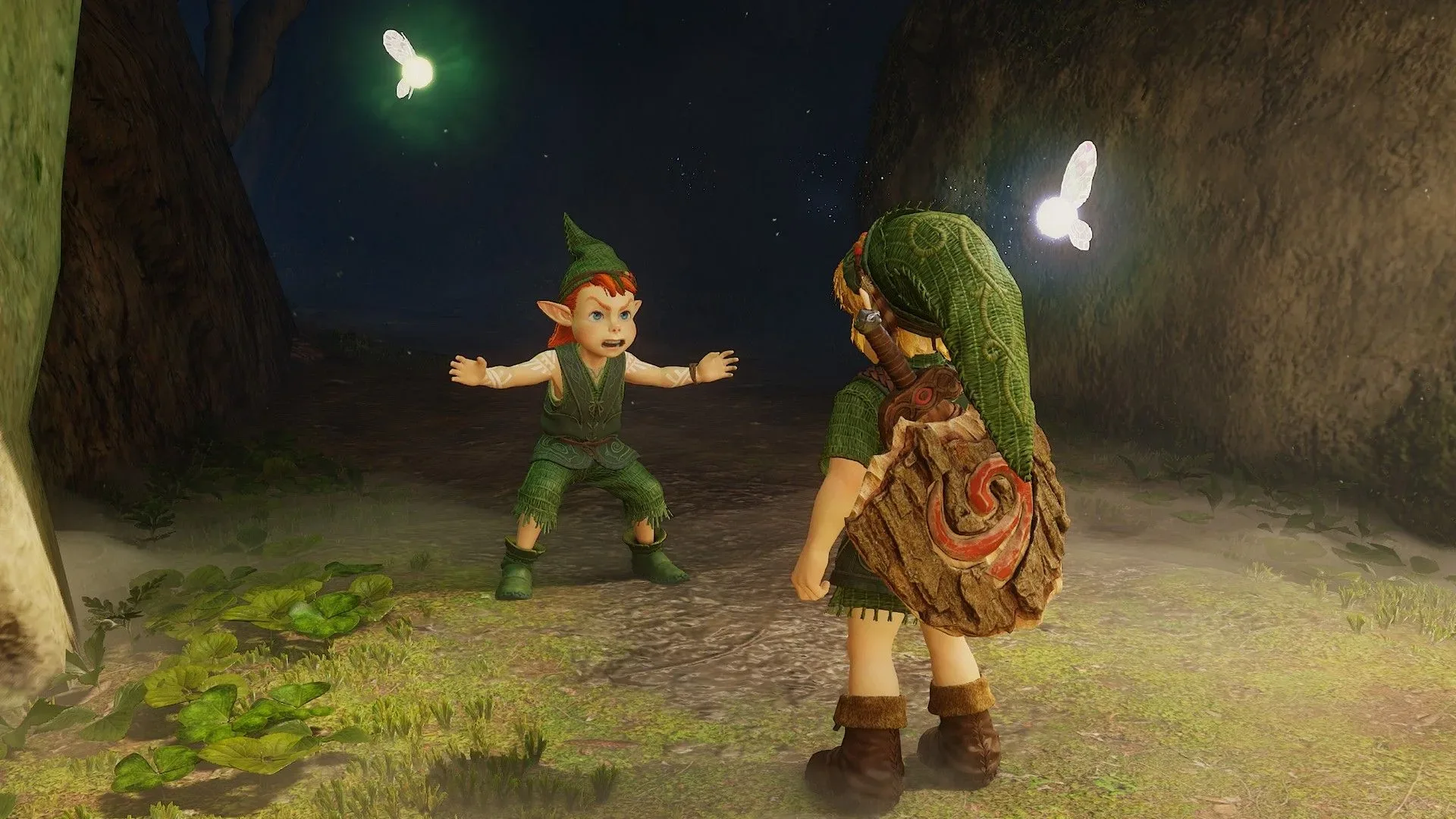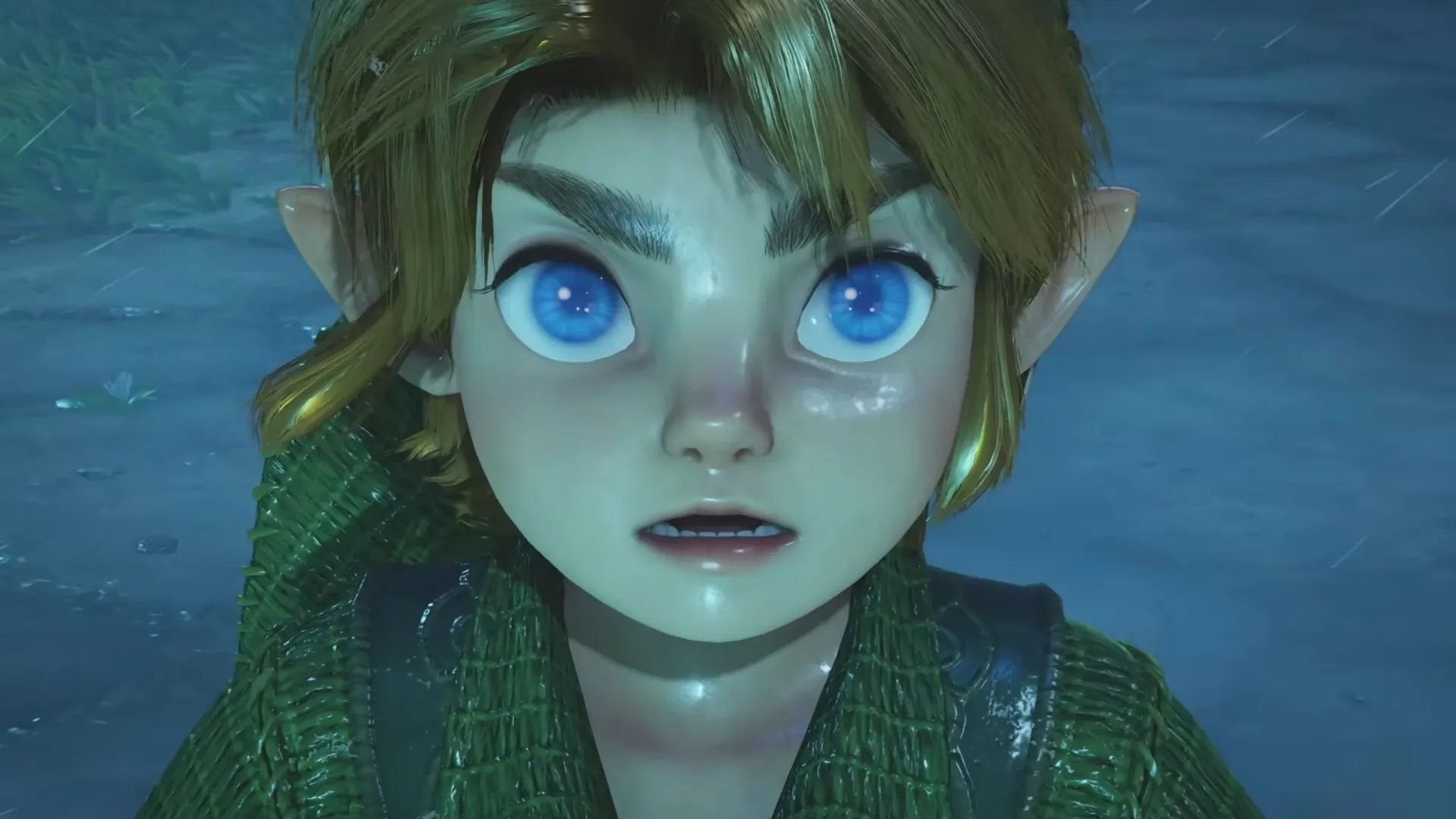
There are many ways for a Zelda remake to make people feel old. A rebuilt Hyrule Field can do it. A freshly orchestrated melody can do it. Seeing the old Kokiri Forest rendered with lighting sophisticated enough to make every blade of grass look judgmental can definitely do it. But Nintendo’s showcased remake of The Legend of Zelda: Ocarina of Time has found a much more immediate route to collective unease: it gave Young Link a face that a sizeable portion of the internet cannot stop examining.
The reaction is not really about whether the character has more polygons, better skin shading, or an upgraded tunic. It is about the particular combination of facial choices visible in the remake footage: notably rounded cheeks, exceptionally large eyes, and an expression that reads as a little too soft and a little too fixed. The result, for many players, is a version of Link that does not simply look younger. He looks uncannily young in a way that has sparked jokes, edits, comparisons, and the sort of loving ridicule only a decades-old gaming icon can survive.
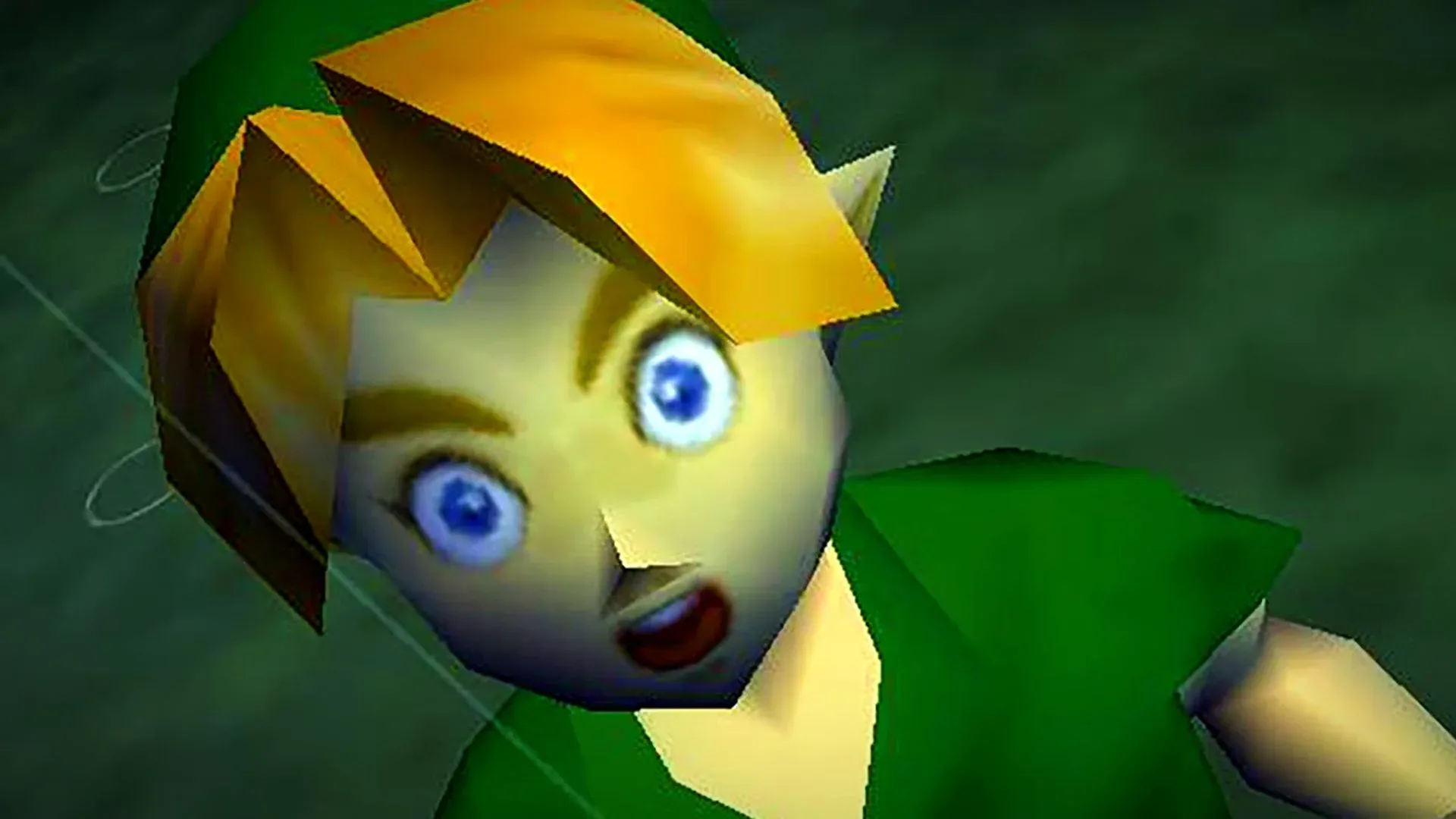
Young Link has always been a stylized character. In the original Nintendo 64 adventure, the technology imposed hard limits, and players were invited to bring much of his personality to the image themselves. Modern character models have a different problem. Once a game gets close enough to human features, every proportion becomes highly noticeable. A cheek that is too plump, eyes that are too round, or a neutral stare held for a fraction too long can shift a design from charmingly youthful into something that makes a viewer instinctively look away.
The face at the center of Hyrule’s latest debate
Criticism of the new model has been unusually focused. Fans are not broadly objecting to the idea of revisiting Ocarina of Time, nor are they necessarily declaring the remake’s wider visual direction a disaster. Young Link is simply the element that has become impossible to ignore. He is the hero, the player’s anchor, and the character seen through some of the game’s most emotionally important scenes. When that central face lands strangely, every other improvement risks being discussed through the lens of those very large eyes.
One of the most circulated comparisons connects the redesign with the famously unsettling animatronic baby associated with the Twilight film series. It is a ruthless internet comparison, but it neatly communicates the specific discomfort people are describing. The complaint is less “this model is low quality” and more “this model appears to have been made by someone who understands children entirely from a very detailed witness statement.”
Other social-media posts have taken a more cartoonishly hostile approach, imagining an old-school, hammer-based response to this particular version of Hyrule’s hero. That is best read as exaggerated online venting rather than an actual call to action, but it shows how swiftly a visual oddity can become a fandom meme. Once the jokes reach that point, the design no longer belongs only to its artists or even Nintendo. It becomes public material, ready to be photoshopped, cross-referenced, and placed beside every other strange-faced child character in video-game history.
The strongest internal comparison comes from Zelda itself. Some players have pointed to Malo, the infant-like shopkeeper from The Legend of Zelda: Twilight Princess, as a spiritual relative of the new Young Link. Malo’s look has long had an odd intensity: a very small child with a dead-serious gaze, an adult-sounding business focus, and an expression capable of making a player reconsider whether Hyrule has adequate child-labor laws. Seeing fans invoke him here suggests that Nintendo’s history with peculiar youth character models is not forgotten.
Why remaking stylized heroes is harder than it looks
A remake has to balance at least two competing promises. First, it needs to make an older game look as though it belongs on modern hardware. Second, it needs to preserve the visual shorthand that made the original immediately recognizable. That challenge becomes especially sharp with a character such as Young Link. His old design was built around broad, simple forms: blond hair, green cap, round face, large eyes, and a small frame. The original’s limitations helped keep those forms abstract.
Related coverage includes Young Link's New Ocarina of Time Remake Design Has Zelda Fans Uneasy.
More detailed rendering removes that abstraction. Skin gains texture. Eyes catch light. Facial volume becomes visible from more angles. The player starts assessing a character’s face not as an icon but as a person. That is where stylization must become extremely deliberate. Lean too realistic and the design can lose its storybook identity. Lean too exaggerated and it may enter a zone where human viewers perceive it as artificial, uncomfortable, or simply odd.
Young Link’s remake model appears to be caught in that difficult gap for many fans. His face is recognizably Link, but its softer contours and enlarged-looking eyes have created the sense of a character who is simultaneously more detailed and less natural. The internet’s blunt verdict that Nintendo “did him dirty” may not be a nuanced piece of art criticism, but it gets at the emotional core of the reaction. Players feel protective of a hero they have known for years, even when that hero is a silent elf-eared kid who spends much of his day breaking pots and rolling into trees.
There is also a practical reason this discussion may continue. Link is not a supporting character who can be glimpsed in a single cutscene and then forgotten. His face will be present throughout the adventure, in close shots, story scenes, and all the moments where players are meant to share his awe, fear, grief, and determination. A remake can substantially improve environments, combat readability, menus, and animation, but a central character model remains an unusually powerful symbol of the project’s approach.
Full voices for Hyrule, silence for its hero
The remake also brings a major storytelling change: its cutscenes are fully voice acted for everyone except Link. That distinction could make the remake’s interpretation of the classic story feel substantially different, even for players who have memorized its key moments.
In the original game, dialogue was delivered through text, sound effects, and memorable vocal noises rather than conventional spoken performances. Full voice acting could give characters such as Zelda, Saria, Navi, Ganondorf, and the residents of Hyrule a new kind of presence. Timing, tone, pauses, and vocal performances all guide a player’s understanding of a scene. A line that once existed as text on a dialogue box can become more tender, more ominous, funnier, or more immediate once an actor delivers it.
Keeping Link unvoiced, meanwhile, follows a longstanding series tradition. Link’s silence has often been part of his role as an adaptable player avatar: expressive enough to convey reaction, quiet enough that players can project their own reading onto him. In a fully voiced remake, that decision could become even more conspicuous. Everyone around him may speak in complete sentences while he responds with gestures, facial animation, and the occasional familiar exertion noise. Given the current discussion around his face, those reaction shots may receive a level of scrutiny few remake protagonists have ever endured.
That does not make the choice a mistake. A speaking Link would be a much bigger departure, and it would introduce its own set of expectations around casting, writing, and characterization. The silent approach protects a core element of the character while allowing the surrounding cast to gain new dramatic texture. It is a cautious solution, though perhaps one that places even more responsibility on animation to ensure viewers understand exactly what Link is feeling.
A meme can be a useful feedback signal
Online mockery is often excessive, but it can also identify a detail that more formal feedback would describe less clearly. If a large number of people independently fixate on the same expression, facial proportions, or uncomfortable vibe, it suggests the design has communicated something unintended. Whether Nintendo changes anything is unknown, and no change should be assumed from jokes alone. Still, the intensity of the response makes Young Link’s model a clear point of attention as more of the remake is shown.
There is precedent for fan communities becoming deeply invested in the appearance of a beloved gaming character, especially when a redesign meets a nostalgic audience. The discussion can move quickly from punchlines to serious questions about style, fidelity, and what a remake is meant to preserve. It can also become a reminder that technical detail is not automatically the same as visual appeal. Sometimes the most convincing version of a fantasy hero is not the most human-looking one. Sometimes he needs to remain a little more like the illustration players remember from a manual, box, or childhood imagination.
For now, Young Link’s eyes have become the remake’s unofficial conversation starter. That is not an ideal fate for a boy preparing to save Hyrule across time, but it is undeniably memorable. And in an era when gaming audiences rapidly turn every unusual reveal into a shared event, it is another example of how character design can dominate the news cycle as thoroughly as hardware, release plans, or collectibles. The rush around limited-edition game gear, such as concerns that GTA 6 DualSense pre-orders could sell out quickly, shows how fast gaming conversation can move; this time, however, the collectible everyone is staring at is a facial expression.
Young Link will still have a sword, an ocarina, a destiny, and apparently a fully voiced world to navigate. But until the remake has more to show, he also has an internet-appointed new quest: proving that those enormous eyes are a creative choice Hyrule can learn to live with.