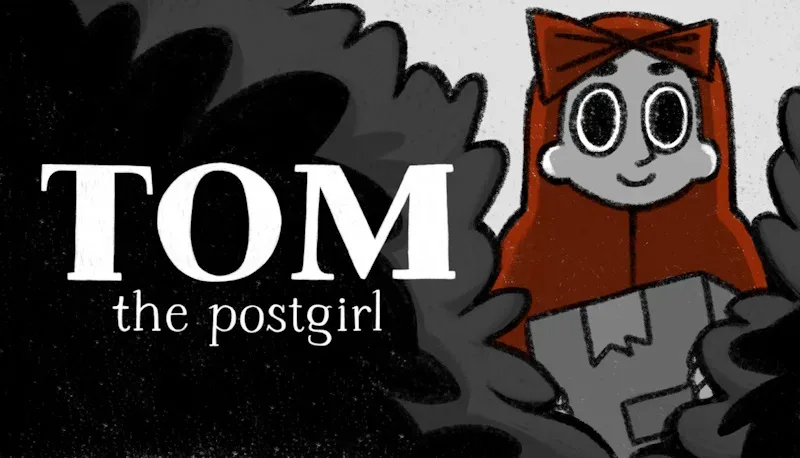
Tom the Postgirl is now available for Nintendo Switch, PC and Mac. The debut game from independent studio Oopsie Daisies follows its titular postal worker through the odd corners of her home village, where delivering packages is only one possible use of her route.
Published by ARTE, the narrative-driven adventure is priced at €9.99 / $9.99 / £8.99. Its Steam edition has a 10% launch discount for the first two weeks after release. PC and Mac players can get it through Steam, while the console version is available for Switch.
That platform combination makes the game an unusual fit for players looking for a compact, illustration-led adventure on a handheld as well as at a computer. More importantly, its premise is not really about the reliable romance of the postal service. Tom’s rounds provide an excuse to roam, look closely at village life and decide whether to be helpful, nosy, disruptive or some uncomfortable blend of all three.
A delivery route with a malicious streak
The basic setup is simple: Tom moves around her village and encounters its residents. The announced play focus is exploration, observation and mischievous interaction. That wording matters because it points to a game built around noticing situations and choosing what to meddle with, rather than one defined solely by completing deliveries efficiently.
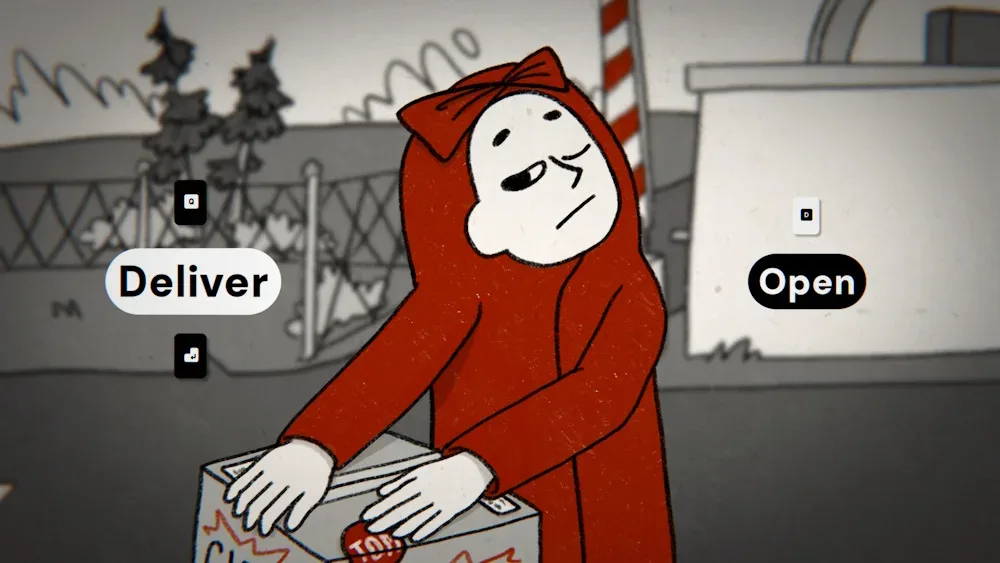
Players can deliver the packages in their care, but the game also permits less civic-minded behavior. Tom can spy through windows, hide, sabotage and generally make a mess of things. Those actions establish a playful but deliberately unsettling version of village exploration: doors, windows, people and places are not just scenery between objectives, but possible opportunities for curiosity or disruption.
The result sounds closer to a small-scale narrative adventure than a traditional action game. Exploration, in this context, means moving through the setting and finding its situations. Observation means paying attention to what inhabitants are doing and what the illustrated spaces reveal. Interaction is where the game’s personality enters: rather than treating every discovery as a collectible or a combat encounter, it asks what Tom might do with the information she has found.
There is an important tonal caveat for anyone drawn in by the storybook look. The mischief can turn violent, and the material is explicitly designed to be darkly funny and disturbing as well as cute. This is not simply a bright, gentle delivery game with eccentric side characters.
Hand-drawn picture-book charm, deliberately warped
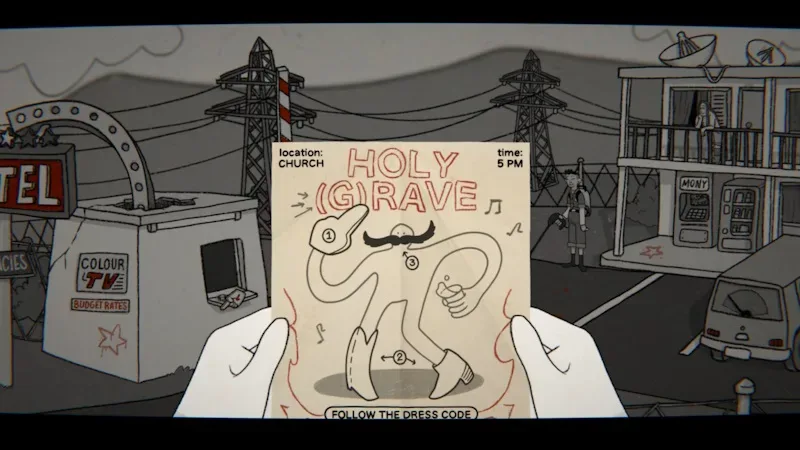
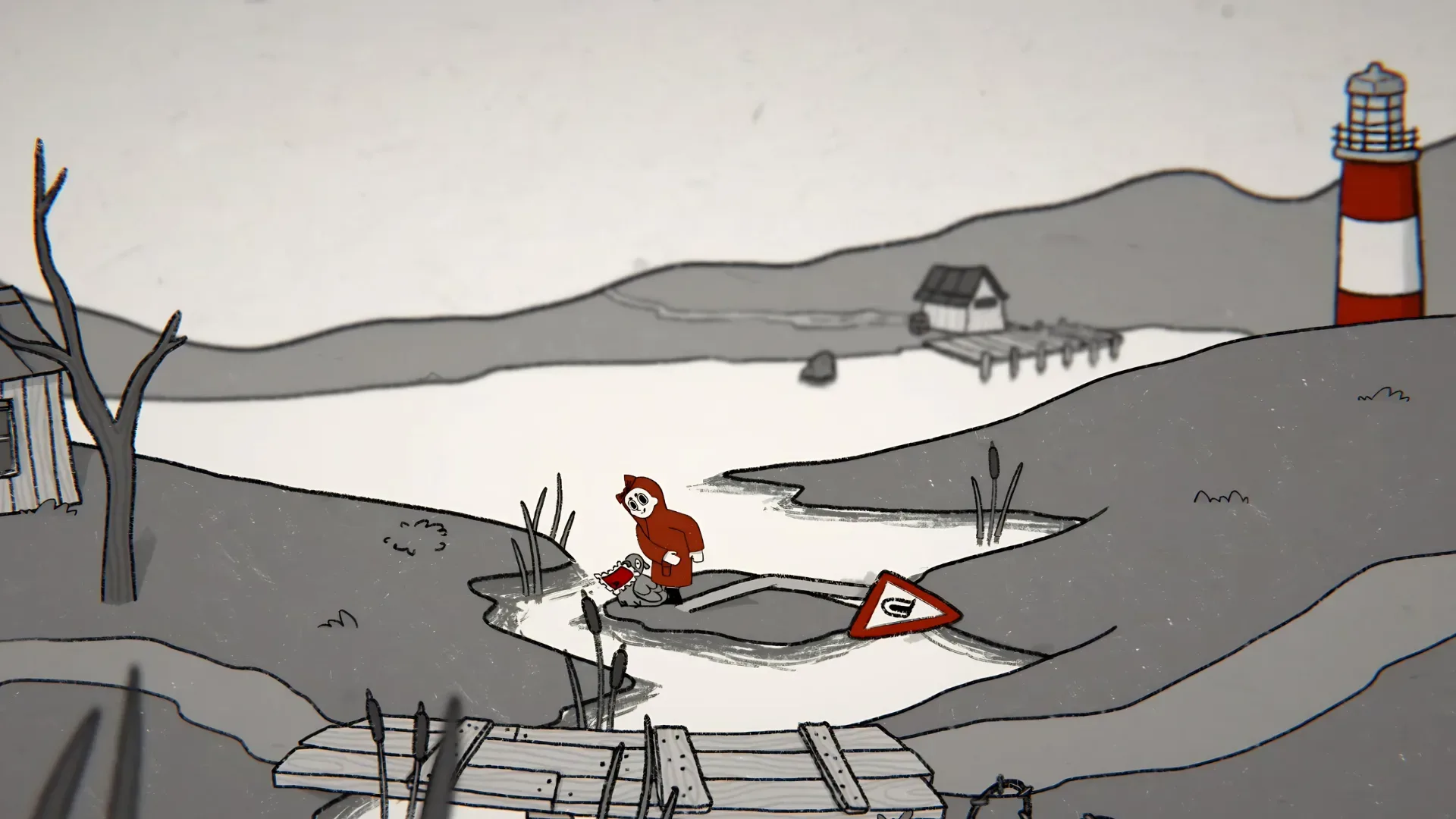
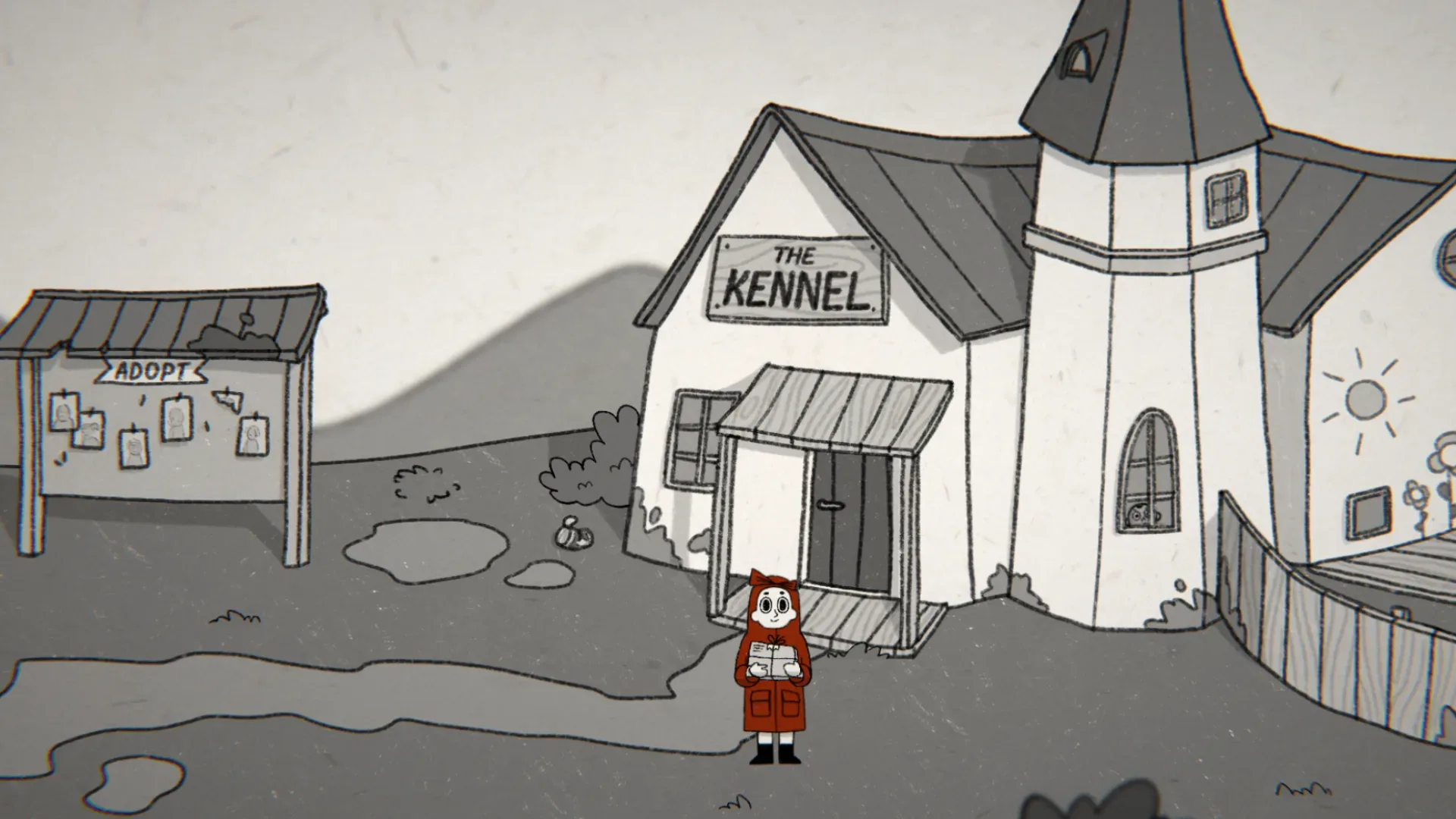
Oopsie Daisies frames Tom the Postgirl around a collision of visual innocence and adult absurdity. Hand-drawn backgrounds and frame-by-frame animation give the game a retro illustrated quality, evoking the tactile, authored feeling of a picture book rather than a cleanly rendered 3D town.
Related coverage includes Tom the Postgirl Delivers Creepy-Cute Chaos on Switch and PC.
Frame-by-frame animation refers to movement created as a sequence of individually drawn images. It can give characters a particularly expressive, handcrafted quality, since poses and timing can be shaped image by image. Alongside the hand-drawn scenery, that approach is central to the game’s visual identity, not just a decorative filter placed over its village.
But the apparent sweetness is intentionally unreliable. The village is populated by bizarre figures and situations, including drug-dealing pigeons, cowboy earthworms that wander the area, and grumpy squirrels. Such details establish a world where a cute drawing style is not a promise of conventional children’s-book logic or child-friendly subject matter.
The game’s stated sensibility sits between a naïve storybook aesthetic and the surreal, sometimes uncomfortable humor associated with adult animated comedy. That contrast may be Tom the Postgirl’s clearest selling point. It uses a familiar visual language—softly illustrated places, animal characters and a local errand—to make the stranger or more disruptive elements land harder.
What “creepy-cute” means here
“Creepy-cute” can be a vague label, but Tom the Postgirl’s announced features make the intended balance clearer. The cute side is carried by the hand-drawn presentation, the village setting and the premise of a postgirl making rounds. The creepy side comes from the disturbing humor, potentially violent mischief and the implication that peeking into a neighbor’s life can reveal more than an ordinary domestic joke.
That contrast is also practical guidance for prospective players. Someone looking only for a relaxed, wholesome mail-delivery loop should be aware that the game makes room for sabotage and unsettling scenes. Conversely, someone who enjoys off-kilter comedy may find that the bright presentation is part of the point rather than an obstacle to it.
The release does not specify a rigid list of consequences, endings or interaction systems, so it would be premature to treat every mischievous option as a promise of branching narrative outcomes. What is clear is that the game presents Tom’s delivery work as a flexible framework for chaotic encounters. Players are invited to engage with the village’s people and spaces beyond the literal task of dropping off parcels.
A debut with a deliberately specific identity
Tom the Postgirl is Oopsie Daisies’ first title, and the game arrives with a sharply defined identity rather than a broad genre pitch. Its central character, its postal-route structure, its handmade animation and its unsettling comic streak all point in the same direction: a compact village adventure where curiosity can become intrusion and a helpful errand can become troublemaking.
For independent games, a clear tone can be as meaningful as a lengthy feature list. Here, the available details emphasize texture and behavior over numerical systems. Players should expect a game interested in odd scenes, eccentric inhabitants and the freedom to make Tom an agent of disorder—not a simulation of postal logistics.
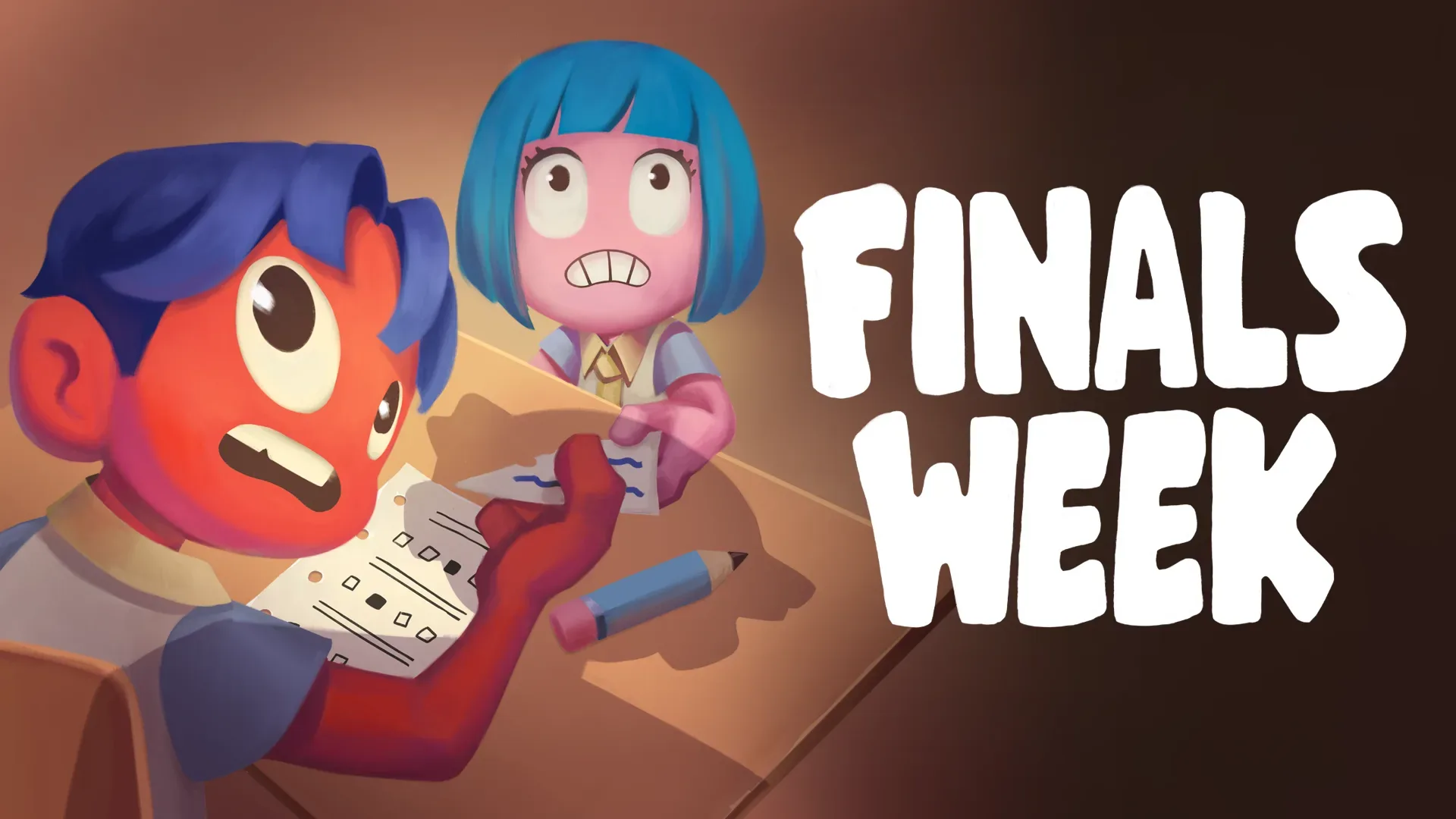
It also joins a wider run of smaller PC releases that use a distinct premise to separate themselves from larger productions. For another recent Steam launch built around a mischievous, unconventional setup, see Finals Week’s co-op classroom caper.
Tom the Postgirl release details
- Developer: Oopsie Daisies
- Publisher: ARTE
- Platforms: Nintendo Switch, PC and Mac via Steam
- Price: €9.99 / $9.99 / £8.99
- Steam launch offer: 10% off for two weeks following release
- Core activities: Exploring, observing villagers, delivering packages and causing mischief
- Presentation: Hand-drawn backgrounds with frame-by-frame animation
Tom the Postgirl is available now for players who want their illustrated village games with a little more spying, sabotage and unnerving nonsense than the average delivery route provides.