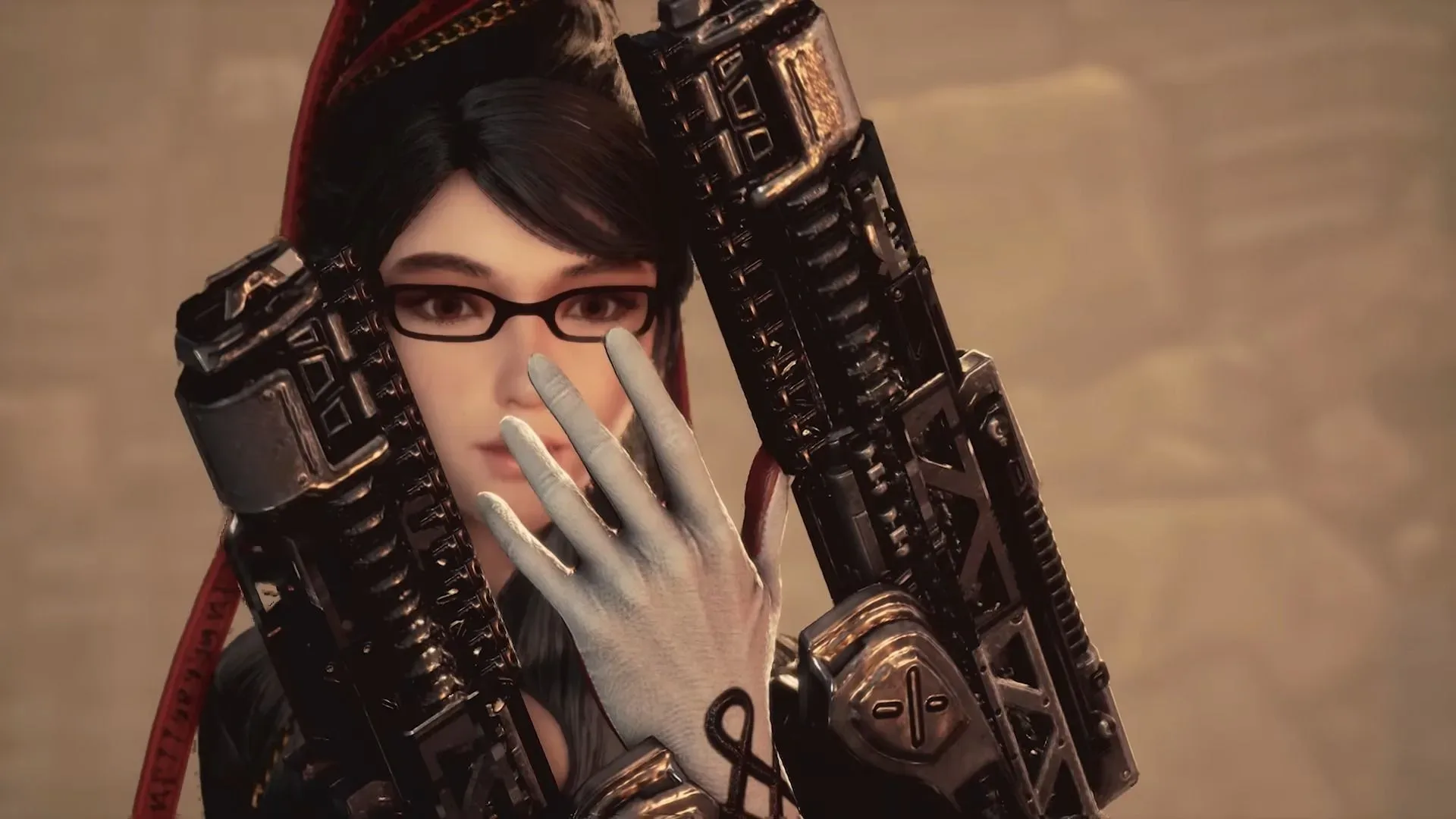

Stellar Blade has a new live-action commercial for its Nintendo Switch 2 edition, and it is not satisfied with simply reminding people that the sci-fi action game can leave the living room. It wants Eve to come along on the commute, help with a frisbee at the park, share a soda, show off a sword to strangers, and apparently perform emergency anti-monster sweeps beneath somebody’s bed.
The roughly 100-second spot treats the game’s heroine less like a conventional on-screen protagonist and more like an unusually committed companion who has wandered into ordinary daily life. That is a direct visual expression of portable play: rather than explaining hardware functions or rattling off technical specifications, the ad sells the idea that the player can keep the world of Stellar Blade close at hand.
It is also, very plainly, an ad built to provoke a particular kind of internet reaction. Comments responding with variations of “It should have been me!” have appeared in large numbers, while the video has already passed two million views. A commercial showing a glamorous game character doting on an adult man is not subtle material, and subtlety does not appear to be the campaign’s goal.
Portability is the premise; wish fulfillment is the punchline
The commercial’s basic message is easy to read. Eve appears in settings that imply a game moving through a player’s routine rather than remaining tied to one screen in one room. She catches a frisbee outdoors, shares a drink and interacts with commuters while displaying her futuristic sword. These moments put a stylized science-fiction character against recognizably everyday spaces, using the mismatch for charm.
For more context, explore Your EV Can Be a Home Backup Battery, but the Compatibility Boss Fight Is Real.
Then the spot takes its most conspicuous detour indoors. A fully grown man is tucked into bed by Eve, receives a bedtime story and gets help when a small creature is found under the bed. The joke depends on an adult being placed in a childlike care scenario, then played straight enough that the character’s protectiveness becomes the gag. It is affectionate, silly, and calibrated for a fanbase likely to turn a few seconds of screen time into a meme.
That approach matters because game advertising often has to do more than identify a platform. A trailer can demonstrate combat, story scenes or graphical effects. A live-action spot has a different job: it must turn a product claim into a compact fantasy. Here, the claimed fantasy is not merely “play Stellar Blade away from home.” It is “Eve can become part of the small, mundane moments around you.”
Portable play, in marketing language, is the ability to take a game beyond a fixed TV or desk setup. The ad illustrates that concept rather than explaining it. It does not establish technical performance details, modes, edition contents, release timing or other platform specifics. What it does establish is the campaign’s intended mood: playful companionship with a knowingly thirsty wink.
A knowingly retro kind of game commercial
There was a time when major game campaigns regularly embraced physical comedy, surreal mascots and ideas that had little interest in being respectable. The Stellar Blade commercial feels consciously adjacent to that tradition. Instead of a solemn montage of cinematic poses, it uses a real-world scenario and lets its premise get stranger as it goes.
That is a useful contrast with the more familiar modern format: a polished sequence of gameplay footage, logos and dramatic music. Those reels can communicate scale and spectacle efficiently, but they can also blur together. A woman in a park catching a frisbee with Eve is more likely to lodge in a viewer’s memory precisely because it is not an expected representation of a high-style hack-and-slash game.
Live action here means the commercial uses performers and real environments rather than presenting only game footage. Eve is integrated into those scenes as a character interacting with people and objects. That choice is central to the joke. The more convincingly the ad places an extraordinary character into a normal moment, the easier it is to understand the portable-play metaphor.
The video is also a reminder that an advertisement can understand a game’s audience without having to validate every audience impulse. The man-under-the-covers sequence invites viewers to laugh at the excess of the premise. It is not a restrained study of parasocial attachment; it is a broad visual bit about being cared for by a fictional action hero.
Why Eve carries so much cultural baggage
The campaign arrives with more baggage than a typical platform promotion because Stellar Blade has been repeatedly pulled into arguments well beyond its combat and science-fiction setting. Released in 2024, the game became a prominent object in culture-war discourse, especially around its character designs and changing or adding outfits.
That attention placed developer Shift Up in the middle of grievance campaigns whenever alterations to character clothing became a point of discussion. The result was an oddly inflated symbolic role for a game that, at its core, is a sci-fi hack-and-slash title. A design choice or wardrobe adjustment could be treated as if it settled a much larger argument about games, masculinity or creative freedom.
The new commercial does not attempt to resolve any of that, nor should viewers mistake its flirtatious humor for a policy statement. It is marketing designed around Eve’s recognizability and the audience’s established affection for her. The campaign knows the character attracts attention. It channels that attention into an exaggerated, comic domestic fantasy instead of a defensive argument.
Culture-war discourse is a broad label for conflicts where entertainment products are made to stand in for larger political or social disputes. It can flatten the actual work being discussed: a game becomes a symbol, and every creative decision is interpreted as allegiance to one side. The Stellar Blade conversation has often followed that pattern. The new ad’s silliness does not erase that history, but it does offer a much less exhausting thing for fans to talk about.
The commercial appears to favor real performers over generative unease
Another reason the ad has drawn scrutiny is the franchise’s association with AI concerns. Material for the sequel, Stellar Blade: Blood Rain, has been criticized for imagery that appeared to lean into an uncanny generative-machine aesthetic similar to what can be seen in low-quality mobile-game advertising.
This commercial gives viewers less reason for that particular alarm. Nothing in the spot has been identified here as generative AI material, and Eve performer Jade J shared behind-the-scenes photographs that further indicate the people appearing in the commercial were real performers on a real production.
That distinction is valuable, even if it sounds basic. Generative AI refers to systems that produce new images, text, audio or other material based on patterns in training data and user prompts. In visual marketing, concern frequently arises when results look inconsistent, physically implausible or strangely polished in a way that obscures how the work was made. “Uncanny” is not proof on its own, but it can make audiences question the production process.
Behind-the-scenes imagery does not answer every possible question about every effect in an advertisement. It does, however, provide straightforward evidence that the commercial’s human cast was not simply an artificial construction. In a campaign whose entire appeal depends on bringing Eve into tactile, recognizable real-world situations, that grounding is particularly useful.
What the campaign actually accomplishes
The strongest part of the commercial is its clarity. It takes one central concept—bringing Stellar Blade with you on Switch 2—and turns it into a set of escalating visual jokes. Eve is present at leisure, on transit and in the bedroom. The scale of the joke moves from public whimsy to intensely private embarrassment, which explains why the bed scene is the part most likely to circulate separately.
There is a practical marketing lesson in that. Hardware capabilities can be abstract; companionship is not. Saying a game can travel with the player describes a function. Showing the game’s lead character participating in someone’s day makes that function emotionally legible, even if the premise is ridiculous.
Whether the ad changes anyone’s mind about the game is a different question, and the commercial itself does not provide an answer. But it has already created a conversation that is more specific than a routine launch reel: people are reacting to a scene, a character dynamic and a deliberately unhinged tonal choice. For a promotional video, being memorable is often the first boss fight. This one has brought a sword, a soda, a frisbee and apparently a bedtime-story book.