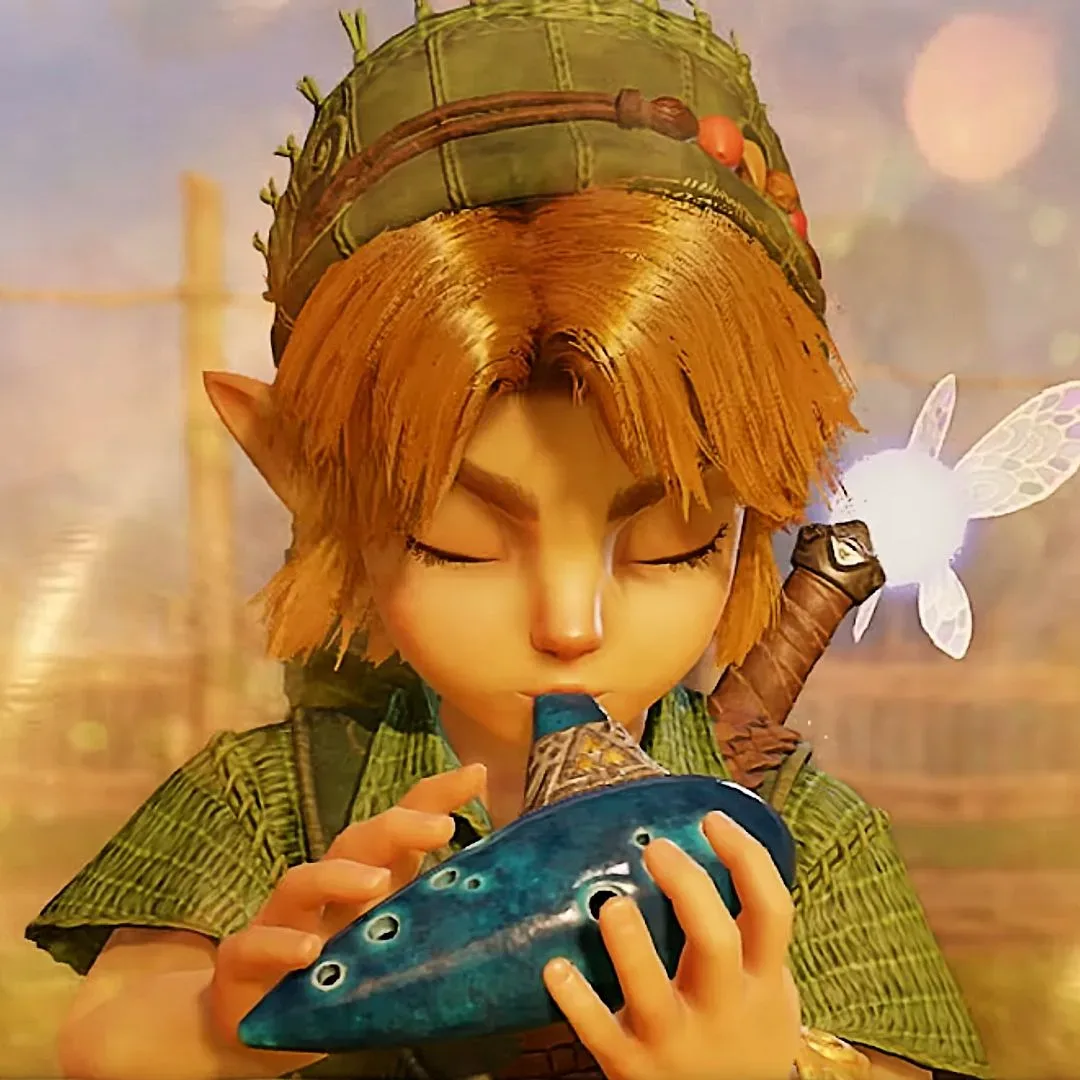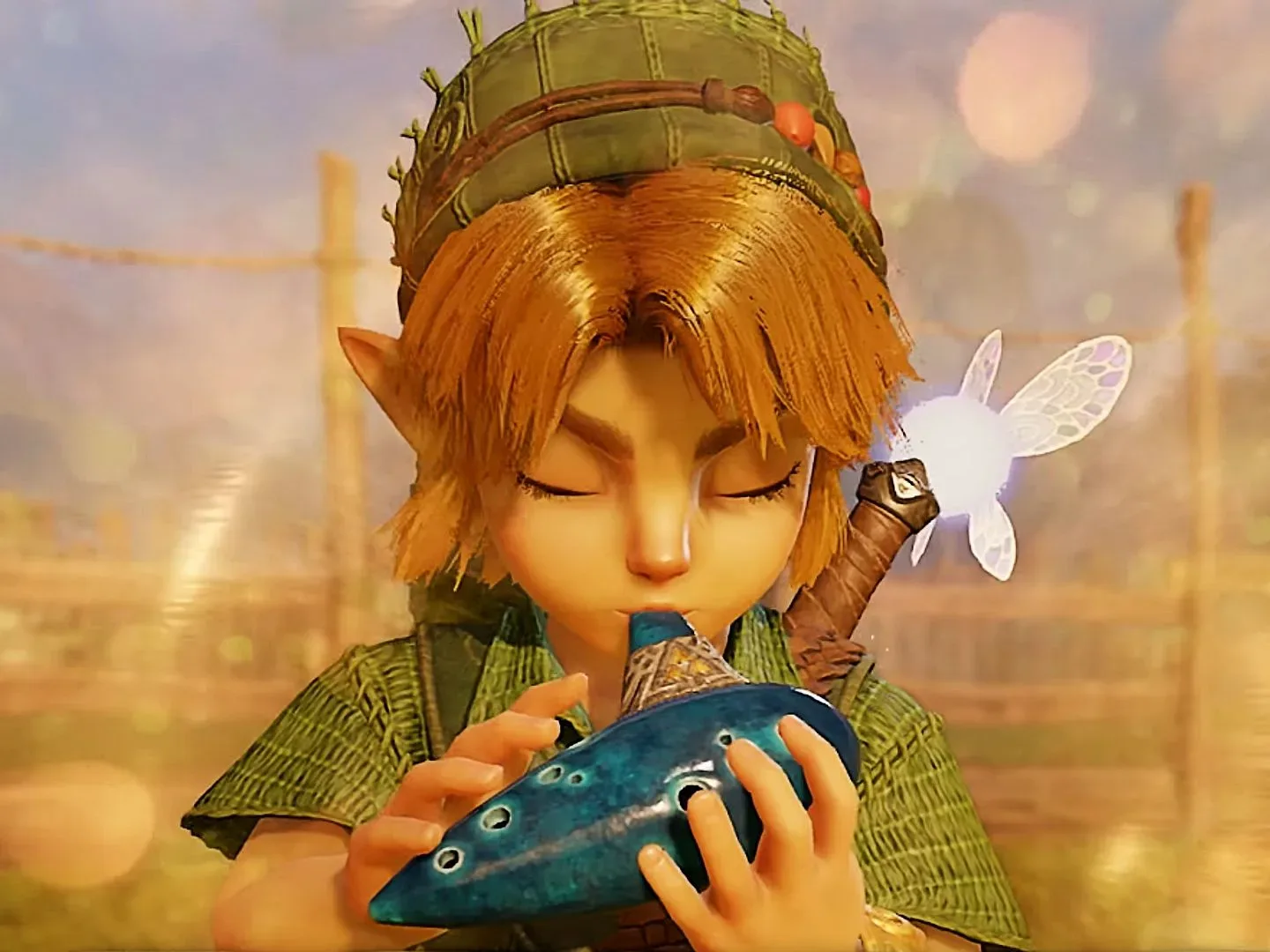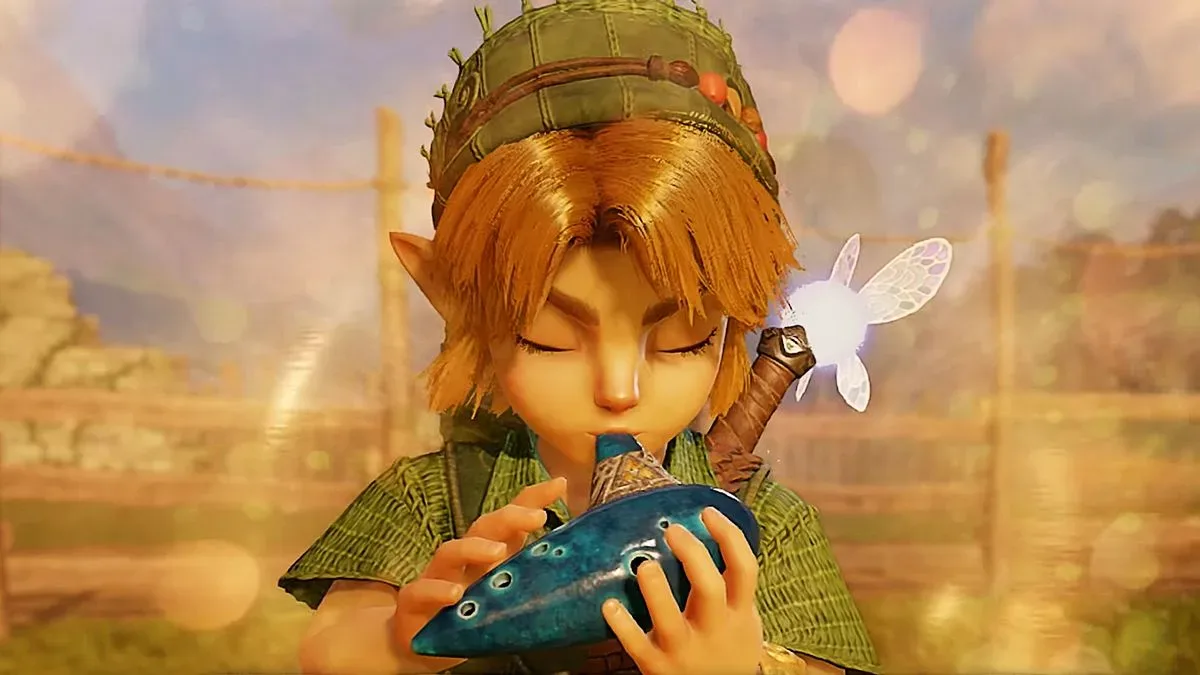
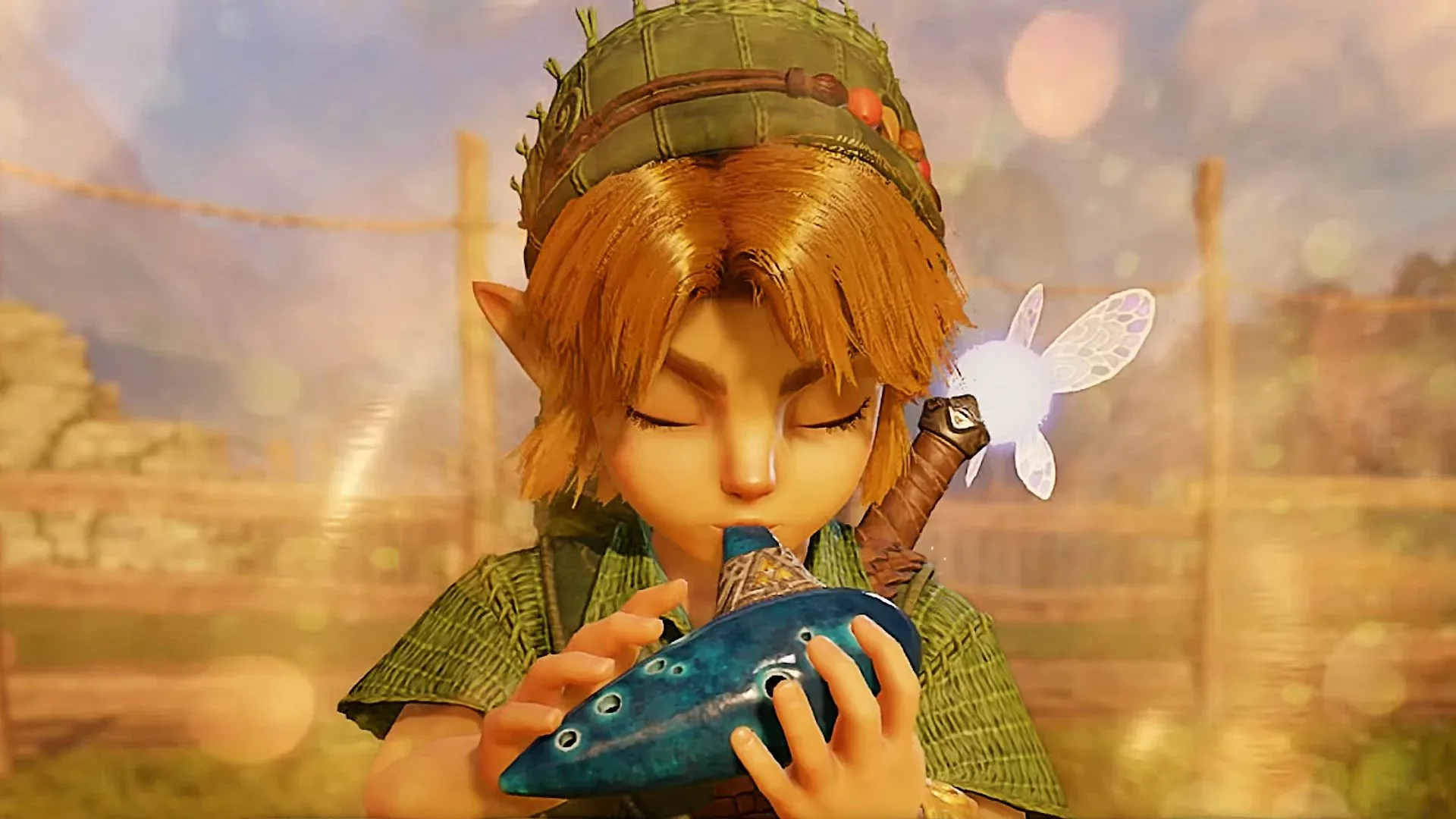
There are plenty of ways for a touring band to deal with an unexpected missing guitarist: rearrange the song, lean on a backing track, hand the passage to another player, or leave a little empty space and hope the crowd understands. Periphery chose a fifth option at the final show of its recent US run. It put Link on a Switch 2, connected the console to the venue PA, and let singer Spencer Sotelo perform an in-game ocarina part from The Legend of Zelda: Ocarina of Time remake in place of a guitar solo section.
The moment arrived during “Wildfire,” with Sotelo holding the handheld console and playing the Zelda instrument live rather than merely displaying it for the bit. Footage shared by guitarist Mark Holcomb shows the console in use, Sotelo’s fingers working its controls, and the game’s audio being sent through the sound system. In a genre frequently built around precision, dense arrangements and virtuoso-level guitar parts, the detour was both a practical response to a difficult situation and an extremely on-brand bit of end-of-tour chaos.
A last-minute gap, filled by Hyrule
The circumstances matter. Guitarist Misha Mansoor had stepped away from the US tour because of a family emergency with only two dates remaining. Rather than cancel those shows, Periphery continued as a four-piece: Holcomb and Jake Bowen on guitar, Sotelo handling vocals, and Matt Halpern on drums.
That is not a small adjustment for a band whose material can involve tightly interlocking parts. Periphery also uses backing tracks for bass and synth elements, which gave the remaining members a way to keep some absent parts in the live presentation. A backing track, in this setting, is pre-prepared audio played alongside the musicians during a performance. It can carry parts that cannot be performed live by the people presently onstage, such as layered synthesizers, bass material, or other arrangements too extensive for the available lineup.
But not every hole needs to be patched in the most invisible way possible. The Zelda insert openly acknowledged the altered lineup instead of pretending nothing had changed. It transformed a moment of necessity into a gag the room could instantly understand: a metal band had lost a guitarist, so its vocalist recruited a digital Link with an ocarina.
Audience reactions in the clip captured the absurdity neatly. One viewer called it “the craziest” thing they had seen, while another joked that the entire venue had been “warped.” That language lands because the performance did more than reference a famous game. It used the game itself as an instrument inside an otherwise full-scale concert arrangement.
Why the console-to-PA detail makes the stunt work
The key distinction is that this was not a Zelda melody played on a conventional ocarina, keyboard, guitar, or backing track. Sotelo performed through the game’s ocarina interface, with the handheld’s audio routed into the PA system.
A PA system—short for public-address system—is the venue sound setup that projects a show to the audience. Connecting the Switch 2 to it made the game audio part of the live mix, audible in the room alongside the drums, guitars and vocals. That is why the clip reads less like a visual joke and more like a genuine, if deliberately unconventional, contribution to the song.
Related coverage includes Periphery Turns Zelda: Ocarina of Time Into a Live Metal Solo During Tour Finale.
The visual component is just as important. A crowd can hear an unusual sound and perhaps assume it came from a sample. Seeing the handheld in Sotelo’s hands, with Link visible and the controls being played, communicates the premise immediately. The audience is not simply hearing an audio cue; it is watching a performer navigate a videogame to get through a passage in a metal set.
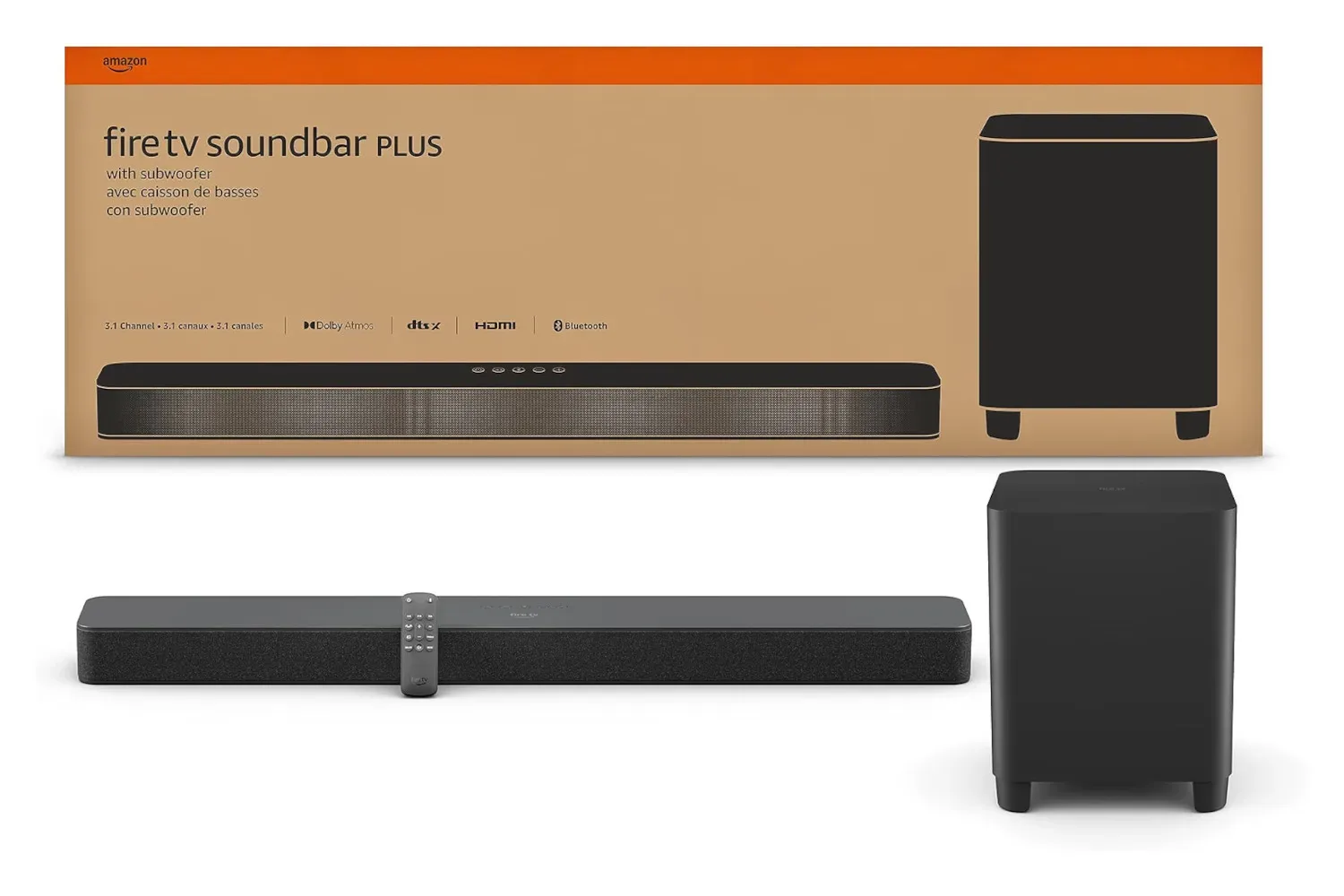
For anyone putting together a gaming or music space at home, that basic idea also illustrates why audio routing matters as much as the screen. A handheld or console can provide the sound, but speakers are what give it scale. That is separate from what happened on Periphery’s stage, of course, but readers comparing home-listening options may want to see this Fire TV Soundbar Plus with subwoofer listing.
The joke fits a band built for complicated arrangements
Periphery’s setup helps explain why one missing musician created a challenge in the first place. The group’s sound is known for heavy riffs, melodic sections and rhythmically unusual guitar work; a single solo section may be a small portion of one song, but it exists inside an arrangement designed around several contributors. Mansoor, Holcomb and Bowen are all guitarists in the group, while Halpern is on drums and Sotelo fronts the band.
In that context, replacing a missing passage with Zelda’s ocarina was not an attempt to claim that a videogame instrument sounds like electric guitar. The humor comes from the mismatch. It is intentionally conspicuous, and the band apparently let the moment remain conspicuous rather than burying it under a substitute track.
There is also a useful difference between covering the role of a solo and recreating the solo’s original sound. A live arrangement does not always need a one-to-one replacement. It needs a musical or theatrical answer to the empty space. Periphery’s answer was to turn the space into an event—one that acknowledged the absent player, kept the song moving, and supplied a memorable payoff for fans at the tour’s end.
That approach is especially effective at a final date, when bands often allow themselves a little more room for jokes, detours and one-night-only decisions. It does not establish that Zelda ocarina passages will become a recurring fixture in “Wildfire.” It does show the group found a workable way to finish the run while Mansoor was away.
What “playing the ocarina” means in Zelda
Within Ocarina of Time, the ocarina is a musical in-game instrument associated with Link. The performance’s appeal relies on that immediate recognition. The game is one of Nintendo’s best-known fantasy adventures, and its ocarina is a particularly memorable piece of Zelda iconography. Putting it in the middle of a Periphery song creates an instant collision between two audiences and two very different performance languages.
It also changes the nature of a typical guest appearance. There was no additional musician walking onstage to take the missing lead part. There was no claim that a new member had arrived. The guest was a game character on a handheld display, while the actual person performing the controls was the band’s singer.
That makes the stunt amusingly literal: Link was “ready to shred,” but Sotelo was still responsible for getting the notes out. The game supplied the instrument and sound; the performer supplied the timing and inputs; the venue system made it concert-sized.
A rare kind of contingency plan
Live production is often at its best when an audience can see the solution to a problem happening in real time. The facts here are simple: a guitarist needed to leave for a family emergency, two shows remained, and the band carried on without him. The inventive part was refusing to make every accommodation invisible.
Backing tracks kept elements such as bass and synth parts available. The remaining musicians maintained the core live lineup. Then, for one solo moment, Periphery leaned into a Nintendo reference with enough commitment to wire a Switch 2 into the PA and play it onstage.
Adam “Nolly” Getgood, who produces the band’s albums and serves as its studio bassist, is not a full-time touring member; he stopped touring with the group in 2017. His status is another reminder that studio roles and touring roles do not always line up exactly, particularly for bands with detailed, layered recordings. The Zelda sequence did not solve every logistical issue of performing without Mansoor, nor was it intended to. It was a playful answer to one visible musical gap.
Periphery is also set to support Meshuggah on the latter’s 40th-anniversary arena tour across Europe and Britain next year, with Vildhjarta opening each night. There is no indication that Link or the Switch 2 will return for those dates. Still, the tour-finale clip has established a wonderfully strange precedent: under the right circumstances, a missing metal guitar solo may be answered by an ocarina from Hyrule.