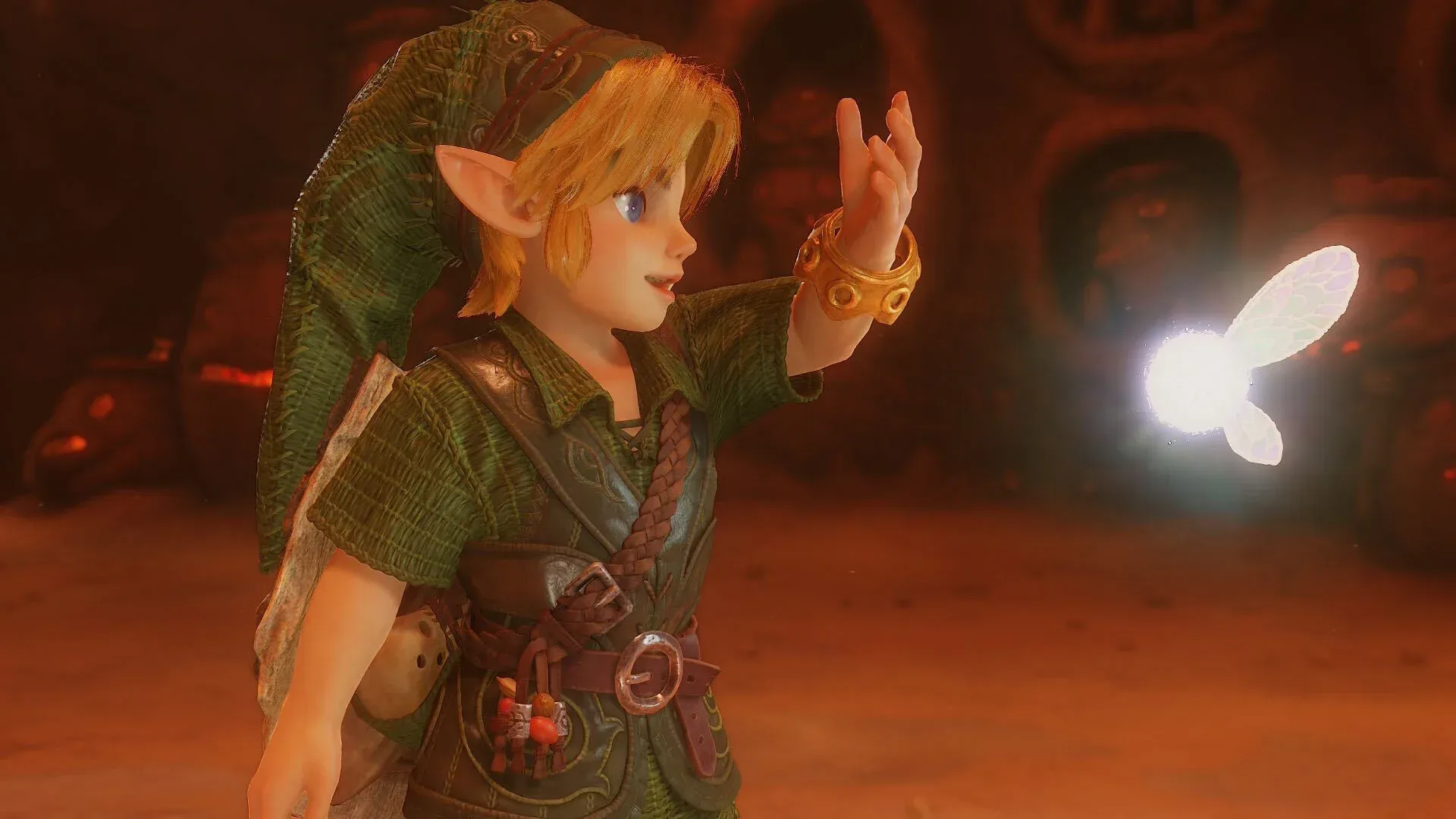
A return trip to Termina may look logical from the outside, but it is still only a theory. Former Nintendo of America marketing and PR leads Kit Ellis and Krysta Yang have argued that a remake of The Legend of Zelda: Majora’s Mask is an especially plausible follow-up to the recently released Switch 2 revival of The Legend of Zelda: Ocarina of Time. Their reasoning is straightforward: the two games have historically been closely connected, and much of the expensive foundational work for one could potentially support the other.
That does not mean Nintendo has confirmed a new Majora’s Mask. Neither Ellis nor Yang is presenting an official announcement, release window, or production detail. Their comments are informed speculation based on the series’ history, the commercial momentum attributed to the new Ocarina of Time release, and the practical advantages of revisiting a game that was originally built as a close technical relative of its predecessor.
Why Majora’s Mask is the natural subject of remake speculation
Ocarina of Time and Majora’s Mask occupy an unusual place in Zelda history. The original Nintendo 64 Majora’s Mask arrived less than two years after Ocarina of Time. It did so in part by reusing assets, character models, and underlying systems already created for the earlier game. Reuse in this context does not mean the follow-up was simply a lightly altered version of the first game; it means a team could begin with an established technical base instead of building every environment, character, interaction, and tool from scratch.
That background is central to Ellis and Yang’s argument. Yang said she still expects a remake and suggested it would be hard to see a reason not to pursue one. Ellis offered a more cautious timetable, saying it may not be the next Zelda release or arrive within one to two years, while maintaining that the foundational work completed for Ocarina of Time could make the project more feasible.
The precedent is not confined to the Nintendo 64 era. The two games also received 3DS remakes relatively near one another. That repeat pattern is why a modern pairing is easy for fans to imagine: remake Ocarina of Time, then use an appropriate portion of that work to tackle its stranger, more ominous companion.
What “foundational work” could mean
In game development, foundational work refers to the broad set of systems and resources that make a project function before its individual quests, locations, and encounters are fully assembled. It can include technology for rendering environments, player movement, animation, camera behavior, menus, audio implementation, tools used by designers, and rules governing how characters and objects react to each other.
For a remake, a shared foundation may also include visual standards and production pipelines: how models are built, how scenes are lit, how animations are authored, and how the team handles the conversion of older designs to current hardware. If two games share characters, ideas, and technical roots, that overlap can reduce duplicated work.
But it should not be mistaken for a guarantee of a rapid project. A modern remake still requires decisions about what to preserve, what to revise, and how to present mechanics for a contemporary audience. Majora’s Mask has its own identity and would need to stand on its own rather than function as extra content for Ocarina of Time. The fact that original developers could reuse work decades ago establishes a useful comparison, not a firm forecast for today.
Related coverage includes Former Nintendo Marketing Leads Think a Majora's Mask Remake Is the Logical Next Step.
The moon is familiar; the game’s challenge is not
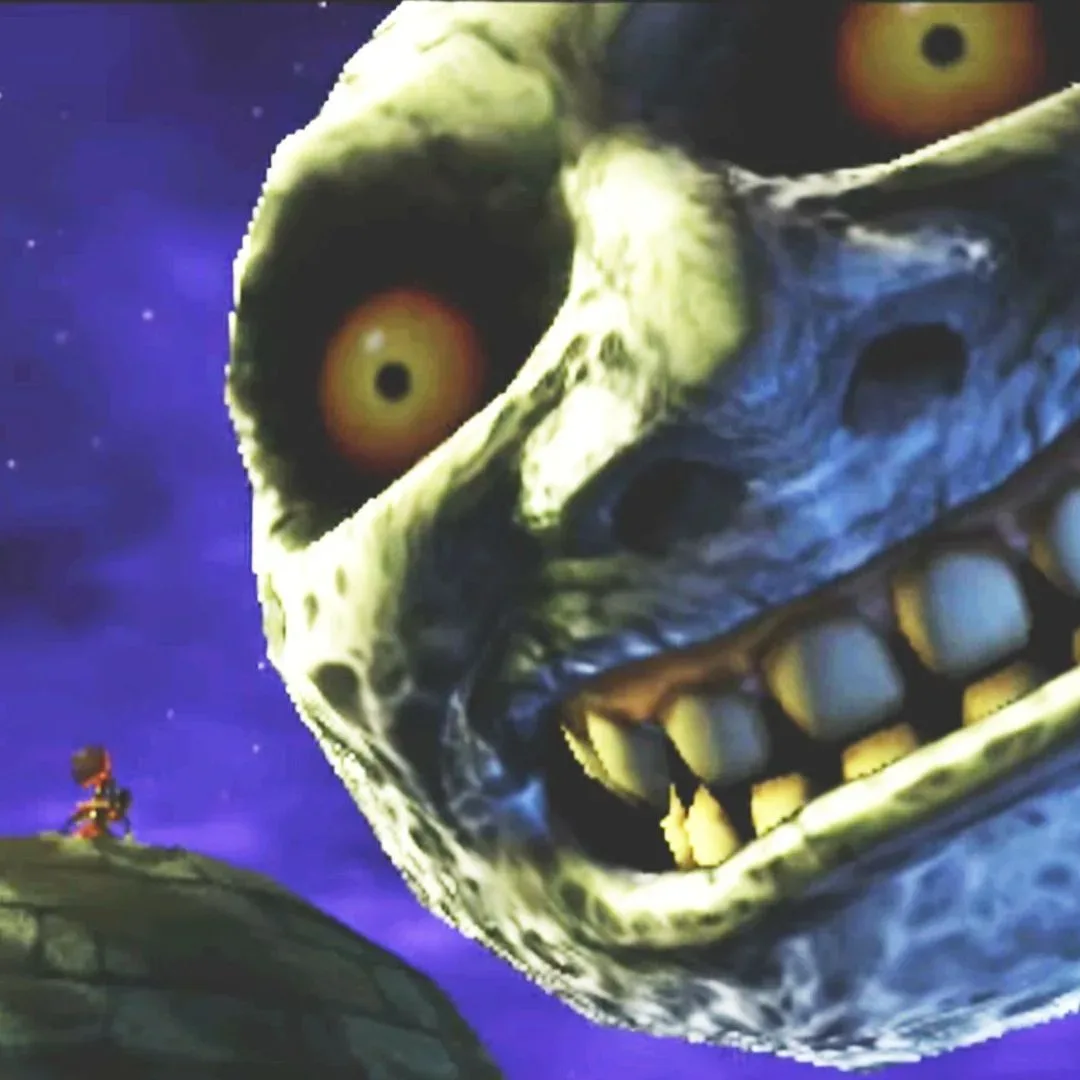
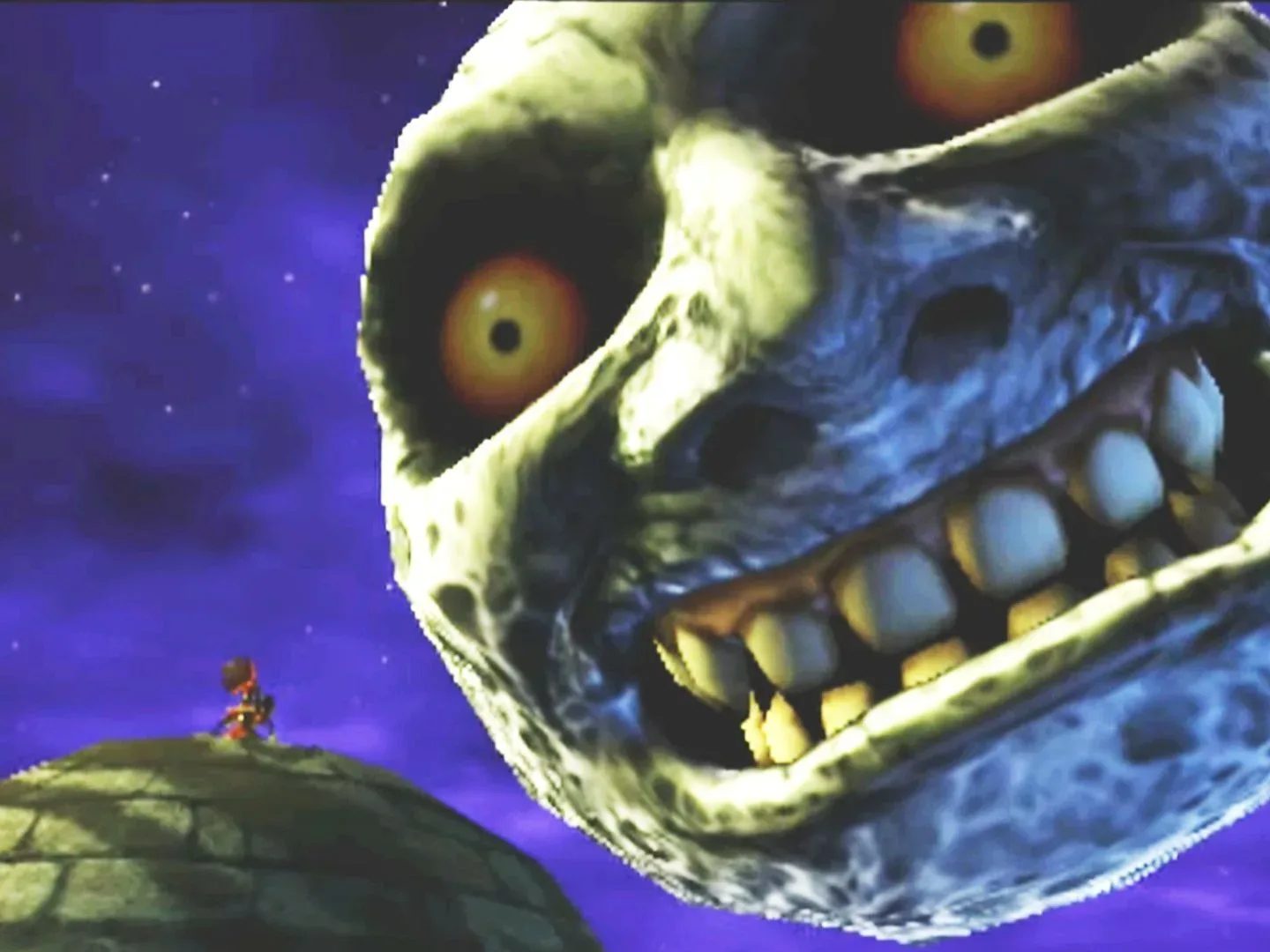
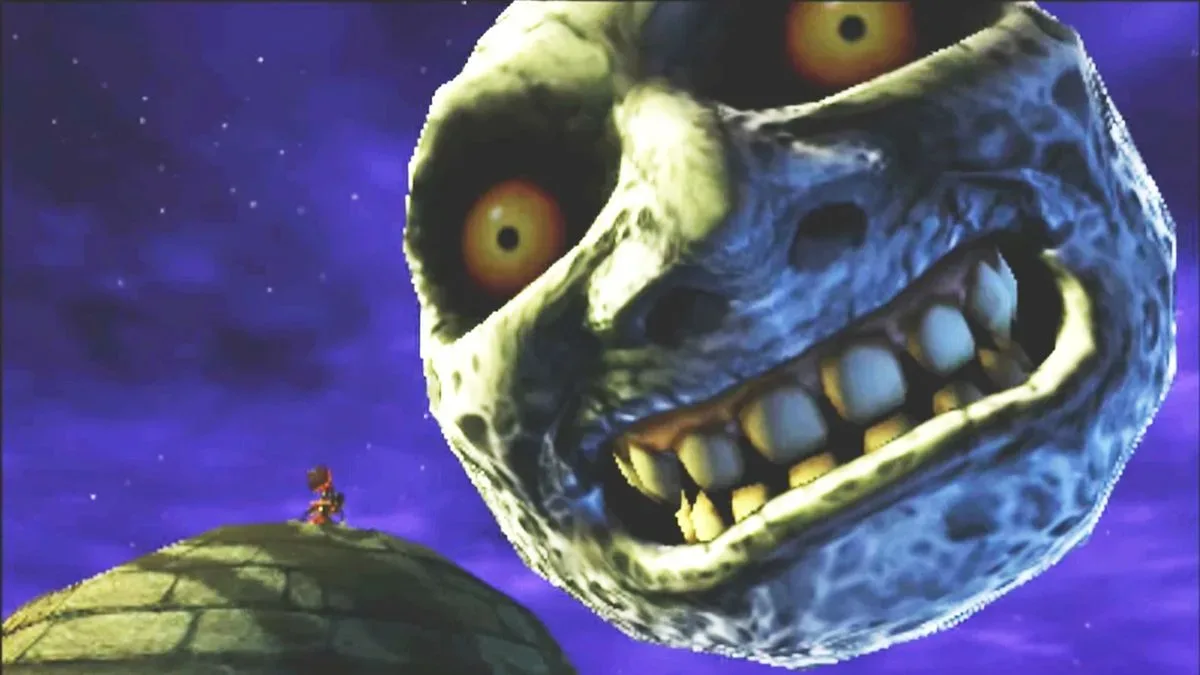
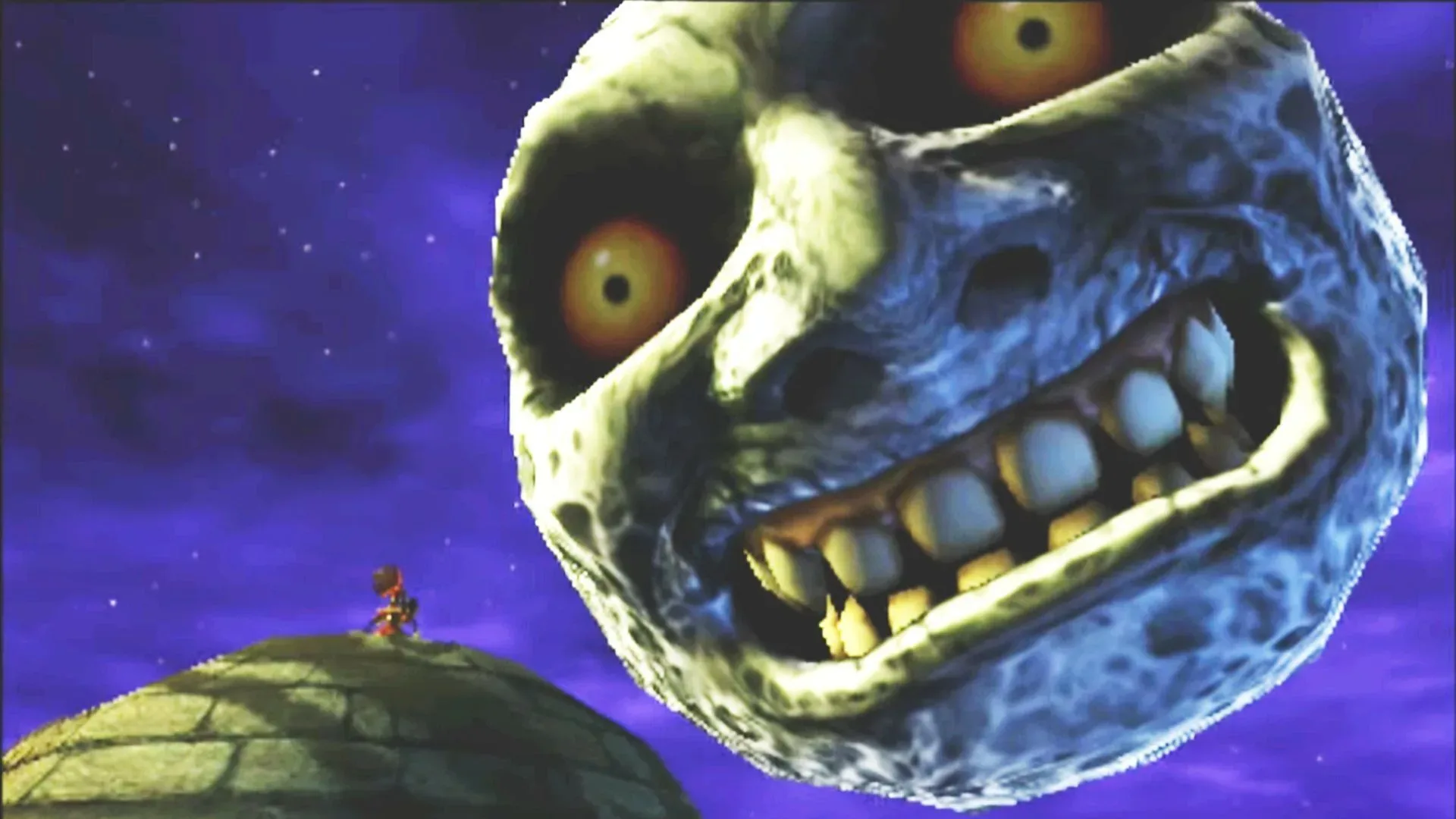
The case for a new Majora’s Mask is not merely technical. The game’s reputation comes from its distinct tone and structure, symbolized by its looming smiling moon. Where its predecessor supplies the shared starting point, Majora’s Mask is remembered as a more unusual destination. Ellis described the game as one whose potential has not yet reached its ceiling, a view that treats a remake as an opportunity to revisit rather than merely reproduce it.
That distinction matters when discussing remake expectations. Asset sharing can make a project easier to begin, but it cannot answer the creative question of what form a remake should take. A remake might closely preserve its original structure, reinterpret elements through a new technical framework, or update presentation while leaving the essential design intact. No direction has been confirmed here, so speculation about exact features, changes, or timing would go beyond what is known.
The recent Ocarina of Time revival is reported to have sold more than 5 million copies in its first four days. If accurate, that early result gives the broader conversation obvious momentum: a successful return for one landmark Zelda game makes discussion of a closely linked follow-up inevitable. Commercial interest, however, is evidence of audience appetite—not proof of Nintendo’s plans.
A possible place in a wider Zelda release rhythm
Ellis and Yang also considered the possibility of a Zelda cadence that alternates among new 2D entries, new 3D releases, and remakes. This is a useful way to understand why a remake can be appealing in a large franchise. It would not necessarily replace an all-new game; instead, it could be one part of a broader release mix that gives different audiences different kinds of Zelda experiences.
There is still a major conditional in that idea. Nintendo has not set out a confirmed annual Zelda schedule, and a hypothetical rotation should not be read as a promise. The value of the observation is strategic rather than predictive: remakes can sit between original installments, and a sequel with historical links to an already-remade game would be an obvious candidate for consideration.
For players, the practical takeaway is to separate three levels of confidence. First, Majora’s Mask has a genuine historical relationship with Ocarina of Time, including the reuse of assets and systems in its original development. Second, former marketing leaders believe that relationship makes a remake sensible. Third, Nintendo itself has not publicly committed to it. Those points can all be true at once without turning a well-reasoned prediction into confirmed news.
Why production efficiency is only one part of the story
The conversation also touches a larger industry issue: rising development complexity. Modern games can require extensive work across art, engineering, design, accessibility, localization, testing, and platform support. Reusing a proven base can be a sensible production decision, but it must coexist with quality control and a clear creative purpose. That tension is part of why broader debates over how games are made—and how technology is used in that process—remain important. Questions around AI-made game clones, for example, underscore that efficiency and originality are not interchangeable ideas.
For a potential Majora’s Mask remake, the strongest argument is therefore not simply “the assets already exist.” It is that the game has a track record as an ambitious follow-up built from an existing base, and that its legacy offers enough of a separate identity to justify revisiting it. The first point concerns feasibility; the second concerns why audiences might care.
What has actually been established
- A Switch 2 revival of The Legend of Zelda: Ocarina of Time has prompted renewed interest in what Zelda could revisit next.
- It is reported to have moved more than 5 million copies during its first four days.
- Former Nintendo of America marketing and PR leads Kit Ellis and Krysta Yang think a Majora’s Mask remake is a logical possibility.
- The original Nintendo 64 games were released less than two years apart, with Majora’s Mask reusing assets, models, and systems from Ocarina of Time.
- The 3DS remakes also arrived relatively close together.
- Nintendo has not announced, dated, or detailed a new Majora’s Mask remake.
For now, the famous moon remains a symbol of anticipation rather than a confirmed Switch 2 project. Ellis and Yang’s comments make a persuasive case for why Nintendo could revisit Termina, particularly after remaking Ocarina of Time. Yet the important word is could. Until Nintendo speaks, fans have a strong historical parallel and an appealing business argument—not a release plan.