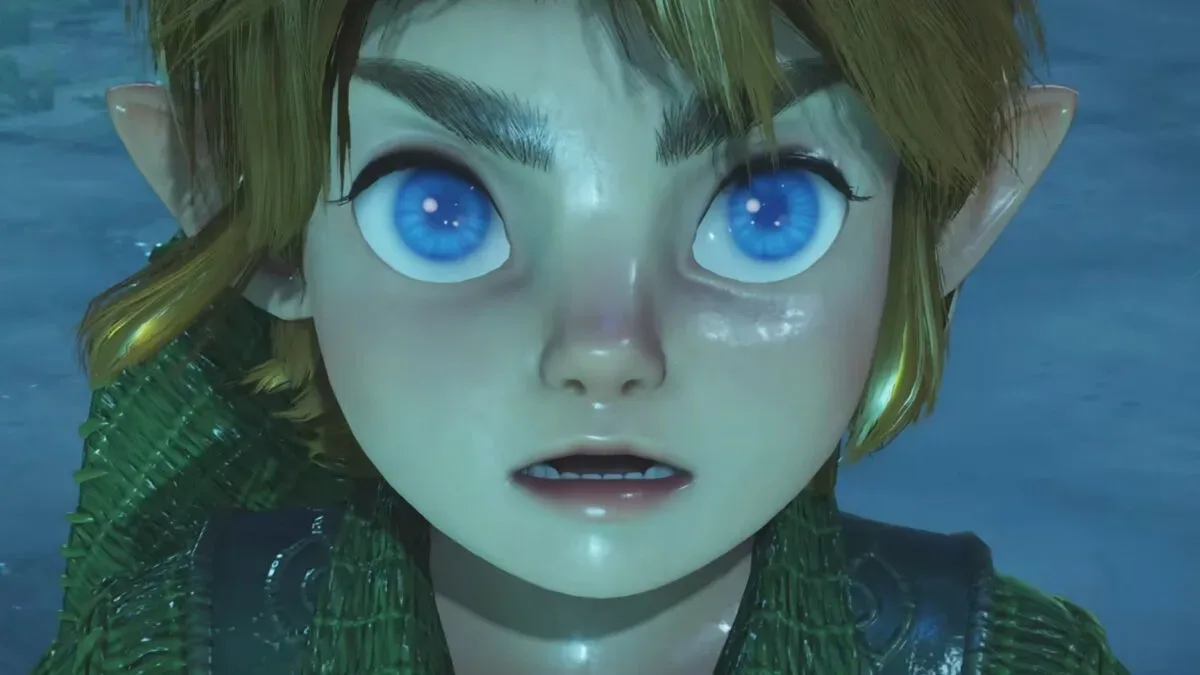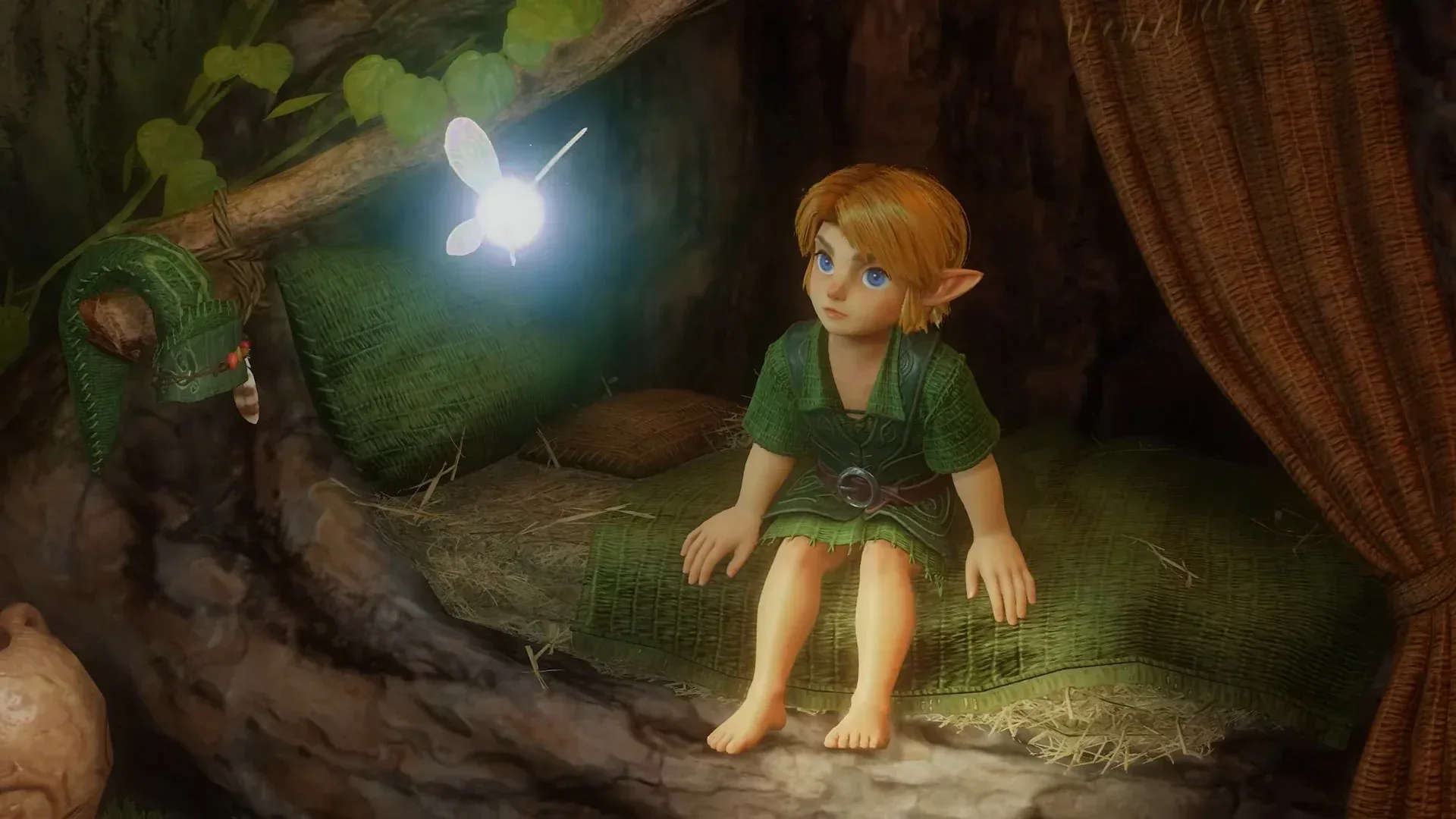
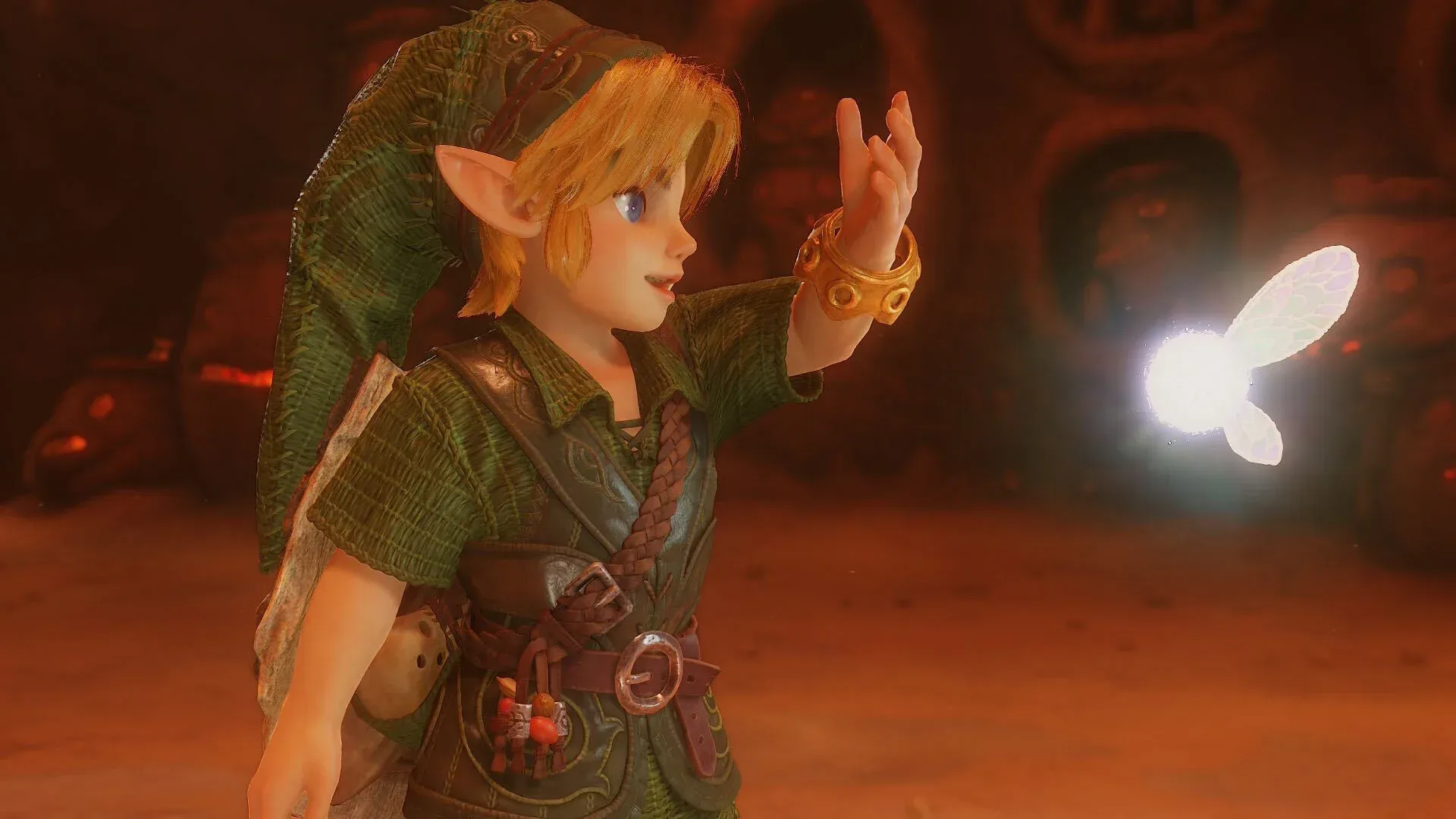
When a beloved game returns in a lavish new form, players do not merely revisit old locations. They start scanning the furniture for clues about the next room. That is the mood surrounding the Switch 2 remake of The Legend of Zelda: Ocarina of Time, where fans are scrutinizing dialogue, character models and timekeeping changes for evidence that Majora’s Mask could be next in line.
The theory is understandable. Majora’s Mask is not some disconnected candidate selected from a hat labeled “Nintendo, please.” It was the Nintendo 64 follow-up to Ocarina of Time, arriving in 2000 only two years after its predecessor. The two games share visual foundations, assets and character models. Nintendo also previously released a 3DS remake of Majora’s Mask four years after the 3DS version of Ocarina of Time.
That history gives the speculation a sensible shape. It does not turn it into a confirmation. The details drawing attention in the new remake range from plainly explainable callbacks to changes that are interesting but ambiguous. For anyone trying to separate a genuine possibility from a moon-sized leap of inference, the most useful answer is a cautious one: there are reasons a remake would make sense, but the currently discussed details do not establish that one has been announced or is definitely in development.
The Skull Kid dialogue is a quest prompt first
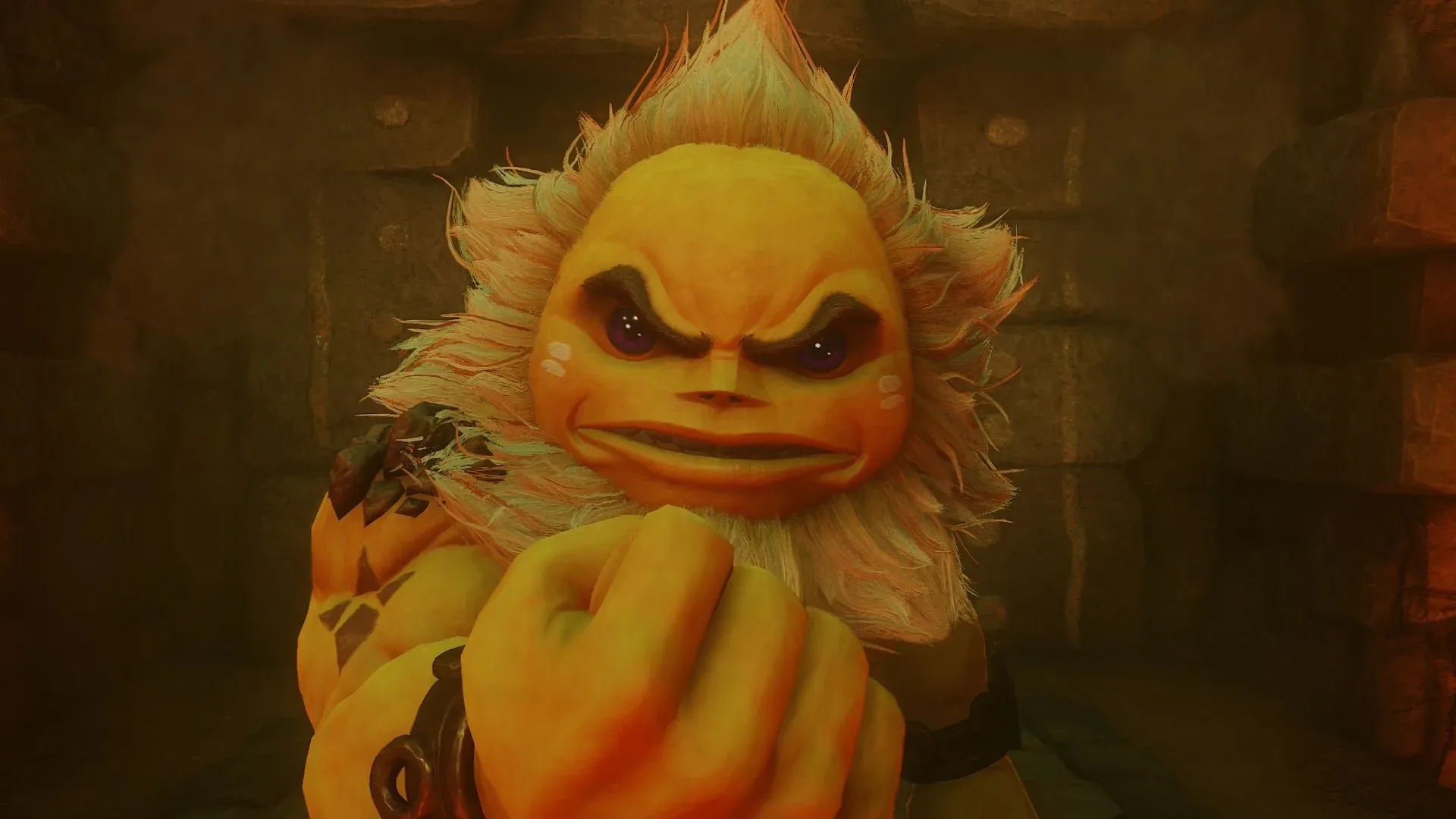
The most immediate alleged clue comes from the Skull Kid encountered in the Lost Woods. In the Switch 2 remake, he talks about feeling as if his face is missing something and wonders whether anything can ease that emptiness. Taken in isolation, it is easy to understand why a player would connect that language with Majora’s Mask. A Skull Kid is the sequel’s primary antagonist, and a mask sits at the center of that game’s identity, story and imagery.
But context is doing most of the work here. The dialogue refers to an Ocarina of Time quest in which Link brings the Skull Kid the Skull Mask. In other words, it is functional dialogue directing or anticipating an activity within the game players are already playing. It is not newly persuasive evidence of a future project simply because the same character later has a pivotal relationship with a very different mask.
This is a useful distinction in remake speculation. A callback is a detail that recalls another game, character or idea. A tease is a deliberate signal intended to point toward something yet to be revealed. The two can look identical from the audience’s side, especially in a series with long-running visual motifs and recurring characters. The Skull Kid’s wording works as a callback because fans know where the character’s history goes. It also has an immediate, self-contained purpose in Ocarina of Time. That makes it weak evidence for a forthcoming remake.
There is no need to dismiss the excitement, though. The reaction says something meaningful about what players want from the remake’s visual language. Seeing a familiar Skull Kid rendered in this style naturally invites people to imagine the sequel’s stranger material—its masks, transformations and unsettling atmosphere—receiving comparable attention. Wanting that outcome and having proof of that outcome are simply separate propositions.
The Happy Mask Salesman detail is more intriguing, not conclusive
The Happy Mask Salesman is a more complicated case. Link meets him in both games, but his importance changes considerably. In Ocarina of Time, he is associated with the mask-related quest. In Majora’s Mask, he is a central supporting character, and his design received adjustments in the original Nintendo 64 sequel.
Related coverage includes Ocarina of Time's Switch 2 Remake Has Fans Watching for Majora's Mask Clues.
Players have noticed that the Happy Mask Salesman’s model in the Switch 2 remake includes golden bangles associated with his later Majora’s Mask appearance. That is the most interesting of the proposed clues because it is not merely a line that can be fully explained by an existing quest. It is a visual choice that blends an Ocarina of Time character model with details fans particularly associate with the sequel.
Still, “interesting” must not be smuggled into the conversation as “officially meaningful.” A remake team can refine a design for numerous reasons: to create a stronger character silhouette, to acknowledge the character’s broader series identity, or simply because the later variation is a preferred reference point. Incorporating a later visual detail does not necessarily mean that the later game is being remade. It may mean the artists wanted the character to look a little more like the version many players remember.
That caveat does not make the model change worthless. It means the proper reading is modest: the remake appears willing to draw from the shared visual lineage between these two games. If a Majora’s Mask remake ever materializes, that continuity could make it feel like a natural companion project. For now, the bangles are a conversation starter, not a road map.
A clock that keeps ticking changes the feel of Hyrule
The mechanical change attracting attention may be the most thematically resonant. In the original Ocarina of Time, the day-and-night cycle stopped when Link entered towns and dungeons. The remake instead lets time continue to pass regardless of where the player is. That makes Hyrule’s clock feel less compartmentalized: a trip inside no longer places the wider world in suspended animation.
The comparison to Majora’s Mask is unavoidable because time is not simply background flavor in that game. Its three-day cycle organizes the experience, with characters following routines across those days. A day/night cycle generally means the game world changes between daylight and darkness as time advances. A three-day cycle, in this context, is a far more structured system: it is the framework through which schedules, events and player planning operate.
That distinction is important. The revised clock in Ocarina of Time resembles a feature associated with its sequel in the broadest sense—time continues and the world feels more alive—but it is not the same design concept as Majora’s Mask’s schedule-driven structure. It could reflect an effort to make the remake’s Hyrule feel more coherent and responsive rather than a technical rehearsal for Termina.
Even so, it makes the idea of a companion remake easier for fans to picture. A team updating one game’s sense of passing time has demonstrated interest in making an older world feel less static. That is not a promise of how it would handle the sequel, whose time system carries much greater narrative and gameplay weight. It is merely the kind of adjacent design decision that encourages imaginations to sprint ahead while the evidence walks behind at a sensible pace.
Why the sequel remains such an appealing remake candidate
Speculation persists because Majora’s Mask offers a clear contrast to Ocarina of Time. It is often regarded as the less broadly celebrated game, but also as the more experimental one. Its three-day structure, the routines of its characters and its mask transformations give it a different rhythm from a conventional adventure through Hyrule. For players already impressed by the detail and beauty of the Switch 2 remake, those qualities make a modern reinterpretation easy to wish for.
Fans have specifically imagined revisiting Ikana Canyon with remastered music and seeing the transformations rendered with contemporary visual power. Those are hopes, not product details. But they identify why a potential remake would not simply be “more Ocarina.” The appeal would be seeing how a new presentation handles a game whose identity depends on unease, repetition, transformation and the pressure of a finite cycle.
There is also a practical franchise argument, though it remains only an inference. The most recent mainline Zelda game mentioned here, Tears of the Kingdom, is three years old. Recent mainline Zelda releases have generally had five- or six-year gaps between them. A remake could give players a major return to an older Zelda while they await news of the series’ next new entry. That kind of release pattern is plausible, but no release plan should be assumed from it.
Nintendo’s broader creative direction should likewise not be read into routine details or fan theories, particularly when the company’s public-facing work can shift quickly. The recent report that Shigeru Miyamoto missed an investor briefing due to sudden illness is separate from this remake discussion, but it is a reminder that speculation is not a substitute for direct information from the company.
What players can reasonably take from the clues
The evidence currently supports three relatively restrained observations:
- The games are closely connected. Their original relationship, overlapping assets and recurring characters make a sequel remake an intuitive idea.
- The new remake includes details that invite comparison. The Happy Mask Salesman’s golden bangles and the continuing clock have prompted discussion for understandable reasons.
- At least one major “hint” has an in-game explanation. The Skull Kid’s line points to the Skull Mask quest in Ocarina of Time, not necessarily to a future Majora’s Mask project.
What the evidence does not support is certainty about an announcement, a release window, a development schedule or the remake’s existence. Fans may be right that revisiting Majora’s Mask is an obvious next move. They may even be right that the team is working toward it. But neither possibility can be upgraded to fact through accumulated screenshots, redesigned jewelry or a clock that refuses to take a break indoors.
For now, the Switch 2 remake has achieved something more immediate: it has made people look at the old connections between these games with fresh attention. That is a fitting result for a series so interested in recurring faces, altered worlds and time itself. Whether the clues lead to Termina or simply back to a well-crafted Ocarina of Time quest, the sensible move is to enjoy the archaeology without declaring the ruin fully excavated.