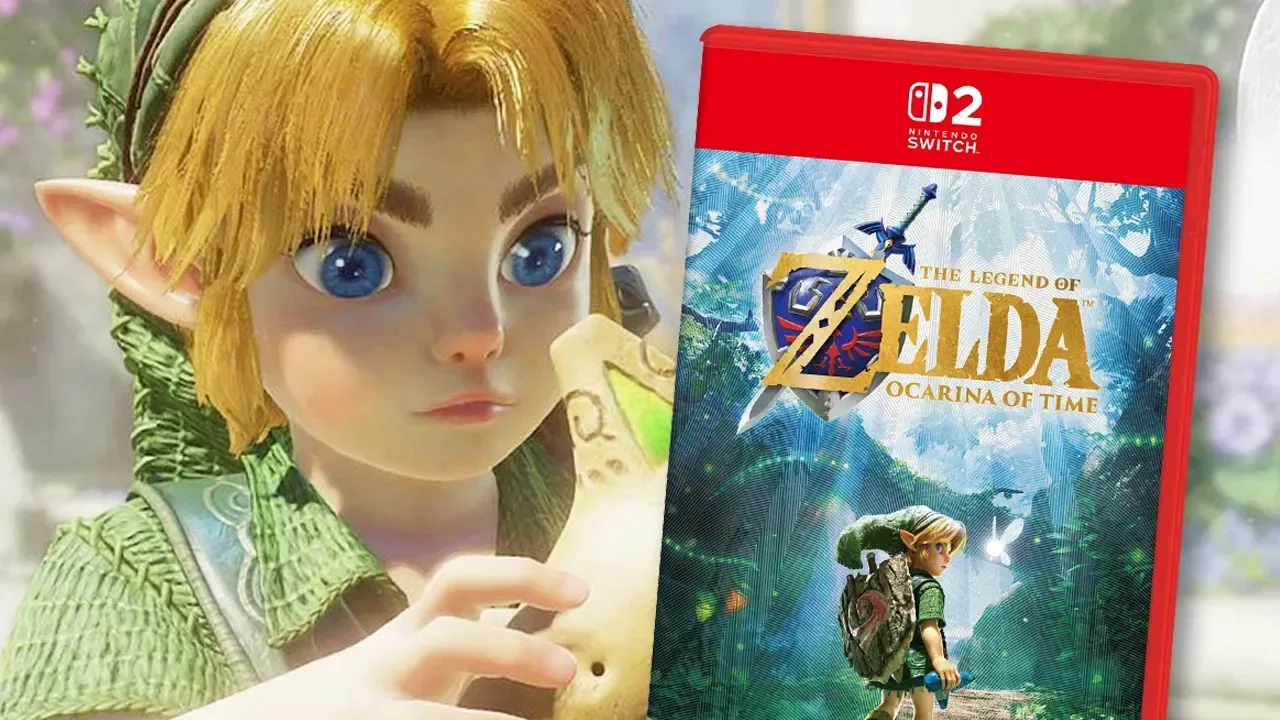
Launch day for The Legend of Zelda: Ocarina of Time remake on Switch 2 has left a group of physical-edition buyers staring at order pages rather than beginning their return to Hyrule. Customers who say they pre-ordered the game through Amazon reported receiving delay notices shortly before or on November 5, the game’s launch date. For some, delivery estimates moved into the following week.
The frustration is easy to understand because the decision facing buyers was unusually clear. A digital purchase offered the chance to play as soon as the game became available, while a physical pre-order meant accepting a delivery window in exchange for a cartridge, retail packaging and, for certain pre-orders, special foil cover art. Launch-day delivery is the promise that makes the latter choice feel like it does not require sacrificing the former.
For affected customers, that promise appears not to have held. Posts shared on X described revised arrival estimates of November 11 and November 12. One fan said they had ordered on the first day pre-orders opened; another said launch-day arrival had been the entire reason for choosing Amazon. The common complaint was not simply that an item was late, but that a pre-order placed well ahead of release had failed at the one moment the service was supposed to matter most.
A pre-order is not just a purchase; it is a release-day plan
In gaming, a pre-order is an order placed before a product is released. It can secure a copy, a retailer-specific extra, or an advertised delivery date. It is not automatically the same as guaranteed possession on launch day, especially when an order is shipped rather than collected in person. But the distinction matters far more when the buyer’s checkout experience explicitly presents launch-day delivery.
That is why an email or order-page revision can land so badly. A customer who waits for a physical delivery may skip a midnight digital purchase because they expect the cartridge to arrive after work or school. Once a delay appears, they have fewer appealing options: wait, buy a second copy digitally, attempt a same-day store purchase, or cancel and order elsewhere without knowing whether another retailer still has stock.
None of those options recreates the original deal. Buying digitally can cost more than the discounted physical order. Buying at another retailer may mean abandoning an anticipated foil cover. And waiting means missing the communal launch-day conversation that often accompanies a major Nintendo release. The delay is therefore not merely a logistics problem; it changes the value proposition customers believed they had accepted.
That broader launch-day energy was visible in reports of midnight crowds gathering for Ocarina of Time. A delayed shipment can make online buyers feel especially stranded when other fans are already opening boxes, sharing early impressions, and starting the adventure.
The $60 physical-copy appeal
Price is a major reason this particular disruption has drawn so much attention. The physical version is described as costing $10 more than its digital counterpart at standard retail: $70 at retailers such as GameStop, compared with a $60 digital price. Amazon has been honoring the digital price for physical Switch 2 games, making the physical edition of Ocarina of Time remake available there for $60.
Related coverage includes Amazon Pre-Order Delays Frustrate Zelda: Ocarina of Time Remake Buyers on Switch 2 Launch Day.
That arrangement made an online pre-order unusually attractive. Buyers could get a physical copy for the same price as a digital one, and potentially receive special foil artwork on the cover. For collectors and players who simply prefer owning a retail copy, it appeared to eliminate the usual trade-off between lower digital pricing and physical ownership.
The reported delivery delays put that bargain in a harsher light. A $10 saving has a different emotional weight when the game is no longer available on the day it launches. That does not mean every customer will value speed over price, and the supplied reports do not establish how many orders were affected. Still, the social-media response shows that many customers saw the deal as a package: physical copy, discounted price, special presentation, and launch-day arrival. Losing one part makes the rest less compelling.
What Amazon said—and what it did not say
Amazon Help responded publicly to at least one complaint, acknowledging frustration and directing the customer to their order page for the latest delivery update. The response said that unforeseen changes in obtaining an item can occur despite efforts to predict when products will be available to dispatch.
That explanation identifies a possible supply or dispatch issue, but it does not establish a precise cause for the delays. The information available does not say whether the problem involved inventory allocation, warehouse availability, carrier capacity, regional distribution, or some other part of the fulfillment chain. It also does not show that every Amazon pre-order was delayed. The safest reading is narrower: numerous customers publicly reported pushed-back delivery dates, including dates after launch, and Amazon acknowledged that unexpected availability changes can affect dispatch.
For buyers trying to decide what to do, the practical detail is the individual order estimate. A pre-order confirmation from weeks earlier is less useful than the current dispatch status and expected arrival date. Customers considering a cancellation would also need to weigh the price difference, the likelihood of local availability, and whether the foil-cover version is important to them.
Why Nintendo fans are particularly sensitive to retail friction
The episode also arrives against a more complicated background between Amazon and Nintendo. Nintendo products have at times not been directly available on the marketplace, leaving buyers to navigate third-party sellers or overseas inventory. Former Nintendo of America president Reggie Fils-Aimé has also accused Amazon of making a request that would have required him to break the law. Those points do not explain the current delivery estimates, but they help explain why some fans were quick to interpret a high-profile release-day disruption as part of a longer, uneasy relationship.
It is important not to turn that history into a proven explanation. There is no supplied evidence tying previous disputes, marketplace availability, or third-party inventory to these particular Ocarina of Time remake delays. The direct issue remains much simpler: customers who expected their launch-day physical copies to arrive on November 5 say their delivery dates changed.
Even so, trust in a retailer is built on the moments when a customer has the least flexibility. For a major game launch, the value of a pre-order is partly convenience and partly certainty. If a retailer offers a compelling discount but cannot meet the advertised release-day window for a notable number of orders, customers may decide that a local store, a different online retailer, or a digital purchase is worth the extra cost next time.
Physical versus digital: the trade-off is back in focus
The situation highlights the core difference between physical and digital releases. Digital access is tied to an account and download availability; it does not require a package to make its way through a fulfillment network. A physical edition gives the buyer a tangible product, but access depends on stock reaching the retailer and then reaching the customer. Neither choice is universally better. The right option depends on what a player values most: immediacy, price, packaging, or the ability to add a game to a shelf.
For Ocarina of Time remake buyers, Amazon’s $60 physical price narrowed that choice dramatically. It promised a physical copy without the standard $10 premium over digital. The reported delays restored the old tension: a cheaper physical order may not offer the immediate access of a digital purchase.
There is also a lesson in separating an advertised delivery target from a guaranteed personal plan. When launch-day play is non-negotiable, downloading digitally or arranging in-store pickup can reduce the risk created by shipping. When the cartridge, packaging, foil art, or lower price matters more, a shipped order may remain the better fit—even if it carries more uncertainty around release day.
That does little to soothe fans whose pre-orders were already delayed. Their anger reflects a straightforward expectation: ordering early was supposed to make launch day easier, not turn it into a customer-service exercise. Amazon’s current order estimates will determine when those customers get to play, but the longer-term question is whether the discount that attracted them in the first place will be enough to earn their next Nintendo pre-order.