It is tempting to describe The Legend of Zelda as a series that simply marched from one triumph to the next. The current picture is much messier—and more interesting. Two former Nintendo of America marketing leaders, Kit Ellis and Krysta Yang, say the franchise faced a declining audience before The Legend of Zelda: Breath of the Wild. Their view is that Nintendo’s eventual move to an expansive open-world structure was not a casual rejection of Zelda tradition, but a dramatic answer to a business and audience problem.
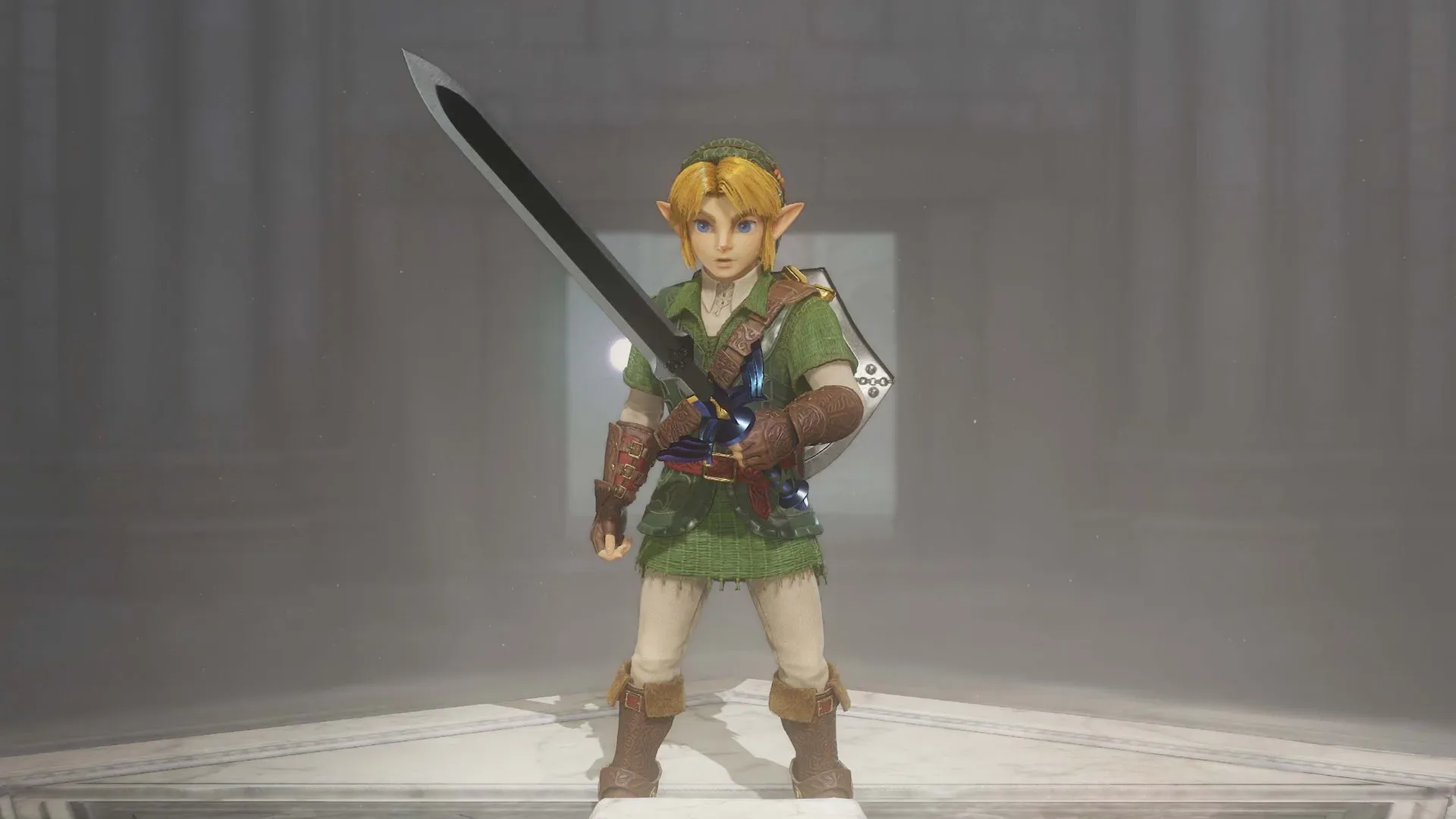
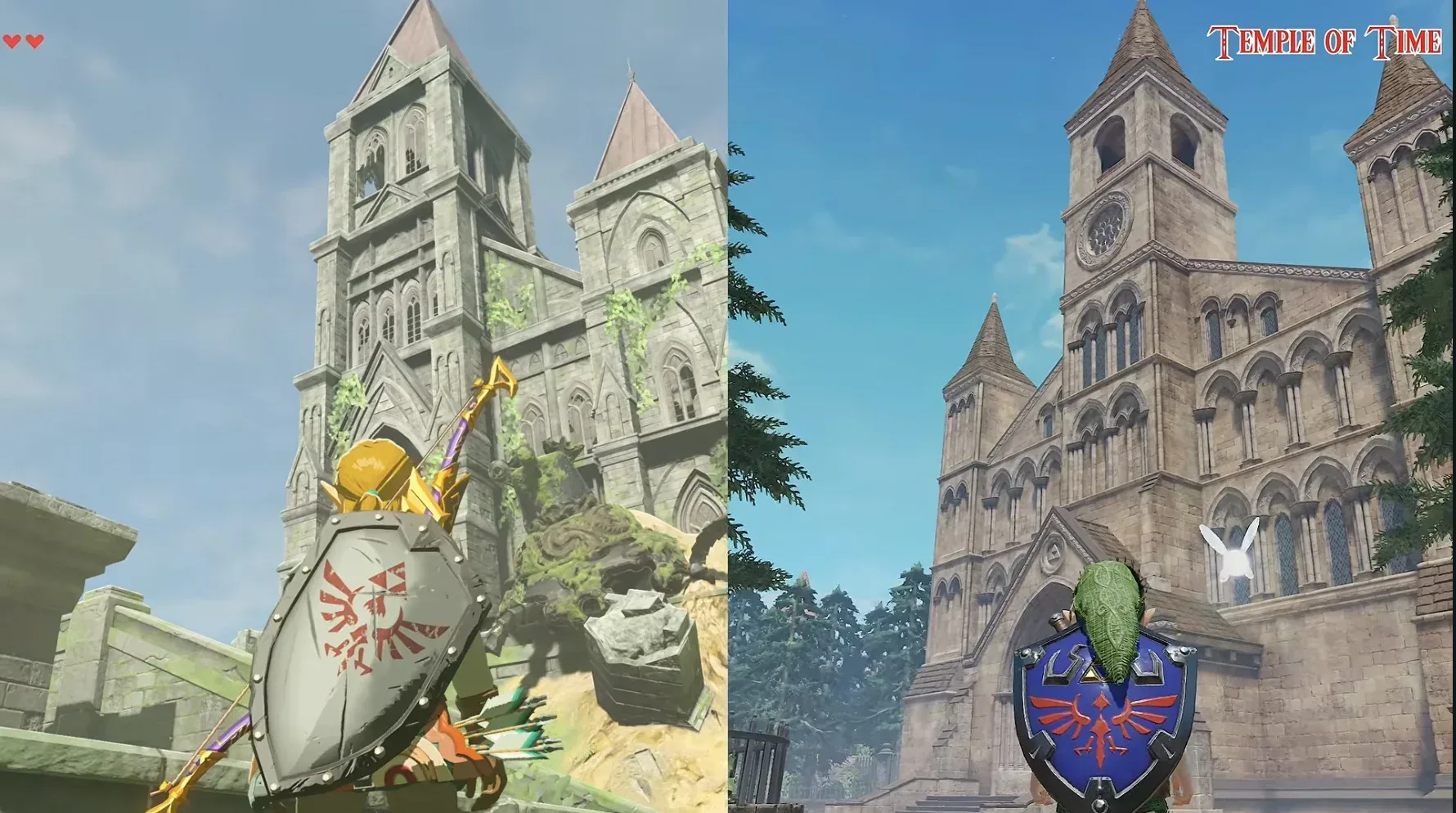
At the same time, the reported early performance of the new Switch 2 remake of The Legend of Zelda: Ocarina of Time makes a different point: players have not lost interest in classic Zelda design. The remake is said to have sold 5.2 million copies in its first four days. That figure does not automatically settle what Nintendo should make next, nor does it turn a remake into proof that every older formula would work unchanged. It does show that a carefully presented version of the more directed, dungeon-led Zelda experience can command enormous attention.
The useful takeaway is not that one style has defeated the other. Zelda’s modern success may instead give Nintendo room to pursue several interpretations of its own history—provided each has a clear purpose.
The case that Zelda had to change
Ellis, formerly Nintendo of America’s director of social media marketing and original content, and Yang, formerly its senior manager of creator relations and original content, pushed back on the idea that traditional Zelda games were abandoned at the height of their commercial momentum. Yang characterized the series’ pre-Breath of the Wild position in stark terms, saying it was in “dire straits” and “selling, like, nothing.”
That shorthand should not be mistaken for a complete sales history or a formal Nintendo financial statement. It is, however, important testimony from two people whose work placed them near audience messaging, community response and promotional decision-making. Ellis recalled attending focus groups where the feedback suggested the existing fan base was getting smaller and the games were not attracting enough new players. In his account, Nintendo had data indicating that interest was narrowing with successive releases.
Focus groups are small, structured conversations used to gather qualitative feedback. They do not by themselves measure an entire market. Their value is in explaining attitudes: what participants find confusing, what they wish a product offered, and whether a message lands. When combined with broader sales, engagement and audience data—the additional information Ellis says Nintendo had—they can help a company identify a pattern that raw unit totals alone may not explain.
That distinction matters because fans can talk past each other when they argue over “popularity.” A devoted community can be highly visible online while still failing to grow. A series can retain fans who deeply appreciate its structure while struggling to recruit people who have never learned its conventions. Neither reality invalidates the other.
From this perspective, Breath of the Wild was a strategic reset. Its open-world approach put exploration, player-led discovery and flexible problem-solving at the center. An open world is a game structure built around broad areas that players can often explore in a self-directed order, rather than progressing primarily through a fixed sequence of levels or objectives. That does not mean there is no design guidance; it means the player has much more freedom over route, pace and immediate goal.
Related coverage includes Former Nintendo Marketers Say Zelda Needed a Major Reinvention Before Breath of the Wild.
Classic 3D Zelda, by contrast, is commonly associated with a more directed progression: major dungeons, specific tools or abilities, and puzzles that unlock the next intended part of the adventure. The difference is not merely map size. It is a question of pacing and authorship. In a traditional structure, designers can build a sequence of challenges around what they expect the player to know. In an open structure, designers must accommodate much wider variations in what a player has seen, collected or attempted.
The commercial scale of the reset
Whatever the debate over design, the supplied Nintendo sales data underlines why the open-world era became foundational. As of the end of September, the Switch version of Breath of the Wild had sold 34.28 million copies. Its sequel, The Legend of Zelda: Tears of the Kingdom, stood at 22.9 million.
Those totals are not just evidence that individual games were received well. They demonstrate that Zelda reached an audience on a scale that makes a major change in direction difficult to dismiss as an experiment. For Nintendo, the practical implication is straightforward: a future flagship Zelda release will be judged in the shadow of two games that established very large expectations for freedom, scope and discovery.
But a successful reinvention does not require a franchise to erase its earlier strengths. Nintendo has already released Zelda projects with different structures during the same broad period. The Link’s Awakening remake, Echoes of Wisdom and the HD remaster of Skyward Sword show that the brand has not become exclusively synonymous with one massive open-world format. Top-down, more guided 3D, and remake-led Zelda all still have a place in the catalogue.
That variety is crucial context for anyone worried that the series can only move in one direction. The strongest evidence here is not a promise about an unannounced game. It is the recent release pattern: Nintendo has continued to put Zelda in different forms in front of players.
Why an Ocarina remake is meaningful—but not a blueprint by itself
The new Ocarina of Time remake’s reported 5.2 million sales in four days are a striking signal of demand. It also gives the conversation a useful corrective. A player who loves Breath of the Wild can still be interested in a game built around more deliberate dungeon progression. A player who prefers traditional dungeons can enjoy an open-world adventure. The audience categories overlap far more than online arguments often allow.
Still, remakes and brand-new games answer different commercial and creative questions. A remake benefits from recognition, nostalgia and the appeal of revisiting an established classic in a new technical package. Its performance shows the continued value of that classic’s identity and structure, but it cannot prove that a wholly original game using the same approach would produce identical results.
That is not a reason to minimize the achievement. It is a reason to interpret it carefully. The lesson is not “Nintendo should repeat the past exactly.” The more defensible lesson is that a well-defined classic Zelda experience remains valuable to a very large audience.
For readers who want a more playful look at what makes that older Hyrule memorable, Joking Joystick has also examined why the Zora take the crown in the Ocarina of Time Chewiness Index.
Two credible paths for Zelda’s next original 3D adventure
Ellis and Yang did not entirely agree on the ideal design response. Yang expressed interest in a hybrid: an open-world game that brings back the kind of substantial, classic-style dungeons many players associate with earlier 3D Zelda. Ellis said he would like a modern attempt at a classic Zelda game without necessarily keeping the open-world component.
Both positions identify a genuine design opportunity. The hybrid route would preserve wide exploration while giving dungeon progression a more central role. The classic route would prioritize a deliberately shaped journey, potentially making each item, dungeon and narrative turn feel more tightly connected. Neither route is inherently more modern. Modernity is not synonymous with acreage on a map; it can also mean applying contemporary production values and player-friendly design to a focused adventure.
A hybrid is not automatically simple, though. Open-world freedom can complicate dungeon design. If a player may approach objectives in several orders, designers need to decide how much each dungeon can assume about the player’s equipment and learned skills. If dungeons are intended to be deeply authored sequences, unrestricted order can limit how sharply difficulty and mechanics escalate. The challenge is to offer freedom without making every major encounter feel interchangeable.
A newly built classic-style 3D Zelda has its own challenge: it would need to make direction feel inviting rather than restrictive to players accustomed to a freer structure. The answer would not necessarily be to copy Skyward Sword, released in 2011, or to reproduce Ocarina of Time beat for beat. It would be to identify what made directed Zelda compelling—purposeful dungeons, puzzle progression, memorable places and satisfying discovery—and give those ideas a fresh expression.
What fans should and should not infer
There is no announced new original classic-style 3D Zelda in the supplied information. The remake’s sales do not constitute an official commitment, and the former marketers’ remarks are their interpretation of the franchise’s circumstances rather than a current product roadmap.
There is also no need to frame the question as a referendum on whether Breath of the Wild and Tears of the Kingdom were good for Zelda. The supplied sales figures make clear that their reach was extraordinary. The more productive question is what their success now enables. A franchise that has broadened its audience can afford to be more confident about its branches, not less.
The pre-Breath of the Wild period, as Ellis and Yang remember it, is a reminder that beloved formulas can reach a point where familiarity no longer brings growth. The new Ocarina of Time remake, meanwhile, is a reminder that changing course does not make the older formula obsolete. Zelda’s advantage may be that it now has evidence for both propositions: reinvention can dramatically expand the audience, and a classic, dungeon-forward identity still has immense pull.
That does not guarantee the next direction. It does make the healthiest possible future look less like a permanent choice between open fields and focused temples, and more like a willingness to let each kind of adventure be excellent on its own terms.