The first substantial look at The Legend of Zelda: Ocarina of Time remake has put a very familiar Hyrule under a very bright new spotlight. The updated adventure is scheduled for Switch 2 on November 5, 2026, and newly shown gameplay offers a clearer idea of Nintendo’s approach: preserve the recognizable shape of a landmark Nintendo 64 quest while modernizing how Link moves, sees the world and performs some of the series’ best-known music.
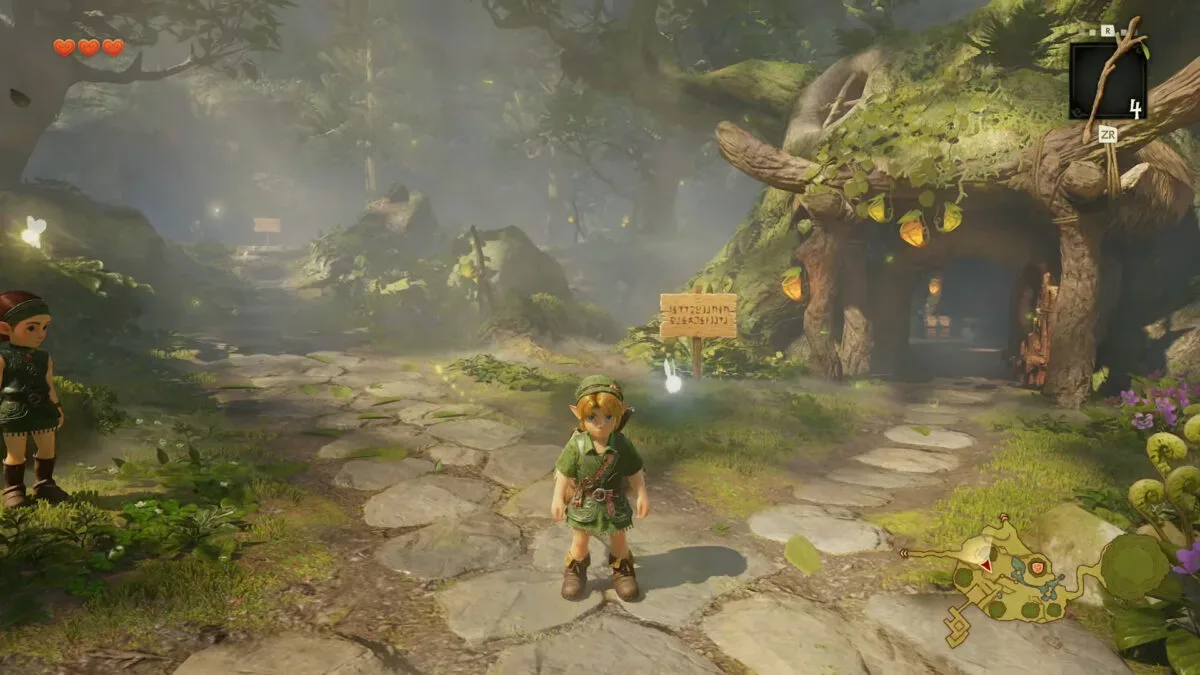
The footage visits Kokiri Forest, the Great Deku Tree, Hyrule Field and Castle Town, making this far more than a brief reveal trailer or an atmospheric glimpse of Link napping in his forest home. Those locations are foundational pieces of the original game’s opening hours and larger journey, so their appearance gives players an early sense of the remake’s visual direction and the kinds of mechanical updates being made around the classic structure.
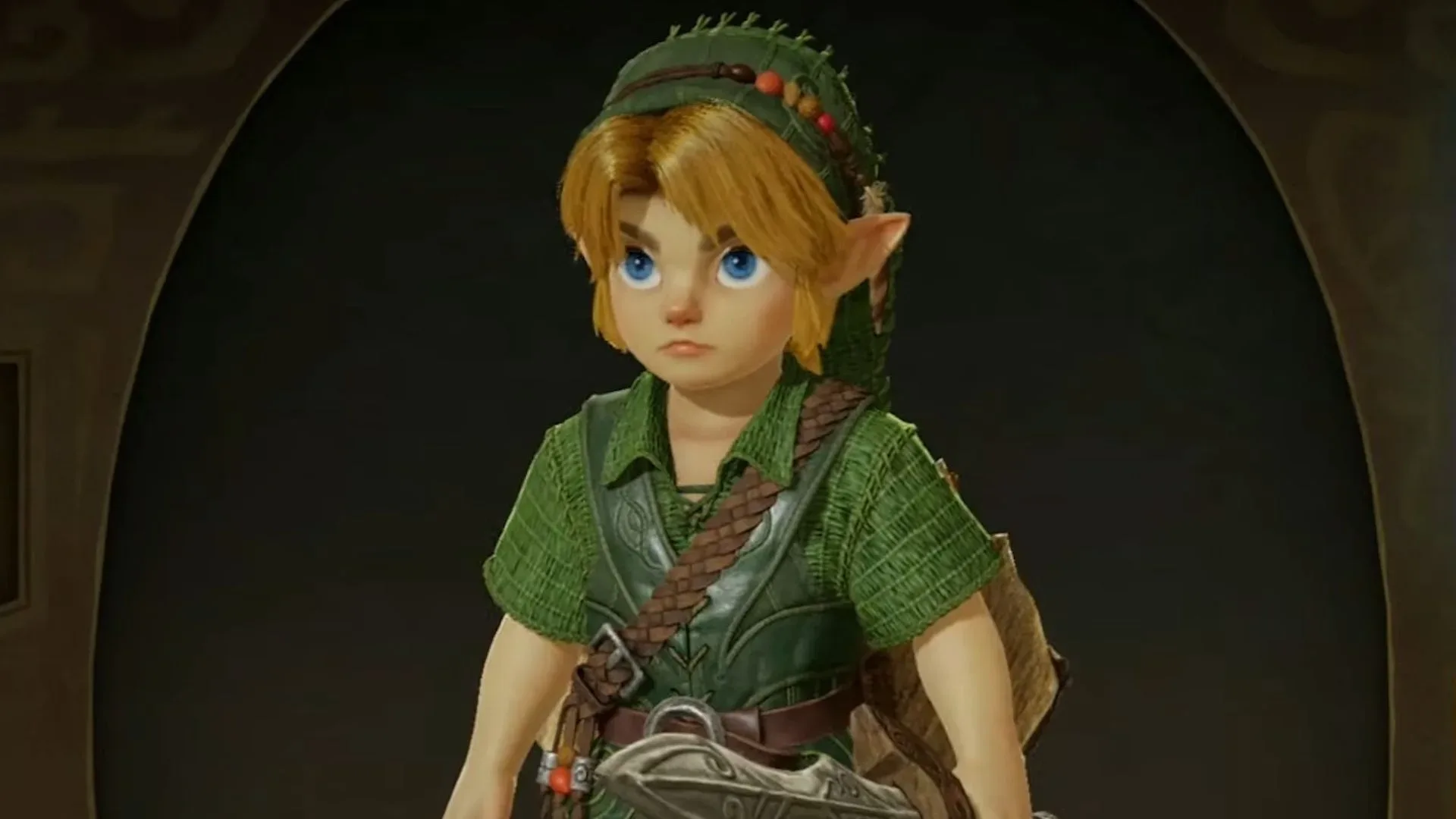
It is also a look that is already attracting strong opinions. The remake appears considerably more detailed than prior versions of the game and moves closer toward realism than the stylized presentation associated with The Legend of Zelda: Breath of the Wild. That does not necessarily mean Hyrule is being presented as a purely realistic world; its fantasy identity remains essential. But the surfaces, character models and lighting shown so far have a distinctly polished, high-detail look.
A familiar Hyrule with a more reflective finish
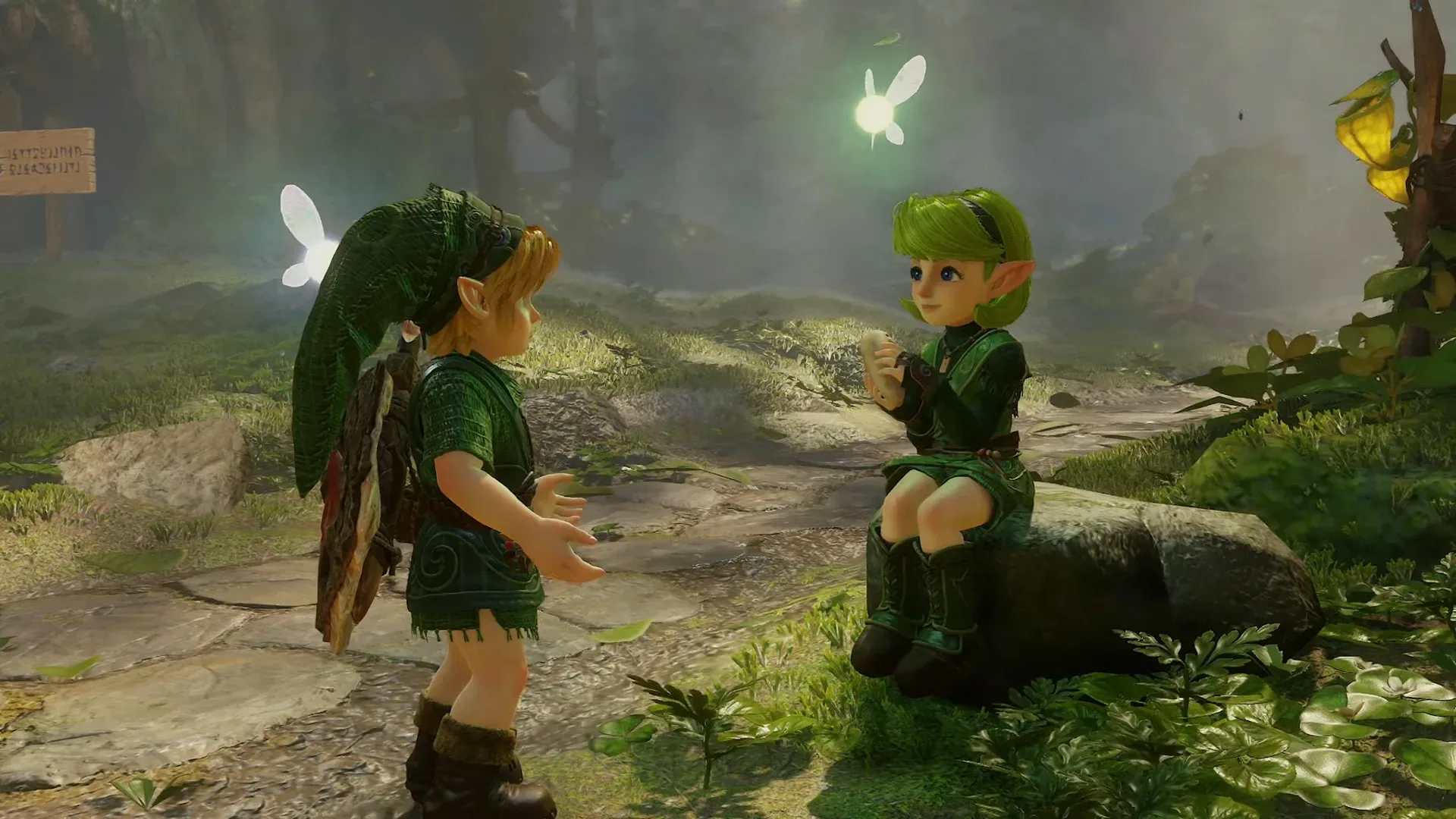
Much of the early conversation has focused on that visual shift. The child characters have drawn especially close scrutiny, while the overall degree of sheen has also become a talking point. It is an understandable response for a remake of a game whose original Nintendo 64 visuals were shaped by the hardware and display technology of the late 1990s. A modern rendering style can make the same faces, forests and stone walls feel strikingly different, even when their underlying locations remain instantly recognizable.
Kokiri Forest is a particularly meaningful place to judge the treatment. It is Link’s starting home, a compact fantasy village where the game establishes its tone before sending him toward the Great Deku Tree. Hyrule Field, meanwhile, is the broad connective space that makes the kingdom feel larger than any individual village or dungeon. Castle Town provides another useful contrast: it is an inhabited setting where a remake’s character work, materials, lighting and environmental density can be noticed more readily than in an open field.
For longtime players, the important question is not simply whether the new visuals are technically richer. It is whether the refreshed art direction retains the emotional read of each place: the sheltered wonder of the Kokiri, the imposing age of the Great Deku Tree, the invitation of Hyrule Field and the activity of Castle Town. The available footage establishes the remake’s shinier and more detailed direction, but reactions to that approach will inevitably vary from player to player.
Link gets a dedicated jump and a modern camera
The most practical changes shown concern movement and control. In the original game, Link jumps automatically when he reaches an appropriate edge while running. The remake instead gives him a dedicated jump button. That is a modest-looking adjustment with potentially broad implications for how moving through the world feels, because jumping becomes an intentional action rather than something governed by proximity to a ledge.
The camera is also now free-moving. Players can look around their surroundings in the manner expected from contemporary 3D games, rather than relying on the more constrained camera behavior associated with the original era. For locations that are already etched into many players’ memories, a free camera could create a renewed sense of scale and detail: Kokiri Forest can be examined from fresh angles, Hyrule Field can be surveyed more naturally, and Castle Town can be viewed as a fuller environment rather than a set of prescribed sightlines.
Related coverage includes Nintendo Reveals Electronic Master Sword and Playable Ocarina for Zelda's 40th Anniversary.
None of this automatically signals a wholesale redesign. A dedicated jump and freer camera can make a classic adventure feel easier to navigate without changing the sequence of its major events. That distinction matters because Nintendo has characterized the project as a faithful interpretation made with modern technology, while also stressing that it offers a different sort of appeal from games such as Breath of the Wild.
In other words, the remake currently appears positioned as an update to a specific, authored adventure rather than an attempt to retrofit the original into every convention of newer Zelda games. The revealed changes point toward quality-of-life improvements, not evidence that its core identity has been rebuilt from the ground up.
Swimming no longer means the Iron Boots shuffle
Underwater travel is receiving one of the clearest upgrades. Link can dive freely and swim properly in the remake. That means players will no longer need to repeatedly equip and remove the Iron Boots as a makeshift method of vertical underwater movement.
Anyone familiar with the older design will recognize why this stands out. The Iron Boots have a famous role in Ocarina of Time, but their use in water created a deliberately awkward rhythm: put the boots on to sink, take them off to rise, then repeat as necessary. The remake’s diving and swimming approach promises a more direct relationship with underwater spaces while still leaving open the question of how exactly the boots’ other functions will be handled.
Link can also transition from a roll into a sprint, providing a faster way to travel. Rolling has long been one of the hero’s most recognizable movement habits, sometimes practical and sometimes performed by players simply because a heroic tumble is more entertaining than jogging in a straight line. Turning that momentum into a sprint gives the maneuver a more explicit travel benefit. It also sounds like a smart convenience change for revisiting broad areas such as Hyrule Field without implying that the game’s geography itself has been transformed.
- Dedicated jump button: Link no longer relies solely on automatic ledge jumps.
- Free-moving camera: Players can look around the world with a more modern camera system.
- Free diving and swimming: Underwater movement no longer depends on repeatedly changing Iron Boots equipment.
- Roll-to-sprint movement: Link can use a roll to enter a quicker mode of travel.
The ocarina listens to the player
The remake’s most unusual new feature is tied directly to its namesake instrument. Players can hum, sing or play notes into the Switch 2 microphone. When Link has learned the corresponding song, he can perform it on his ocarina in response.
That creates a new alternative to entering the instrument’s familiar button combinations. The original musical system made particular tunes into tools for changing time, traveling, interacting with characters and solving problems. The remake does not abandon those songs; instead, it gives players an additional, more literal way to call on them if they know the melody well enough to sing, hum or play it.
It is a fitting idea for a game in which the ocarina is more than an inventory item. The instrument is one of the adventure’s central symbols, and its songs are inseparable from the game’s sense of discovery and ritual. Asking players to supply the tune themselves could make those moments feel more personal, while also removing the need to remember every button sequence for someone who remembers the music more readily than the inputs.
There are still practical details not established by the revealed information, including how players may prefer to use the feature in different environments or how it will coexist with traditional controls. What is clear is that this is not merely a graphical remake with smoother movement. It introduces a distinct interaction designed around the capabilities of Switch 2 and the enduring musical identity of Ocarina of Time.
What “faithful” appears to mean so far
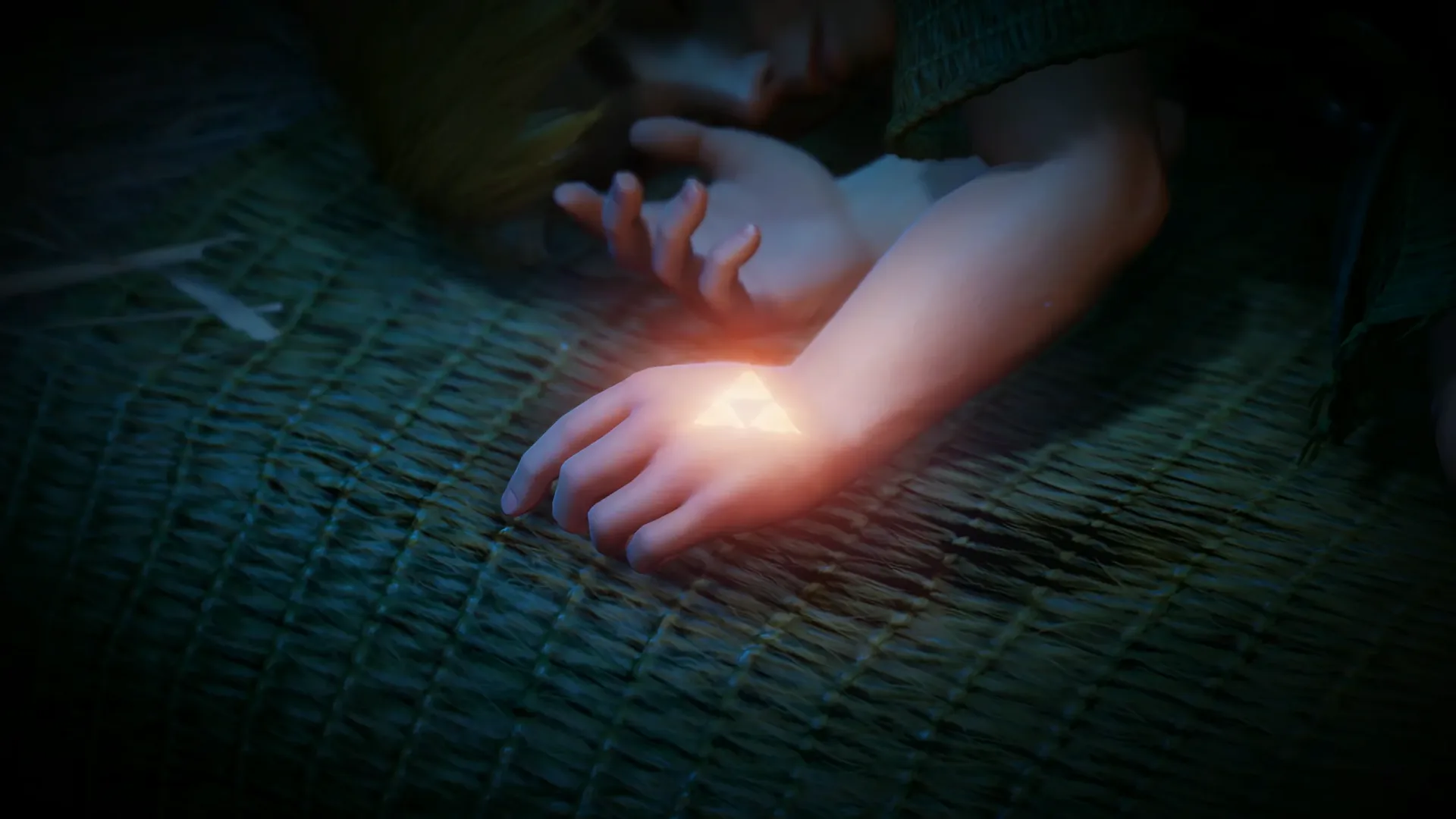
The project was initially revealed in June after a lengthy mural-focused buildup culminated in a single image of Link asleep at his forest home. At that stage, there was little firm information about its gameplay philosophy. This new presentation supplies the first meaningful answer.
Series producer Eiji Aonuma described the remake as a faithful interpretation using modern technology and drew a contrast with the appeal of other Zelda games, including Breath of the Wild. Based on the footage and the features outlined so far, that language suggests an effort to keep the original adventure fundamentally intact while addressing control limitations and friction points that reflect its age.
That leaves plenty not yet confirmed. The presentation does not establish sweeping story revisions, major dungeon alterations, new regions or a dramatically revised progression system. It would be premature to assume such changes exist. The safer reading is that Nintendo is concentrating on accessible movement, improved navigation, more natural aquatic traversal and an inventive music option, all while retaining the specific character of an older Zelda adventure.
November 5, 2026 is the date to circle for the full answer. For more on where the remake lands on the calendar, see our coverage of Ocarina of Time remake’s November 5 release date. Until Nintendo shares more, the first extended gameplay establishes a clear premise: this is Hyrule remembered through a modern lens, with Link finally allowed to jump on command and players invited to sing the hero’s magic into being.