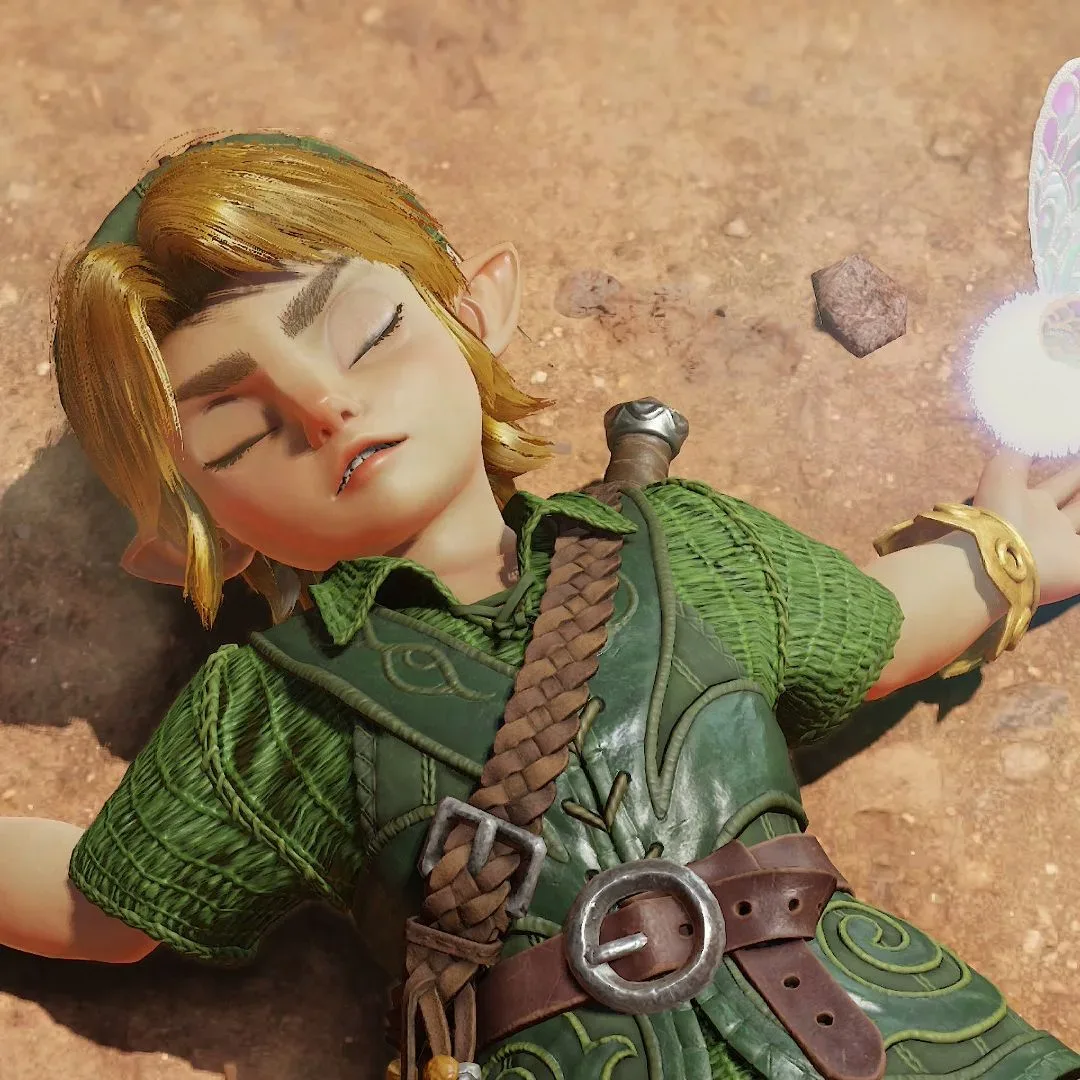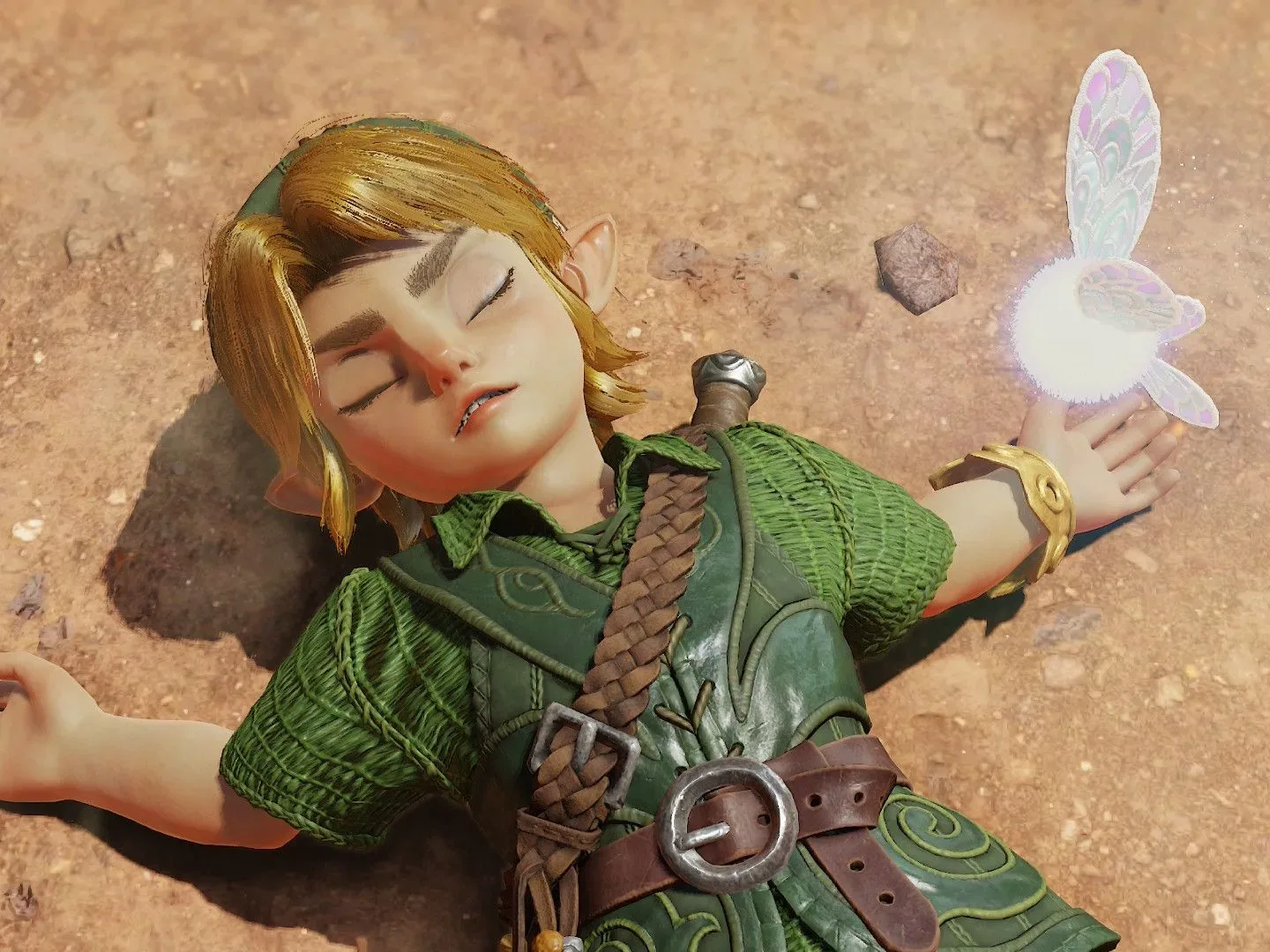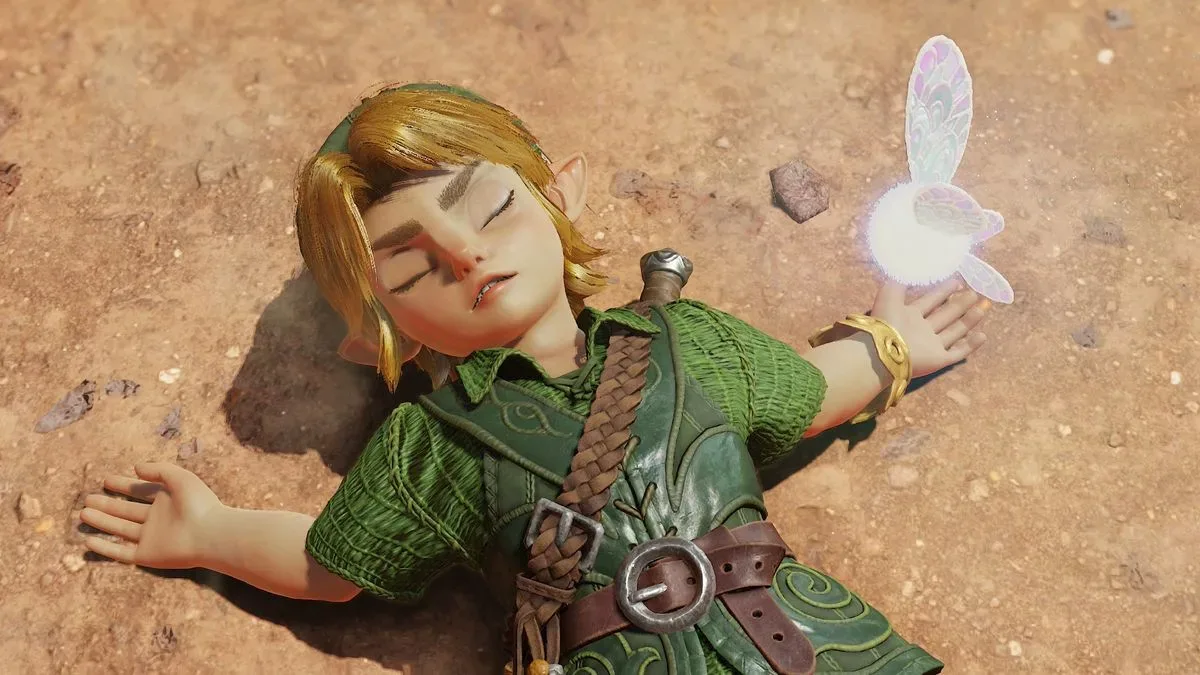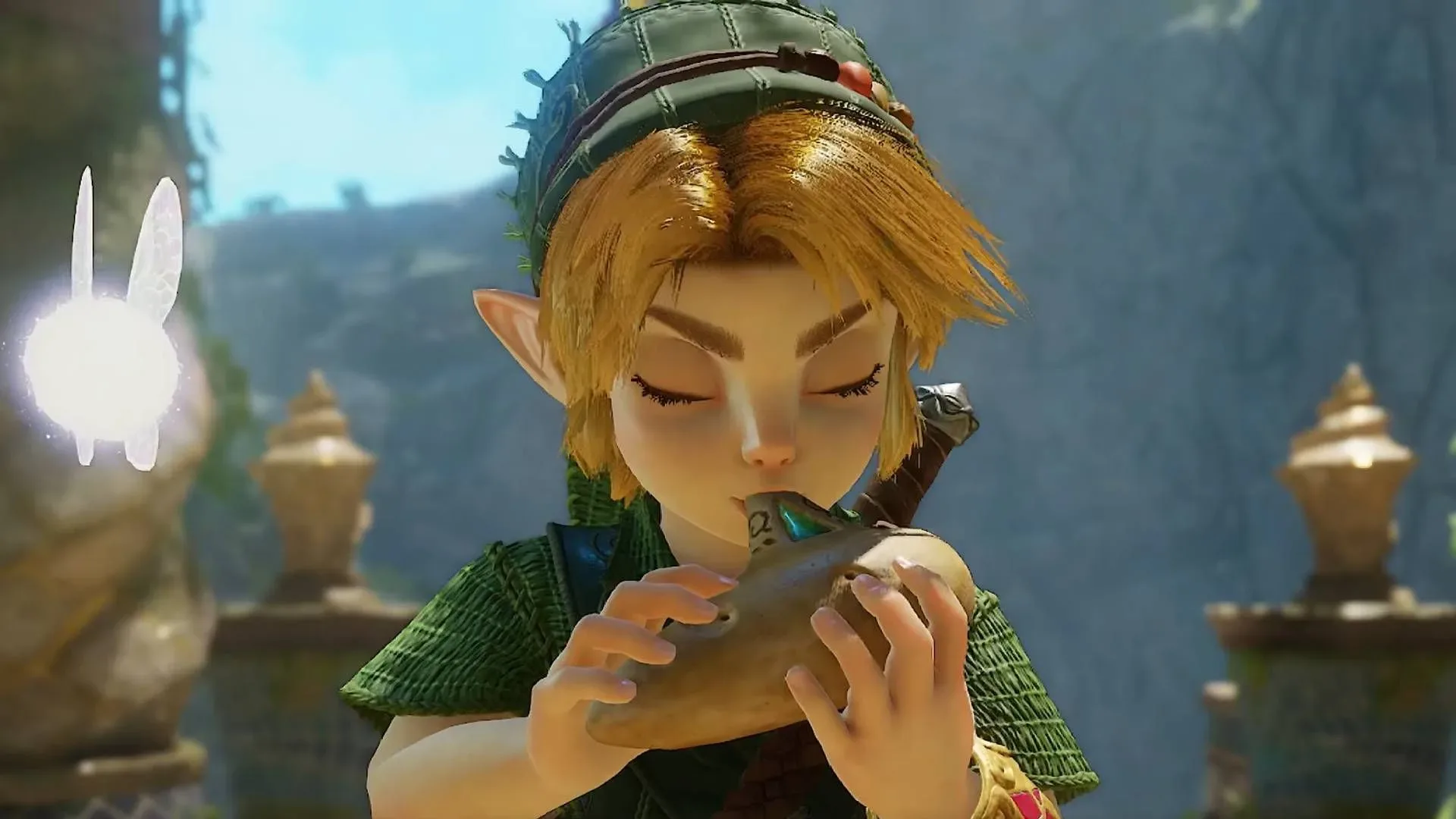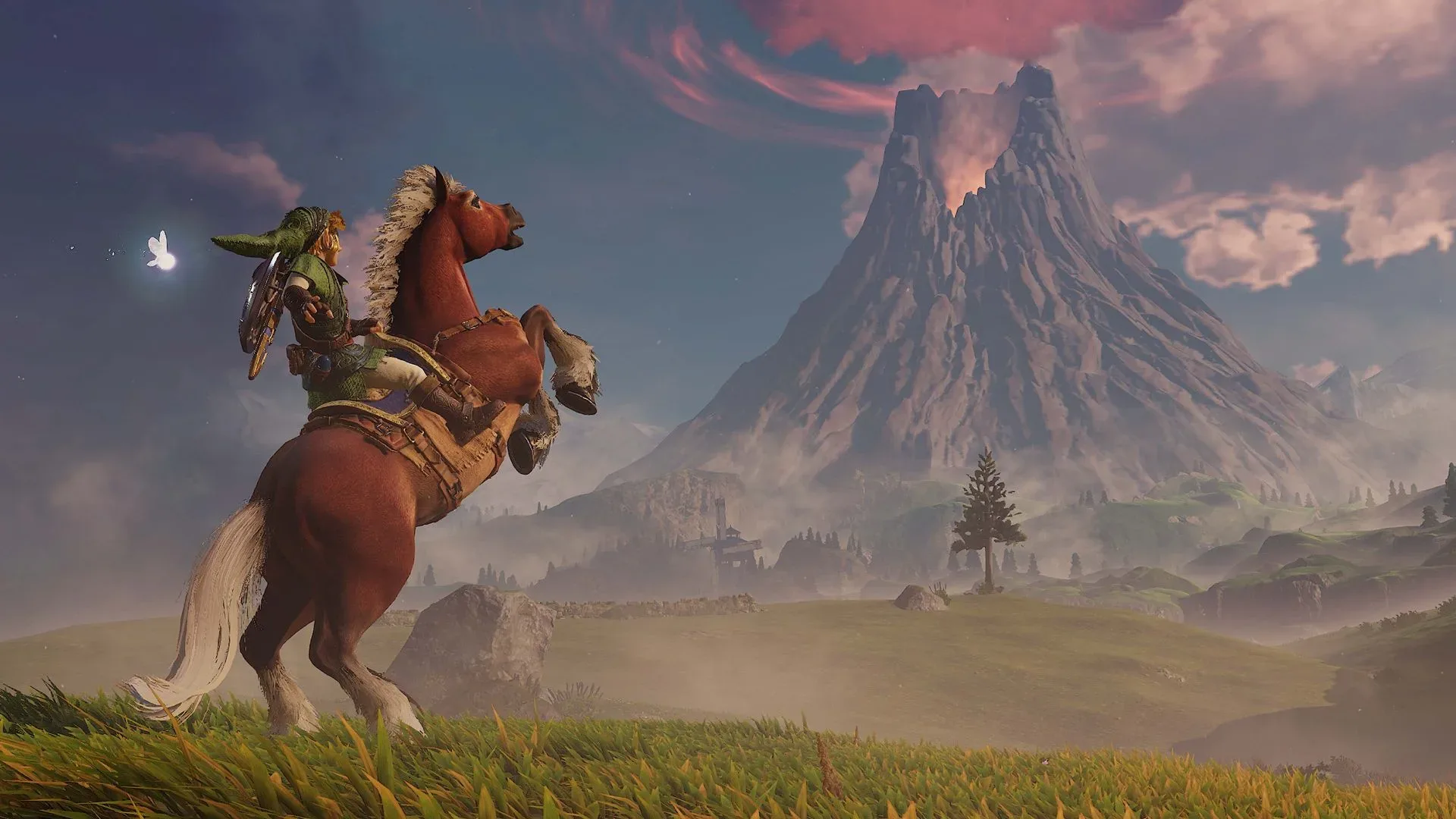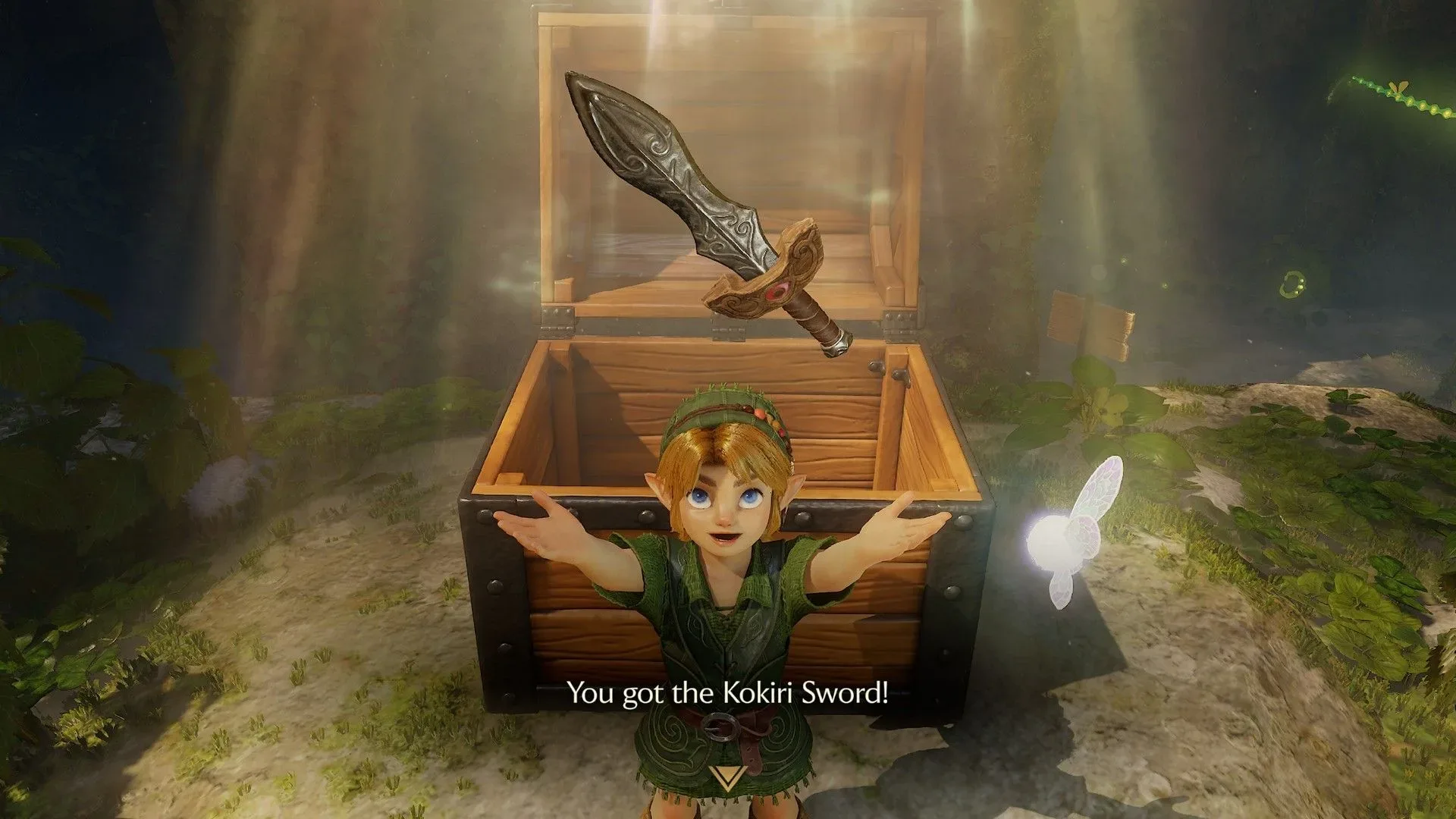
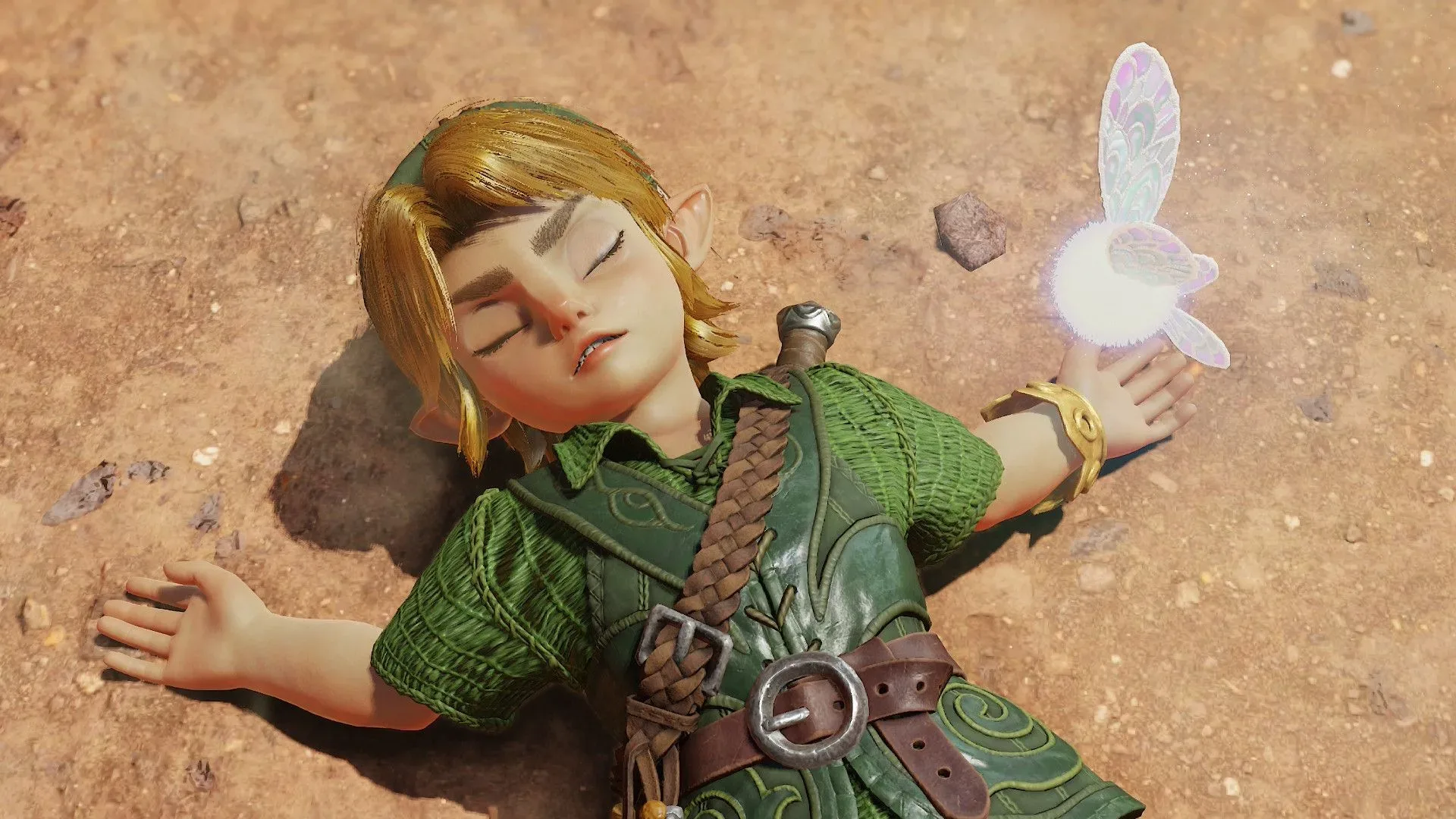
The rebuilt The Legend of Zelda: Ocarina of Time is barely out of the gate and Hyrule is already being treated less like a sacred kingdom and more like a physics lab with a very small, very determined test subject. Players have begun documenting exploits that let Link jump repeatedly, access areas normally gated behind the game’s progression and, in the process, turn the hero of time into a collection of deeply unsettling stretched polygons.
The immediate practical result is funny: child Link can apparently reach places he is not supposed to see before the Temple of Time’s central shift in the adventure. The more interesting result is that a remake with new content and modern-facing adjustments has quickly become a fresh puzzle for glitch hunters. The methods may not precisely match what veteran players remember from the 1998 Nintendo 64 original, but the impulse certainly does: find the edge of the rules, step over it, then see whether Hyrule remains intact.
Two routes, one very airborne Link
Two techniques are currently being shared online. One reportedly involves cycling between two items in the quick menu. The other is generally referred to as actor jumping, and appears to be the more dramatic of the pair.
In game-development terms, an actor is usually an interactive object or entity handled by the game engine: a character, prop, moving platform, enemy or similar element. The label “actor jumping” therefore points to an exploit involving Link’s interactions with something the game is treating as an active object, rather than a normal piece of fixed terrain. The available material does not establish every input or condition needed to reproduce it, and that restraint matters. Early discoveries often get misdescribed, altered by later testing or shown in clips without all of their setup.
What is clear from the circulated footage is the outcome: Link can gain repeated upward movement and cross boundaries that ordinarily keep child Link out of later sections of the world. That is a major capability in a game whose structure relies on age, equipment, dungeon completion and story events to control when players enter particular spaces.
“Infinite jump” is a convenient description, but it should not be confused with a new intended traversal ability. It means a player has found a way to repeatedly trigger or preserve jumping behavior beyond the normal limits imposed by the game. Once that happens, walls, ledges, missing bridges and sequence gates can stop being meaningful obstacles. A route that was designed to take many quests and several tools may instead become a question of where Link can get enough height.
Why forbidden spaces produce cursed Link
The glitch clips are not only about shortcutting the game. They have also produced the most immediately shareable side effect: bizarrely distorted Link models. Fans have dubbed the stretched variations “Lonk” and “Lunk,” names that fit a version of the character who looks less like Hyrule’s chosen hero and more like a loading error wearing green.
The visual distortion makes sense at a high level, even if the exact cause has not been formally detailed. Games depend on assumptions about which state a character is in, where that character can be, which animation should be playing, and which model or scene data should be active. Forcing child Link into an area that expects another state can create a mismatch among those systems. The game may still try to render Link and keep the scene running, but the result can be a malformed model, warped animation, or textures that do not line up as intended.
Related coverage includes Ocarina of Time Remake Players Are Already Finding Wild Ways to Break Hyrule.
That does not automatically mean the remake is broadly unstable. An out-of-bounds exploit is specifically designed to put software into situations its normal progression prevents. It does, however, reveal how much invisible sequencing sits behind an adventure game’s apparent freedom. Hyrule can feel like one contiguous fantasy world, while behind the scenes it is a carefully managed chain of states, conditions and transitions.
One shared example sends the elongated child Link into Bongo Bongo’s arena in the Shadow Temple. That is an especially fitting location for a glitch showcase: Bongo Bongo is already among the game’s stranger boss encounters, and an unnaturally stretched Link only adds to the disquiet. It is the sort of image that turns a technical discovery into community folklore within hours.
A remake inherits a culture of experimentation
The original Ocarina of Time, released in 1998, has a long history of player-discovered glitches, routing experiments and speedrunning techniques. That history is relevant not because every original trick must survive a remake, but because it explains why people started looking so quickly.
Speedrunning is not simply playing fast. At its most technical, it is the study of a game’s systems to identify legal-in-category ways of reducing time: optimizing movement, avoiding unnecessary interactions, manipulating inventory behavior, exploiting collision and discovering ways to bypass intended locks. A remake gives that community both familiar landmarks and a new technical landscape. The world, characters and broad progression may be recognizable, but changes to controls, menus, collisions, loading behavior or animation can invalidate familiar methods and create new ones.
That appears to be the situation here. Some older methods tied to the original auto-jump behavior have changed, while the remake’s new jumping possibilities have opened different doors—sometimes quite literally. The notable point is not that the newer game contains glitches; complex games do. It is that its particular changes seem to have shifted the vocabulary of exploiting it.
The remake is described as including new sidequests, dungeon adjustments, an option to disable the user interface and a dedicated jump button. Each change has a different relationship with the game’s original design. Sidequests and dungeon changes alter authored content. Hiding the UI changes presentation, allowing a cleaner view of Hyrule. A jump button changes the player’s direct control over movement. On its own, a jump button does not prove anything about a glitch, but extra movement control gives players another system to test against terrain, objects, menus and scene transitions.
That tension is part of the appeal. A remake can preserve a beloved adventure while becoming its own game for technical play. For players following speedruns or glitch discoveries, the question is not merely whether the remake resembles the Nintendo 64 version. It is what its own rules permit once people begin combining systems in ways the quest designers never expected.
What this means for ordinary players
For most people, these discoveries are primarily entertaining rather than essential. They are not evidence that a standard playthrough requires workarounds, nor do the circulating examples establish that the exploits are reliable across every situation. Players looking to experience the story in its intended order can simply avoid trying to recreate them, particularly because skipping sequence gates may leave the game in an unusual state or spoil areas meant to arrive later.
For challenge runners, route researchers and curious tinkerers, though, the discoveries are the start of a larger investigation. The key questions will be whether the tricks can be performed consistently, what setup they require, whether they save meaningful time, and whether they lead to dead ends or progression problems. A visually spectacular exploit is not necessarily a useful speedrun tool. Reliability matters as much as raw power when a run is measured in minutes or seconds.
There is also a difference between reaching an area and completing it. Accessing a late-game room as child Link does not necessarily provide the items, story flags or mechanics needed to proceed through that space. Glitches can expose a location without making it fully playable in the way the designers intended. That distinction is exactly why distorted models and broken-looking textures are so revealing: the player has crossed a boundary in space without satisfying all the other conditions that normally travel with them.
For a more character-focused reminder of what the game’s ordinary pacing accomplishes before the exploits start shredding it, revisit why Ocarina of Time’s Castle Town matters when its people still have time to worry. The contrast is striking. One moment, Hyrule is a carefully staged place with people, rhythms and escalating danger. The next, Link is vertically ascending into a forbidden arena with the proportions of a haunted rubber band.
Glitch hunting is now part of the remake’s early story
These early exploits do not define the remake, but they already form part of its identity. New sidequests and reworked dungeons speak to the effort to revisit a classic; the quick emergence of infinite-jump experimentation speaks to the player community’s equally enduring urge to interrogate every revised system.
Whether the two techniques become established speedrun staples, niche curiosities or targets for future fixes remains uncertain. What is not uncertain is the immediate image they have supplied: child Link reaching places outside the intended timeline, while the game struggles to decide exactly what shape he should be. For a series built around time, transformation and strange worlds behind ordinary doors, it is oddly appropriate. Hyrule has a new coat of paint, but its explorers are already looking for the seams.