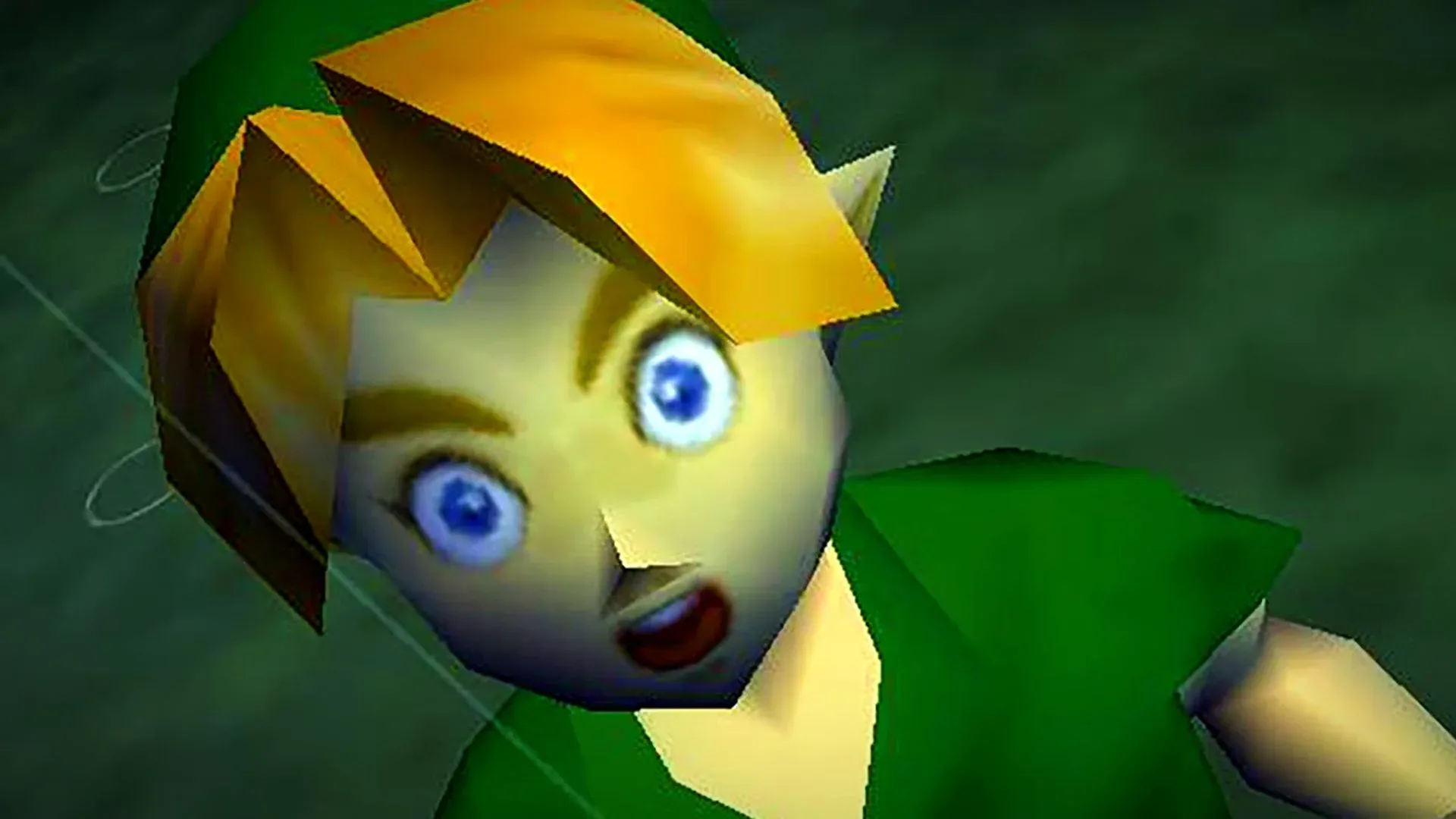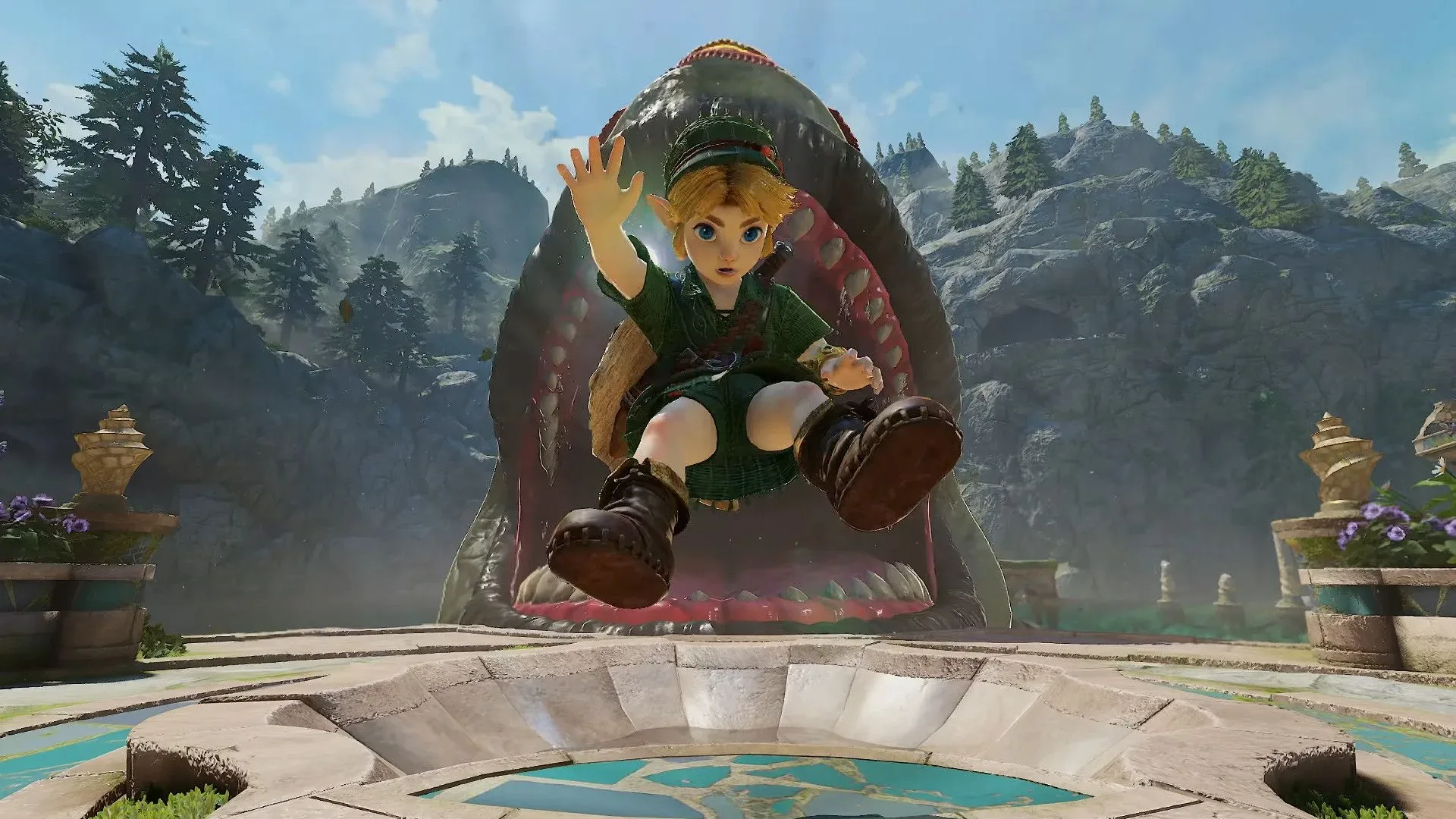
For nearly three decades, The Legend of Zelda: Ocarina of Time players have accepted a peculiar rule of Hyrule: Link could leap from an edge when the game decided the time was right, but he could not simply jump because the player pressed a button. That long-standing arrangement is changing in the upcoming remake. Nintendo’s refreshed version gives Link a dedicated jump input, modernizes camera control with the right stick, and introduces a sustained sprint that may finally end the hero’s famously frantic rolling commute.
These are not changes that rewrite the structure of the 1998 Nintendo 64 landmark. The remake appears to keep Hyrule and the original game’s overall design substantially intact, with a new visual presentation layered onto familiar places. But movement is one of the most immediate ways a player experiences an adventure game. A button that lets Link hop at will, a camera that can be freely adjusted, and a faster way to cover open ground could make an old journey feel meaningfully different from moment to moment.
The remake is scheduled for November 5, 2026. For more on that date and the broader rebuild of its world, see our coverage of the Ocarina of Time remake’s November 5 release and rebuilt Hyrule.
A simple jump, 28 years in the making
In the original Ocarina of Time, jumping was contextual. Run Link toward a suitable ledge and he would perform an automatic leap. It worked for the spaces Nintendo designed, and it helped give traversal a deliberate, guided feel. Yet it also created one of the game’s most conspicuous limitations. Link was an adventurous sword wielder crossing forests, dungeons, mountains and deserts, but he could not make a small hop on demand.
That design choice felt especially conspicuous on Nintendo 64, where Super Mario 64 had made jumping the center of its movement language. The two games had very different goals, of course. Mario’s world was built around acrobatic freedom and elaborate platforming, while Zelda’s adventure emphasized targeting, exploration, puzzles and carefully arranged spaces. Still, the contrast made players wonder why one of gaming’s most athletic plumbers could triple-jump across a courtyard while Hyrule’s chosen hero had to locate an approved cliff edge.
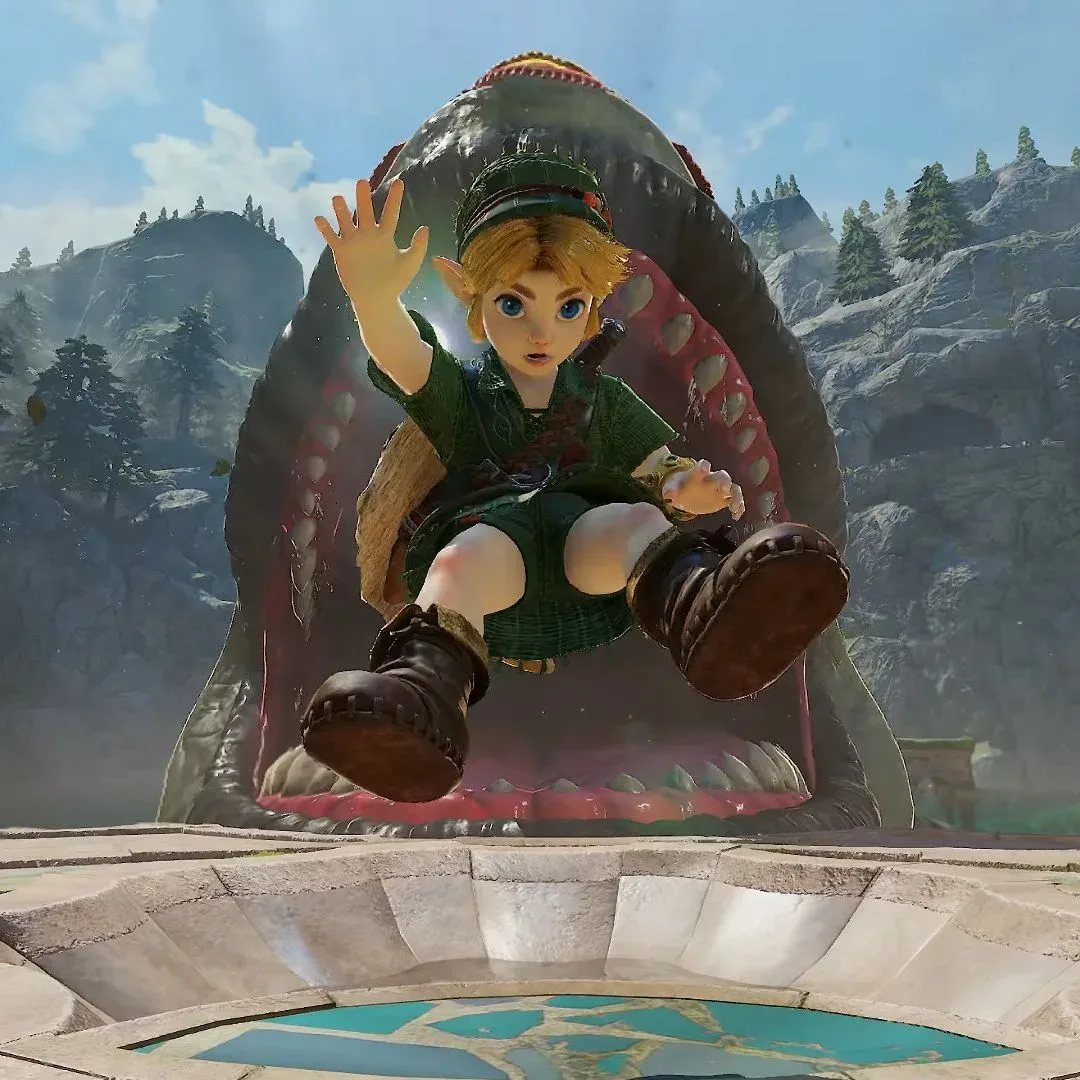
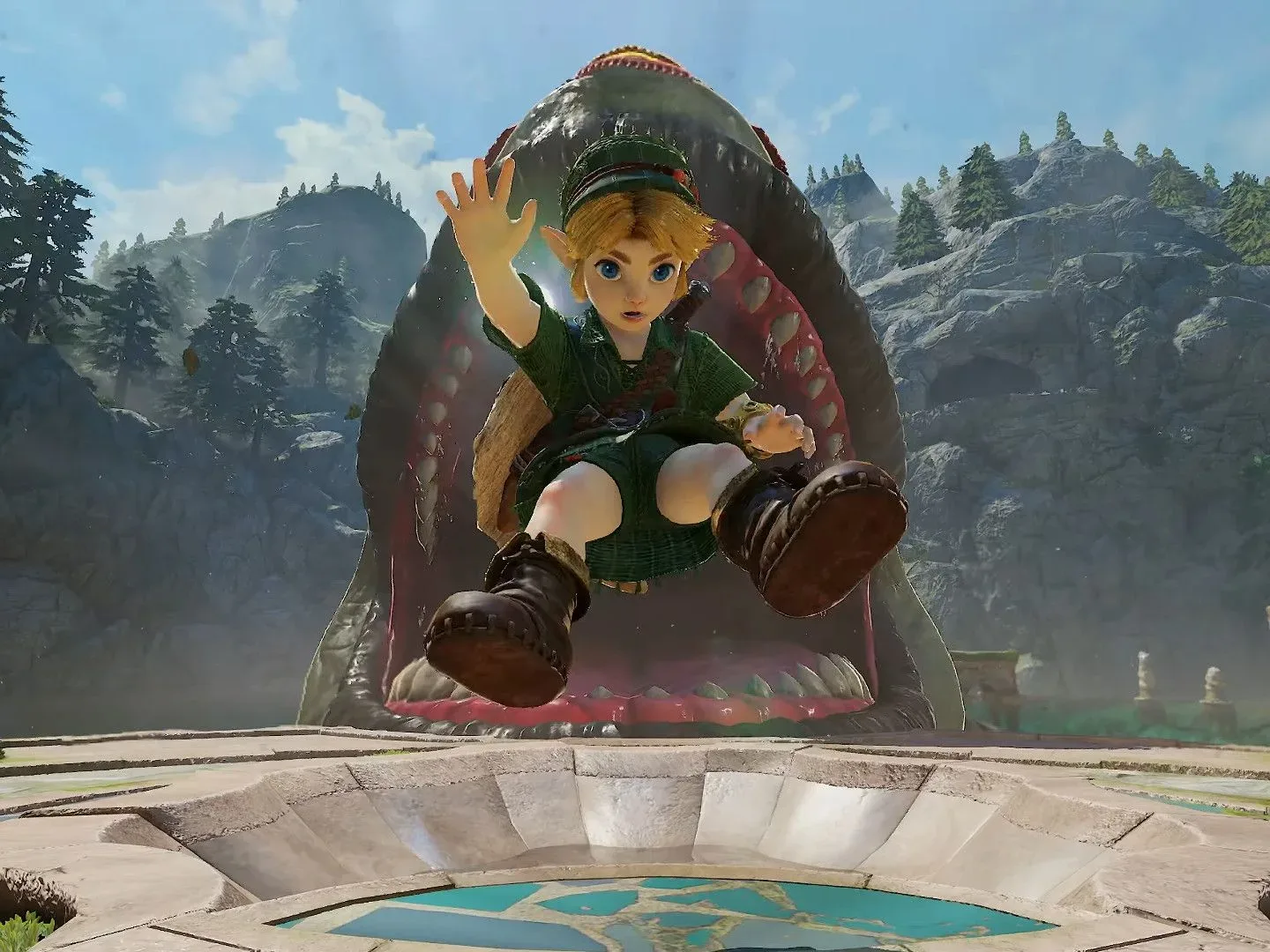
The new remake finally changes that equation. Link can now hop when players tap the jump button. It sounds like a modest addition, but it carries substantial implications for how people read a game world. A dedicated jump button offers an immediate sense of agency even before anyone knows how extensively the mechanic is used in puzzles, combat, navigation, or simply moving around towns and fields. The available information confirms the button’s existence, not the full list of interactions it enables, so expectations should stay measured. The key confirmed change is the freedom to jump on command.
That freedom also creates a curious preservation question. The original game’s environments and encounters were made around contextual jumping. A remake that stays broadly faithful has to let new mobility coexist with old assumptions. That does not necessarily mean players will be able to skip every obstacle or break dungeon progression. It does mean Nintendo has chosen to revise a foundational input convention rather than preserve it as a museum piece.
The right stick joins a world that predates it
The second major quality-of-life update is right-stick camera control. The Nintendo 64 original did not offer the now-familiar ability to rotate the viewpoint with a second analog stick. Its camera system was designed around the controller and conventions available in 1998, relying on fixed perspectives, button-driven adjustments, and the game’s influential targeting system to maintain readability.
Related coverage includes Ocarina of Time Remake Adds a Jump Button and Reworks Link's Fast Travel Movement.
A right-stick camera will be instantly recognizable to anyone who has spent time with more recent 3D action-adventure games, including later Zelda entries. Nintendo producer Eiji Aonuma described the jump input and camera adjustment as features that may appear obvious to people accustomed to newer games in the series. That is precisely why their inclusion stands out. What counts as a baseline expectation in contemporary 3D games was not a baseline when the Nintendo 64 game arrived.
Camera control can be more than cosmetic. It changes how players inspect a room, frame a route through the landscape, and maintain awareness while moving. In a remake of a game whose original camera was enormously important to the evolution of 3D design, that is a notable update. Whether every location has been altered to account for more player-directed viewing remains unclear. The confirmed point is simpler: players will be able to swing the camera around using the right stick, an option the original did not have.
Goodbye, roll spam; hello, sprint
If the jump button is the change players have requested aloud for decades, the sprint may be the change that makes longtime players briefly forget how their hands used to work. In the Nintendo 64 release, repeatedly rolling forward is slightly quicker than normal running. That led to an enduring ritual: tap the roll command again and again whenever Link had a long stretch of Hyrule Field, a road, or any other open area ahead of him.
The technique has never been merely a historical oddity. Speedrunners still use rolling as part of efficient movement, because a tiny speed advantage becomes meaningful across a full run. It is an iconic example of players discovering the best possible movement within a game’s rules, even if the result looks less like a heroic adventure and more like Link is late for a very important appointment and has elected to travel by shoulder-first somersault.
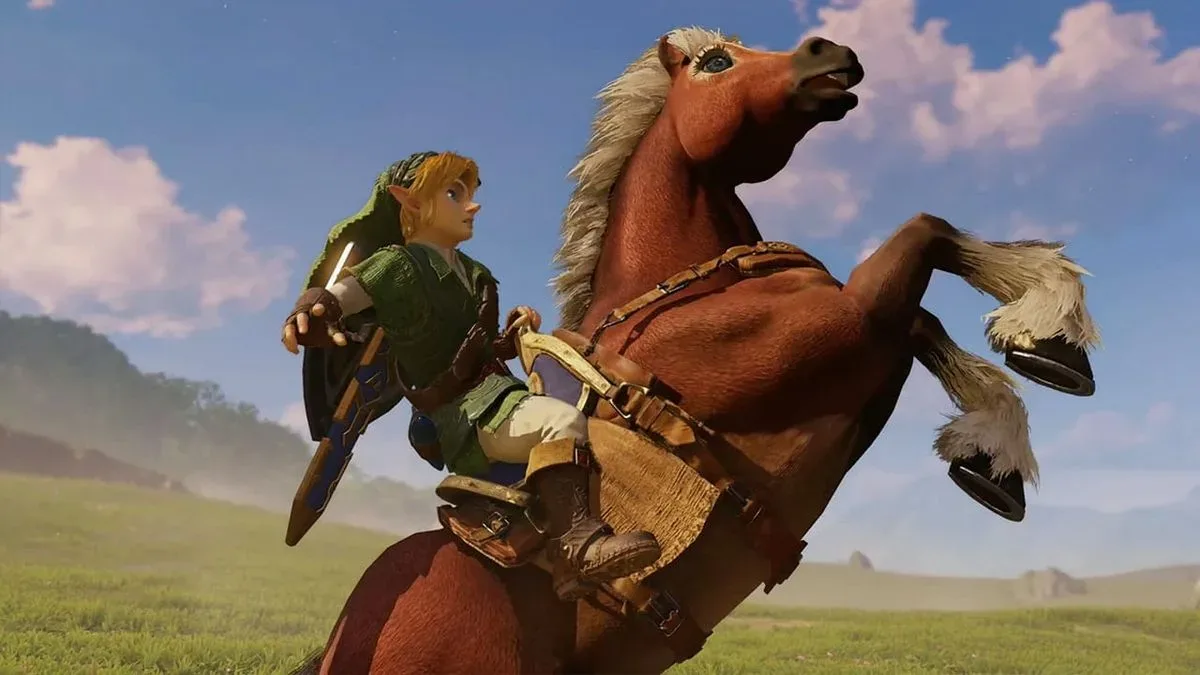
The remake presents a cleaner alternative: hold the roll button and Link breaks into a rapid sprint. Based on the gameplay demonstration, there does not appear to be a stamina gauge limiting how long that dash can continue. If that holds in the finished game, players may be able to sprint indefinitely, making it the apparent new preferred way to move quickly over long distances.
There is still room for caution in describing the exact impact. “Appears” matters here. A demonstration can show a feature without documenting every edge case, balance restriction, terrain behavior or interaction with other movement techniques. It is also not yet known whether rolling will retain a specialized use, or whether sprinting will prove categorically faster in every relevant situation. What is clear is that Nintendo is addressing the old roll-spam behavior directly with an input designed for sustained travel.
Faithful remake, selective modernization
The three movement changes reveal an interesting philosophy. This does not appear to be a ground-up reinvention that abandons the original in pursuit of a wholly contemporary action game. Hyrule seems largely recognizable in its 1998 form beyond the revised visuals. Instead, the remake looks set to preserve the underlying adventure while smoothing specific points where modern expectations have diverged sharply from the old control scheme.
That balancing act will inevitably divide fans. For some, the original’s quirks are inseparable from its personality. Contextual jumping, camera limitations and the accidental athletic art of repeated rolling are part of the texture of returning to Nintendo 64 Hyrule. For others, those quirks are friction that has outlived its purpose, especially when a remake provides an opportunity to make a classic easier to inhabit without discarding what made it special.
The visual direction may become an equally central part of that debate. The world appears mostly unchanged in layout, while its graphical treatment is new, and a fresh art style can be harder to judge than a mechanical feature list. Fidelity is not automatically the same thing as improvement; nor is modernization automatically a betrayal. The strongest case for this remake may rest on whether its new look and small control revisions combine into a version that feels respectful without feeling frozen.
For now, the most concrete takeaway is unusually down-to-earth: Link has learned to jump whenever players ask him to, players can steer the camera with the right stick, and the kingdom’s fastest traveler may no longer need to tumble across every field. After 28 years of ledge-only hops and roll-button percussion, that is a major change in the everyday rhythm of Ocarina of Time.