Level-5 has responded to criticism surrounding artwork shown during its VISION 2026 II: Dreams presentation, saying that several details viewers suspected were made with generative AI were instead rooted in real-world reference material or, less flatteringly, conventional human mistakes.
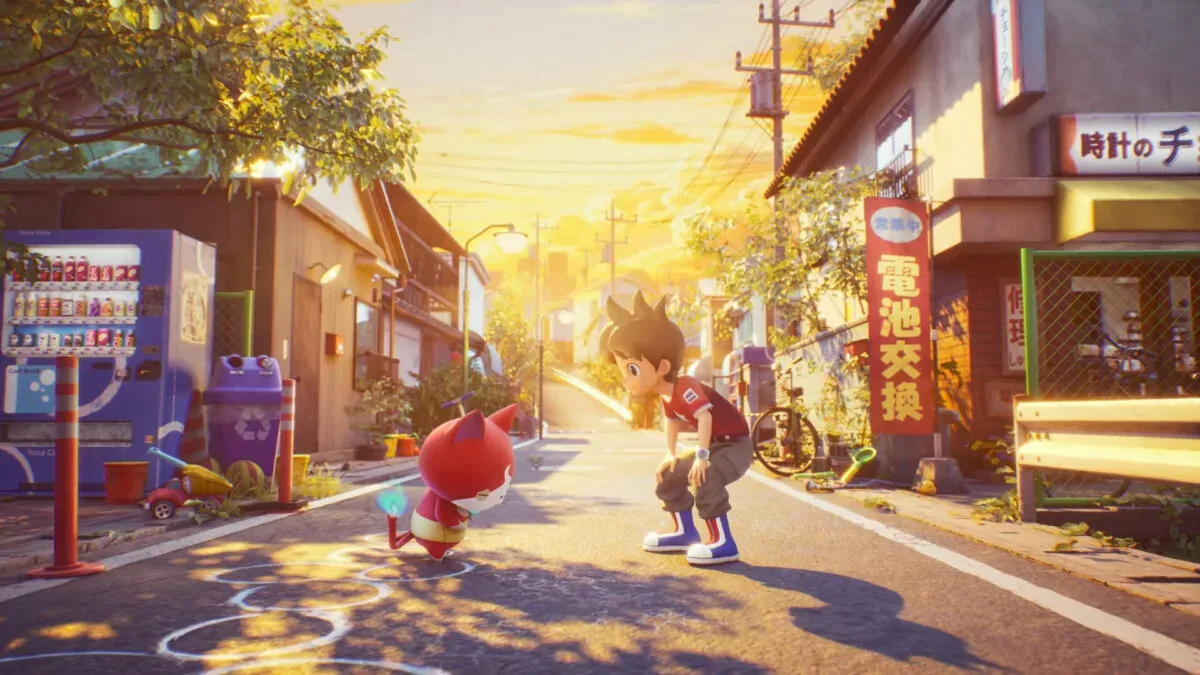
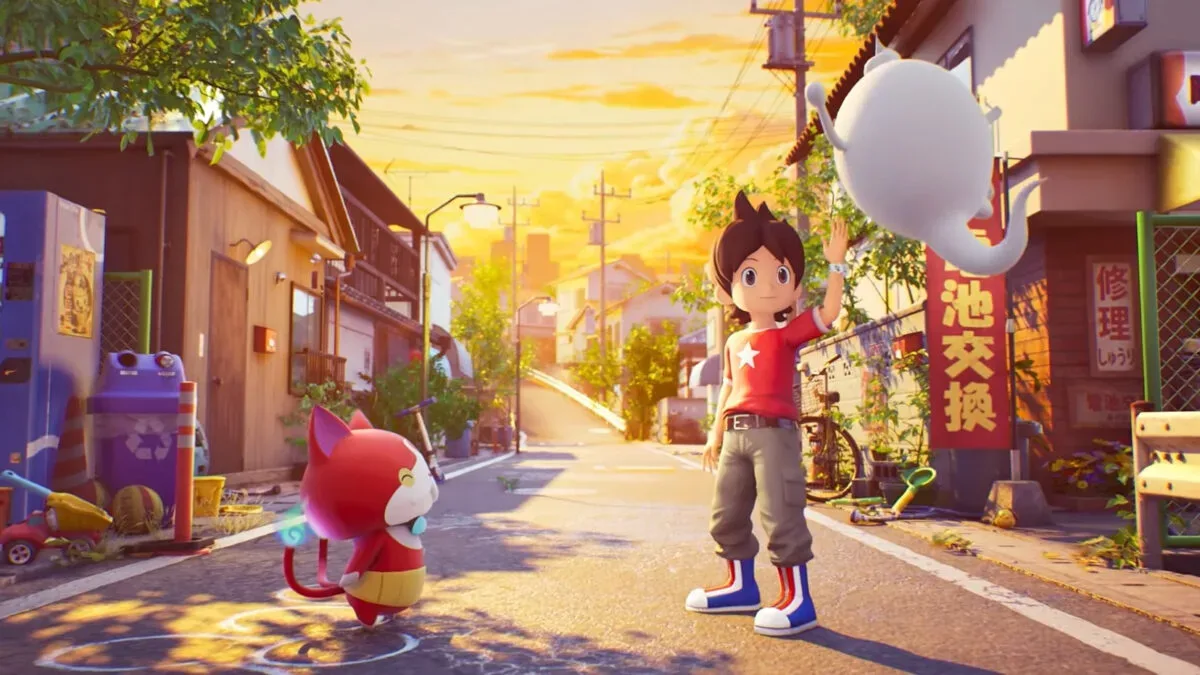
The clarification concerns the first teaser trailer for Yo-Kai Watch 2: Haunted Domain, where fans highlighted unusual environmental details and questioned whether they were evidence of AI-generated imagery. Level-5 says the answer is more complicated than a simple denial: AI tools have been used somewhere in the game’s development, but the particular background details drawing scrutiny were not all generated by AI.
That distinction matters because the studio has also said it intends to restrict AI use to efficiency-related work rather than material that will appear in videos shown to fans. It has changed background artwork for a newer version of the trailer and says an updated set of trailers will be shown at Tokyo Game Show.
What Level-5 says went wrong in the trailer
One prominent point of debate was the trailer’s telephone poles and wiring. Level-5 says these were based on photographs of real Japanese electrical wires, rather than being machine-generated distortions. That may sound like an unusually specific defense, but it gets at a central difficulty in internet-led image analysis: reality can look strange, especially when infrastructure, perspective, dense cabling, weather and stylized art all meet in one frame.
Other objects, including vending machines and rain gutters, received a much less elegant explanation. Level-5 says the questionable-looking background elements were simply the result of poor artwork by people. In other words, some of the visual oddities were errors that should have been caught in production and review—not proof that a model had improvised nonsensical scenery.
The studio says those portions of the background were altered in a second version of the Haunted Domain trailer. However, the earlier version remained in the Nintendo Direct broadcast on September 9 because that event had been scheduled before the VISION 2026 II: Dreams presentation and required trailer materials to be delivered by its own deadline.
This explains why viewers may have encountered conflicting versions of what was ostensibly the same reveal. It does not make the original art problem disappear, but it does provide a production-timeline reason that an older trailer continued to circulate after revisions existed.
AI use is acknowledged, not fully disavowed
The important point in Level-5’s response is that it is not claiming zero use of AI. Akihiro Hino, the company’s CEO and president, had already discussed the issue in a September 12 post on X. The new clarification instead narrows the claim: viewers should not treat every awkward piece of art in the presentation as an AI artifact.
Generative AI refers to systems that produce new text, pictures, audio or other content from prompts and training patterns. In an art-production controversy, viewers frequently associate it with malformed objects, inconsistent structure, improbable text, conflicting perspective or repeated visual details. Those can be warning signs, but they are not a conclusive test. Human artists can make the same kinds of errors, and a real reference can be visually confusing when placed into a stylized scene.
Level-5’s stated policy direction is therefore more limited than an outright rejection of the technology. The company says it will try to keep AI focused on improving efficiency and away from visible work used in fan-facing videos. The wording leaves open many questions about where the boundary sits in practice, including which tasks count as efficiency work and what internal oversight will verify the distinction. No further technical breakdown of the tools or workflows is described here.
Why the explanation has not ended the argument
Fan skepticism did not come from a vacuum. Once a company acknowledges using generative AI in development, audiences will naturally examine public material more closely for signs of it. That heightened attention is especially likely when a trailer includes art that appears unfinished or visually inconsistent. Even when a disputed detail turns out to be a real reference or an ordinary production error, it can still resemble the kinds of mistakes people have learned to associate with generated images.
Level-5 is effectively asking audiences to separate two criticisms that became intertwined: whether it uses AI at all, and whether individual assets in a particular trailer were AI-generated. Its response addresses the second point for particular examples, while only setting a broad limit on the first.
That split is worth keeping clear. A bad vending machine illustration is a quality-control problem whether it was made by a person or a tool. A recognizably real but odd-looking tangle of wires can be an art-direction challenge rather than a fabrication. Meanwhile, a studio’s choice to use AI in its workflow is a policy and labor question that cannot be settled merely by identifying one telephone pole correctly.
For players, the most practical result is straightforward: the Tokyo Game Show material should be the more useful version to evaluate. The revised trailers will show whether the announced corrections resolve the visibly disputed background work and whether Level-5 can present the game without reigniting the same uncertainty.
A communication problem as much as an art problem
The episode demonstrates why visible polish and clear disclosure matter when AI is part of an active industry debate. An ambiguous visual flaw now carries extra baggage. In a different moment, an odd gutter or a clumsy vending machine might have been dismissed as a rushed asset. In this moment, it can become evidence in a wider dispute over authorship, quality standards and the treatment of creative work.
Hino has argued that treating AI use as inherently wrong could impede digital technology’s progress, framing it as a tool creators can use in making their work. That view does not automatically answer the concerns of fans who prefer human-created art, want transparent production practices or simply expect cleaner promotional material. But it makes Level-5’s position clear: the company is not presenting AI as forbidden, only as something it says should be constrained in how it reaches the audience.
The pressure is now on the studio to make that constraint legible through its output. Corrected trailers are a useful immediate step, but their significance goes beyond swapping out a few background objects. They are an opportunity to demonstrate a review process that catches avoidable mistakes before a high-profile presentation, regardless of what tools sit elsewhere in the pipeline.
AI-related workflow debates are also continuing across game development and adjacent technical communities. One recent example involved a developer ending PS5 Linux work while citing concerns around AI-generated homebrew code; it underlines how questions about the technology can extend beyond visuals into trust, maintenance and responsibility for shipped work. Read more about that PS5 Linux homebrew dispute here.
For now, the confirmed facts are narrower than the online argument: Level-5 says the trailer’s unusual power lines came from real Japanese reference photos; it says some other background problems were human art errors; it says a newer trailer has already changed background work; and it acknowledges AI has been used while pledging to aim that use at efficiency rather than fan-facing video assets. Whether that reassurance is sufficient will depend less on one statement and more on the clarity and craft of what the studio shows next.