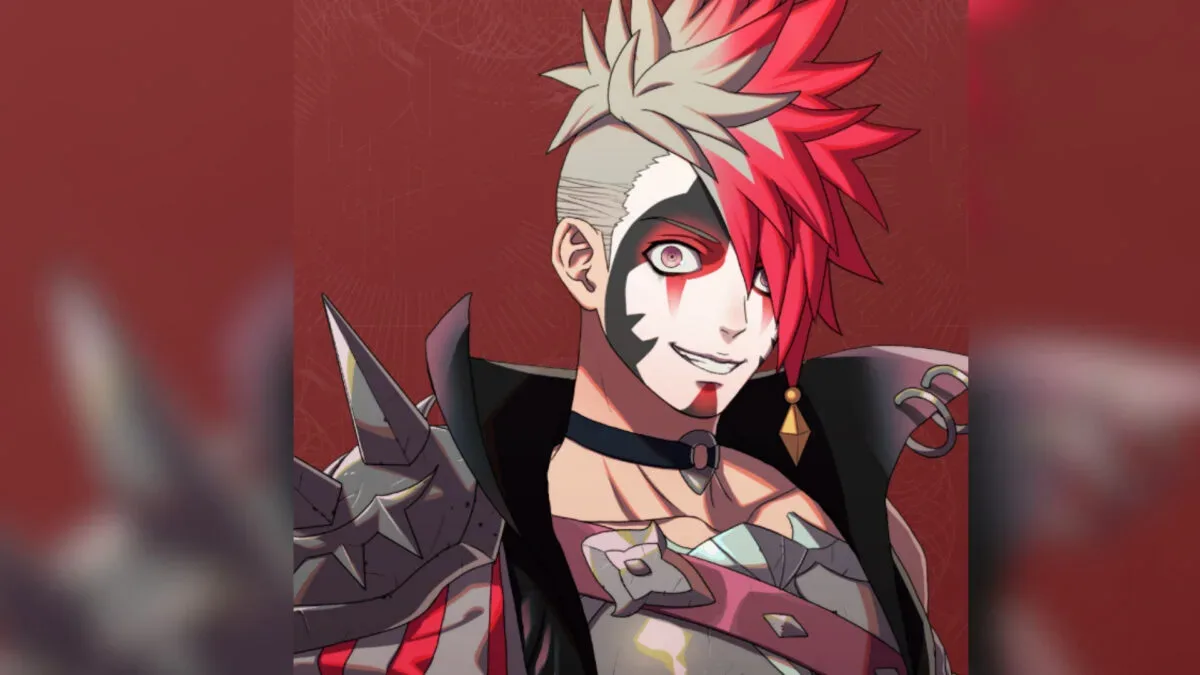
Fire Emblem: Fortune’s Weave is only days away, and a newly highlighted character has already accomplished the most important pre-release feat possible: generating an immediate, highly specific demand for an S-support.
The character is called Jester, based on an automatic translation of a post from the game’s Japanese social account. The available details are still limited and should be treated cautiously until an official English character profile arrives. What is clear from the material shared so far is that Jester carries a sword, appears to benefit offensively after evading an attack, and has an unnerving fondness for seeing opponents’ expressions twist into fear. In a series that has never lacked for elegant knights, tragic princes, immaculate healers, and people who desperately need to log off and talk through their trauma, that is a remarkably efficient introduction.
It is also the kind of description that makes players immediately wonder whether Jester will be eligible for one of Fire Emblem’s deepest relationship outcomes. Fortune’s Weave has not confirmed romance options, support ranks, or Jester’s potential place in those systems. But the fan impulse is understandable. Give a character dramatic styling, a sword, evasive combat tech, and a bio that sounds like it was written under a flickering carnival spotlight, and players are going to ask whether they can spend dozens of battles building a bond with him.
Jester arrives with just enough information to cause trouble
Jester’s apparent combat identity is appealing because it joins personality and mechanics cleanly. A unit who becomes more dangerous after a dodge naturally suggests a risky, mobile duelist: someone who invites an enemy swing, slips out of the way, then answers with a harder hit. That tells a story on the battlefield even before anyone has seen a full list of stats, classes, skills, growth rates, weapon ranks, or map performance.
Of course, players should resist declaring him the next unstoppable dodge tank off a brief profile. An increased-damage effect following an evade can be powerful, but its real value will depend on how reliably dodges occur, whether the skill has restrictions, what his defenses look like, and how Fortune’s Weave handles enemy accuracy and terrain. Fire Emblem has a long tradition of making an ability sound gloriously broken before an inconvenient number, activation condition, or axe-wielding enemy quietly restores balance.
Still, Jester is already doing exactly what a memorable pre-launch character should do. He is creating questions. Is he a theatrical rogue, a villain-adjacent ally, a mercenary with a frightening hobby, or simply a flamboyant warrior whose biography got much darker in automatic translation? The answer matters, and so does the wording. Early posts from regional social accounts can offer tantalizing details before localized pages catch up, but they are not always the final authority on names, nuance, or terminology.
Jester currently looks like a character designed to turn “I should probably avoid this person” into “I need to see every support conversation immediately.”
The S-support question is doing its usual Fire Emblem work
Romance speculation is not a side activity in Fire Emblem fandom; it is often part of the main campaign running alongside tactical planning. Across different entries, relationship systems have taken different forms, and the meaning of an S-rank has not been identical every time. Some ultimate support scenes have been romantic, while others have landed on close but non-romantic commitments. The particulars can vary by character, player avatar, story route, localization, and game.
Related coverage includes Fire Emblem: Fortune's Weave Introduces Jester, a Sword-Wielding Wild Card Fans Want to Romance.
That history is precisely why it would be premature to promise anything about Jester. Even if Fortune’s Weave includes a high-level support framework, that alone would not verify who can reach it, which pairings are available, or whether it is romantic in every case. The game’s promotional material has left room for plenty of questions about its social side.
But players are right to see potential. Fire Emblem relationships work best when they let a character exceed the first impression made by their combat niche or visual silhouette. The scariest-looking recruit may reveal unexpected loyalty. The polished noble may turn out to be hilariously awkward. A clownish sword fighter who enjoys fear could become more alarming with every conversation—or reveal a personal code, hidden grief, or an unreasonably sincere fondness for baked goods. There is no evidence yet for any of those specific possibilities. That is simply the series’ usual talent for making a roster feel bigger once support scenes start unlocking.
For a useful comparison point on how other major role-playing series sustain long-term excitement around character-driven stories, the wider genre is also watching where the Final Fantasy VII remake trilogy goes after Revelation. Fire Emblem’s appeal is structurally different, but the attachment people form with party members is every bit as central to the conversation.
A broader roster is giving players more to watch
Jester is not the only Fortune’s Weave character drawing attention. The recent profile material has also prompted excitement about the game’s apparent range of characters of color, particularly women of color. For players accustomed to major releases offering only a narrow handful of characters who resemble them, a roster with more than one immediately compelling option can be meaningful before the first map is even deployed.
That reaction is about more than a checklist. Fire Emblem characters are built to become favorites for wildly personal reasons: a portrait, a class, a voice, a battle animation, a support chain, a single absurdly useful skill, or the way someone survives an impossible mission with one hit point left. A visibly broader ensemble increases the chance that more players can find characters they want to recruit, train, protect, and perhaps recklessly send into a forest full of cavalry.
The disclosed names circulating around the game include Diego, Bertrand, and Talimun, alongside Jester. The material alone does not establish their full roles, affiliations, recruitability, or relationships with the player’s party. Yet their presence helps explain why the character chatter has moved beyond one particularly chaotic sword user. Fortune’s Weave seems eager to seed a large number of personalities for fans to inspect, theorize about, and assign to imaginary future teams.
Seteth’s appearance keeps the timeline argument alive
Then there is Seteth, returning from Fire Emblem: Three Houses. His appearance is an enormous conversation starter because it connects Fortune’s Weave to one of the series’ most discussed settings and casts. It is not, however, a definitive solution to the game’s place in the timeline.
Fans are still debating whether Fortune’s Weave is a prequel, sequel, or something more complicated in relation to Three Houses. Seteth’s presence adds evidence for a link, but does not automatically establish when the new story occurs. Anyone familiar with the character’s circumstances can see why his return does not neatly settle the question. The safest reading is that Fortune’s Weave wants players to notice the connection, while keeping the larger answer under wraps for now.
That makes Seteth more than a cameo-shaped nostalgia button. If Fortune’s Weave explores a period meaningfully tied to the world of Three Houses, his dialogue, knowledge, and interactions may be valuable clues. Every familiar name could become a timeline marker; every careful omission could inspire another page of speculation. Fire Emblem fans have turned smaller details into elaborate theory boards before, and a returning character with lore significance is not going to reduce that enthusiasm.
What remains unconfirmed before launch
With the release so close, the character posts are doing their job: they give players personalities to latch onto while withholding enough context to preserve surprises. For Jester in particular, the current facts are intriguing but narrow.
- His name is presented as Jester through automatic translation and has not been firmly established in English material described here.
- He uses a sword and has an ability connected to higher damage after a dodge.
- His profile indicates that frightened opponents appeal to him.
- His story role, recruitment status, complete mechanics, and support options are not confirmed.
- No confirmed information establishes that he can be romanced.
That final point may disappoint the portion of the audience already planning a morally questionable matching outfit, but uncertainty is part of the fun of a fresh Fire Emblem roster. Jester could become a genuine romantic option, a platonic confidant, an enemy, a temporary ally, an unavailable favorite, or something far stranger. For now, all that can responsibly be said is that he has made a very strong first impression—and that the demand for answers is already loud.
Fortune’s Weave does not need to reveal every support pairing before players can be excited. It only needed one sword-wielding dodge specialist with a predatory grin at the prospect of fear. Mission accomplished, clown.