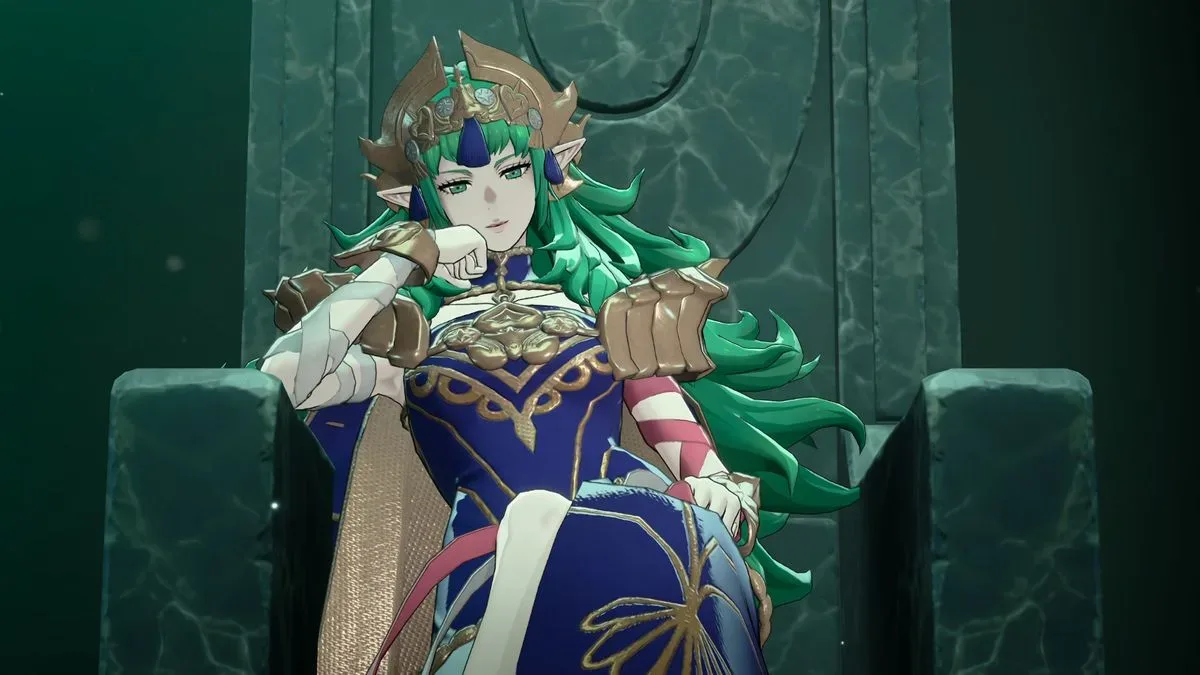
Fire Emblem: Fortune’s Weave is built around a tantalising tactical-RPG premise: rather than choosing one house, faction or viewpoint and accepting the blind spots that come with it, players can move among four heroes’ campaigns while working toward a shared final confrontation. That scope is the game’s defining strength. It also appears to be the source of its biggest friction, as the journey between its standout battles can become clogged with repeated introductions, overlapping progression systems and activities that do not always feel proportionate to the stakes.
Developed by Intelligent Systems and published by Nintendo, Fortune’s Weave arrives for Nintendo Switch 2 on September 17, 2026. Its central ideas should be immediately familiar to Fire Emblem players—grid maps, unit placement, class advancement, relationships and permanent danger—but its structure aims for something broader. The result is an epic that reportedly delivers when it concentrates on character drama and difficult battlefield problems, even as its substantial downtime can test a player’s patience.
A tragedy shown before it can be prevented
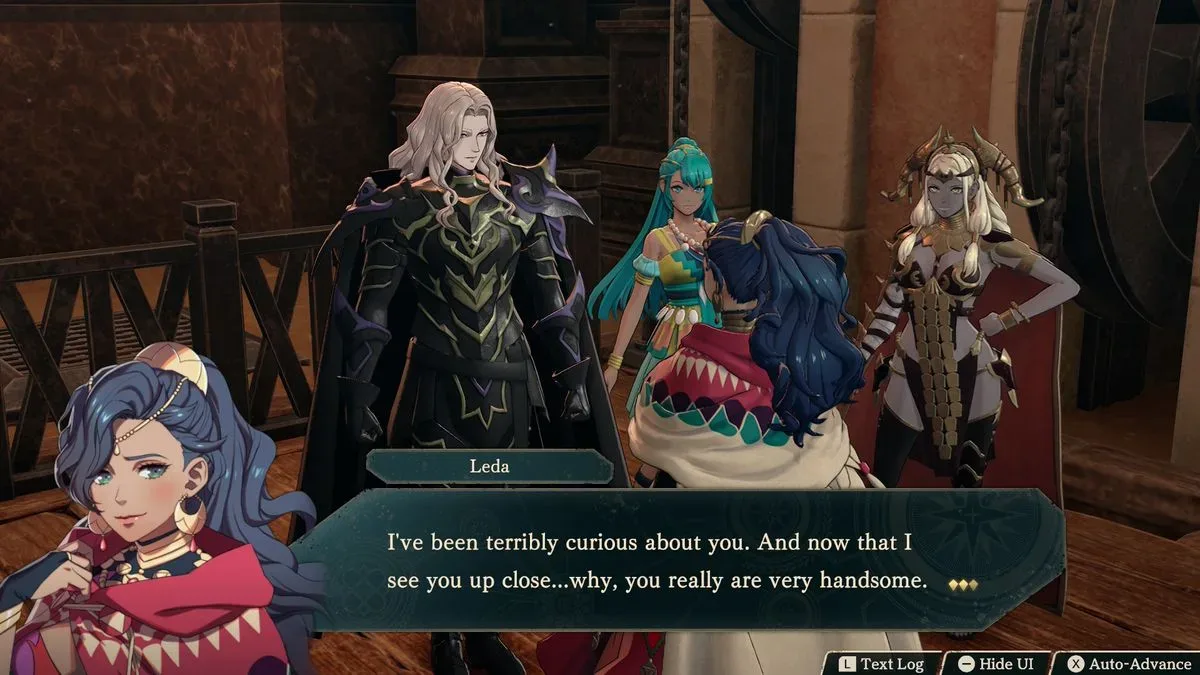
The opening establishes the game’s endgame before sending the player back to change it. Eshmel, the customizable protagonist, is introduced at a point where the world has already succumbed to undead forces and the demon god Balor’s return is near. In the prologue, Eshmel defeats the four heroes who might otherwise have stood against that catastrophe: Cai, Dietrich, Theodora and Leda.
Fortuna, a goddess of fate, then makes it possible to travel five years into the past. Eshmel reaches Dagsion in the year 1449, when the Rome-inspired city is hosting the Heroic Games. Each of the four eventual heroes has entered for distinct personal reasons, while the winner receives a wish. The narrative asks players to change their outcomes and eventually rally them for the conflict glimpsed at the start.
That framing has a practical storytelling advantage. Eshmel does not need to become the center of every relationship and every crisis in the manner of a more conventional avatar character. Instead, Eshmel observes each campaign as the Pale Raven, making the protagonists’ personal motives the focus. It is a potentially self-aware device—players are, after all, deliberately revising people’s lives—but it gives each route more room to establish its own emotional center.
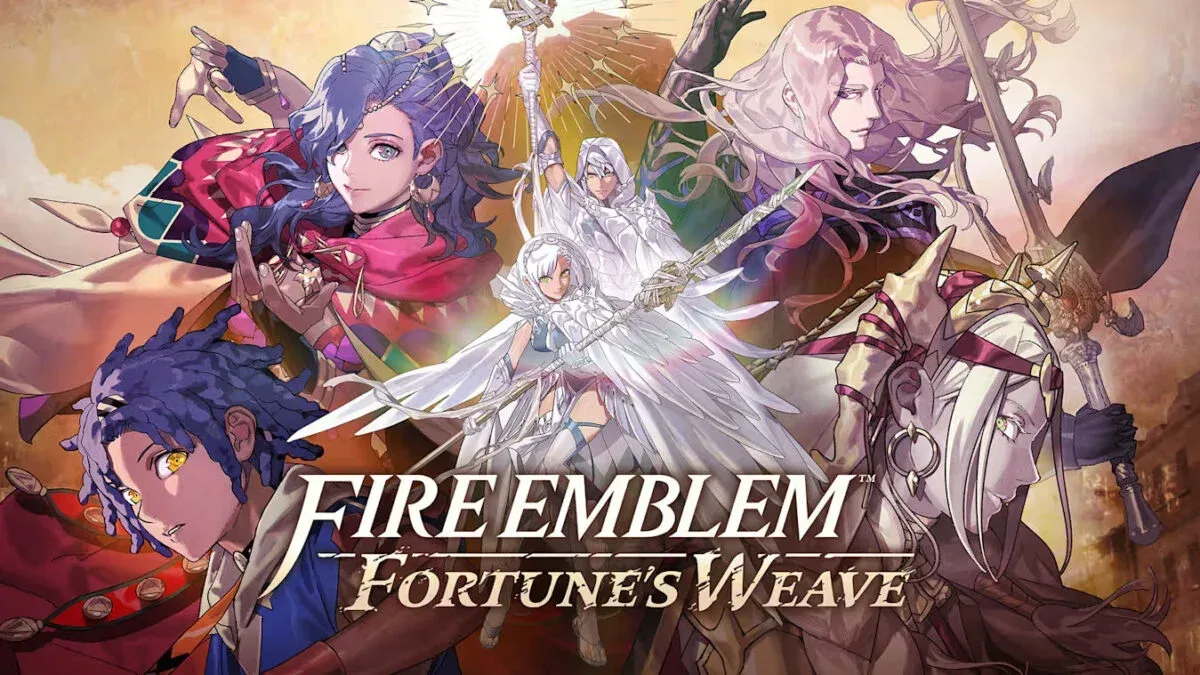
Cai is a young contender attempting to save his imprisoned father from execution. Dietrich, who comes from Fódlan, has an overwhelming desire for battle. Theodora’s route traces her ascent to the Samaris throne amid assassination and betrayal. Leda, a musician, sees her home destroyed and her father murdered, then enters the Games driven by revenge. These are not simply four starting classes with different coats of paint; their circumstances inform how their stories and campaign mechanics unfold.
The plot carries a lot at once: fate, time travel, ancient undead warriors and technology with an unusually futuristic edge. That breadth can make the mythology convoluted if examined too literally. Yet the larger design has a clear appeal. Seeing separate casts collide, cooperate or oppose one another lets the game use multiple viewpoints to turn a single conflict into a connected saga rather than a set of wholly isolated what-if campaigns.
Four routes, but no permanent route lock
Players return to the Obelisk Chamber in the present to select another protagonist’s path. This means the campaigns can be pursued in parallel rather than completed one at a time. The early benefit is variety: a player can sample a hero’s particular systems, allies and access to Dagsion before committing many hours to one route.
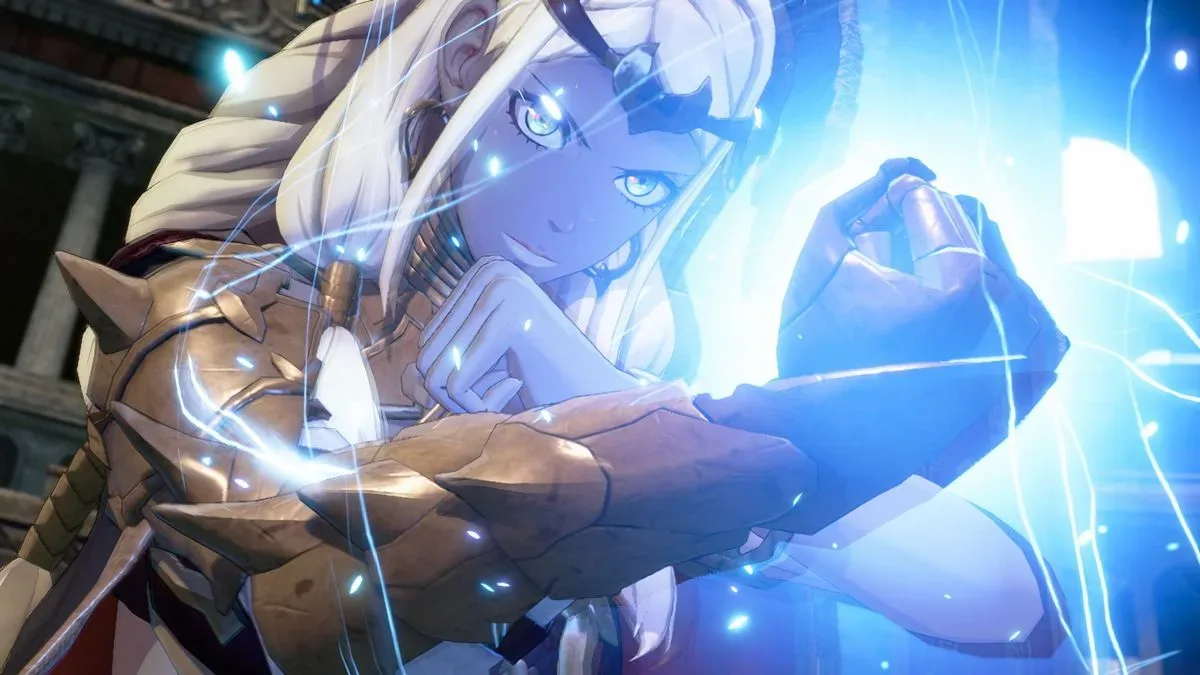
The protagonists bring distinct battlefield or growth hooks. Leda can perform in towns to learn songs, which can then buff allied units in combat. Cai can receive mentoring from other allies. Dietrich begins as a formidable fighter and can warp several spaces to strike foes positioned beyond a normal attack range. These abilities sit on top of Fire Emblem’s fundamental turn-based, grid-driven decision-making rather than replacing it.
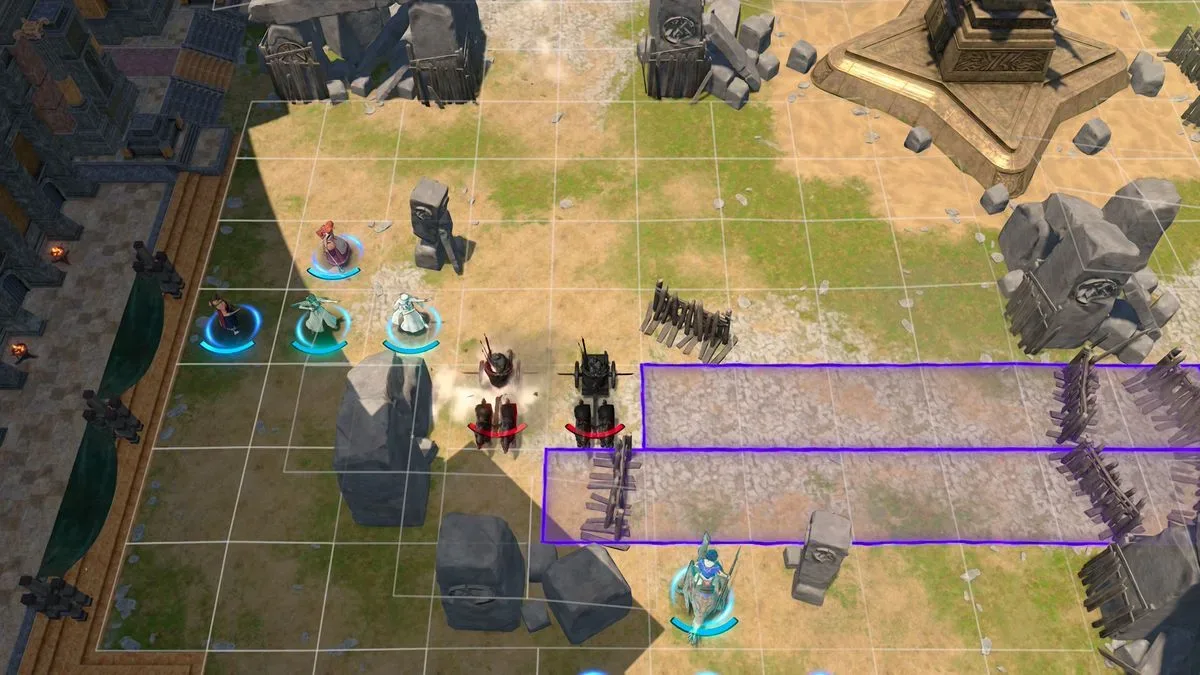
That distinction matters. A grid-based tactical battle is a combat encounter in which positioning is as important as attack power: the square occupied by a unit affects who can be reached, who can retaliate, whether terrain offers an advantage and which enemies can threaten that unit next. In Fortune’s Weave, the battle forecast provides information needed to plan around those variables. Terrain can improve a unit’s prospects while encouraging enemies to approach; HD Rumble can warn when flying cavalry are being moved into the deadly reach of an archer.
These systems reward reading the board before committing. A critical hit that surpasses the forecast and removes a foe without retaliation remains part of the satisfying tactical rhythm. More importantly, the route-specific skills give players another reason to consider which hero is leading a particular army and what sort of formation that leader supports.
There is a catch to having four freely accessible stories: players also face repeated onboarding. The opening chapters reuse quests and cinematics, including each protagonist’s first arrival in Dagsion. Differences remain in the companions who can be recruited and in which city areas a hero can access early based on social status, but the overlap can slow momentum. Switching routes reveals clever intersections—one group may assist another in battle before meeting as arena opponents—but it can also make every plotline advance slowly.
For players approaching the game, that suggests a useful expectation rather than a hard rule: sampling every route may be the best way to understand the full design, but focusing on one storyline for a sustained stretch may preserve narrative momentum. Completing every protagonist is not strictly required to bring them into the final arc. Finishing a hero’s associated paralogue can make that character available as a combat ally, with class changes and upgrades still possible. However, an unfinished route means that hero will not take part in the main story or receive the same support conversations.
A paralogue in this context is an optional side chapter tied to characters or story threads. Its importance here is notable because it provides a middle path between ignoring a hero and finishing an entire campaign: players can secure that hero’s battlefield utility while leaving the full narrative route for later.
The strongest ideas are on the battlefield
When Fortune’s Weave gets to major maps, its ambitions appear far more focused. Combat arts can modify an attack in exchange for a cost. An axe art, for example, can raise accuracy while consuming weapon durability. That is a classic risk-and-reward choice: the player may spend a limited resource to make an important strike more dependable now.
The four leads also have bespoke Blaze arts. These powerful moves consume HP, and frequent use unlocks stronger options, but it can lower the user’s maximum HP as well. HP, or hit points, is a unit’s remaining health; lowering the maximum makes the downside longer-lasting than taking ordinary damage. Blaze arts therefore create a meaningful question before a difficult turn: is winning an immediate exchange worth making a key protagonist more vulnerable in future maps?
The Heroic Games setting supplies elaborate arena concepts before the wider war escalates. Encounters can involve chariot-riding units, aerial targets immune to arrows and an overt reference to a famous wooden horse. Later battles reportedly become more punishing, with changing objectives during a map, environmental effects that apply debuffs, bosses with multiple health pools, regenerating shields and persistent reinforcements.
A debuff is a negative status effect that weakens a unit or otherwise makes it harder to execute a plan. Environmental debuffs can be especially disruptive because they turn terrain from a passive movement concern into an active hazard. Bosses with shields that regenerate similarly demand more than raw damage; players must work out how to break through before the defense returns, often while managing pressure from incoming enemies.
Unlimited rewinds give players a way to undo turns and rethink a disastrous move. Divine blessings, meanwhile, can grant whole-party buffs for a turn. A buff is a temporary beneficial effect, such as an increase to a unit’s effectiveness. Both systems can soften the consequences of an unforgiving scenario, but they do not erase the tactical puzzle. They instead give players room to recover from imperfect information, experimentation or a misread danger zone.
One optional middle section is reportedly where the game reaches its most confident form, reducing its broader management layers in favor of consecutive drama-heavy battles. It is an encouraging sign for players chiefly interested in Fire Emblem as a combat series: beneath the clutter, the map design can still deliver escalating challenges with clear tactical texture. Anyone interested in how other RPGs are judged beyond their most obvious touchstones may also appreciate this look at why The Blood of Dawnwalker deserves attention beyond comparisons to The Witcher 3.
Exploration and time pressure complicate the campaign
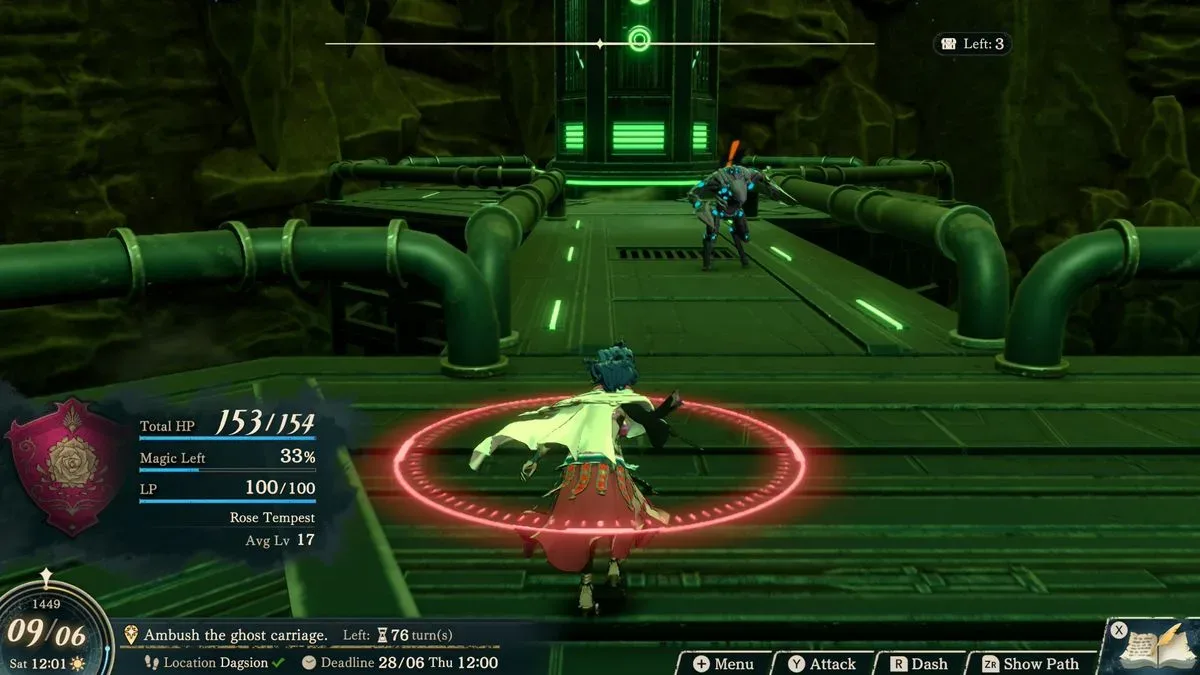
Outside battles, players can travel around the Dagdan Empire through a world map, visit towns, collect resources, find distinct wares and enter skirmishes for experience. There are also third-person mini dungeons entered with a smaller party. Their fights resemble classic command-based turn battles rather than Fire Emblem’s usual map tactics, and can be skipped for an automated result. That option is convenient for quick experience, but it also points to the problem: if the optimal emotional response is to skip the activity, it may not be adding much to the campaign’s larger rhythm.
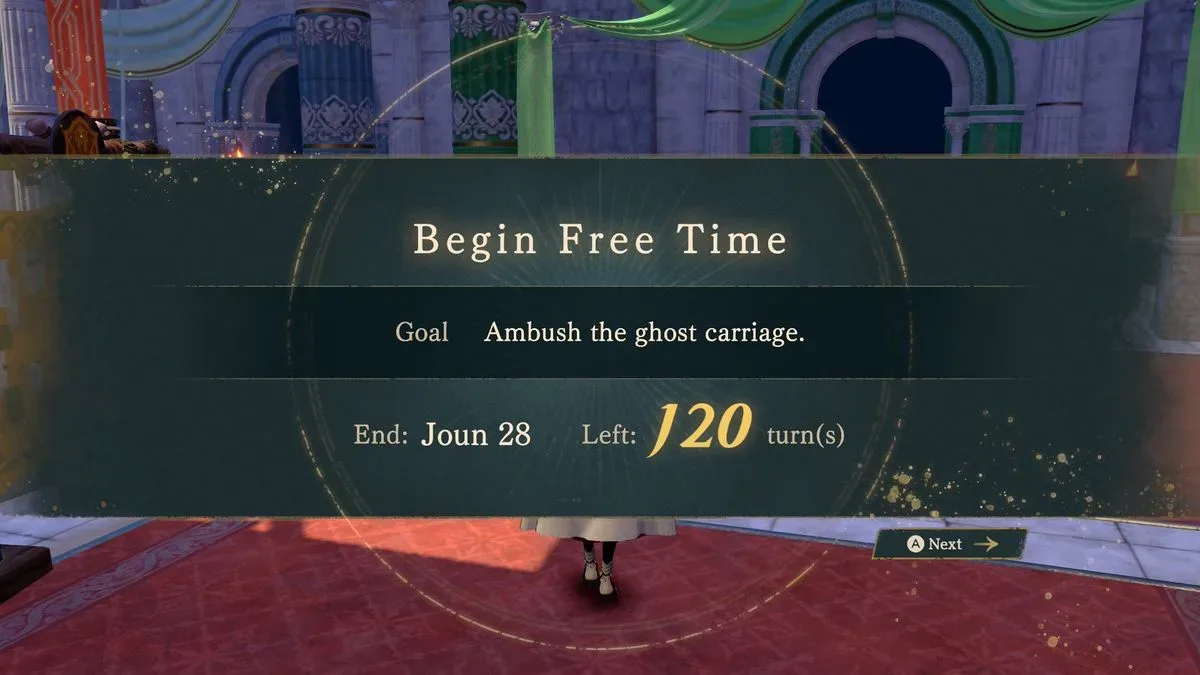
Free time is measured in turns rather than days, but the rules do not always feel unified. World-map movement can consume multiple turns, especially if a skirmish occurs or a new route is explored, yet movement must be advanced one turn at a time. City activities generally draw on party members’ motivation instead, a separate resource. Weekly limits in Dagsion restrict certain relationship and training activities, so players who want another chance to bond or raise weapon skills may need to spend time elsewhere until the week refreshes.
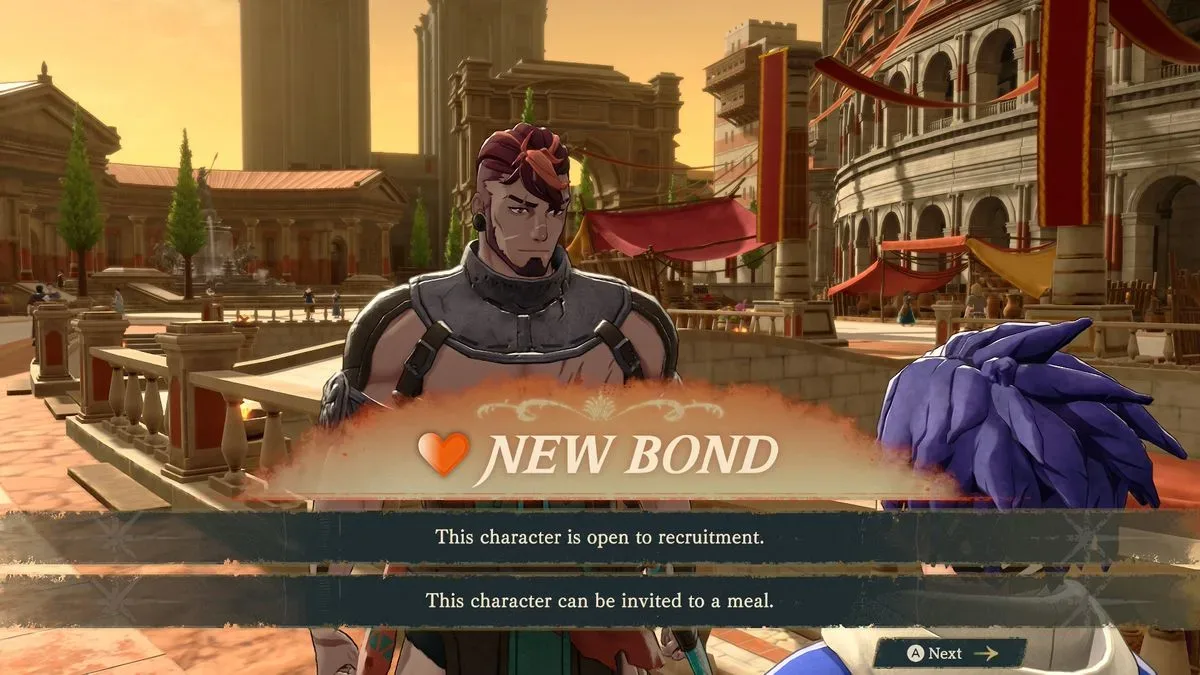
Renown adds another gate. Some locations or recruits are inaccessible until Renown rises through story and side-quest progress. Recruitment can additionally require a high Renown level or enough gifts and activities to raise a bond. None of these mechanics is inherently out of place in a strategy RPG. Resources, restrictions and trade-offs are often what make tactical planning compelling. The issue is density: turns, motivation, weekly refreshes, Renown, weapon training and bond requirements can create a web of low-stakes administration around a story presenting an urgent fight against fate.
Class promotion is connected to weapon-skill training, so the downtime does have combat consequences. Relationship bonuses also matter on the map, where adjacent units receive buffs. But party members reportedly have relatively few support conversations with one another, making those mechanical bonds feel less dramatically vivid than they might. The game retains the incentives to keep units close; it does not always provide enough character interaction to make every adjacency bonus feel like a relationship players have watched grow.
Who Fortune’s Weave is likely for
Fire Emblem: Fortune’s Weave sounds best suited to players willing to invest in a long-form strategy RPG whose rewards arrive most reliably in its main-route drama and late-game maps. Its four-protagonist design, overlapping routes and optional route completion promise a lot of story to explore. The presentation—flashy cinematic sequences and a grand score—also appears to make a strong case for playing on a television, even for those who normally prefer Fire Emblem in portable form.
Players who enjoy managing every layer of party growth may find the world map, city activities and various resource limits engaging. Others may find themselves impatient to return to the campaign’s more purposeful confrontations. That tension is the central story of Fortune’s Weave: it is a game with enough strategic imagination and narrative scale to make its many paths worth following, but it asks for considerable time—and a willingness to spend plenty of turns—between its best moments.