Two enormous entries in the modern Final Fantasy VII project have become unusually inexpensive on Switch 2. The digital version of Final Fantasy VII Remake Intergrade is listed at $8, while Final Fantasy VII Rebirth is $7.50, with the sale scheduled to run through November 17.
That is a sharp departure from their stated regular prices: $40 for Remake Intergrade and $50 for Rebirth. Put another way, a Switch 2 player can pick up both for $15.50 before tax rather than $90. The arithmetic is almost comically backwards in one small respect: the newer and larger Rebirth costs 50 cents less than Remake Intergrade during this promotion.
For anyone whose primary system is Switch 2, this is a straightforward opportunity to start—or catch up on—the remake trilogy before Final Fantasy VII Revelation, identified as the concluding installment, arrives in April 2027. For players who already have these games on another current platform, the decision is less automatic. The Switch 2 versions are portable, but there is no cross-save system between them and editions on PS5, Xbox Series X/S, or PC.
What is included in the Switch 2 sale
The discounted releases are not the original 1997 game. They are the first two pieces of a multi-game reimagining of Final Fantasy VII.
- Final Fantasy VII Remake Intergrade is the Switch 2 edition of the first installment.
- Final Fantasy VII Rebirth follows it and is the more recently released, larger game of the pair.
- Final Fantasy VII Revelation is planned to complete the trilogy in April 2027.
For new players, the practical order is clear: start with Remake Intergrade, then continue to Rebirth. The two games are part of a continuing story, so buying the second at a bargain price does not make it an ideal place to begin for someone who has not played the first.
At their normal prices, choosing between the games could be a meaningful purchase decision. At $7.50 and $8, the economics change substantially. The combined cost is low enough that Switch 2-only players interested in the trilogy can acquire both entries at once and leave themselves time to play through them before the finale arrives.
The sale deadline matters
The crucial detail is that these are temporary digital prices. The promotion ends November 17, rather than being a permanent reduction. Anyone considering the games should check the Switch 2 digital storefront before purchasing, both to confirm that the promotion is still live and to verify the local price in their region.
One point worth avoiding is an easy mix-up: the $8 figure is shorthand, not an identical label on both products. Remake Intergrade is $8 and Rebirth is $7.50. The difference is tiny, but the unusual pricing makes it worth stating precisely.
Related coverage includes Final Fantasy VII Remake Intergrade and Rebirth Hit $8 on Switch 2.
The provided regular prices also show the scale of the cuts. Remake Intergrade has fallen from $40 to $8, a reduction of $32. Rebirth has fallen from $50 to $7.50, a reduction of $42.50. Those discounts make this more than a routine sale, especially for two large role-playing games.
Performance: what “30fps” means here
The Switch 2 ports are described as performing decently, with work done to keep the games running at a solid 30 frames per second, commonly abbreviated as 30fps. Frame rate refers to how many individual images a game displays in one second. A stable 30fps target is not the same as 60fps, but consistency is important: maintaining the target can make movement and combat feel more predictable than a presentation that frequently varies.
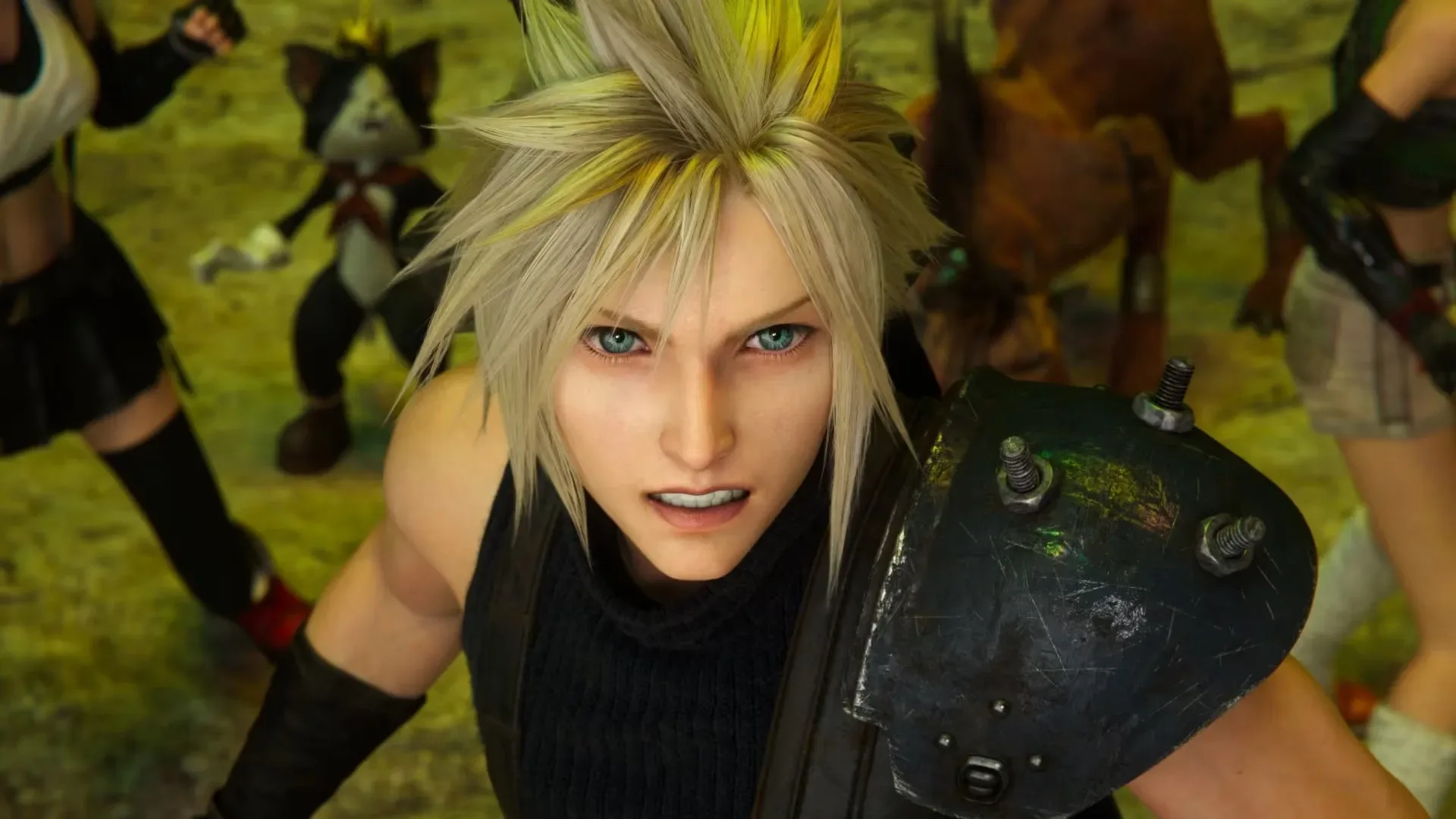
There is also a visual trade-off. The ports aim to preserve their graphical presentation without cutting resolution too drastically, but they do not match how the games look on the other console versions. Cloud’s detailed hair, in particular, is noted as looking better elsewhere. That is a concise example of the broader compromise involved in bringing technically demanding games to a handheld-oriented platform: portability and price are balanced against the highest possible image quality.
Resolution is the amount of visual detail used to form the image on screen. Reducing it can ease hardware demands, but can also soften fine objects, hair, distant scenery, and interface elements. The reported approach here is therefore significant: these editions apparently seek an acceptable middle ground rather than simply pursuing the sharpest possible image at any cost to performance.
Players interested in the technical side of modern game presentation may also find it useful to understand that frame-rate and image-quality conversations often involve difficult trade-offs across platforms. That broader tension is visible in other graphics technology discussions, including the performance costs that can accompany newer rendering techniques. The Switch 2 situation is simpler in consumer terms: these versions aim for a dependable 30fps while accepting that some visual detail is better on more powerful hardware.
Digital versus physical does not change the core proposition
The discounted offers are digital, but physical copies do not present an obvious alternative for buyers who specifically want a fully data-bearing retail cartridge. Both physical releases use game key cards.
A game key card is a physical purchase format that functions as a key for obtaining the game rather than serving as a conventional cartridge containing the complete playable game data. For this particular comparison, that means choosing physical does not sidestep the key-card model. A player deciding between the current digital sale and a physical copy should factor in personal preferences about ownership format, storage, resale, and download requirements, but should not assume the boxed version contains a fundamentally different complete-on-card experience.
That makes the discount especially clear-cut for players whose priority is access to the games at the lowest stated price. The digital promotion is dramatically cheaper than the normal listed prices, while the physical editions share the game key card characteristic.
Who should consider buying both?
Switch 2 owners who have not played the series
This is the strongest case. The two titles offer the first two chapters of a trilogy that is not due to finish until April 2027. The sale provides a low-cost path into the ongoing story, and the reported 30fps performance suggests the ports are viable versions rather than novelty releases.
Players waiting for the trilogy to be complete
There is a reasonable argument for waiting until Revelation exists before beginning, particularly for people who prefer to experience a serialized story in one uninterrupted stretch. But the current deal gives those players the chance to buy the first two installments cheaply now, provided they are comfortable building a digital backlog and understand that the promotion has an end date.
Existing PS5, Xbox Series X/S, and PC owners
This group should be more cautious. The supplied information does not indicate cross-save support comparable to the feature available in Cyberpunk 2077. In plain terms, save progress does not move seamlessly between those versions and Switch 2. Someone who has already begun either game elsewhere would likely need to keep playing on that platform or start again on Switch 2.
The lack of cross-save also affects anyone imagining a split routine—long sessions on a home system, then handheld progress during travel. Without shared saves, portability is not an extension of the same campaign; it is a separate copy and separate progression track. At these prices, that may still appeal to someone who specifically wants a second version, but it is not an essential upgrade merely because it is inexpensive.
Why the deal is unusually attractive
Price reductions are common, but the context makes this one stand out. These are two recent Switch 2 releases, their regular prices total $90, and together they now cost $15.50. The second game is described as bigger, yet it is the cheaper of the two during the sale. Meanwhile, a third installment is already dated for April 2027, giving players a concrete reason to catch up rather than treating the purchases as isolated RPGs with no approaching follow-up.
There are limitations to keep in mind. Switch 2 buyers should expect visual compromises against other platforms, and existing owners do not gain cross-platform save continuity. Physical-copy fans should also understand that the available physical releases use game key cards. None of those caveats erases the central value proposition for someone with only a Switch 2: both games are available for a fraction of their usual combined cost.
For a first-time Switch 2 buyer who wants the remake trilogy’s story in order, the sensible plan is to secure Remake Intergrade first, add Rebirth while its matching discount is available, and play them sequentially before Final Fantasy VII Revelation closes the project in 2027. Just do not wait past November 17 expecting these particular prices to remain in place.