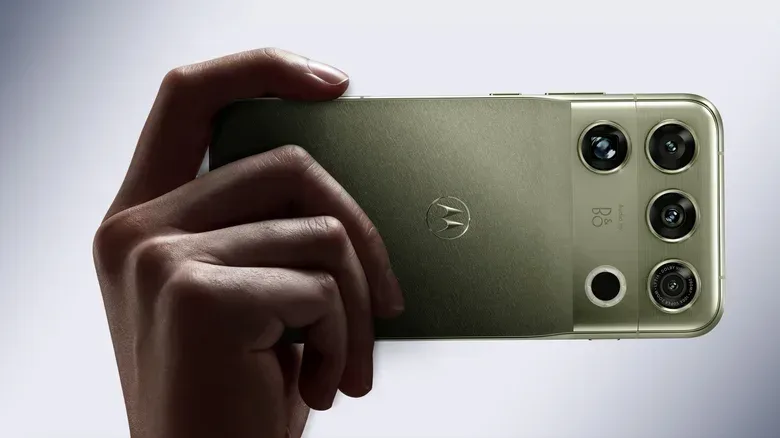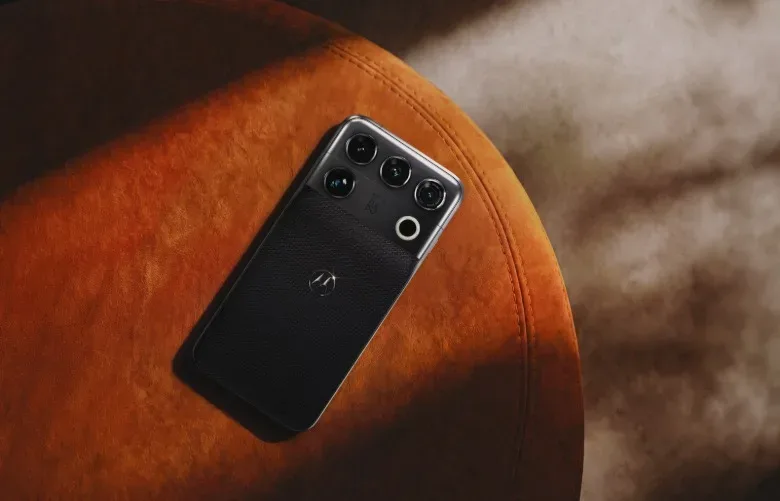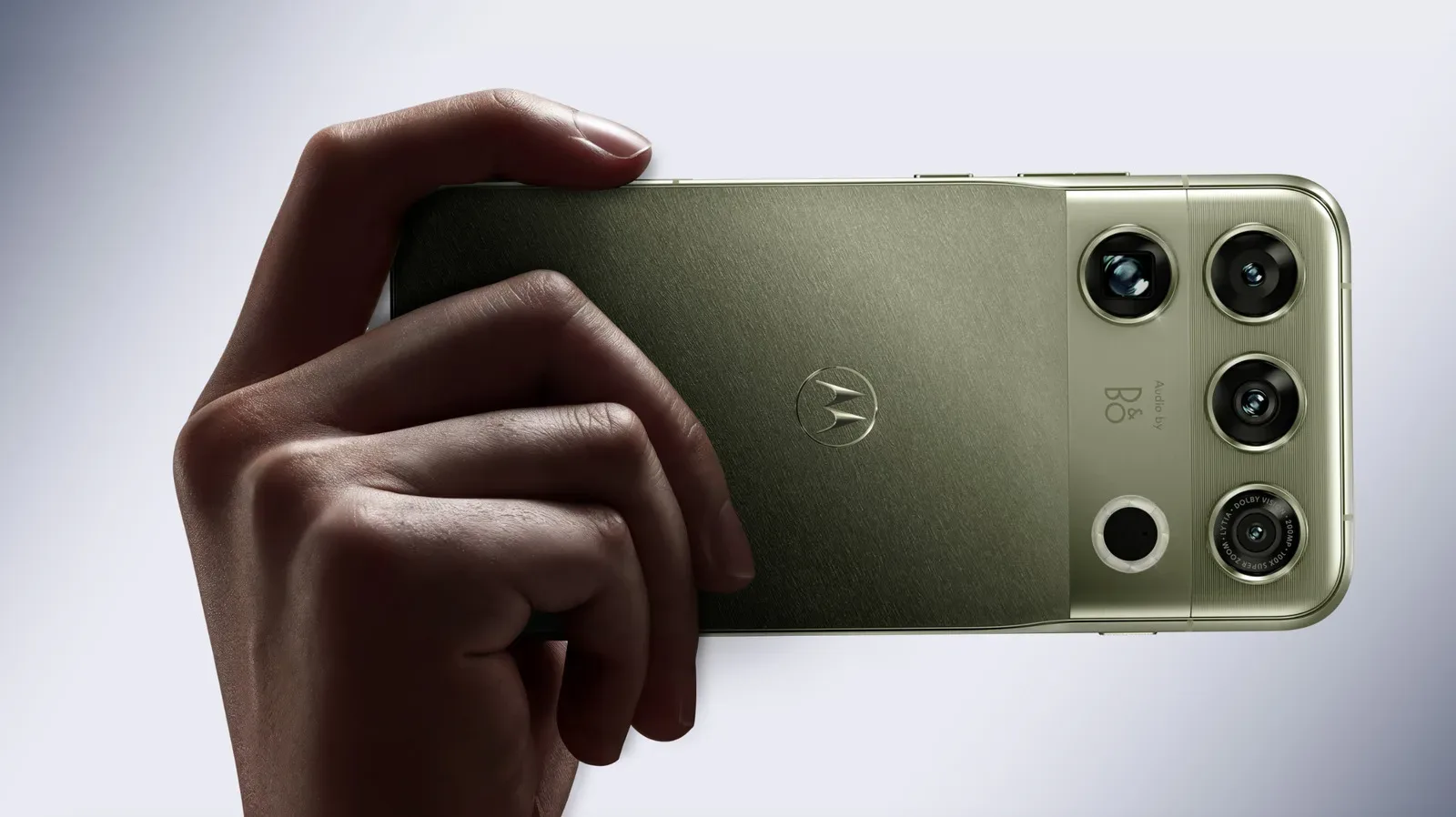
Motorola has revealed the Signature 27, a new flagship handset that puts Qualcomm’s Snapdragon 8 Elite Extreme Gen 6 processor at the center of its pitch. Presented at the Snapdragon Summit, the phone refreshes Motorola’s existing Signature line and is among the first announced devices to use the new mobile system-on-a-chip, or SoC.
The headline specification is accompanied by a handful of meaningful upgrades and a substantial number of unanswered questions. Motorola says the Signature 27 has an improved cooling system, Bang & Olufsen speakers, Android 17, and a commitment to seven years of operating-system upgrades. Its main camera retains a 50MP Sony Lytia 910 sensor, while the telephoto camera rises from 50MP on the earlier model to 200MP here.
Those facts frame the Signature 27 as a phone aimed at the premium end of the market. But it is not yet a complete buying proposition: Motorola has not detailed the display, named a precise launch date, or announced pricing. The company’s present window is simply a worldwide arrival sometime in 2026.
A new flagship built around Qualcomm’s latest silicon
The Snapdragon 8 Elite Extreme Gen 6 is the component likely to draw the most attention. A mobile SoC is the central package that combines major phone functions, including processing and graphics duties, into one piece of silicon. It is the part that broadly shapes how quickly apps open, how demanding software behaves, how media tasks are handled, and how much work a handset can attempt at once.
Motorola is positioning the Signature 27 as its most advanced smartphone to date, and adopting Qualcomm’s newest top-tier platform is central to that argument. Still, the announcement does not supply benchmark results, battery-life figures, sustained-performance data, or game-specific results. Those omissions matter. A current flagship processor establishes a high ceiling, but it does not by itself reveal how a finished phone will perform under long workloads or in day-to-day use.
That distinction is particularly useful for people who care about games and demanding media tools. A phone can have an aggressive-looking chip name and still depend on the rest of its design—thermal management, software tuning, display characteristics and battery behavior—to define the practical experience. At this stage, it is fair to say the Signature 27 is designed to compete at the flagship tier; it is too early to quantify what its processor means in use.
For a separate look at a demanding game built around pressure and rapid decision-making, see White Knuckle’s rising-sludge climbing challenge. The Signature 27 announcement, however, does not identify any particular games, frame-rate targets, or gaming features.
Cooling is more than a spec-sheet footnote
Motorola also says the Signature 27 has upgraded cooling. That is an important companion claim to a new top-end processor, even though the company has not explained the cooling hardware or provided measurements.
In simple terms, cooling concerns heat produced when a device is asked to work hard for an extended period. If a phone becomes too warm, it may reduce performance to manage temperatures. Better thermal design can therefore matter most in sustained activities rather than brief tasks: long gaming sessions, intensive video work, extended camera use, or on-device AI processing are obvious examples.
The key word is can. Without details on the cooling design or independent testing, there is no basis to declare how much longer the Signature 27 will sustain peak output, how warm it becomes, or how it compares with competing phones. Motorola’s claim is nonetheless a sensible signal of its priorities. The company is not treating the processor as an isolated upgrade; it is also calling attention to the hardware intended to keep that processor operating comfortably.
A major telephoto number, but not a complete camera verdict
The camera hardware contains the most easily understood change between generations. Motorola is keeping the 50MP Sony Lytia 910 sensor for the primary camera, suggesting that the headline alteration is focused on zoom photography rather than a wholesale reset of the camera system. The telephoto camera is moving to 200MP, up from 50MP in the previous Signature handset.
Telephoto refers to a camera designed for tighter framing of distant subjects. It is the lens people turn to when they want to bring faraway details closer without merely cropping a wide shot. A 200MP specification is undoubtedly a big numerical jump, but megapixels describe resolution, not every aspect of image quality. The announcement does not specify the telephoto lens’s optical reach, aperture, stabilization, sensor size, image processing approach, or the results users can expect in different lighting conditions.
That means the upgrade should be read accurately: Motorola has confirmed a significant change in telephoto resolution, not a full case for the finished camera’s superiority. Buyers who prioritize photography will still need the missing lens and processing details before deciding whether this is a genuinely meaningful zoom-camera leap for their needs.
Android 17 and a long software-support pledge
The Signature 27 will run Android 17, and Motorola is promising seven years of OS upgrades. Of all the announced points, that commitment could have the most practical value over the life of the device. A flagship phone is often expensive, and a multi-year upgrade policy gives owners a clearer expectation that the software will continue moving forward rather than being left behind early.
It is worth being precise about the wording: Motorola has promised seven years of OS upgrades. The announcement does not offer additional detail here about security updates, the exact schedule for future releases, or regional differences. Still, the stated commitment is direct and considerably more useful than a vague suggestion of ongoing support.
Motorola also says the phone will offer Gemini-adjacent AI tools, including Omni for video generation and Lyria for music generation. These are generative tools: software intended to create new media from user inputs rather than simply edit a file in a conventional way. Their inclusion illustrates how quickly AI functions have become part of a flagship-phone launch checklist.
Yet the language available leaves several practical questions open. It does not establish whether those tools run locally on the handset or rely on remote services, what limits may apply, which markets receive them, or how they will be integrated into Motorola’s software. Interested buyers should treat Omni and Lyria as announced capabilities, while waiting for the usage details that determine how useful they actually are.
Bang & Olufsen partnership extends beyond one phone
Audio is another part of Motorola’s premium presentation. The Signature 27 includes speakers branded with Bang & Olufsen audio, and Motorola and Bang & Olufsen have announced a multi-year partnership. Motorola has also indicated that the Signature 27 will not be the only product to feature that audio relationship.
That does not tell us how the speakers will sound in practice, and no specifications for them were included. But the broader partnership is notable because it suggests the audio branding is intended as an ongoing product strategy rather than a one-off Signature 27 flourish. For consumers, the immediate takeaway is straightforward: audio has been given a more visible role in Motorola’s flagship identity.
What remains unknown before a purchase decision
For now, the Signature 27 is a promising but incomplete announcement. Motorola has not shared display specifications, which leaves out information many flagship shoppers consider essential. Screen size, resolution, refresh behavior and brightness can materially change how a phone feels for games, video, reading and everyday navigation, but none of those details are currently available.
Release timing is also broad. The phone is expected to come to markets worldwide in 2026, but there is no confirmed date. Price is similarly unannounced. The prior Signature model reportedly ranged from roughly $800 to $1,200 depending on configuration, but that is context for the line rather than a confirmed price for the Signature 27. It should not be treated as a price promise.
Motorola has revealed enough to establish the phone’s direction: latest-generation Qualcomm silicon, upgraded thermal attention, a 200MP telephoto sensor, Bang & Olufsen audio, Android 17 and a seven-year OS-upgrade commitment. The remaining details—especially the display, price, exact availability and performance evidence—will determine how persuasive the complete flagship package becomes when it reaches markets in 2026.