Climbing games can be calm, scenic, social, or precision-heavy. White Knuckle has picked a more alarming route: make the climb itself a survival-horror problem, then fill the space beneath the player with steadily rising toxic sludge.
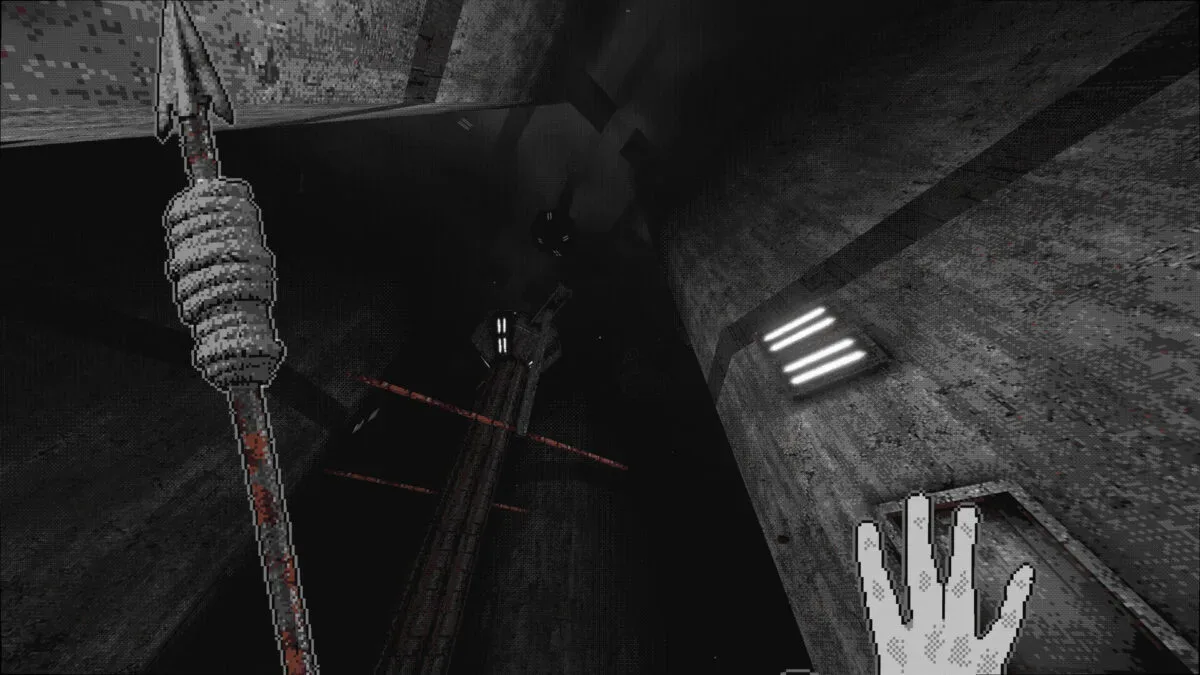
The Early Access Steam game frames the player as a pair of hands scrambling up a grim industrial-looking structure. Staying alive is not simply a matter of finding the highest ledge. Each hand can fatigue from gripping, tools consume limited inventory space and may be needed later, routes can be misleading, and failure means beginning another run on a newly generated map. The setup makes a very ordinary climbing question—“can I reach that hold?”—feel inseparable from much nastier ones: “can I afford to?” and “what happens if I am wrong?”
There is also a free demo for players who want to test their tolerance for elevated panic before committing to the full Early Access version.
The hands are the whole point
White Knuckle’s central idea is unusually literal. Climbing is performed one hand at a time: grab an edge, hang on, move the other hand, and repeat. The hands visibly show strain, shifting from pale to pink and then red as their grip is taxed. That visual feedback matters because it turns stamina into an immediate physical warning rather than an abstract number that can be ignored in a corner of the screen.
Stamina, in this context, is the resource governing how long a hand can continue to hold on. Letting it run too low risks a fall, so players must find moments to rest. Unfortunately, the poisonous fluid below removes the luxury of waiting indefinitely. The game’s tension comes from that deliberate collision between two sensible instincts: preserve energy and keep climbing.
The available movement goes beyond simply reaching for the next ledge. Hands can swing from holds, pull the character upward in small increments, and leap for more distant surfaces. These options create potential recoveries and shortcuts, but they also create opportunities for errors. A long jump may gain desperately needed height; it may also turn an already stressed grip into a catastrophic tumble.
That is why White Knuckle’s horror does not depend only on an unseen threat. It weaponizes the player’s own decision-making. The pressure to move faster can produce the exact sort of rushed, imprecise choice that a careful climbing system punishes.
Tools create choices, not simple solutions
The climb includes a set of practical-looking tools that can alter the route upward. A hammer can drive found picks into a wall, creating new handholds. A metal rod can be thrown into a distant surface, providing something that can be stood on or swung from. On paper, those sound like welcome safety measures. In practice, every item also represents a decision about scarcity.
Related coverage includes White Knuckle Turns Every Climb Into a Panic-Fueled Fight for Survival.
If a pick is used now, it cannot solve a worse wall later. If a rod is thrown to make one difficult transition possible, it is no longer available for another. Carrying these objects also takes up room in the pack. White Knuckle turns inventory management into an active part of the ascent rather than a pause between climbing sections.
Inventory management means deciding what limited resources to carry, where to place them, and when their use is worth the trade-off. Here, it has a particularly uncomfortable twist: accessing an item requires opening the bag and searching through its contents while the climb is still under pressure. Items must be physically arranged within the pack, remembered, and retrieved when needed. A tool’s value is therefore not only whether it exists, but whether it can be found and used quickly enough.
Food-like recovery items add another form of triage. A can of unpleasant-looking slop can restore stamina during a climb, but taking the time to use it is itself a risk. White Knuckle seems built around these small but consequential interruptions: the move that keeps a run alive can briefly make the player more vulnerable.
A speed-climbing game that rewards thought
White Knuckle is described as a speed-climbing game, an identity that may sound at odds with its measured stamina, inventory, and route-planning systems. The contradiction is the appeal. Speed here does not appear to mean mindlessly rushing upward. It means making efficient choices under a threat that never gives the player a comfortable amount of time.
Multiple routes appear early in a climb, and their difficulty is not always clear from a glance. One path may demand equipment already spent. Another may be much harder than it first appears. A failed attempt can mean dropping down and losing precious time before trying again. This uncertainty transforms level navigation into a gamble: the most direct-looking line may not be the safest, while a seemingly slower detour may preserve tools or stamina.
That is also where the game’s run-based structure becomes important. Each death sends the player back to the start with a new map. Roguelike is commonly used for games built around repeated attempts, procedural or changing layouts, and learning through failure. In White Knuckle’s case, the changing map means that route memorization alone will not resolve every problem. Players can improve their grasp of the movement and their judgment about supplies, but must still respond to a fresh ascent.
That structure can make an unsuccessful run useful even when it is frustrating. Learning to hold on with one hand while placing a pick with the other, recognizing when a recovery item is worth using, or avoiding an equipment-hungry route are skills that can carry into the next map. The player is not merely trying to get higher; they are learning how not to panic when the game insists that panic would be understandable.
The climb reportedly becomes stranger higher up
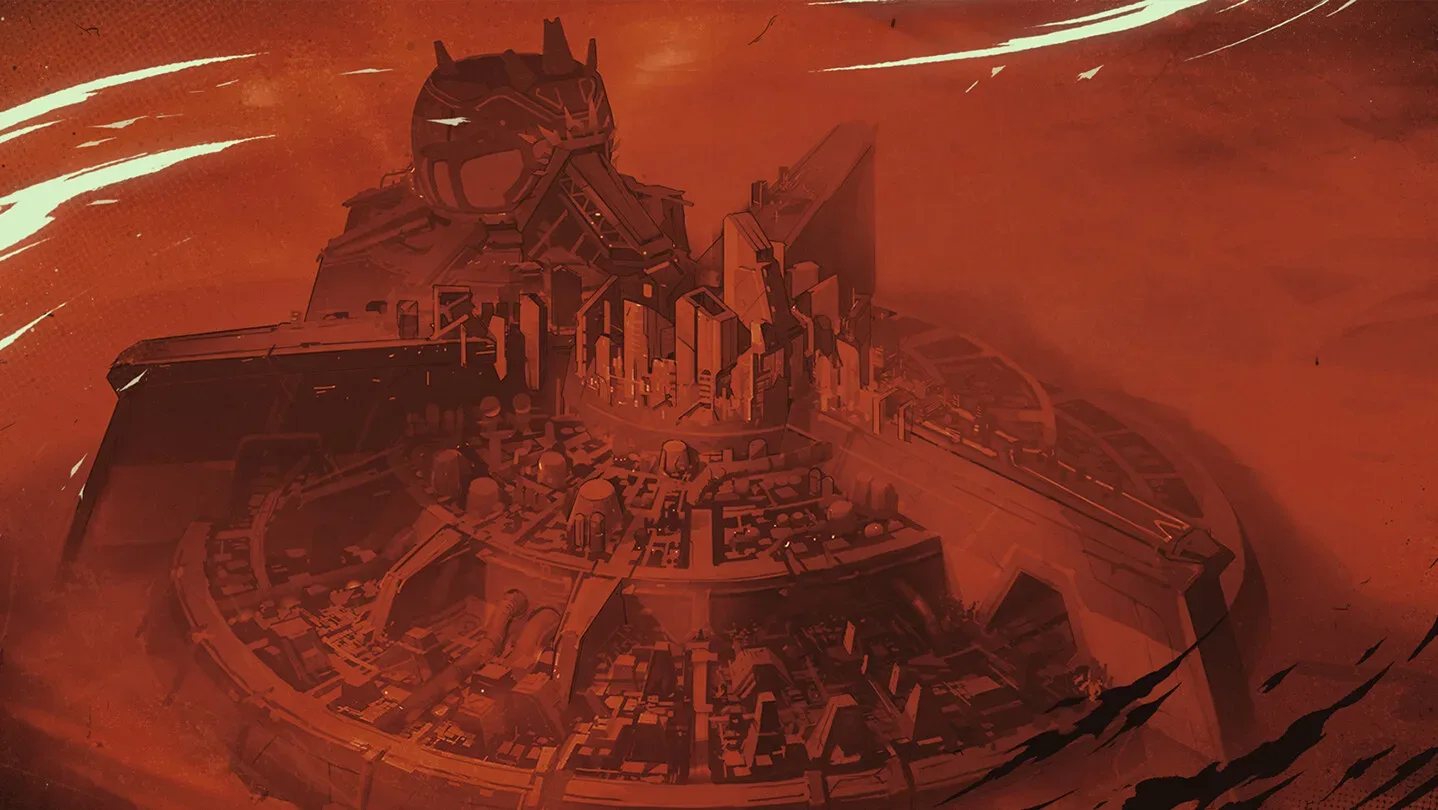
The environment is presented as an indistinct blend of science-fiction facility, factory, laboratory, and nuclear-industrial ruin. Its precise nature and the reason for the climb are not established in the available details. That lack of explanation is part of the atmosphere: the ascent begins as an urgent practical problem rather than a fully explained mission.
What is clear is that the structure is said to become more frightening at greater heights. Creatures are reportedly present in the darker areas and may interfere with the climb. Specific behavior, enemy types, and methods of evasion have not been detailed, so it is too soon to treat them as a known combat system. But their reported presence changes the stakes of the core premise. A player already balancing hand fatigue, rising sludge, unfamiliar routes, and limited supplies may eventually need to react to an active threat as well.
There are also power-ups higher up that are said to persist from run to run. That suggests a form of longer-term progression: even when an individual ascent ends, some discoveries may improve future attempts. The exact powers and the rules governing persistence have not been specified. Still, permanent unlocks could soften the harshness of the reset loop without removing the uncertainty of a newly generated route.
Brown and gold cockroaches can be collected, though their purpose has not been explained. They are a small, suitably grimy detail in a game that appears committed to making its environment feel unpleasantly tangible rather than conventionally heroic.
Why the premise lands as horror
White Knuckle’s most compelling feature may be how efficiently its mechanics reinforce its name. A white-knuckle experience is one that produces intense anxiety; here, the climbing hands themselves visibly telegraph that stress. Reddening hands, a fiddly backpack, expendable pitons and rods, uncertain pathways, and the encroaching flood are all versions of one idea: there is never quite enough security.
The game does not need to rely exclusively on sudden shocks to produce fear. It can make the player dread a mundane sequence of actions—opening a bag, choosing a route, reaching farther than planned, or deciding to rest. This is systems-driven tension: anxiety produced by mechanics interacting under pressure, rather than by a scripted scare alone. The sludge supplies the deadline, fatigue limits the body, and the inventory turns preparation into a possible source of delay.
For players who enjoy difficult games, the attraction is likely to be the prospect of mastery. The climb may look chaotic in an early attempt, yet its systems suggest room to improve: cleaner movement, faster item retrieval, smarter tool conservation, and better judgment about which routes deserve the risk. A successful run would not just be a result of speed. It would be evidence that the player has learned how to stay composed inside a deliberately hostile machine.
For players who dislike timers, White Knuckle may be a more demanding proposition. The rising sludge ensures that the game does not allow fully methodical, indefinite planning. But the available mechanics indicate that it is not only asking for raw reflexes. It is asking for quick prioritization—an uncomfortable but compelling distinction.
What prospective climbers should expect
- Persistent time pressure: toxic sludge continually rises, making pauses and failed route experiments costly.
- Hand-by-hand climbing: grips strain over time, so stamina management is central to staying aloft.
- Limited route-building tools: picks and rods can create options, but using them now may reduce options later.
- Physical inventory friction: gear occupies bag space and must be located while the climb remains dangerous.
- Changing runs: death leads to a new map, putting emphasis on adaptable skills rather than a single rehearsed route.
- Unspecified escalation: creatures and persistent power-ups are reported at higher elevations, but their detailed functions remain unclear.
White Knuckle is currently available through Steam Early Access, with its free demo offering a lower-commitment way to see whether its particular mix of climbing precision and industrial nightmare is appealing. Players tracking the broader appeal—and uncertainty—of games still being developed can also look at how several Early Access graduates reached Steam250’s 2026 top 10.
For now, White Knuckle’s clearest promise is brutally straightforward: climb faster than the sludge, make every tool count, and try not to turn a manageable ascent into a fatal scramble.