Early access has always asked players to make a slightly unusual deal: buy into a game before its creators say it is finished, accept that systems may change, and hope the eventual version 1.0 is more than a ceremonial number slapped onto the loading screen. In 2026, that deal is looking unusually productive at the top end of Steam’s new-release rankings.
Steam250’s current list of the year’s best-rated new releases includes six games that previously spent time in early access and have now reached 1.0. Palworld and Valheim occupy the first two positions, while TCG Card Shop Simulator is fifth, Fields of Mistria is seventh, Timberborn is eighth, and Scrap Mechanic is tenth.
That is not a verdict that every early access game is a winner, nor is it proof that the model’s risks have vanished. It is, however, a conspicuous result: more than half of the ten highest-ranked releases in this particular 2026 list are games whose development continued in public before a full release.
What the top 10 is actually showing
Steam250 is a ranking resource for games on Valve’s PC platform, and its approach matters when reading a list like this. Its ratings are not a simple display of the highest percentage of positive user reviews. The calculation weights the positive-review percentage by the volume of reviews.
In plain English, a title with a tiny number of perfect scores cannot automatically leap over a game with an excellent rating supported by a much larger audience. That weighting is designed to make the ranking more resistant to the small-sample problem: the tendency for a handful of enthusiastic reviews to look definitive when they may not represent much of a player base.
There is still interpretation built into any ranking formula. A weighted score makes one kind of judgment about what should count more heavily, and no single chart can settle whether one game is objectively “better” than another. Review sentiment changes, review totals differ dramatically, and a 1.0 launch can bring an influx of new players with different expectations from the people who joined during development.
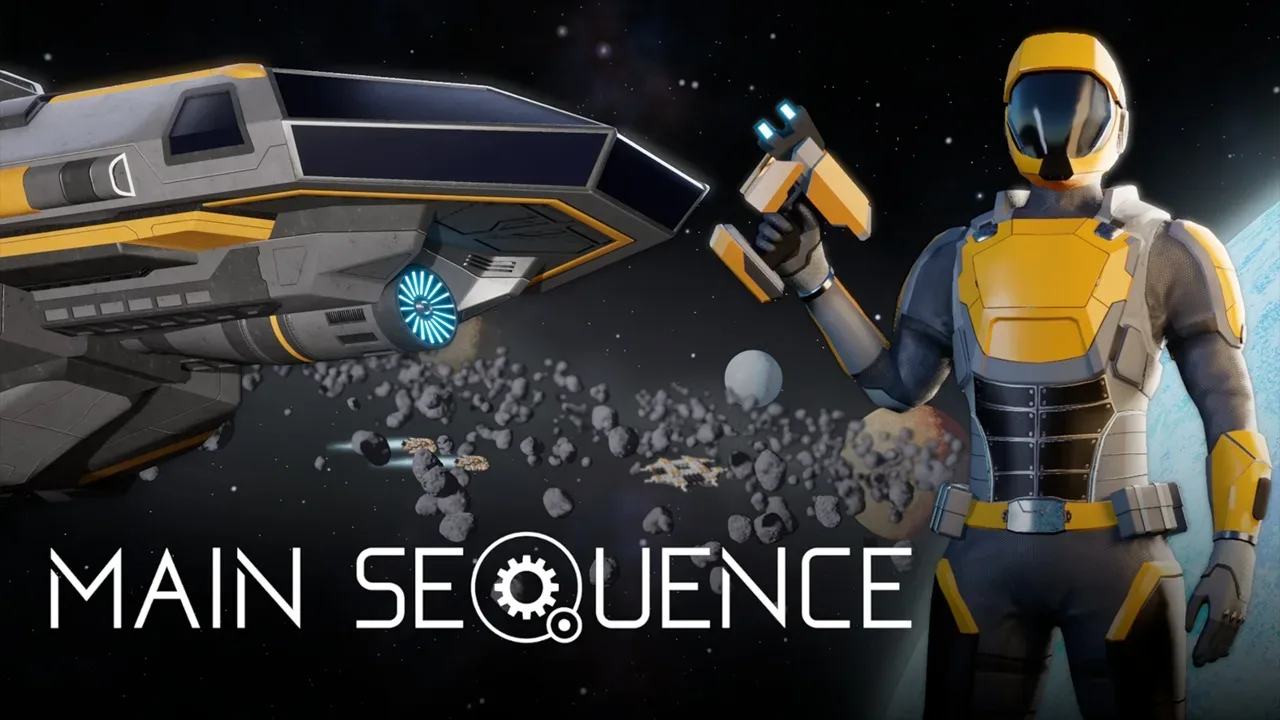
Yet the pattern is difficult to ignore. Palworld and Valheim lead the list after their respective 1.0 launches, and the remaining four graduates span notably different kinds of game: a shopkeeping game, a farming role-playing game, a beaver-led city builder, and a machinery-focused survival game. This is not one narrow genre taking advantage of a fad. It is a collection of games with different loops, audiences, and development demands that share one route to release.
Early access is not the same thing as a demo
It is useful to separate a few terms that often get blurred together. A demo is usually a limited sample intended to show prospective customers what a completed or nearly completed game is like. A beta traditionally describes testing intended to locate problems before launch. Early access, by contrast, is a commercial release state: people can buy and play a game while its developers continue building it toward a stated full version.
Related coverage includes Early Access Graduates Dominate Steam's Highest-Rated 2026 Releases.
That distinction explains both the appeal and the discomfort. Players are not merely reporting bugs from a sealed test environment. They are often spending substantial time in a game whose balance, content, priorities, and even fundamental direction can shift as development proceeds. For some communities, that ongoing relationship is a feature. For others, it is an invitation to postpone buying until the developers declare the work complete.
The 2026 ranking results make the strongest case for early access in its best form: a long-running development process can produce a full release that arrives with a large, engaged audience rather than having to build one from scratch at launch. Players who have followed a game over time can contribute feedback, spot issues, and reveal which parts of the experience they return to most. Developers, in turn, can iterate on a game alongside people who already understand its core appeal.
“Iterative” is the key technical idea here. In development, iteration means repeatedly making a version, observing how it works, revising it, and doing the cycle again. The process can apply to systems, performance, balance, progression, usability, or content. It does not guarantee that every revision will be popular. It does provide more opportunities to discover that something is unclear, frustrating, too easy, too punishing, or simply less fun than it seemed on paper.
Why a 1.0 launch still matters
Calling a game version 1.0 is meaningful precisely because early access can otherwise feel indefinite. The label tells prospective players that its creators consider the release to have reached the intended full state, even if updates continue afterward. It also offers an obvious moment for people who avoided an unfinished build to take a fresh look.
For games in genres built around long-term play, that moment can be especially significant. Survival games, builders, farming RPGs, shop-management games, and mechanically dense sandbox experiences are often judged not just on a first hour but on whether their systems continue to give players meaningful reasons to return. The full-release moment creates a new expectation: the game is no longer only a promising framework; it is asking to be assessed as a complete product.
Palworld and Valheim sitting first and second in Steam250’s 2026 new-release ranking suggest that the transition can be commercially and critically legible to audiences. The other entries reinforce the point. TCG Card Shop Simulator’s fifth-place position, Fields of Mistria’s seventh, Timberborn’s eighth, and Scrap Mechanic’s tenth show that 1.0 can become a major point of reappraisal across varied game structures.
It is also notable that these titles are holding positions among conventionally released major games, including Capcom’s Resident Evil Requiem and Pragmata. That does not mean the chart turns every comparison into a head-to-head contest of design quality; each game serves a different audience. It does mean former early access projects are competing for player approval on the same broad new-release stage. For more discussion around the Resident Evil side of the wider conversation, see the debate over Resident Evil’s latest brutal ending.
The reasons for skepticism remain real
A favorable chart should not erase the compromises players make when buying an early access game. The blunt objection is also the most understandable: why pay to participate in a work still in progress? A purchaser may encounter rough edges, missing elements, unexpected changes, or a development timetable that does not match their expectations. Early access can be a productive feedback relationship, but it can also feel like paid uncertainty.
Direction is another issue. The same responsiveness that lets developers improve a game may lead to changes that some existing players dislike. The debate around Slay the Spire 2 is an example of how a game’s evolving direction can divide a community. Feedback is not a single instruction delivered by a single player; it is often conflicting signals from groups who value different things. Choosing which feedback to act on is itself a design decision.
Then there is the most basic risk: an early access project may never fully deliver on what buyers believed it would become. A public development model offers more visibility than a closed process, but visibility is not a guarantee. Players should not treat a road map, a promising build, or a lively community as certainty about a finished game’s eventual scope or shape.
These caveats are important because the six games in the top 10 are successes, not a complete census of early access. A ranking of highly rated 1.0 launches naturally spotlights projects that crossed the finish line well. It cannot, by itself, measure projects that struggled, changed course in ways players disliked, or did not reach 1.0.
What players can take from the pattern
For players deciding whether to buy in early, the top 10 is less a blanket recommendation than a reminder to identify what they want from the purchase. Someone who enjoys watching systems evolve, sharing feedback, and returning for major updates may find real value in early access. Someone who prefers a settled experience with a clear sense of completion may be better served by waiting for 1.0 and then checking how the release has been received.
Review totals and recent sentiment are useful practical signals, especially on a platform where rankings weight both positivity and volume. They cannot answer every personal question, but they can help distinguish a game supported by a substantial audience from one whose score rests on very limited feedback. Players should also recognize that early access communities can have a different tolerance for change than people arriving at full release.
For developers, the 2026 results underline the value of a clear purpose for early access. The model is at its strongest when public feedback helps refine a game that already has a compelling foundation, rather than when the label is used as a vague substitute for a plan. A 1.0 launch needs to mean something to returning players and newcomers alike: an understandable point at which the project is ready to be judged in full.
Six of Steam250’s ten highest-rated 2026 releases reaching those positions after graduating from early access does not settle the long-running argument over the model. It does supply a meaningful counterpoint to its worst reputation. When developers can turn years of iteration and player investment into a satisfying full launch, early access is not merely a waiting room for games. This year’s chart suggests it can be part of the route to some of PC gaming’s most warmly received releases.