Monster Hunter Wilds: Ascendance is being positioned as more than a fresh map and a new batch of monsters. Due in 2027, the expansion is intended to reshape the late-game proposition of Monster Hunter Wilds through the return of Master Rank, a new aerial region called the Skybound Eyrie, and an ability named the Boost Bracer.
That direction matters because the base game drew criticism at launch over its PC optimization and a sense among some players that its streamlined structure and abundant resources softened the series’ traditional challenge. Updates and events have continued since then, and the development team says feedback from both new hunters and long-standing fans has informed further work on the base game as well as Ascendance.
Producer Ryozo Tsujimoto said the team has been reviewing responses from players across that range. The stated goal is not simply to add more quests, but to build on the parts of Wilds that landed well while improving elements players have asked to see addressed.
Master Rank puts the focus back on preparation
The defining gameplay addition is Master Rank, a quest tier designed for the game’s most demanding encounters. In Monster Hunter terms, a quest rank is a level of progression that broadly communicates the expected strength of monsters and the quality of equipment hunters should bring. Master Rank is therefore not merely a label for additional missions; it is meant to create a higher ceiling for character builds, monster difficulty, and repeatable endgame challenges.
Game director Takuro Hiraoka said the team wants Ascendance’s Master Rank to provide the challenge and depth players associate with that level of play. His explanation also points to the particular gameplay loop the expansion is meant to reinforce:
“As players progress and quests become more difficult, we want to create that desire to think, ‘I want to craft that armor,’ or ‘I want to make a set with this element,’ then craft and use it to take on the next level of difficulty.”
That is the essential Monster Hunter rhythm: hunt a monster, use its materials to make equipment, refine a loadout, then take that improved build into a harder hunt. The loop works best when an upgrade has a practical purpose. If existing gear can comfortably solve every new fight, the incentive to chase a specialized armor set or elemental weapon becomes weaker.
Ascendance’s stated approach suggests tougher encounters should create more reasons to reconsider a hunter’s kit. Elemental sets refer to weapon and armor setups built around a particular elemental strength or resistance, rather than a single all-purpose configuration. A difficult monster can make that planning meaningful by rewarding the right damage type, defensive traits, or coordinated team composition.
Related coverage includes Monster Hunter Wilds: Ascendance Targets a Tougher, Deeper Master Rank Endgame.
There is an important distinction between a difficult game and a deep endgame. Simple numerical escalation can make enemies take longer to defeat, but it does not automatically encourage useful decisions. The developers’ emphasis on crafting, equipment choices, and quests that put earned gear to the test indicates an ambition for challenge that asks players to prepare and adapt, not just endure longer battles. Whether the finished expansion achieves that balance will depend on the details of the quests and equipment systems that have not yet been outlined.
A second chance at the Wilds foundation
Ascendance arrives after an eventful first stretch for Wilds. The game remained a major seller and has received a steady flow of updates and events, but the launch conversation included complaints about PC performance as well as concerns that familiar Monster Hunter friction had been reduced too far. Performance concerns can be especially disruptive in an action game built around reading animations, reacting to openings, and committing to deliberate attacks.
That makes continued optimization a meaningful backdrop to a difficulty-focused expansion, even though no specific Ascendance PC performance changes have been detailed here. PC technical support is an ongoing subject across the industry; recent coverage of a Radeon driver update aimed at graphics glitches in The Witcher 3 Remastered is a reminder that game experience can hinge on work shared between developers, game updates, and hardware software.
Hiraoka describes Ascendance as a “true evolution” of Wilds rather than a detached add-on. That phrasing sets an ambitious expectation: the expansion is meant to improve the overall experience across Wilds and its new content, based on what the team believes worked and where players requested changes.
For returning players, that framing is arguably as significant as the headline additions. A conventional expansion can extend a game’s campaign and inventory. A broader refresh can potentially make the reasons to return clearer, particularly for hunters who felt the original endgame did not demand enough from their builds.
The Skybound Eyrie and a story set years later
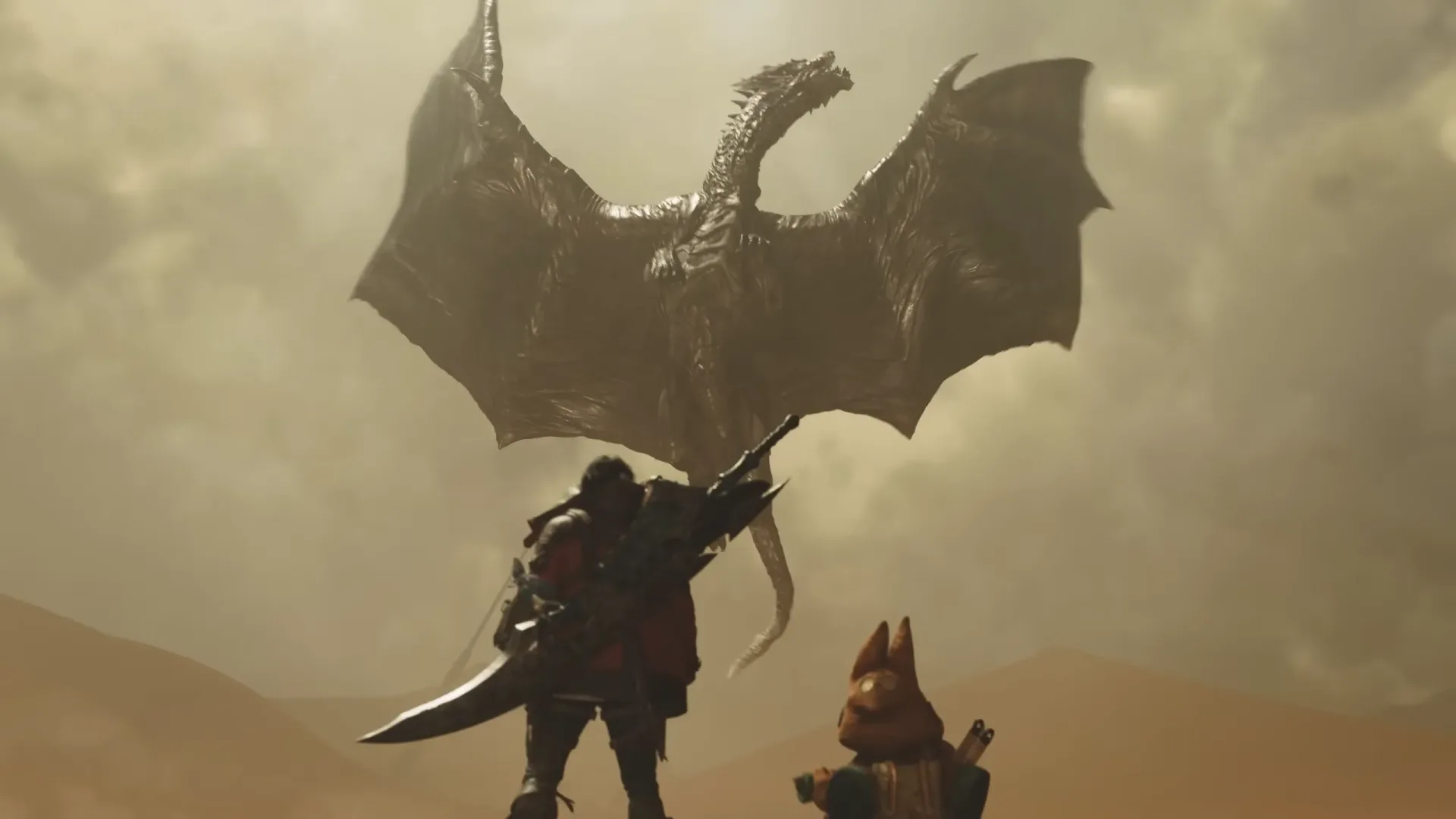
The new campaign takes place several years after the events of Wilds and the Hunters’ Guild’s efforts to restore the Windward Plains. Lao-Shan Lung, an elder dragon, returns and destroys the guild base. The crew later comes back with greater experience and stronger equipment, then heads into the aerial territory known as the Skybound Eyrie to confront new threats affecting the lands above and below.
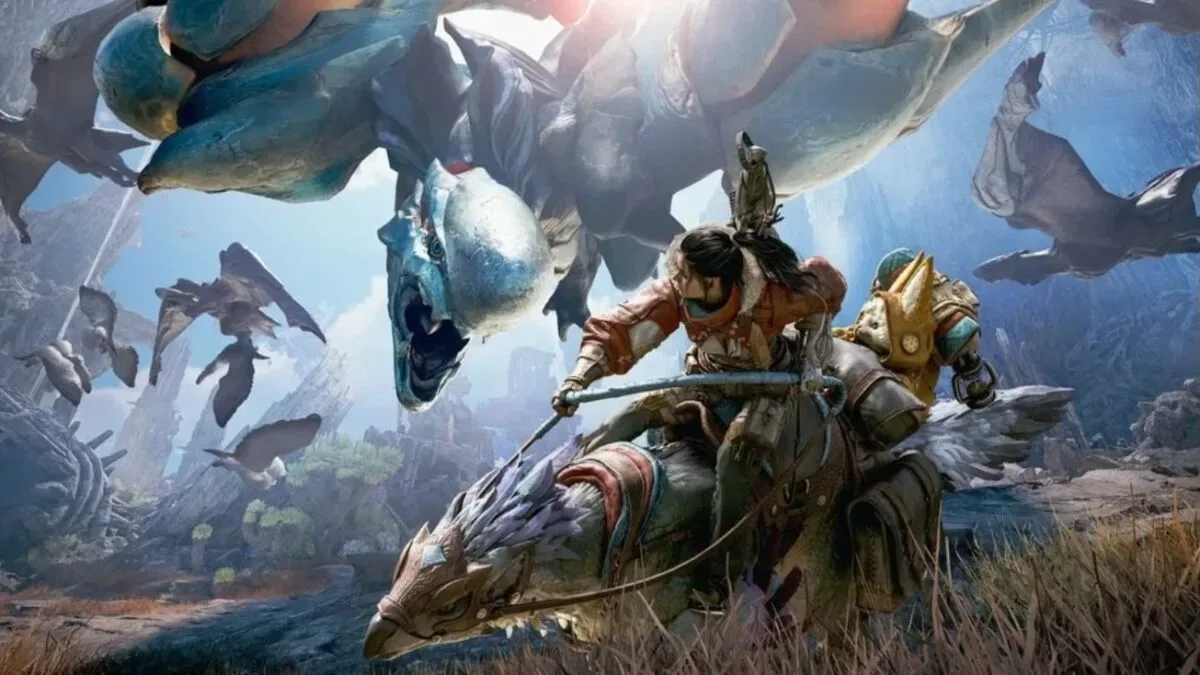
The Skybound Eyrie is described as more vertical and visually complex than locations including the Windward Plains and Scarlet Forest. Verticality refers to level design that asks players to navigate across different elevations rather than primarily over broad, level ground. In a hunting game, that can affect sightlines, traversal, positioning, and how groups approach a monster’s movement through an environment.
It is too early to infer precise mechanical changes from the location alone. Still, a more layered region offers a natural contrast to Wilds’ existing zones and gives the expansion a setting that fits its Ascendance title. The campaign will also bring new hunts, gear to craft, and monsters to battle.
Among the new threats is Araketa and its minions, which attack together. Group attacks can change the priorities of a hunt by making spatial awareness and target selection more important. Players may need to account for multiple sources of pressure rather than focusing exclusively on a single monster’s moveset. The extent of that coordination, and the exact behavior of the minions, has not been detailed.
Boost Bracer brings a limited-time offensive surge
Ascendance also adds the Boost Bracer, an ability unlocked through the campaign. It allows hunters to trigger a powerful attack with their selected weapon and enter a temporary boosted state that enhances combos and strikes.
In plain terms, the Boost Bracer is a limited-duration offensive power-up. It appears designed to create a moment where a hunter can convert an opening into a heavier burst of damage, while also making familiar weapon actions feel more forceful for a short period. The system is not described as a permanent upgrade that runs throughout a hunt, which means timing should be central to its role.
That new tool may prompt a debate within the community. Monster Hunter’s appeal has long rested on weighty weapon commitment, monster knowledge, careful preparation, and the satisfaction of turning hard-won openings into damage. A temporary super-powered phase could add spectacle and give teams a satisfying synchronized moment, especially when a full group activates it during a vulnerability window. But it may also raise questions about whether the added offensive potential changes the pace or balance that some players want from the series.
Neither outcome is guaranteed from the concept alone. Its effect will depend on factors that remain unknown: how quickly it becomes available, how long the boost lasts, how much damage it adds, whether it carries tradeoffs, and how Master Rank monsters are tuned around it. The important point is that Ascendance is pairing its promise of heightened difficulty with a new way for players to respond.
Familiar monsters, new expectations
Ascendance is also set to include the return of elder dragons and other established Monster Hunter creatures, including Teostra and Khezu. Their presence gives the expansion recognizable targets for experienced players while the Skybound Eyrie, Araketa, Master Rank, and Boost Bracer establish its own identity.
The expansion’s clearest promise is a more robust top end for Wilds. The team says it intends to offer challenging quests after players obtain the equipment they have been pursuing, giving those builds a real opportunity to prove their worth. That is an encouragingly specific priority for an expansion responding to complaints about streamlined difficulty and thin endgame incentives.
There are still practical questions waiting for answers. How quickly Master Rank opens, what its quest structure looks like, how the Boost Bracer interacts with each weapon, and which quality-of-life changes will arrive are all unconfirmed in the information available so far. But the direction is clear: Capcom wants Ascendance to make gear crafting, elemental planning, and high-level execution matter more decisively.
For Wilds players who wanted a more demanding reason to keep hunting, that is the signal to watch as the 2027 launch approaches.