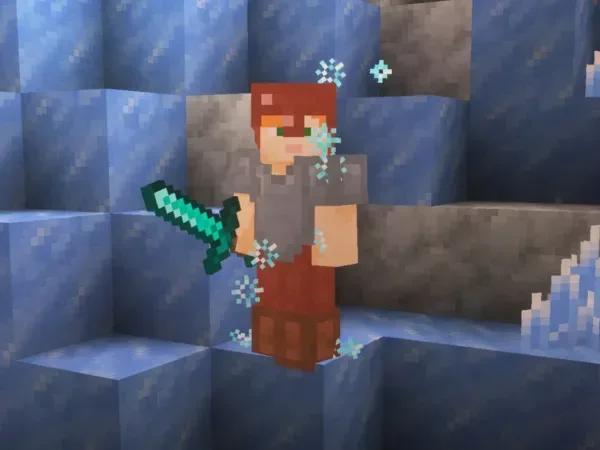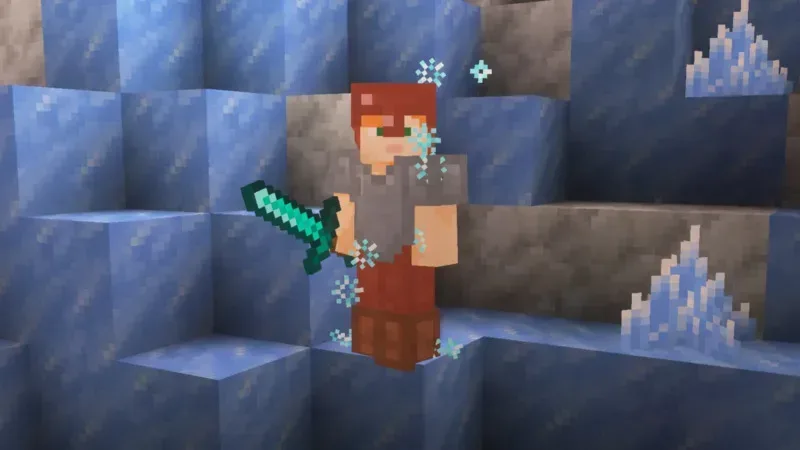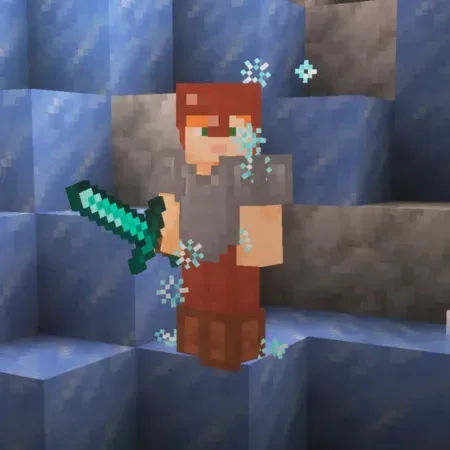
Minecraft is heading underground and into the deep freeze with its next game drop, Ice Caves. The update is set to add rare cave systems beneath cold biomes, along with a new hostile Frozen zombie, throwable ice balls, a freezing potion option and luminous ice crystals that can be used by builders in more than one orientation.
The headline is not merely that there will be another pretty cave type—although glowing crystals certainly help the sales pitch. Ice Caves appear designed to make cold regions matter more below the surface. They combine environmental variety, a distinctive combat threat and materials with both survival and creative uses. In short: bring a sword, bring a plan, and perhaps do not assume every suspiciously beautiful blue cavern is a free interior-design consultation.
What Ice Caves add to cold-biome exploration
Ice Caves are described as a rare underground extension of cold biomes. That wording matters. Rather than being a separate overworld destination players can simply choose from a menu, they are tied to places already defined by cold conditions and add another layer to their subterranean terrain.
The caves will feature glowing ice crystals and greater environmental variation. For players who explore primarily for resources or discovery, that means cold biomes should have a more distinctive underground identity than they did before. For builders, it creates a new natural setting with a clear visual theme: ice formations that emit light instead of a cave that is only dark stone with a chilly coat of paint.
Rarity is also an important part of the design. A rare biome feature can turn exploration into a real search rather than a quick trip to the nearest snowy hill. There is no release date, world-generation frequency or full item list confirmed here, so players should be careful not to treat Ice Caves as a guaranteed find beneath every snowy area. The confirmed premise is more limited: they are uncommon, underground, connected to cold biomes and intended to diversify those spaces.
Frozen zombies turn the temperature into a combat mechanic
The main danger in these caves is a new hostile mob called the Frozen zombie. It has two reported forms of attack, and both make distance and positioning important.
- Melee attacks: These apply a stacking freezing effect. Taking enough hits causes the player to freeze.
- Ranged attacks: Frozen zombies throw ice balls that deal damage and apply knockback.
A stacking effect is one that builds through repeated applications rather than necessarily reaching its most serious state on a single hit. The practical takeaway is simple: treating a Frozen zombie like an ordinary slow-moving zombie could become expensive if it gets repeated melee connections. Players will have an incentive to avoid being boxed into close quarters, especially in a cave where uneven terrain can limit escape routes.
The ice-ball attack brings a second problem. Knockback means a hit pushes the target away. In a broad, flat fight, that may be a manageable interruption. Underground, however, forced movement can be more consequential: it can break spacing, push a player into an awkward corner or turn a controlled encounter into a scramble. The confirmed information does not specify projectile range, firing rate, exact damage values or how quickly freezing accumulates, so any detailed combat recommendations beyond maintaining room to move would be premature.
Related coverage includes Minecraft's Next Game Drop Will Add Ice Caves, Frozen Zombies, and Ice Ball Combat.
The result is a monster that makes the cave itself part of the encounter. The Frozen zombie is not only a source of damage; its attacks ask players to account for freezing buildup and involuntary movement. That is a useful fit for a cold underground environment, where the danger is meant to be more than cosmetic.
Powder snow can convert ordinary zombies
Frozen zombies will not be limited to naturally occurring Ice Caves. Normal zombies can become Frozen when exposed to powder snow. That conversion is especially notable because it gives players a way to deliberately create the mob rather than only locating it through world exploration.
The new conversion follows an existing transformation route in which Husks can become Zombies. Adding a Zombies-to-Frozen step expands what players can do with mob conversion setups. The clearest stated consequence is the possibility of more advanced mob farms.
In Minecraft terms, a mob farm is a player-built setup that controls how hostile creatures appear, move or are processed so their drops can be collected more efficiently. The newly confirmed chain potentially lets builders begin with Zombies, use powder snow to transform them, and then obtain Frozen-specific drops. Exactly how such farms will work in practice—what conditions they require, how reliable the conversion is, and how loot systems will interact—is not detailed. But the design direction is clear: powder snow gains a new role in a system-oriented survival build.
That distinction is worth making because it separates two reasons to seek Ice Caves. Explorers may want the cave biome and the atmosphere. Technical players may be more interested in the Frozen zombie’s renewable conversion path and its drops. One update can therefore serve players who want a striking discovery as well as those who want to engineer a repeatable resource setup.
Ice balls are drops, projectiles and brewing ingredients
Defeated Frozen zombies drop ice balls, and those ice balls have several confirmed uses. They can be used as weapons, crafted, and used in brewing for a new potion that freezes players.
As a direct weapon, an ice ball deals damage and applies knockback. This gives the drop a purpose beyond being a trophy or a single-use crafting component. A player can take an enemy’s ranged threat and use a version of it themselves, creating another combat choice based around displacement as well as damage.
Ice balls can also be crafted and used to brew a new potion. The resulting potion can freeze players. The available details do not identify the recipe, duration, strength, splash behavior, or whether there are survival restrictions around its use, so those particulars should remain open questions until more is shown. Still, the stated effect indicates that freezing is becoming a tool players can apply, not just a punishment they receive from the new mob.
This is the most strategically interesting part of the drop’s early outline. A new hostile enemy introduces a threat, while its drop supplies a related combat option for players. That loop gives the mob a practical reason to engage with after the first discovery. It also ties the update’s systems together: cave exploration can lead to Frozen encounters; Frozen encounters yield ice balls; ice balls support combat and brewing.
For anyone planning multiplayer challenges or arena builds, the prospect of a player-freezing potion is likely to attract attention. But it is important to keep the known facts narrow. The potion freezes players; how it will be brewed and balanced has not been specified.
Ice crystals offer light and flexible decoration
Ice crystals found in Ice Caves will have a less dangerous but potentially long-lasting impact on building. They can be placed vertically or horizontally, and they can serve as a light source.
Orientation matters in a block-building game. A decorative material that works in more than one direction can be used for wall accents, ceiling features, floor details or freestanding formations without forcing builders to make every room follow the same shape. The glowing quality adds another useful dimension: crystals can support a frozen visual style while also illuminating it.
The announcement does not give light-level numbers, crafting rules, mining requirements or confirmation that the crystals can be obtained outside of Ice Caves. Even so, their stated placement flexibility suggests they are intended as a genuine building material rather than scenery that is only attractive when left untouched in the wild.
That could make Ice Caves appealing even after their initial novelty wears off. A cave biome with a useful light-emitting decorative resource has a reason to remain relevant to projects far away from cold biomes. The crystals may become the sort of material players seek for themed bases, underground halls and frosted ruins—provided they can safely handle the local Frozen population first.
What players can prepare for now
There is not enough information yet for a definitive Ice Caves checklist, and no release timing has been provided. Still, the confirmed mechanics point to a few sensible expectations:
- Cold-biome expeditions may become more valuable. Ice Caves are rare and linked to cold terrain, making snowy exploration more meaningful for players seeking new underground spaces.
- Close-range fights carry a compounding risk. Because Frozen melee attacks build freezing, reducing repeated hits should be more important than trying to absorb damage.
- Mob-conversion builds have a new avenue. Powder snow can turn Zombies into Frozen, which opens a path toward farms centered on ice-ball drops.
- New materials support both utility and style. Ice crystals provide configurable decoration and light, while ice balls serve combat and potion-making roles.
Ice Caves arrive amid a broader slate of Minecraft developments. For a wider look at the announced direction, see the report on The Sift, Ice Caves and Dungeons II.
For now, the Ice Caves drop looks focused rather than overloaded: a rarer environment, one purpose-built hostile mob, one multi-use drop and one building material with unusual placement options. Whether players approach it as a hunt for glowing architecture, a source of ice-ball technology or a challenge cave where the zombies have discovered projectile physics, the update gives cold biomes a more active identity beneath the surface.