Minor spoilers for Marvel’s Wolverine mission names and environments follow.
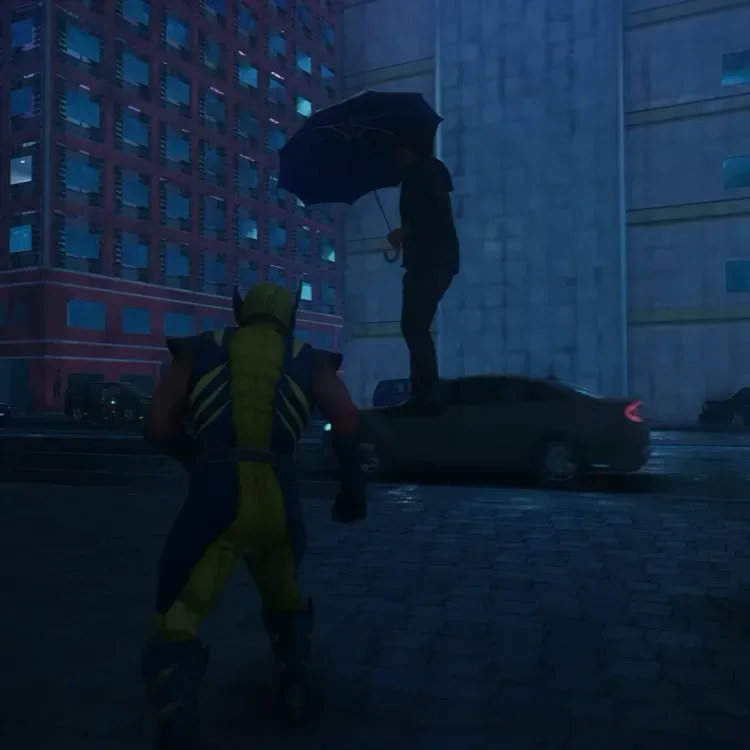
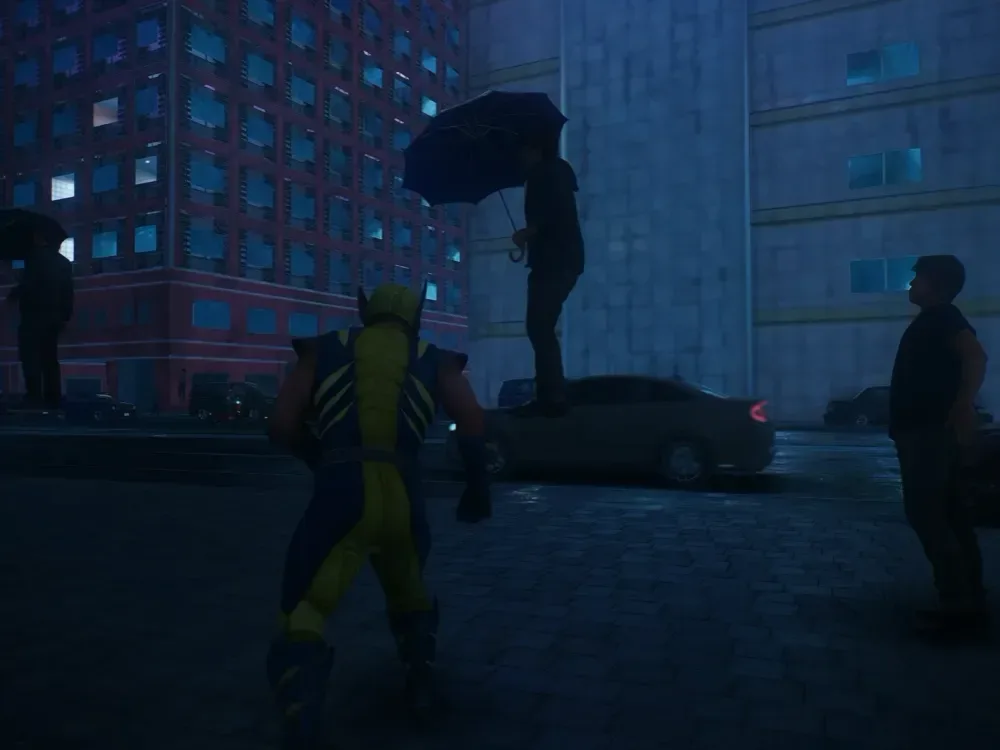
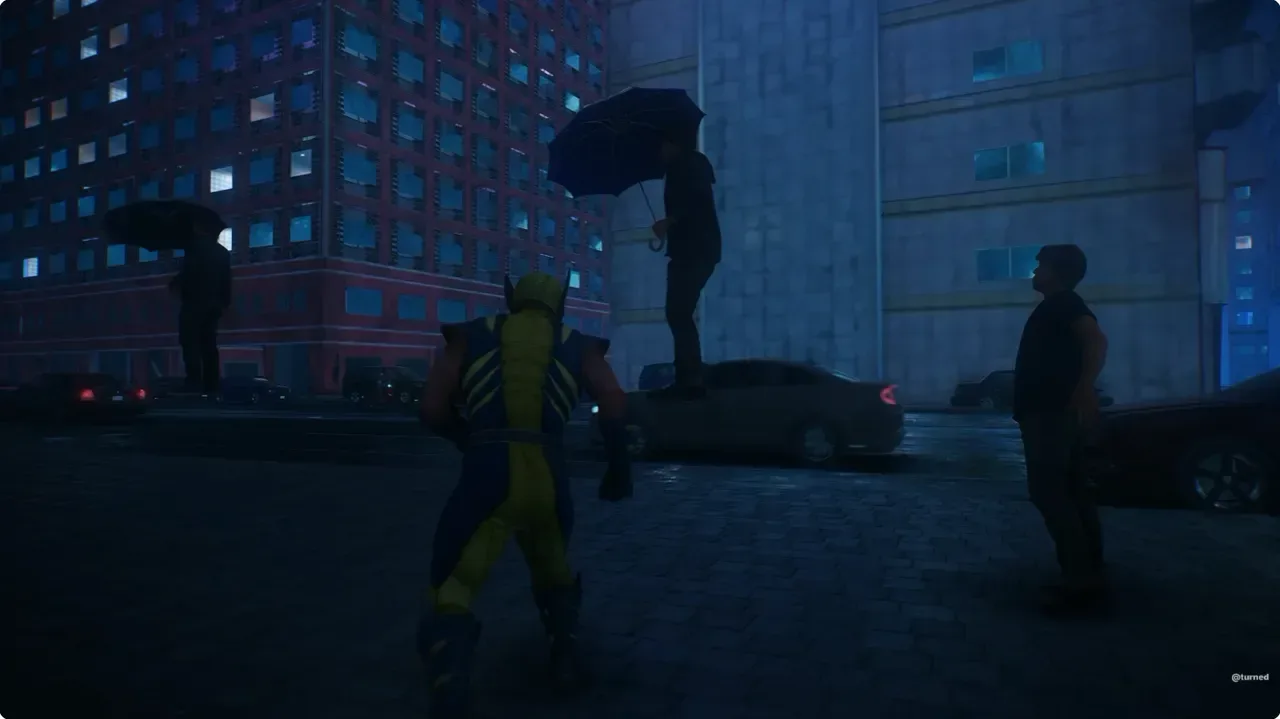
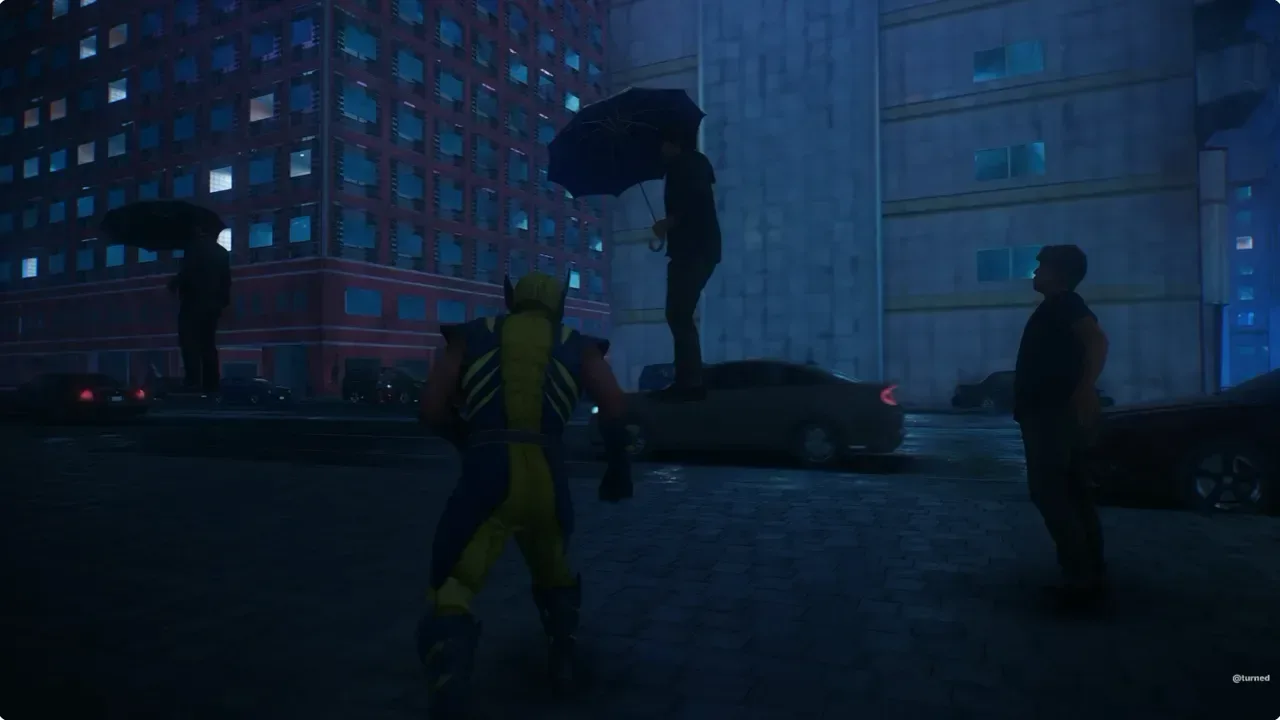
There is a particular kind of accidental tourism that only games can provide: step over the wrong boundary, and a dramatic action scene suddenly becomes a field trip through the machinery holding it together. Player videos from creator Turned show Marvel’s Wolverine’s Logan slipping beyond intended mission limits in two separate areas, revealing floating characters, traffic with an unwavering commitment to driving through walls, scenery without the polish expected of the playable route, and the blunt square edge of the world.
The clips are amusing because the escape routes appear comparatively simple. In the mission called The One That Got Away, Logan can apparently climb a building and get over it to leave the intended space. In a Japan environment, the footage indicates that jumping over trucks can take him out of the mission area without activating the automatic respawn that normally returns a player to the playable zone.
That does not make the videos a reliability test of the whole game, nor does it establish that every player will reproduce the behavior in precisely the same way. It does, however, document two apparent holes in the boundary system—and it offers a surprisingly clear look at why game worlds can seem so strange once the player is no longer where the game expects them to be.
What the footage appears to show
Beyond the boundary in The One That Got Away, the explorable space looks far larger than the mission’s linear presentation suggests. The video passes floating trees and uneven-looking terrain, including ground that may allow Logan to drop below the map. Eventually, the terrain reaches a hard-looking squared boundary: the world simply ends in a way players are never meant to see during normal play.
The Japan footage is even more revealing, at least visually. It shows cars passing through walls and continuing in a straight line until they despawn. Despawning is the process of removing an object from the active game world, usually because it has traveled too far away, is no longer needed, or has reached a system-defined limit. Here, it creates an unexpectedly bleak little spectacle: vehicles seemingly carrying out their routine with no road, no collision and no reason to stop.
Nearby pedestrians do not appear to react to the impossible traffic. The same exploration also shows non-player characters, or NPCs, floating in the air, plus a familiar character-model failure: the T-pose. A T-pose is the default arms-out stance commonly used as a basic rigging or animation reference. Seeing it in a finished scene generally means the animation the game meant to display did not load, trigger, or apply as expected.
Some Japan-area buildings appear to have no real interior once viewed from an unintended angle. At the same time, that space seems more built-out than the area seen beyond The One That Got Away, with eating areas and shops that include interiors. That contrast is important. “Out of bounds” does not necessarily mean “empty.” Development teams often build more of a world than a player can directly reach, whether to support sightlines, movement systems, background activity, missions, or future adjustments. The unusual part is not that extra material exists; it is that a player can walk into it.
Related coverage includes Marvel's Wolverine Out-of-Bounds Glitch Reveals Floating NPCs and Unfinished Map Space.
Why the world falls apart outside its intended route
Video-game environments are not single, solid places in the physical sense. They are layers of visual assets, rules, triggers and invisible barriers designed to work together from the angles and routes the player is supposed to encounter. Once a character crosses the intended perimeter, those layers can become exposed or stop behaving as though a player is present.
Collision is not the same as appearance
Collision is the invisible system that determines whether a character, vehicle or object can pass through something. A wall may look completely solid but lack collision on an exterior side players should never access. Conversely, a surface can have collision even if it is barely visible. This is why an out-of-bounds trip can produce both bizarre outcomes shown in the footage: scenery that looks real but cannot be interacted with properly, and apparent walls that traffic can pass through.
For normal play, collision is usually concentrated around spaces where the player fights, climbs, walks or drives. Building collision on every unseen face of every asset can be unnecessary work, particularly when level boundaries are supposed to keep people out. A gap in the boundary therefore has a multiplier effect: it does not merely let Logan into one unintended spot; it potentially exposes all the assumptions made about what a player would never see or touch.
Triggers and respawns are the game’s guardrails
The automatic respawn avoided in the Japan clip is another form of boundary control. Rather than constructing a completely impassable wall at every edge, a game can place a trigger: an invisible zone that activates an event when crossed. A respawn trigger typically teleports the player back to a valid location if they fall, travel too far, or enter invalid terrain.
The reported truck jump is notable because it apparently avoids that safeguard. It is less a case of the game openly inviting exploration than of Logan moving from a valid space to an invalid one without touching the trigger that would correct the problem. In the mission clip, climbing over a structure appears to serve a similar purpose by getting above or around the controls that were meant to contain the player.
That distinction matters for players deciding what to make of the clips. The material visible outside the boundary is not necessarily hidden content, a secret route, an unlock, or a sign that the whole mission was intended to be freely explored. It is better understood as a behind-the-scenes slice of the environment reached through a failure of containment.
Why NPCs, cars and scenery can keep functioning oddly
Many game systems are tuned for the player’s ordinary position. Pedestrians may follow preset paths; traffic may be told to travel along a direction or route; background characters may be placed to sell the illusion of a living area. Those systems do not need elaborate contingency plans for a player who has bypassed the map boundary and is watching from the wrong side of a building.
That can explain the eerie normality in the Japan clip. Cars are still being created and moved, but their behavior no longer encounters the collision or stopping conditions that would make sense from the intended viewpoint. Pedestrians can continue their own routines because they have not been programmed to recognize a vehicle phasing through a structure far outside the player’s expected access. The result looks like chaos, but it can also be a set of narrowly scoped systems continuing to do exactly the limited jobs assigned to them.
The detailed shops and eating areas likewise should not be overread. A storefront interior might exist because it is visible from a planned route, used by a mission sequence, supports NPC placement, or simply survived as part of the surrounding environment. The footage confirms that these assets can be seen from out of bounds; it does not establish their original purpose.
What the clips say about bug fixing—and what they do not
TT Games developer Tim Spencer offered one possible production explanation on social media: a quality-assurance team may have found an issue, only for it to be assigned a lower priority during triage and deferred to a later patch. QA, or quality assurance, is the testing discipline that identifies and documents problems. Triage is the process of assessing those reports—often by severity, frequency, player impact, reproducibility and the cost or risk of a fix—to decide what must be addressed before a build ships.
That is a useful general framework, not confirmation of the exact history of these particular glitches. Without internal bug reports or production decisions, nobody outside the development process can know whether either escape route was found, how it was classified, or why it remained available. Even a clearly reproducible visual bug may be ranked below crashes, progression blockers, save problems, performance issues, accessibility concerns, or flaws that affect a much larger share of players.
It also illustrates why “easy to perform” and “easy to fix” are different claims. The player action documented in the videos may be straightforward, while a safe remedy could involve adjusting collision, revising geometry, moving a trigger, testing alternate traversal angles and ensuring the change does not create a new gameplay issue. The public footage supports the first observation; it cannot tell us the engineering scope of the second.
Insomniac has said it intends to further refine the player experience based on feedback. That statement leaves open which items may be changed and when. It would be reasonable to expect conspicuous boundary escapes to draw attention, but no specific fix for these routes has been confirmed in the material available here.
Practical takeaway for players
Players curious about these videos should treat the excursions as glitches rather than guides to collectibles or mission rewards. There is no evidence that the off-route scenery contains intended progression, suits, claws, or other unlockables. Falling beneath the level, reaching an invalid state, or being forced into a respawn are plausible outcomes whenever a character is moved beyond a designed play area.
For people discussing the clips, it is also worth separating this kind of boundary break from cheating. The footage concerns unexpected level access through movement and collision behavior; it is not evidence of a third-party cheat tool or an online competitive advantage. That distinction is useful in a wider industry conversation where actual cheating has a very different impact—such as the concerns covered in this look at estimates surrounding the broader cheat economy.
Most of all, the videos are a reminder that even highly authored game spaces are assemblies of practical compromises. The polished route gives players story, action and spectacle. A few steps past an overlooked boundary, the same place can become a land of floating trees, unconvincing walls, NPCs suspended in space, and cars bravely driving onward until the engine decides they no longer need to exist.