Marvel Rivals is treating its upcoming Avengers: Doomsday crossover as a spoiler-sensitive project. Game director Guangyun Chen has said the team is doing “everything we can to prevent any leaks” around the important event, which is set to cap the game’s year-long Path to Doomsday programming in December.
That caution makes sense for a live-service superhero game tying its plans to a major film event. A crossover can need early access to characters, themes, visual references, or other approved material in order for game content to arrive at the right moment. Yet every extra person, asset, build, and schedule connected to that work can create another route for information to escape before its intended reveal.
For players, the immediate takeaway is simple: Marvel Rivals is still heading toward Doomsday-themed content, but the developer is signaling that fans should not expect it to outline the crossover’s specifics ahead of time. What the event ultimately contains—and how closely it connects to the film’s story—remains unconfirmed.
Path to Doomsday has moved through four Avengers-themed events
The Doomsday crossover is the final destination for a series of Avengers-focused Marvel Rivals events running through 2026. Rather than being one isolated promotion, the Path to Doomsday has used themed cosmetics and different game modes to mark four MCU Avengers eras.
The route began in April with an Avengers event built around a 6v1 asymmetrical mode. In an asymmetrical mode, the sides are intentionally given different player counts, roles, or objectives instead of competing under identical conditions. Here, six players teamed up against one Loki player, turning a recognizable Marvel character into the center of an uneven matchup.
The current Infinity War event shifts the structure again. It introduces 2v2 competition in which two six-player teams battle over the Infinity Stones through round-robin bouts. Round robin describes a format where competitors face each other across scheduled matchups, rather than being immediately removed by a single loss. The important point is that the event is not merely a cosmetic drop: it gives the Infinity War theme its own competitive ruleset.
Later in October, the Endgame portion is scheduled to add a PvE mode involving 50 players against Thanos and his army. PvE, short for player versus environment, means players cooperate against computer-controlled enemies rather than facing another human team as the primary opposition. A 50-player clash with Thanos is a very different proposition from a 2v2 event, and that variation has been a defining part of the broader campaign.
- Avengers: a 6v1 asymmetrical battle with one Loki player.
- Infinity War: 2v2 competition between two teams of six, centered on the Infinity Stones and round-robin bouts.
- Endgame: an upcoming 50-player PvE battle against Thanos and his forces.
- Avengers: Doomsday: the planned December culmination, with detailed content not yet confirmed.
It is a useful distinction because “crossover” can mean many things in a multiplayer game. It might mean outfits, a limited-time playlist, a thematic map treatment, a narrative framing device, or a combination of those elements. Marvel Rivals has already demonstrated that each stage of Path to Doomsday can lean into a different gameplay idea, but that does not establish what form the December material will take.
Related coverage includes Marvel Rivals Team Tightens Spoiler Controls for Avengers: Doomsday Crossover.
Keeping a crossover secret does not necessarily mean hiding the whole film
The desire to avoid leaks should not be read as confirmation that Marvel Rivals will contain major plot revelations from Avengers: Doomsday. In fact, a game collaboration does not inherently require that level of disclosure. A tie-in can be designed around broad character associations, approved artwork, locations, a seasonal theme, or gameplay scenarios without exposing a film’s biggest narrative turns.
That uncertainty matters. Fans naturally look for clues in every cosmetic, character selection, and promotional phrase when a game is tied to a larger Marvel release. But an allusion to a film does not automatically establish that the game is revealing a plot point from it. Until Marvel Rivals specifies the scope of its December event, interpreting its content as a story spoiler would be speculation.
Chen’s remark instead highlights the operational challenge of bringing a film-linked event to a live game. The team may have to coordinate creative material well before the public is meant to see it, while continuing normal development and publishing work. On top of that, multiplayer games routinely have patches, marketing assets, localization, storefront listings, and player-facing data to manage. The more closely a collaboration is timed to a movie, the more valuable early details can become to people seeking an advance look.
That is why the distinction between confirmed information and alleged material is especially important. Officially, the December crossover and the broader Path to Doomsday structure are the substance available to players. Specific characters, plot beats, or content formats beyond that have not been established here.
Alleged Season 11 character leaks remain unverified
The anti-leak message arrives while alleged Marvel Rivals Season 11 details have circulated online. Those claims point to Nightcrawler and Doctor Doom as possible additions, but they have not been confirmed by the developer in the information available.
Doctor Doom is particularly easy for fans to connect to the Doomsday branding, while Nightcrawler is another character with clear Marvel appeal. Still, a rumored roster addition and a confirmed crossover plan are not the same thing. Treating the names as settled would turn unverified reports into fact, and it could unfairly frame future official reveals as either confirmations or contradictions.
There is also reason for fans to be cautious without dismissing every claim outright: Gorr the God Butcher, who arrived in Season 10, had previously appeared in leaked information. A prior leak that later resembles released content can make subsequent posts more persuasive, but it does not authenticate every later detail. Development plans change, material can be incomplete, and a real asset can be interpreted incorrectly once it is separated from its original context.
In practical terms, players who want to stay spoiler-free may want to avoid unverified roster discussions, datamining threads, and social posts presenting images or text without official context. For everyone else, the most reliable way to follow the event remains waiting for Marvel Rivals to announce its own content and timing.
Why varied modes are doing much of the crossover work
The Path to Doomsday’s design so far suggests that Marvel Rivals is using modes as much as cosmetics to distinguish each Avengers theme. That approach has a practical advantage: it lets the game offer a different play pattern alongside recognizable Marvel imagery.
Loki works naturally as the solitary opposing force in a 6v1 setup. The Infinity Stones lend themselves to an objective-focused competitive event. Thanos and an army fit a large cooperative encounter. These are thematic connections rather than proof of a fixed template for the Doomsday event, but they explain why the campaign has not depended on costume releases alone.
For a free-to-play multiplayer audience, limited modes can also be a straightforward reason to log in during a crossover window. They change what players are doing moment to moment, even when the central hero roster remains familiar. The tradeoff is that special modes require clear explanation: player counts, victory conditions, item interactions, and availability dates all matter if an event is meant to be approachable instead of only visually impressive.
The December finale therefore has an opportunity to pull together the campaign’s identity without requiring public plot details from the film. Marvel Rivals has not confirmed whether it will use another new mode, a different kind of event, or a combination of content. The restrained communication around spoilers makes that absence of detail part of the story rather than a gap fans should fill with rumor.
A large audience raises the stakes for a clean reveal
Disney has said Marvel Rivals has attracted 40 million players worldwide. That figure describes a substantial global audience for the game, even as it has not surpassed Overwatch’s statistics.
For that audience, a well-managed Doomsday rollout would mean more than preserving surprises for a moviegoing crowd. It would give players a chance to encounter the game’s event on its intended terms, with its rules and rewards properly explained rather than filtered through partial leaks. It also matters for the teams responsible for the year-long progression from Avengers to Infinity War and Endgame: a premature disclosure can flatten the impact of a final reveal that has been positioned as the campaign’s culmination.
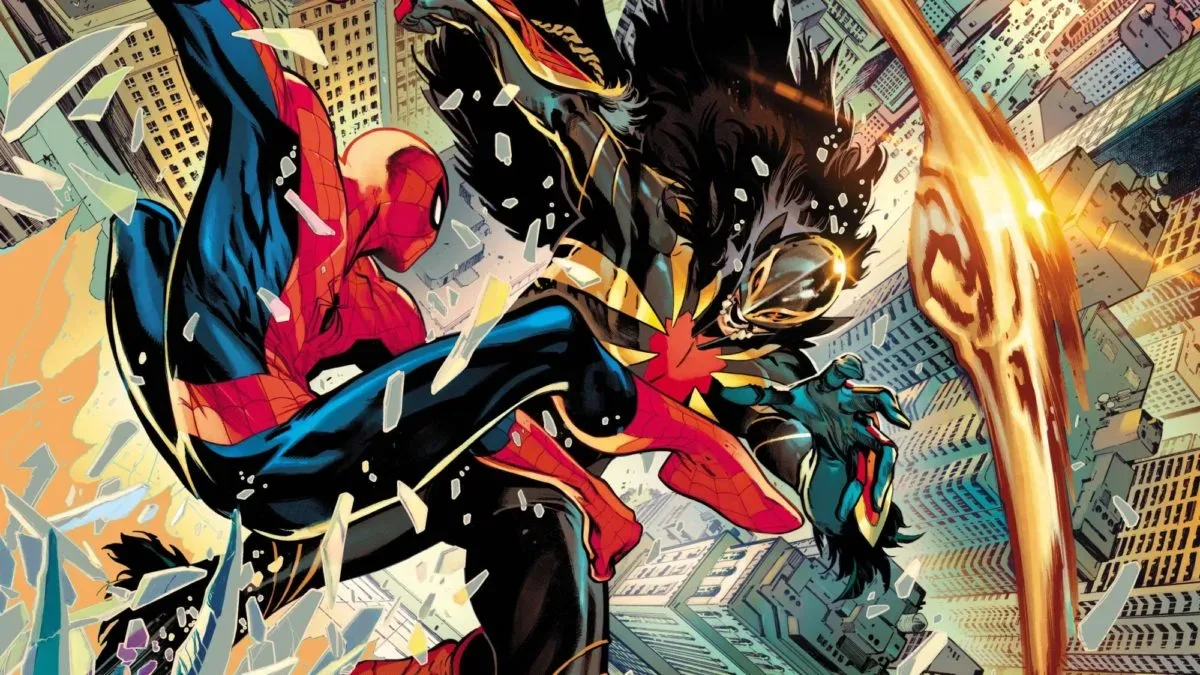
Marvel Rivals’ Marvel connections extend beyond the screen events that inform this campaign. Readers interested in the publisher’s broader comic direction can also see how Amazing Spider-Man #1000 led a comic-shop sales chart, another example of the continued reach of major Marvel characters across formats.
For now, the firm details are the Path to Doomsday schedule and its changing multiplayer formats: Infinity War is underway, Endgame is still to come later in October, and Avengers: Doomsday is planned for December. Everything more specific about the finale should be treated carefully until Marvel Rivals chooses to show it.