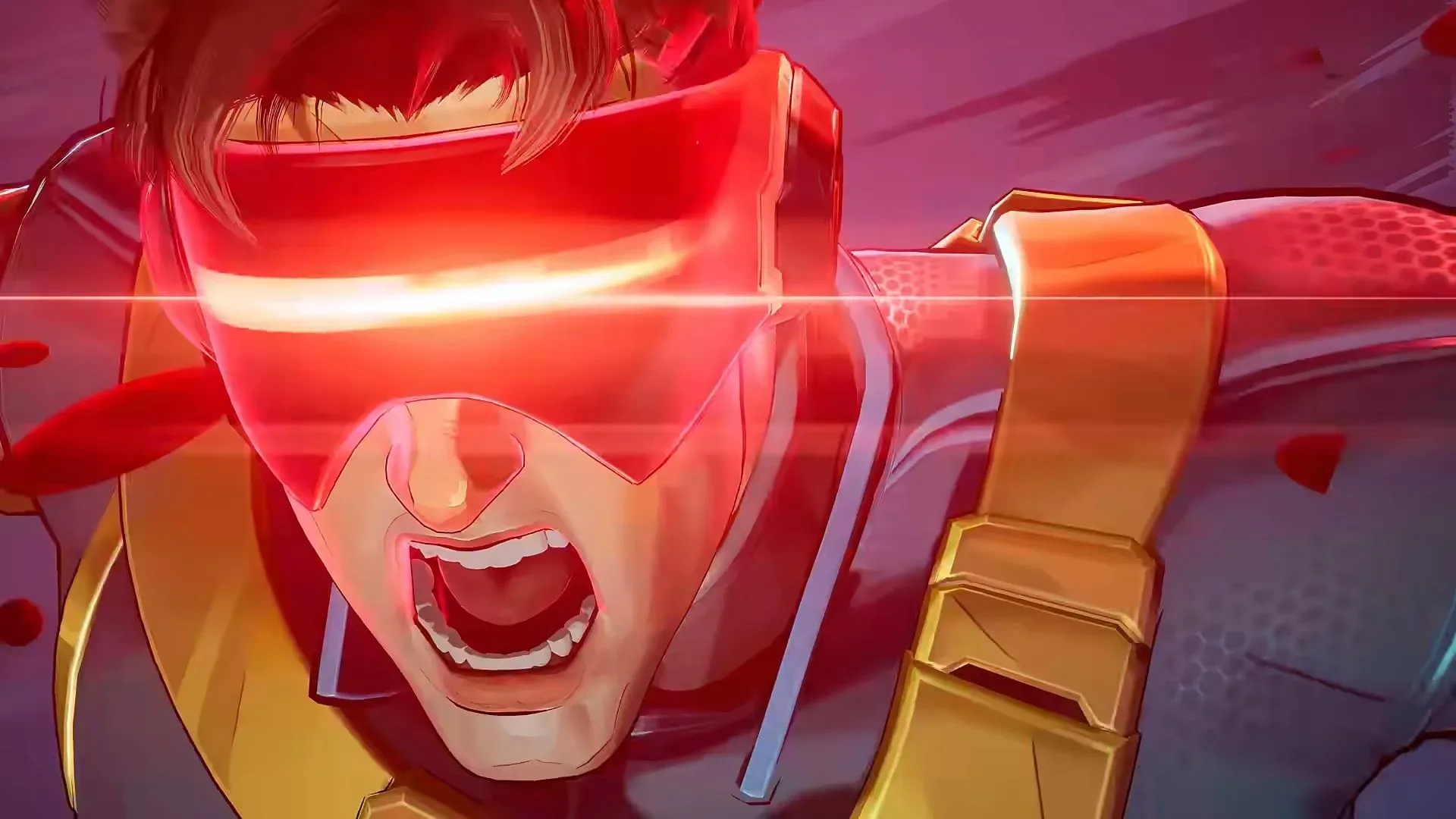
Marvel Rivals is turning one of the Marvel Cinematic Universe’s largest battles into a multiplayer encounter. The Path to Doomsday – Avengers: Endgame event begins on October 24 and places 50 players in a fight against an enlarged Thanos and his alien forces.
The setup is deliberately built around the climactic confrontation from Avengers: Endgame: a sprawling hero army, a towering Thanos, a hostile alien legion, and, if the team wins, a finale that appears to recreate Tony Stark’s Infinity Gauntlet snap. It is a notable change of scale for a hero shooter, where matches are often designed around smaller teams and clearer sightlines. Here, the pitch is less about a tidy competitive duel and more about giving a crowd of Marvel players a shared superpowered spectacle.
For Marvel Rivals players, the key detail is not simply that Thanos is involved. It is that he is being positioned as the center of a 50-player, PvE-style event encounter rather than as another ordinarily sized combatant on a roster. The mode looks intended to make the fantasy of “assemble” literal: many players firing, moving and surviving together while a single oversized opponent controls the battlefield.
What the Path to Doomsday – Avengers: Endgame event includes
The event’s stated premise is straightforward. Fifty players face Thanos alongside an army of aliens. Thanos is much bigger than a standard hero, a practical design choice as well as a visual one. With dozens of players expected to attack at once, a large target gives the group something everyone can see and hit amid the chaos.
Being big does not appear to mean being harmless. Footage of the event shows Thanos using broad attacks designed to threaten a packed field of players. Most notably, he can summon an aerial strike from his ship, an attack capable of wiping out a large cluster at once. That capability matters because it gives the encounter a basic raid-like tension: players may be able to overwhelm a giant health pool through sheer numbers, but they still need to avoid sharing the same disastrous patch of ground when a large-area attack arrives.
The available details do not establish every mechanic, objective, phase, player role or reward attached to the mode. It is also not clear how much coordination the encounter requires, whether all 50 slots are filled by a single organized group, or how the game handles players who are eliminated during the battle. Those are the details that will decide whether the event feels like a demanding group challenge or a loose, celebratory brawl built to let huge numbers of players participate.
Why Thanos reads as a raid boss here
A raid boss is an exceptionally powerful enemy designed for a large group rather than an ordinary one-on-one fight. The label generally implies several things: a large health reserve, attacks that affect wide portions of the arena, and mechanics that encourage the group to react together even when every individual is using a different character or ability set.
Thanos appears to fit that framework. His size gives the battle an obvious focal point; his ship-based aerial strike gives him an area-of-effect threat; and the 50-player count creates a scale where individual damage may matter less than collective survival and sustained pressure. Area of effect, often shortened to AOE, means an attack damages everyone or everything within a defined zone rather than only the target directly struck. In a crowded encounter, AOE is the natural equalizer. One well-placed blast can punish a mass of heroes more efficiently than any attack aimed at a single player.
Related coverage includes Marvel Rivals Is Bringing 50 Players Together for an Endgame-Inspired Thanos Battle.
That makes spacing an especially interesting practical question. Even without a complete breakdown of the mode’s rules, the trailer’s aerial strike suggests that standing shoulder-to-shoulder may be risky. Players may have to balance the instinct to concentrate fire on a giant opponent against the need to spread out enough to prevent one attack from taking down a substantial portion of the force.
At the same time, a giant enemy with 50 people shooting at him raises the opposite possibility: Thanos could largely function as a highly visible target whose challenge comes from spectacle rather than intricate group execution. That would not necessarily be a weakness. A limited-time MCU recreation has a different job from an enduring, highly technical endgame activity. It needs to communicate the scene instantly, accommodate players with varied familiarity with the game, and produce a memorable shared moment without requiring every participant to learn an elaborate assignment.
A large-scale event, not a promise of a new permanent format
It is important to separate what is known from what can only be inferred. Marvel Rivals is holding events tied to major MCU moments in the run-up to Avengers: Doomsday, and this is the latest. The Endgame-themed event has a start date of October 24 and a 50-player Thanos battle. Beyond that, there is no supplied confirmation that the format is permanent, that it will establish a recurring raid playlist, or that it signals a wholesale replacement for the game’s usual hero-shooter structure.
The safest reading is that this is a cinematic special event with an unusually large player count. That distinction matters for players deciding whether to return specifically for it. The appeal may be the chance to see how Marvel Rivals handles a one-off blockbuster scenario, not evidence that every future match will operate at this scale.
It also illustrates the usefulness of limited-time modes in a live-service game. A normal multiplayer ruleset depends on balance, readable encounters and repeatable competition. A special event can be much more theatrical. It can bend the usual proportions, put a giant enemy in the middle of the map, and prioritize the recognizable beats of a movie scene. The payoff is immediacy: the premise is understandable before anyone has fired a shot.
The Endgame connection is the point
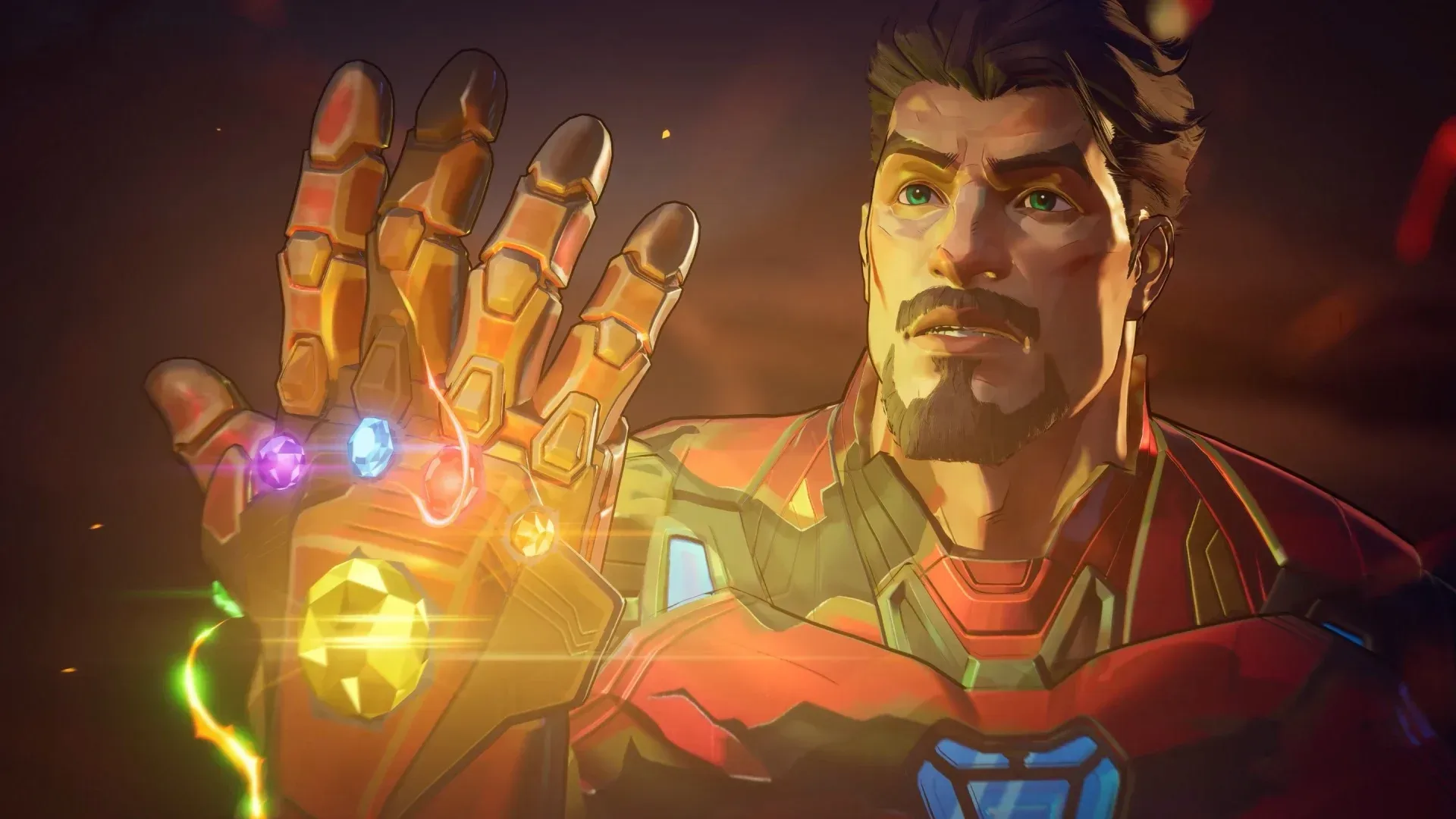
The central draw is the recreation of the final battle from Avengers: Endgame. Thanos leading alien forces against a large combined player force is a direct attempt to translate that movie-scale conflict into an interactive format. The apparent victory sequence pushes the reference still further, showing Tony Stark with the Infinity Gauntlet before Thanos is snapped out of existence.
That ending should be treated as a reported look at the apparent win scene, rather than a full explanation of how the battle is resolved mechanically. Still, it suggests that victory is designed to have a defined narrative payoff. Rather than ending only with a score screen, the event appears poised to conclude on one of the MCU’s most recognizable images.
For a game based on a universe with decades of characters and storylines, the approach is also a reminder that Marvel Rivals can use familiarity as a gameplay hook. Players do not need an exhaustive briefing to understand why Thanos is the boss, why an alien army is present, or why the Infinity Gauntlet matters. The event borrows that established emotional shorthand and attaches it to a massive multiplayer fight.
What players should watch for once the mode begins
Because many specifics remain unconfirmed, it is worth focusing on the gameplay questions that will matter most after October 24:
- How survivable is Thanos? A 50-player force can create enormous damage output. His health, defenses and encounter phases will determine whether the battle has real endurance or is primarily a brief crowd-powered takedown.
- How lethal are the large attacks? The ship’s aerial strike is visually built for scale. The practical question is whether it requires alert positioning and avoidance or simply creates periodic, unavoidable mayhem.
- What coordination tools exist? Fifty players can be a thrilling army or an unreadable stampede. The event’s success will depend in part on how clearly it communicates danger, objectives and where players need to be.
- How much do heroes matter? The source material establishes a large player group but not how individual character choices interact with the fight. Players will want to see whether the mode rewards particular forms of damage, mobility, protection or recovery.
- What happens after a win or loss? The Tony Stark scene appears connected to success, but the broader progression and replay structure have not been detailed in the supplied information.
Those questions are not complaints; they are the natural test for a mode this much larger than a familiar hero-shooter match. A cinematic premise gets players in the door. Clear feedback, manageable chaos and a meaningful sense of contribution are what make a giant group encounter satisfying more than once.
Marvel Rivals is leaning into event-scale spectacle
The Path to Doomsday – Avengers: Endgame event’s most compelling idea is its commitment to scale. There is a difference between putting Thanos in a standard match and asking 50 players to confront him together while he calls down attacks capable of flattening a crowd. The latter recognizes that the Endgame finale is remembered not as a careful duel, but as an overwhelming collision of heroes, enemies and battlefield-sized consequences.
That does not mean the game needs to reproduce every detail of a movie battle to make the crossover land. In fact, attempting to do so would likely be impossible in a competitive-action framework. The more relevant goal is to capture the feeling: a massive threat, a huge group, recognizable stakes, and a climactic payoff when the villain finally falls.
Players looking for more current game-news coverage can also check our report on the October 2026 ID@Xbox Showcase’s games, dates and platforms.
Marvel Rivals’ Thanos encounter arrives October 24. Until more of the mode’s structure is outlined, the confirmed promise is already a substantial one: 50 players, an oversized Thanos, alien forces, devastating wide-area attacks, and an Endgame-inspired victory moment waiting on the other side.