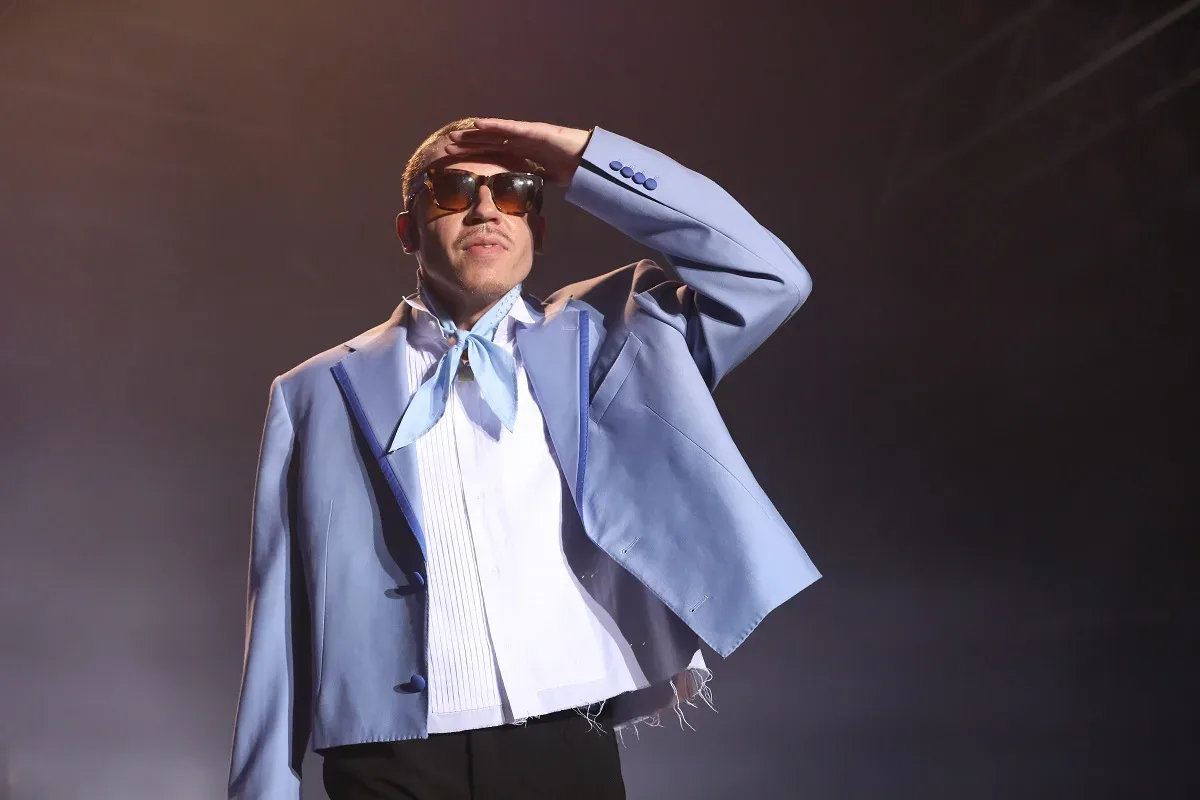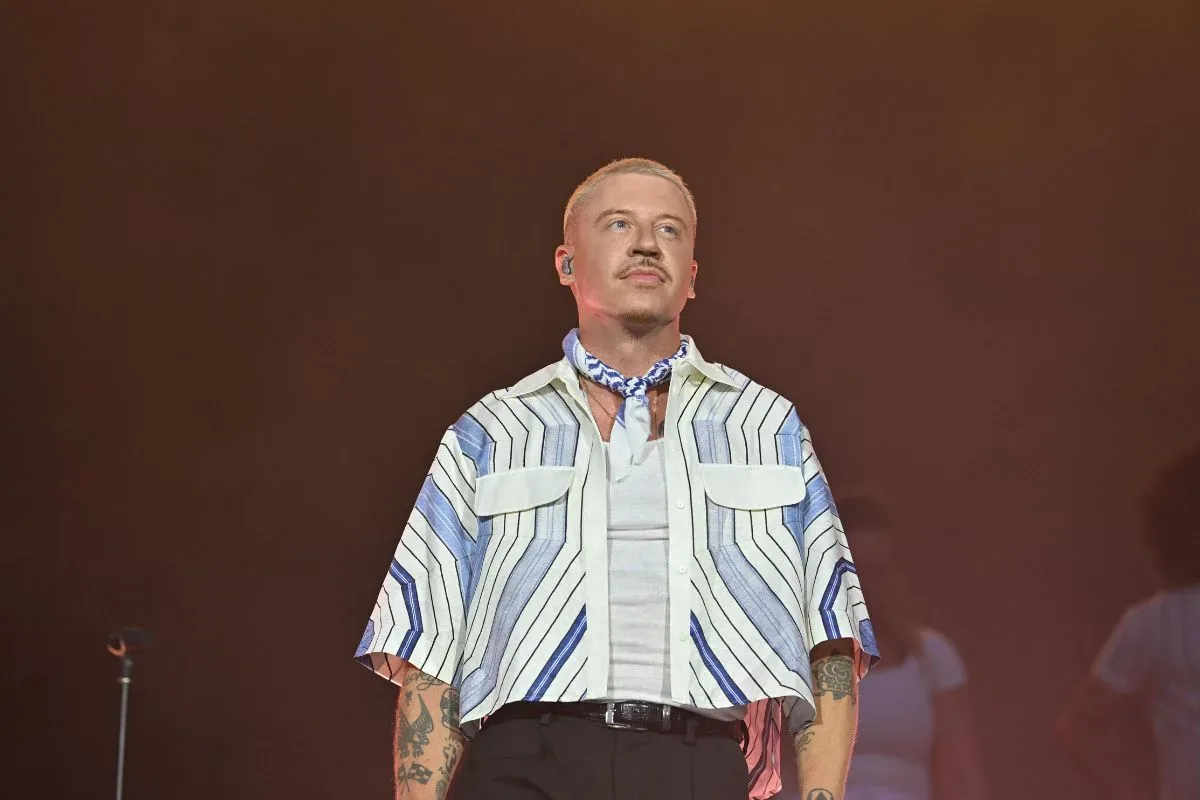
Macklemore is facing a call from 50 members of the House of Lords to be prevented from entering Britain ahead of a planned October 30 benefit concert at Wembley. The proposed action concerns his electronic travel authorization, but there is an essential distinction between a request to revoke permission and an actual revocation: no reported decision has said that his authorization has been withdrawn.
The concert is listed as Macklemore & Friends: Free Palestine Tour, and its event page says proceeds will go to 12 named beneficiaries. Those organizations include the Palestinian Youth Movement, Medical Aid for Palestinians and UNRWA USA. The listed work covers medical treatment, education, humanitarian assistance and advocacy, although the page does not explain how proceeds would be allocated among the 12 groups.
The push for a travel ban centers on the inclusion of the Palestinian Youth Movement as a beneficiary. Baron Walney, identified as a former government adviser on political violence, wrote to Home Secretary Shabana Mahmood on behalf of the group of peers. The letter objected to money from the event reaching the organization.
The peers alleged that the Palestinian Youth Movement has links to terrorist groups and glorifies terrorism. The organization denied those allegations. That denial is central context: the claims are allegations in a political demand for immigration action, not a reported finding in the material available here.
What is being requested — and what has not happened
An electronic travel authorization is an entry permission mechanism, and the peers’ request is for that authorization to be revoked. In practical terms, the requested move would block Macklemore from traveling to Britain for the London date. But the information available does not establish that the Home Office accepted the request, started a formal process, or made any decision at all.
That uncertainty matters for fans, ticket-holders and the event’s charitable recipients. A parliamentary letter, even one signed by dozens of peers, is pressure on a decision-maker rather than proof that entry has been denied. It is also not the same as a cancellation announcement from a venue or concert organizer.
As matters stand in the reported information, the October 30 Wembley event remains the planned London stop in a short run that is due to include Dublin on October 26 and Paris on October 29. The available material does not say whether either of those earlier shows faces comparable challenges.
The benefit’s funding question
Benefit concerts often turn a performance into a fundraising vehicle, but they also make the destination of the funds part of the public debate. Here, the event page’s promise that all proceeds will support the listed organizations broadens the stakes beyond Macklemore’s speech onstage. It places scrutiny on the whole beneficiary list, including groups engaged in distinctly different kinds of work.
Related coverage includes Macklemore Faces UK Entry Push Ahead of Wembley Palestine Benefit.
Medical Aid for Palestinians and UNRWA USA are named alongside the Palestinian Youth Movement, while the event page describes the collective work in terms of treatment, education, relief and advocacy. However, the page does not provide a percentage split, dollar amounts, or another formula for distributing proceeds. That means the public information does not establish how much, if any particular amount, would go to each group.
This is also why it is important not to collapse the entire concert into one allegation aimed at one listed recipient. The fundraising page identifies 12 beneficiaries. The entry-ban request described in the available information focuses on the Palestinian Youth Movement, which has disputed the accusations against it.
Macklemore’s return to the stage at Red Rocks
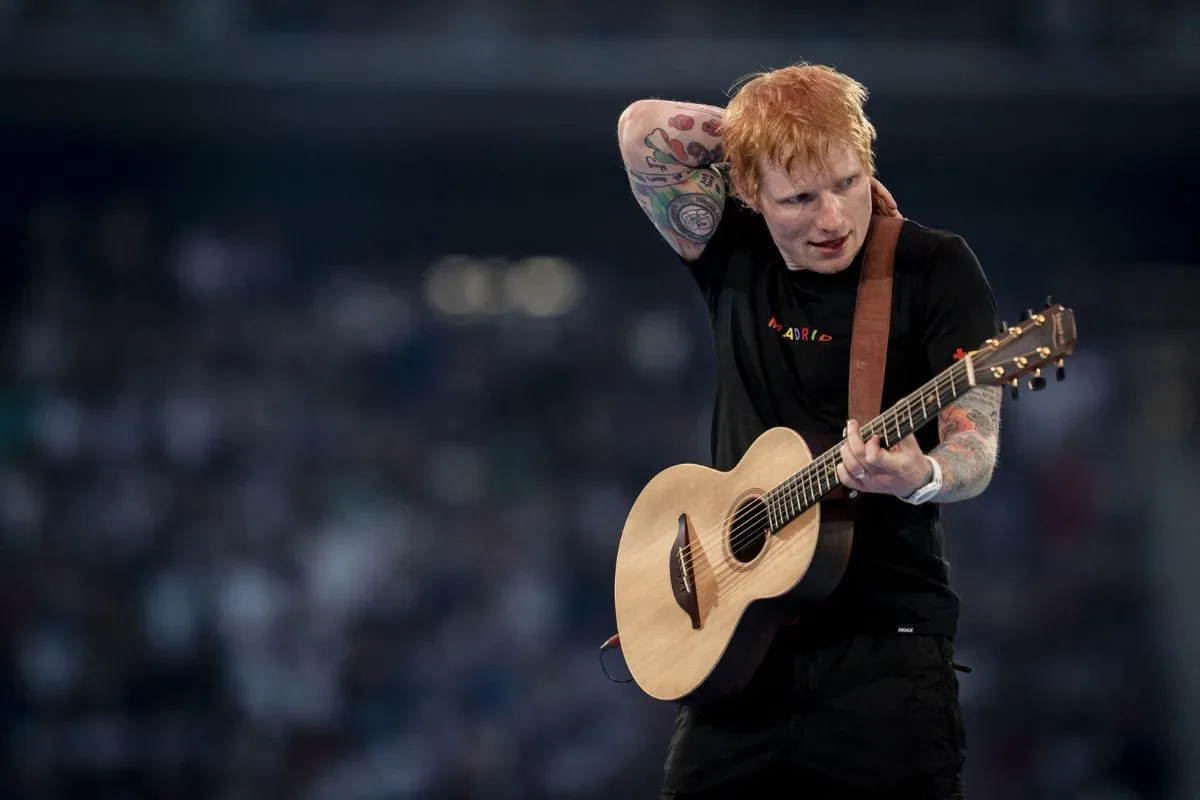
The UK pressure followed Macklemore’s October 22 appearance at Colorado’s Red Rocks Amphitheatre. It was his first show after he lost the remaining dates where he had been scheduled to open for Ed Sheeran.
At Red Rocks, Macklemore again spoke in support of Palestinians, while framing his remarks as a broader appeal to recognize suffering across several places and communities. He referenced Gaza as well as Sudan, Congo, Lebanon and Haiti, and spoke about people in the United States who fear Immigration and Customs Enforcement.
“Being a human being in this moment is not complicated,” Macklemore told the audience. “It is not political.”
He also stated that “the message will always be love.” Those remarks show the framework Macklemore has used in public: he presents his advocacy as humanitarian rather than partisan. Critics of his rhetoric, meanwhile, have raised objections that make clear the argument is not only about the mechanics of a single fundraising event, but about the language, imagery and associations attached to high-profile political advocacy.
The Ed Sheeran support-slot dispute
The loss of Macklemore’s remaining appearances on Ed Sheeran’s tour followed September performances at MetLife Stadium, where he publicly advocated for Palestinians. New England Patriots owner Robert Kraft objected to Macklemore performing at Gillette Stadium, citing rhetoric and imagery that Kraft considered offensive to Jewish people.
Macklemore drew a distinction between criticizing Israel and criticizing Jewish people, and he called for equal treatment. That distinction is an important part of the disagreement. Criticism of a government or its policies is not, by definition, criticism of an ethnic or religious group; at the same time, audiences and institutions may disagree sharply about whether particular wording or symbols cross that line. The available reporting establishes that Kraft believed Macklemore’s material was offensive, and that Macklemore rejected the idea that his position was directed at Jewish people.
Sheeran said the decision regarding the support dates was made by tour organizers. He later apologized for how he dealt with the dispute during a Philadelphia concert. The episode illustrates the different parties that can shape a touring artist’s appearance: performer, promoter, venue, tour organizer and, in some circumstances, venue ownership. The UK matter adds government immigration authority to that list, though no reported action has yet been taken against Macklemore’s travel permission.
The debate around entertainers speaking on the Israel-Palestine conflict has also extended beyond music. In another recent culture-industry dispute, cast members publicly navigated differing responses to pro-Palestine comments, underscoring how political speech can become an immediate professional and institutional issue rather than a separate personal matter. That discussion likewise showed how disagreement can emerge within an entertainment project itself.
Why careful language matters in this case
There are several layers to this story, and each has a different evidentiary status. The planned benefit and its named beneficiaries are presented on the event page. The request to revoke Macklemore’s authorization was made by 50 peers. The accusations against the Palestinian Youth Movement were denied by that organization. And, crucially, there is no reported decision withdrawing Macklemore’s travel authorization.
Keeping those layers separate avoids two misleading conclusions. First, it would be inaccurate to report that Macklemore has already been banned from Britain. Second, it would be inaccurate to state disputed allegations as established fact. The current development is a high-profile effort to stop the Wembley appearance, not confirmation that it will be stopped.
For the concert, the immediate practical question is whether the Home Office responds before the October 30 date. For Macklemore, the dispute continues a period in which advocacy for Palestinians has affected major live-performance opportunities. And for the organizers and beneficiaries, the unanswered details around the proceeds split remain relevant because the challenge specifically targets the event’s charitable structure.