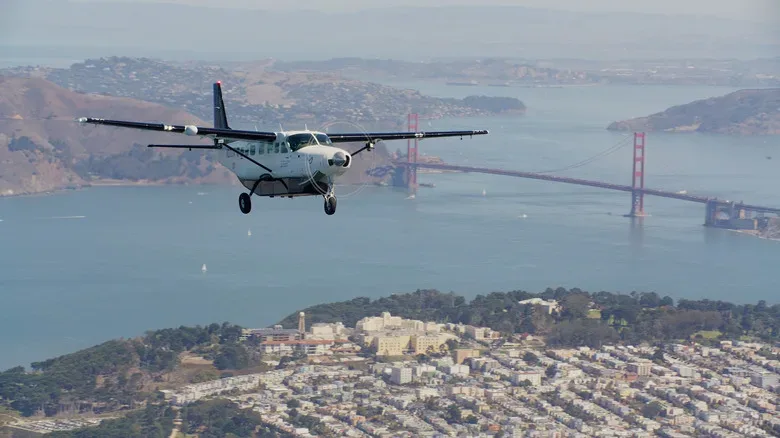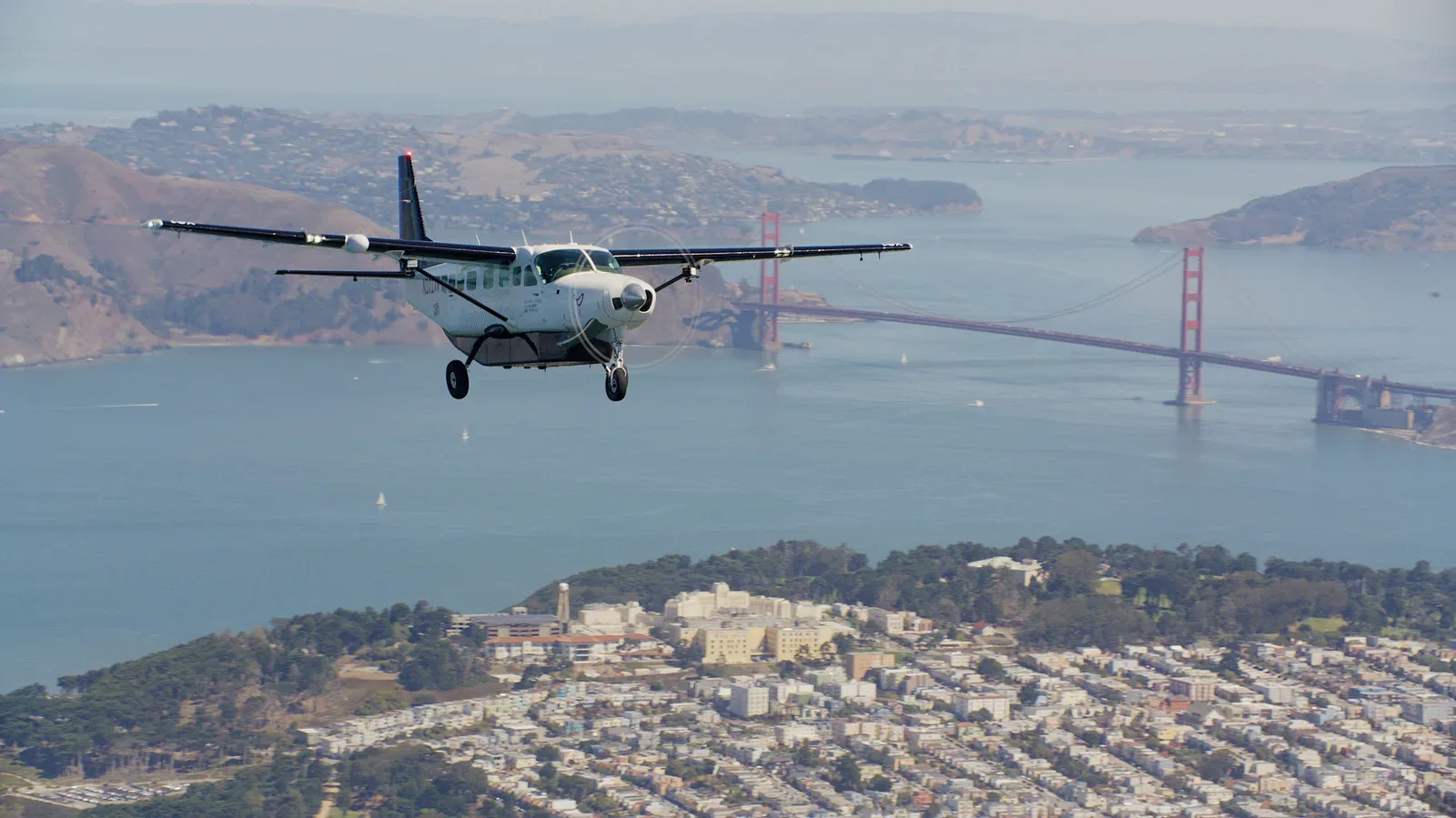
Joby Aviation says it has completed a 3,199-mile autonomous flight across the United States, sending a converted Cessna Caravan from Buchanan Field Airport in California to Dare County Regional Airport in North Carolina’s Outer Banks.
The company is calling it the first autonomous flight to cross the country. That is a significant claim, and one that should be read precisely: Joby says its aircraft completed the journey with no control inputs from the onboard safety pilot. A human monitor was still aboard, while teams at Joby’s California headquarters and Shaw Air Force Base in South Carolina remotely supervised the operation.
That distinction matters. The achievement described is not an unmanned aircraft disappearing over the horizon with nobody watching. It is a demonstration of an aircraft autonomy system carrying out the major phases of a long-distance trip—taxiing, takeoff, cruising and landing—without a human pilot actively manipulating the controls, under multiple layers of human oversight.
What Joby says the aircraft did on its own
Joby integrated its autonomous flight technology into a converted Cessna Caravan. The Caravan is the airframe used for this effort; it is separate from the fully electric, piloted air-taxi aircraft that are more closely associated with Joby’s public plans.
For this cross-country mission, Joby says the autonomous system handled the operation from movement on the ground through the arrival landing. In plain language, the claimed scope includes:
- Taxiing: moving around the airport surface before departure and after arrival.
- Takeoff: beginning the flight and departing the runway.
- Cruising: conducting the en-route portion of the trip.
- Landing: bringing the aircraft back to the airport environment and completing its arrival.
Those phases are worth listing because “autonomous flight” can otherwise sound like a single, vague capability. A cross-country flight involves far more than holding a route at altitude. Joby’s description places its system across the flight profile, including the ground and runway stages that bookend the journey.
At the same time, the supplied details do not establish that the flight lacked human participation in a broader operational sense. The onboard monitor and remote supervision are explicit. Nor do the details explain the system’s decision-making, its communications arrangements, its response to unusual conditions, or the exact division of responsibility between the aircraft and its human supervisors. Those are important unknowns, not minor footnotes, when assessing what the demonstration means for future aviation operations.
Autonomous does not mean unsupervised
Joby’s wording makes a useful technical distinction: there were no control inputs from the safety pilot, but people remained in the loop. An onboard safety pilot is a person positioned to observe a flight and, if needed, intervene. Remote supervision means people at another location oversee the aircraft from afar. For this mission, Joby says that remote oversight occurred from its California headquarters and Shaw Air Force Base in South Carolina.
Related coverage includes Joby Completes 3,199-Mile Autonomous Flight Across the US.
That setup makes the trip more meaningful than a conventional flight with an advanced assistance feature, since Joby says the aircraft itself executed the flight tasks. But it also prevents an easy shorthand from becoming misleading. This was not presented as passenger service without human monitoring, and it was not described as a zero-human-contact operation.
For anyone tracking automation in transportation, that is the practical takeaway: autonomy is best understood as a spectrum of responsibilities rather than a binary switch. The useful questions are who is monitoring, what the automated system is doing, whether a person can intervene, and what conditions the system is intended to handle. The same habit of looking beyond a headline feature is helpful with everyday technology as well; for example, device convenience claims often have trade-offs, as with wireless charging and phone battery health.
A separate path from Joby’s electric air-taxi plan
Joby is also pursuing a different aviation product: piloted, fully electric air taxis. The company began demonstrating those aircraft in New York City in April and plans to launch them to the public later this year.
The cross-country Caravan flight should not be treated as proof that Joby’s electric air taxis are becoming autonomous. The aircraft involved here was a converted Cessna Caravan, and the stated air-taxi plan is for piloted service. The two efforts may share an interest in aviation technology, but the supplied information describes different aircraft and different near-term uses.
Instead, the autonomous Caravan demonstration points toward an expansion of Joby’s ambitions beyond faster trips around dense urban areas. Joby says its autonomy technology can be integrated into existing aircraft. That framing is important because it positions the system as something that could be adapted to aircraft already in operation rather than being confined to a future purpose-built air taxi.
Freight, emergency response and defense are the stated use cases
Joby has identified commercial freight, emergency response and defense logistics as potential applications for its autonomous flight technology. These are broad categories, and the flight itself does not confirm a deployed service in any of them. Still, they help explain why a long cross-country trip matters to the company’s strategy.
Commercial freight concerns moving goods. An autonomy system compatible with existing aircraft could, in principle, be relevant to operations where moving cargo between locations is the core task. Joby has not detailed a specific freight product, customer or launch timeline here, so the immediate significance is a stated potential rather than a confirmed offering.
Emergency response refers to operations associated with urgent situations. The material does not specify the kind of response mission, payload or aircraft configuration involved. What it does show is that Joby sees autonomy as applicable beyond scheduled city transportation.
Defense logistics is the third area Joby named. Logistics generally concerns the movement and support of people or material. Again, the cross-country flight demonstrates a technical claim, not a disclosed operational contract or service deployment. Keeping those two things separate is especially important around high-profile demonstrations: a successful mission can establish a capability milestone without answering all of the regulatory, operational and commercial questions needed for routine use.
The return trip will provide another visible milestone
After the eastbound flight to North Carolina, Joby says the aircraft will travel back west. The planned westbound route includes stops in Raleigh, North Carolina; Salt Lake City; and Portland, Oregon.
Those planned stops are the only return-route details provided. They do not, by themselves, reveal whether the same level of autonomy will be used on every segment, how the monitoring arrangement will work on the return journey, or when each leg will occur. Still, the return trip extends the project beyond a one-way headline and puts the company’s autonomy work on a continuing cross-country itinerary.
Why the wording around this milestone matters
The most defensible reading of Joby’s announcement is both substantial and measured. The company says a converted Cessna Caravan covered 3,199 miles from California to North Carolina while its autonomous system handled taxiing, takeoff, cruising and landing without onboard safety-pilot control inputs. That is a concrete operational claim with a clearly stated route and aircraft type.
It is also a supervised flight, with a human monitor aboard and remote teams overseeing the aircraft. Those safeguards do not erase the autonomy claim; they define the environment in which the claim was demonstrated. Anyone interpreting the event should avoid collapsing “no pilot inputs” into “no humans involved.”
For Joby, the larger message is strategic. The company is known for piloted electric air taxis intended for urban travel, but it is presenting autonomy as a technology that can be installed on existing aircraft and directed toward freight, emergency response and defense logistics. The Caravan mission is therefore less about replacing its stated air-taxi plan than about showing a second, potentially broader path for its aviation technology.