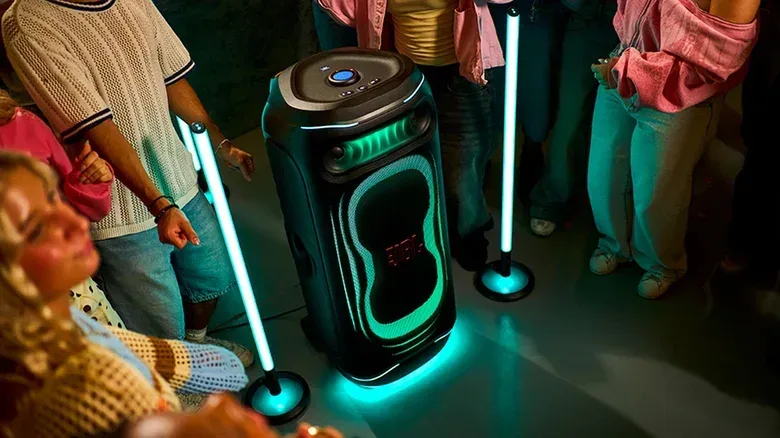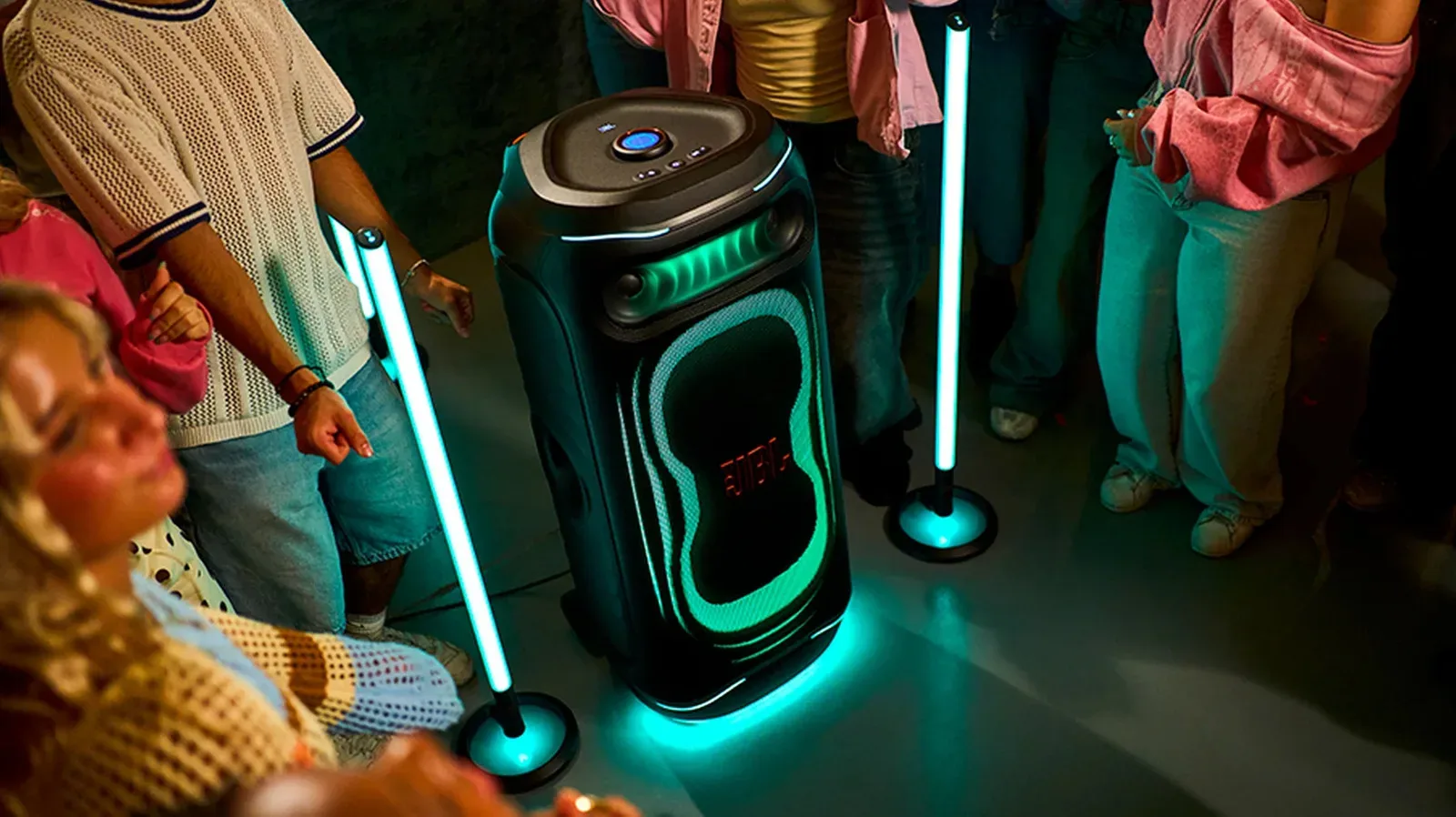
JBL’s PartyBox Ultimate 2 is aimed squarely at the kind of gathering where a normal Bluetooth speaker would be swallowed by the room, the playlist and the people arguing over who gets the next karaoke turn. The new model carries a $1,800 price, a claimed 1,500 watts of sound, integrated lighting and a feature set built around flexible music playback, TV karaoke and DJ connections.
It is also enormous. At 41.4 inches tall and 120 pounds, the PartyBox Ultimate 2 is less an item to casually move between rooms than a piece of event equipment with a domestic address. JBL has included wheels and a handle, which matters considerably at this size, but prospective owners should treat placement, transport and return arrangements as part of the buying decision rather than an afterthought.
A bigger PartyBox, in both output and physical scale
The Ultimate 2 is positioned above the 800-watt PartyBox 720, with JBL listing 1,500 watts for the new speaker. Wattage is a measure associated with electrical power, but it should not be treated as a simple shortcut to perceived loudness or sound quality. Room size, speaker design, placement, music and listening distance all affect what people actually hear. Still, the jump in the stated figure makes JBL’s intention clear: this is its most powerful and most expensive PartyBox model to date.
Its driver layout is designed to divide the audio workload across different frequency ranges. The speaker includes:
- Dual pro-grade PEN tweeters, comparable in design intent to those used in JBL professional systems, for high-frequency detail.
- Dual five-inch mid-range drivers, intended to handle the range where vocals and much of the character of instruments sit.
- Dual 10-inch woofers, intended to provide the low-end weight that tends to matter most in party-focused playback.
That three-part arrangement is worth understanding because “big bass” and “clear vocals” are not automatically the same thing. Woofers are responsible for lower frequencies; mid-range drivers carry a major share of voice reproduction; tweeters handle the upper-frequency content. A dedicated set of drivers for each area is the design logic behind JBL’s description of vocal clarity and party-ready low end.
JBL also promotes an AI Sound Boost feature, claiming it delivers detail and clarity with low distortion at every volume. That remains a manufacturer performance claim, not a guarantee of how the speaker will sound in every room or at every listening level. Distortion, broadly, is unwanted change to the audio signal as a system is pushed harder. Keeping it controlled can be particularly important for a speaker intended to play loudly, but the supplied details do not establish measured distortion figures or comparative testing results.
The light show is part of the product, not an accessory
Party speakers increasingly compete on atmosphere as well as sound, and the Ultimate 2 leans into that idea. Its lighting extends across the front panel with ripple-wave effects, rather than treating illumination as a small accent around a grille or logo. JBL also describes multi-layer effects intended to create depth and motion, alongside floor projection that carries the visual effect beyond the speaker itself.
For a living-room game night, birthday gathering or karaoke setup, that approach could reduce the need for separate mood lighting. It also means the speaker has a stronger visual presence when it is not playing. Buyers who want audio equipment that disappears into a room may find the overall proposition excessive; buyers building an obvious focal point for social events are the clearer audience.
Related coverage includes JBL PartyBox Ultimate 2 Brings 1,500W Audio, Karaoke Tools and a Light Show.
The lighting focus pairs naturally with karaoke and party games. There is a practical distinction, however, between a speaker that can create an energetic setting and one that solves every part of a karaoke system. The PartyBox Ultimate 2 provides controls and connections for the audio side, but users still need to consider their display, song source, microphone requirements and available space.
Karaoke tools include AI vocal removal and TV-friendly input
One of the more notable features is EasySing AI Vocal Removal, accessible from the speaker’s top-panel touch controls. Vocal removal is meant to reduce or remove a song’s lead vocal so the people in the room can take over. It is a useful concept for spontaneous karaoke because it can potentially turn compatible playback into an instrumental-style backing track without requiring a separately prepared karaoke version.
There are limitations inherent to this kind of processing. A song’s vocals can overlap musically with instruments and effects in the same frequency ranges, so vocal-removal tools may not produce a perfectly clean backing track in every case. The available information identifies the feature but does not specify its processing method, which services it works with or how results vary from track to track. It is best understood as a social feature for party use, rather than a promise of studio-grade stems.
For a television-based setup, JBL has included an optical input. Optical audio is a digital connection commonly used to send sound from a TV to an audio device. That could make the Ultimate 2 relevant to a screen-and-speaker karaoke arrangement, with lyrics or videos on the TV and output routed to the PartyBox.
There is also an XLR line-in for DJ equipment. XLR is a connector format commonly found in professional and live-sound gear. Its inclusion suggests the speaker is intended to accommodate more than phone playback, including hardware that a DJ or event host may want to connect directly. The supplied specifications do not detail every supported setup or accessory, so anyone planning a particular microphone or mixer configuration should verify compatibility before committing to the speaker.
More than one way to get music into the speaker
JBL lists an unusually broad group of playback and connectivity options: lossless USB-C audio playback, Wi-Fi 6 audio, Bluetooth LE Audio, Auracast, AirPlay, Chromecast and Spotify Connect. In practical terms, that range is valuable because large social setups do not always begin with the same device or service.
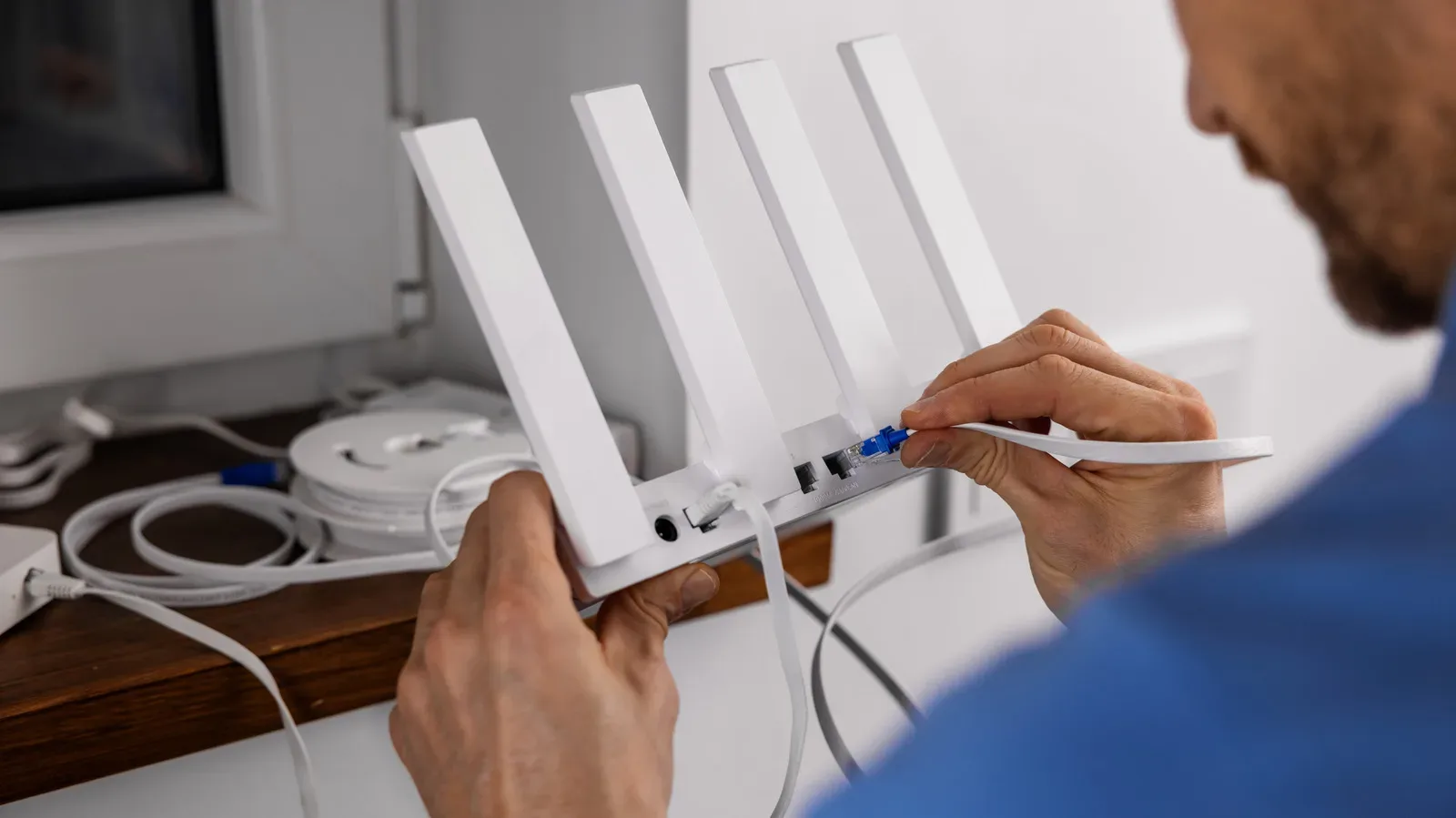
Wi-Fi 6 is a wireless-network standard. For this product, the relevant point is that the PartyBox can use Wi-Fi as an audio connection rather than relying solely on Bluetooth. Wi-Fi capability can be useful where a supported streaming ecosystem is already in use, although actual reliability will still depend on the local network. Anyone putting together a Wi-Fi-heavy entertainment space may also want to consider the broader home-network setup; our guide to owning your network rather than renting an ISP router explains why the equipment behind a wireless connection can matter.
Bluetooth LE Audio refers to a newer, lower-energy Bluetooth audio architecture. JBL also lists Bluetooth 6.0 support. The notable takeaway is compatibility breadth, but feature availability can depend on the transmitting device and the software involved. A phone, tablet or computer does not gain every potential advantage merely because the speaker supports a newer standard.
Auracast is a Bluetooth broadcast feature designed to let audio be shared more broadly with compatible receivers. It could be relevant for group-oriented listening arrangements, but its real usefulness likewise depends on compatible devices in the rest of the setup.
AirPlay, Chromecast and Spotify Connect each provide routes for sending or controlling audio through familiar ecosystems. Their presence gives households using different platforms several options, rather than making a single Bluetooth pairing the only entry point. Lossless USB-C playback adds a wired route for listeners who want to play supported audio from a USB-C source. JBL describes it as lossless, though the provided information does not list supported file formats or device conditions.
Touch controls and a design that needs planning
The Ultimate 2 introduces touch controls on the top panel, a first for the PartyBox line. Those controls cover audio functions and the EasySing vocal-removal tool. For an active party, having direct controls on the cabinet may be more convenient than finding the right app or passing a phone around. Conversely, the speaker’s tall form means the top panel will be easiest to reach when the unit is placed where guests can approach it safely and where controls are not obstructed.
JBL rates the unit at IPX4 for splash resistance. The “X” indicates that no dust-protection rating is stated, while the “4” indicates protection against splashing water. That can be reassuring around drinks, patios and busy events, but it is not the same as a waterproof rating. It should not be interpreted as permission to submerge the speaker, expose it to heavy water conditions or disregard sensible care around electronics.
The 120-pound weight is arguably the specification with the greatest day-to-day consequence. Wheels and a handle improve maneuverability, but they do not turn the speaker into a lightweight portable device. Owners should account for stairs, vehicle loading, flooring, storage and the distance from power and inputs to the intended setup area. The unit is compared in weight to a small refrigerator, which is a blunt but useful mental image for an item likely to need a dedicated spot.
Price, pre-orders and what the premium is buying
The PartyBox Ultimate 2 is available to pre-order for $1,800, with shipping expected on October 25, 2026. Shipping is free, though JBL will charge for return shipping. With a product this large, that policy is not a trivial footnote: a return can require logistics and expense that are materially different from sending back a compact speaker or headphones.
The price puts the Ultimate 2 in a specialized category. It is not simply a wireless speaker with extra volume. The proposition combines a large multi-driver cabinet, high claimed output, built-in visual effects, touch operation, karaoke processing, a TV-oriented optical connection, DJ-oriented XLR input and several modern wireless and streaming paths.
For the right buyer, those features can consolidate a party audio setup into one conspicuous unit. For someone who primarily listens alone, needs to carry a speaker frequently or only wants occasional background music, its size, weight and cost may outweigh the flexibility. The PartyBox Ultimate 2 makes the most sense where loud playback, karaoke, lighting and multi-device connectivity are recurring needs—not merely features that sound entertaining on a specification sheet.