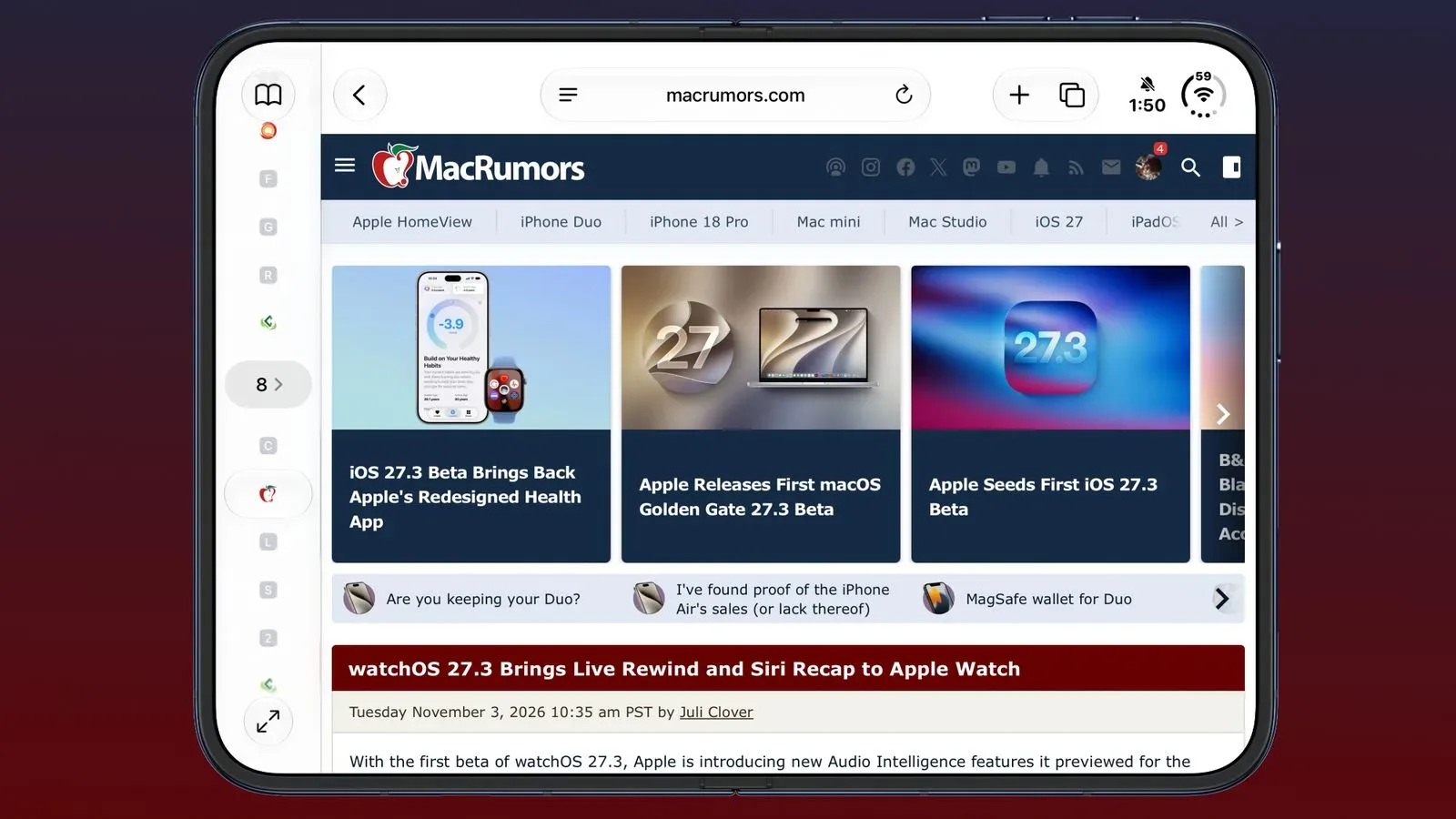
Siri may eventually get a much more structured way to remember personal context. Code uncovered in the iOS 27.3 beta points to an unfinished “memory graph” intended to organize information about a user’s relationships, places, routines, health, workouts, motivations and barriers. The discovery is notable not because it confirms a new Siri feature is imminent, but because it offers a rare look at how a more persistent assistant memory could be built inside Apple’s ecosystem.
The important caution comes first: this appears to be work in progress. Several key pieces are either absent or not writing data yet, and the available code does not establish a public launch date, final behavior, supported devices, or the controls people would have over the information. Beta code can reveal experiments and foundations as well as shipping plans. For now, the sensible reading is that Apple is developing infrastructure with potentially significant implications for Siri, not that users can switch on a fully realized personal-memory feature.
What the reported memory graph is meant to organize
A graph database is a way of representing connected information. Rather than treating every detail as an isolated row in a list, it is designed around entities and their relationships. In this case, an entity could be a person, a place, a time, an event, a topic or a user preference. The useful part is the connection: a person associated with a contact card, a routine associated with a time, or a workout associated with a particular place.
The beta references a “memory graph” that would organize categories including relationships, places, routines, health and workouts. It also appears intended to account for what motivates a user, what gets in their way, and what resources may be relevant. That is a broader target than a simple history of commands. A record of a question asked to an assistant is one thing; a connected model of recurring habits and personally relevant circumstances is another.
The design also refers to “memory atoms.” The term appears to mean small, discrete units of contextual information: facts, opinions, intentions and events, together with details such as the people, locations, times and topics involved. An atom might be a compact representation of a single piece of information, while the graph supplies its links to other pieces. Separating these concepts could matter because an assistant needs both: individual details to retrieve and relationships to understand why those details are relevant.
Nothing visible so far demonstrates that the system is making those memory atoms. The code findings indicate that a process responsible for creating them is not yet present. That limitation sharply defines the current state of the project. The concepts and data model may be taking shape, but the evidence does not show a complete, user-facing memory pipeline operating today.
Two paths for turning data into context
The reported system has two broad methods for gathering or deriving information. One is based on structured data. Structured data is information already stored in defined fields, making it comparatively straightforward for software to interpret. A name field on the user’s own contact card is the cited example. In a system like this, structured sources can provide dependable building blocks without requiring an AI model to infer meaning from a free-form conversation.
The second path is more ambitious. It would use an on-device AI model or Private Cloud Compute to derive insights by querying sources including Siri conversations, messages, photos and health data. On-device processing means a model runs locally on the user’s device. Private Cloud Compute is Apple’s named approach for processing certain more demanding requests using cloud infrastructure while positioning the work within its privacy architecture. The presence of both approaches suggests a potential attempt to balance direct, locally available data with tasks that require more computational capability.
There is an enormous difference between having access to a data source and producing a good inference from it. Messages, photos and conversations are rich in context, but they can be ambiguous, outdated, joking, incomplete or shared by multiple people. A personal assistant that tries to form durable memories from them would need to distinguish a passing remark from a genuine preference, an old plan from a current intention, and a one-off event from a routine. The code’s apparent focus on small memory units and relationships could be useful for that sort of task, but the findings do not show how Apple plans to address errors, confidence levels or corrections.
The part that appears to exist today
Only one of the AI-oriented processes has reportedly surfaced so far. It appears focused on identifying motivations, barriers and resources through a bank of 60 built-in questions. One example concerns routines that may interfere with getting enough sleep. This implies the system could be designed to identify patterns with practical relevance rather than merely cataloguing personal facts.
That distinction matters. A conventional search feature answers a request by locating an existing message, image or document. A memory-oriented assistant could theoretically use connected context to make a request more natural. Instead of requiring the user to remember which app contains a detail, an assistant could seek a relevant fact, event or routine across its approved sources. It might also understand why a question is being asked, if the underlying context were accurate and accessible.
Still, that is an explanation of the direction suggested by the code, not a promise of capabilities. The discovery does not identify final commands, assistant responses, recommendations, proactive alerts or any health-related functions that will ship. It is particularly important not to turn internal labels about sleep, motivation or barriers into assumptions that Siri will provide medical guidance or make behavioral judgments. The current evidence supports an unfinished contextual system, not a released wellness product.
A separate store for explicit memories
The graph is reportedly distinct from another store for explicit memories. The difference is meaningful. A graph can model a network of related information inferred or assembled from multiple places. An explicit-memory store sounds more like a place for durable records that could be intentionally saved, recalled or searched as individual entries.
The explicit-memory store reportedly includes room for records in Apple’s search system, yet nothing is currently writing those records. This reinforces the early-stage nature of the work. The architecture may anticipate a searchable personal-memory layer, but the code findings do not show it populated or connected to a public Siri workflow.
For users, the distinction could eventually influence expectations and controls. An explicit memory is easier to imagine reviewing, editing or deleting because it resembles a defined record. Inferred context is more complicated: its value often comes from the links between details, but that can make it harder to understand why the assistant reached a particular conclusion. Apple has not revealed how either form of memory would be displayed, managed, corrected, retained or erased, so those questions remain open.
Kuzu and why the database choice is relevant
Both reported systems use Apple’s version of the Kuzu graph database. Apple acquired Kuzu in 2025, though the purpose of that acquisition was unclear when it came to light. The beta findings now supply a possible application: a system that needs to represent and query large numbers of connections among people, places, times, topics, activities and other personal-context details.
A graph database does not itself make an assistant intelligent, private or accurate. It is storage and query technology suited to linked data. The AI models and extraction processes would determine what gets represented; product rules would determine which information could be used; interface choices would determine what a person can see and control. But the database choice helps explain how a future assistant could move beyond isolated lookups toward connected context.
That background is also useful when considering Siri’s existing personal-context features. Siri already has the ability to find information about a user’s life in apps including Mail, Messages and Photos. A memory graph could be a deeper layer beneath that idea: rather than only retrieving information from a selected app when asked, it could organize relevant context in a reusable model. Whether Apple ultimately chooses to expose that model broadly is unknown.
Privacy and control are the unanswered product questions
A system touching conversations, messages, photos and health data would naturally raise high-stakes privacy questions. The code references on-device AI and Private Cloud Compute, which indicates the project may be designed with different processing locations in mind. But processing location is only one part of the issue. People would also need clarity on what data can contribute to memories, when an inference is made, whether a memory can be viewed, how it can be corrected, and how deletion works across connected records.
There is no information yet on those controls. The findings also do not say whether participation would be optional, whether sources could be enabled separately, whether memories would synchronize across devices, or how long any information would persist. Those are not minor settings for a feature based on personal context; they would determine how understandable and trustworthy it feels in everyday use.
Accuracy is equally important. A useful personal memory system needs a way to handle changes: a move, an altered exercise schedule, a new relationship, or a preference that no longer applies. It also needs a meaningful distinction between a user stating something directly and the software drawing an inference. The separate explicit-memory store may eventually be relevant here, but the current code gives no answer about the final experience.
What this means right now
For the moment, iOS 27.3 beta findings describe foundations rather than a finished Siri upgrade. The memory graph, the notion of memory atoms, the use of Kuzu, and the partially visible process around motivation and barriers all indicate work toward a richer model of personal context. At the same time, the lack of a memory-atom creation process and the inactive explicit-memory records show how incomplete the system remains.
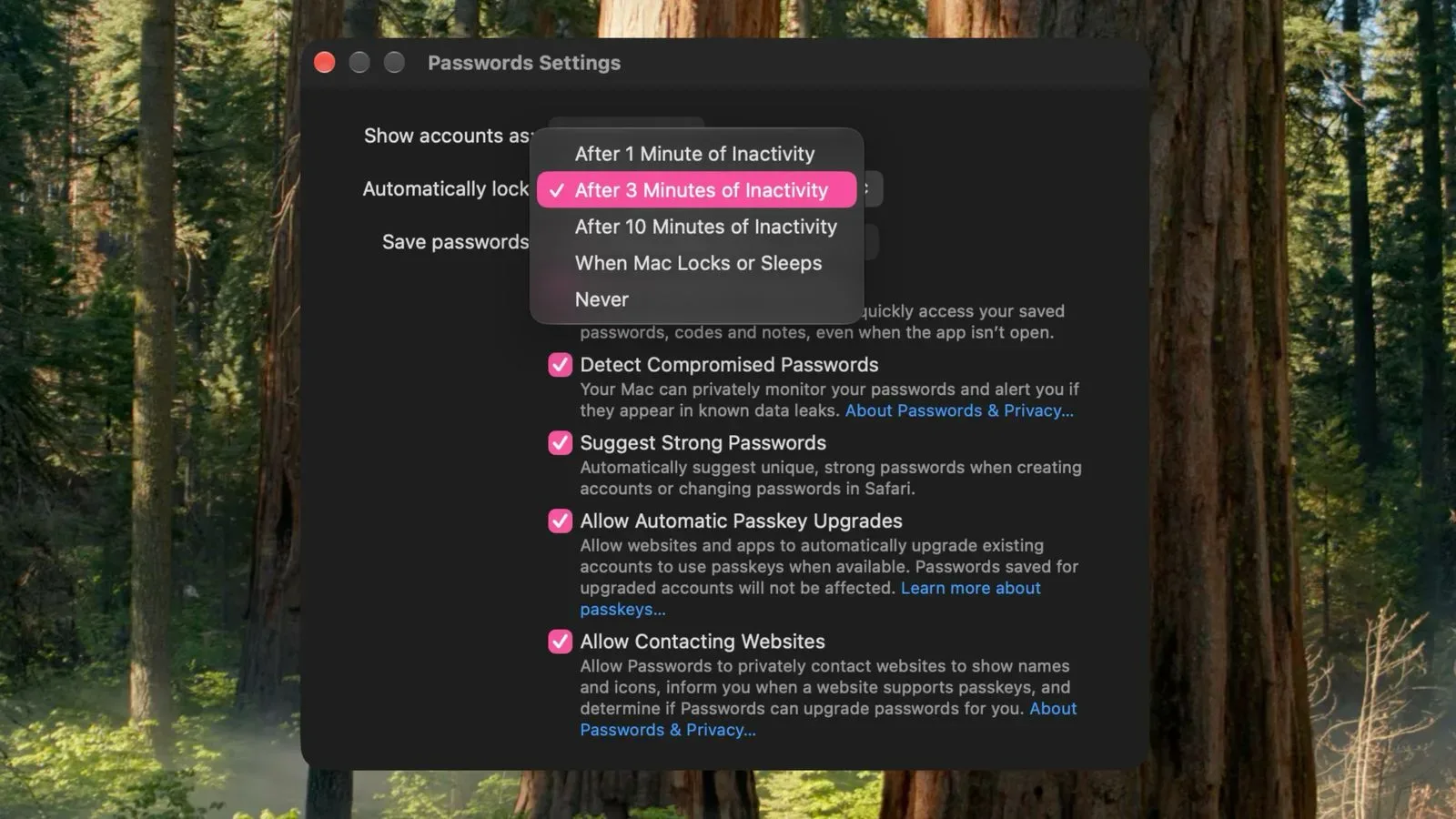
Users should therefore treat the discovery as a signpost, not a feature announcement. Siri already works with personal context from Mail, Messages and Photos; the newly uncovered work suggests Apple may be exploring a more organized and persistent way to connect that information. Before it becomes meaningful in practice, Apple would need to show what the assistant actually does with those memories and, just as importantly, how users remain in charge of them. For another recent Apple software privacy-related development, see the reported Passwords app auto-lock options on Mac.